

Well, it’s been a week! This post was supposed to go out last Friday, but Mother Nature had other plans. A large fire broke out on the coast north of us, sending an incredible amount of smoke straight into our little corner of Sebastopol. At one point, the air quality index climbed above 1,000, making it one of the worst in the world. We packed up the car, got out of town for a few days to find cleaner air, and waited for the smoke to clear. We're finally home, the windows are open again, and I'm so happy to be sitting down to share this with you.
I’ve been wanting to share more about postpartum foods for a while now. Truthfully, I don’t think I could have written this sooner.
As a new mom, I needed so much support myself that it felt hard to offer it to anyone else while I was still in the thick of it. Now, almost a year later, I have a little more distance from those early days and can look back with more clarity at the foods and herbs that nourished me, especially in those first tender months.
Before we dive in, I want to say a couple of things.
First, every postpartum experience is different. Every birth is different. Every body is different. This isn’t meant to be a definitive guide to postpartum nutrition or a checklist of foods you should eat. It’s simply a collection of the meals, herbs, and small rituals that helped me feel nourished while my body was healing.
Second, I was incredibly fortunate to have support. Our midwife also offered postpartum doula care, and she came to our home each week to prepare many of these foods for me. After an unexpected C-section following a 30-hour labor, I couldn’t stand for long, walk very far, or even hold Theo while standing without pain for weeks on end. Having someone step into my kitchen to make a pot of broth, stir a congee, or put together a simple meal was exactly what I needed during such a difficult transition.
There’s nothing quite like bringing a new life into the world, and it’s honestly hard to put the experience into words. I do think every new mother deserves access to nourishing food and support after giving birth. It can make such a difference during those first few months of recovery, and ultimately supports the whole family as everyone adjusts to this new season.
So, if you know someone who’s going to have a baby and you want to support them, this guide will be great for you, too!
One of the things I’ve always appreciated is how many traditional postpartum foodways, despite coming from completely different cultures, share similar ideas. They often emphasize warm, easy-to-digest meals, plenty of nourishing fats, mineral-rich broths, nutrient-dense animal foods, and herbs that support rest and recovery.
The book The First Forty Days was my first introduction to postpartum foods, and it’s a wonderful staple for anyone expecting or supporting someone after birth.
We know that after birth the body is rebuilding tissue, replenishing nutrients, and recovering from months of growing another human. Protein becomes especially important for healing. Iron may need replenishing after pregnancy and blood loss. Healthy fats provide energy and help us absorb fat-soluble vitamins. Fluids and minerals become especially important, particularly when breastfeeding.
The foods I found myself craving (intensely!) naturally fit many of those same principles—not because I was following a strict postpartum protocol, but because they were the foods that made me feel the most nourished. Here are a few simple principles I kept coming back to when thinking about food postpartum.
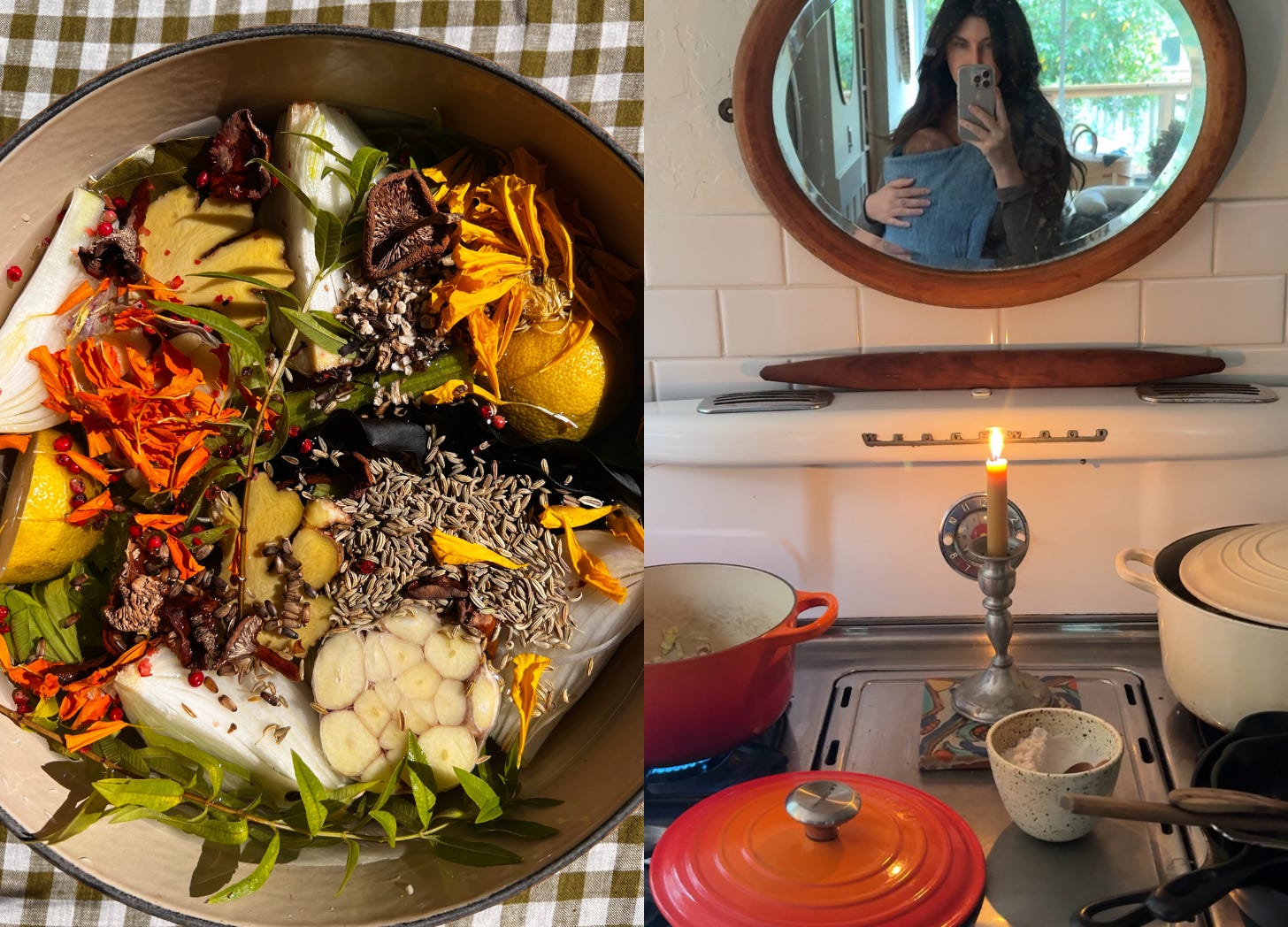
I’ll admit, liver isn’t exactly the first thing most people crave. But after struggling with low iron during pregnancy, I found myself wanting foods that felt substantial and blood-building. Organic chicken livers are one of the most nutrient-dense foods we can eat, providing highly absorbable iron along with vitamin B12, choline, folate, and vitamin A.
For me, this wasn’t about expecting pâté to fix everything. It was simply one delicious and decadent way to bring those nutrients back to the table. Spread onto good sourdough with a few cornichons or olives, it became one of my favorite lunches and easy snacks.
Comments
Nothing yet. Say the first thing.
Sign in to join the conversation.