
I'm so excited to share this interview with Kristen Caissie, co-founder of Moon Canyon, for my At the Kosmic Table series. Although we've only known each other for a short while, it felt like we had been friends for years. After she moved to Sonoma County from Los Angeles, our paths crossed, and I immediately felt a deep kinship. Kristen has a beautiful way of weaving together plants, beauty, and inner work, reminding us that healing happens through relationship—with ourselves, each other, and the natural world. Spending time with her always leaves me feeling grounded and inspired, and I have a feeling you'll feel the same after reading our conversation.
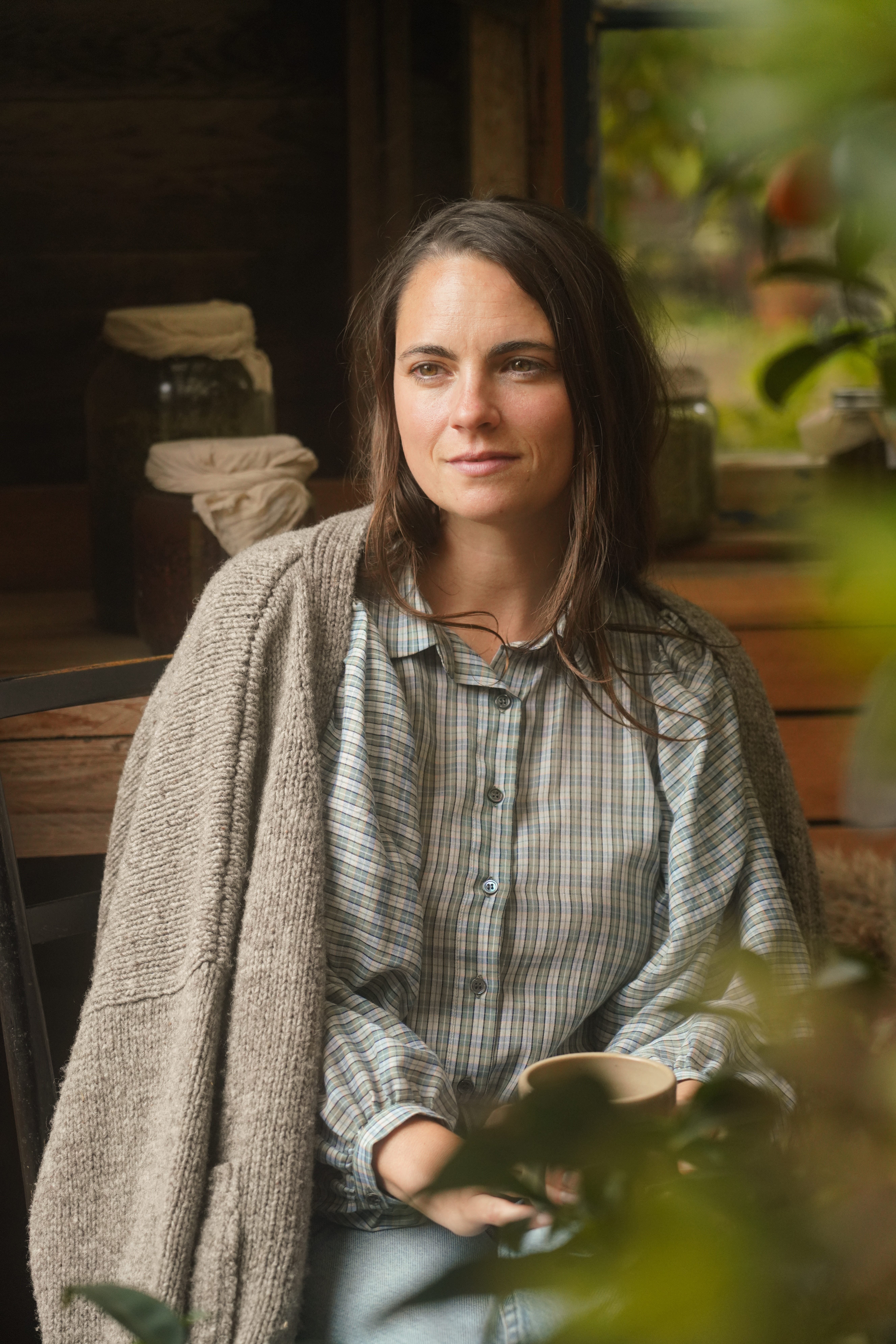
Can you share a little about your path—how did plants, food, or creative work first find their way into your life?
Ever since I was a little girl, I have been in awe of plants. I often say I’m a “plant person,” someone who deeply needs that relationship between plant and human to feel whole. Listening to nature, to the trees, to the way flowers seem to sing, has always been foundational to my being.
In college, I was drawn to literature, poetry, and forms of expression that attempt to give language to what often lives beyond words. I’ve always been captivated by that threshold: the quiet conversation between the human and the more-than-human world. That unspoken language continues to guide me. Over time, living in rhythm with that listening has shaped the way I move through my life. It has opened me to the many ways the Earth co-creates through me - through writing, gardening, studying herbalism, and through creative direction and embodiment. Each of these feels like a different expression of the same relationship: a devotion to listening and to bringing what I hear into form.
Right now, in this season of life, what does your relationship with nourishment, plants, or cooking feel like? In a world that can feel uncertain and ever-changing, how do you see your practice connecting to your community, the environment, or the bigger challenges we’re all navigating together?
Right now, my relationship with nourishment feels deeply rooted in both my body and my community. I am 43, a mother to an 8- and 11-year-old, and beginning to move through the early stages of perimenopause—a threshold that is asking me to listen in quieter, more intimate ways. My needs are shifting, and I find myself softening into that—learning to respond rather than push, to receive as much as I give.
One thing that feels especially present in this season is how much I need others. Mothering has a way of revealing the places where I cannot do it all alone. I feel myself leaning more on friends, on shared meals, on conversations, on the invisible threads of support that hold us. It’s humbling, and also deeply relieving.
Through this, I’m coming to understand nourishment as something we weave together. Not something we produce in isolation, but something that lives between us. The feminine, to me, feels inherently co-creative in this way, rooted in relationship, in exchange, in the quiet art of tending and being tended to.
When I turn toward my body and listen, when I honor what it needs in this particular season, I am also opening to that larger web. I have been really deepening my capacity to be held as much as I hold. This, too, is a healing, a new way of learning to trust the wider web of support, even as resistance rises to meet it. And in that, there is a remembering: that we were never meant to mother alone, or nourish alone, or live alone. We are always, in some way, creating and sustaining one another.
As a mother, this practice ripples outward. The more compassion, curiosity, and care I offer myself and my children as we grow, the more deeply rooted I become in my community. There is an embodied knowing that we are not meant to do this alone, that nourishment, like life, is something we co-create. We do not mother alone, grow alone, or sustain ourselves alone. And it is through these small, daily acts of tending food, touch, and attention that we begin to remember what it means to belong to one another and to the Earth itself.
Tell me about your kitchen or creative space—what makes it feel grounding, cozy, or inspiring for you?
I was just writing in my journal about my deep love for my kettle. When I think about my kitchen, I think about all the ways it holds me. The kettle is a tool, yes, but it’s also the first thing I reach for each morning as I prepare my chai, marking the beginning of the day with warmth and rhythm. It’s what I turn to when my children need a hot water bottle, or when they’re sick and asking for tea. Over time, it has become something more than functional, it’s a steady presence, a small anchor of care.
There’s a kind of comfort I find in this simplicity, in the quiet rituals that live in the kitchen. It reminds me that nourishment doesn’t have to be elaborate to be meaningful. Often, it’s found in these small, repeated gestures and the ways we tend to one another, day after day, without needing to name it.
How do you weave creativity and nourishment into your everyday routines? Are there little rituals, habits, or ways your work connects to the world around you?
These days, I find myself spending a lot of time at my computer. I’ve just wrapped the writing and design of my second book, a creative process that, in many ways, has taken over my life. I love this kind of deep immersion. There’s something about entering a world so fully, letting it shape me as much as I shape it.
At the same time, this process has asked something new of me. I’ve learned that I can’t stay there indefinitely, that if I push too far, things begin to blur, and I lose my ability to see clearly. Where I once might have pushed through, I now take that as a cue to step away.
So I’ve begun to build in small rituals of return. I step outside. I feel the air, the ground beneath my feet. I let my body settle and co-regulate with the living world around me. These pauses aren’t interruptions but part of the work itself. When I come back, something has shifted. There is more space, more clarity, more flow. In this way, creativity and nourishment have become intertwined. I’m no longer creating from depletion, but from a place of relationship, moving between focus and rest, between making and being made by the world around me.
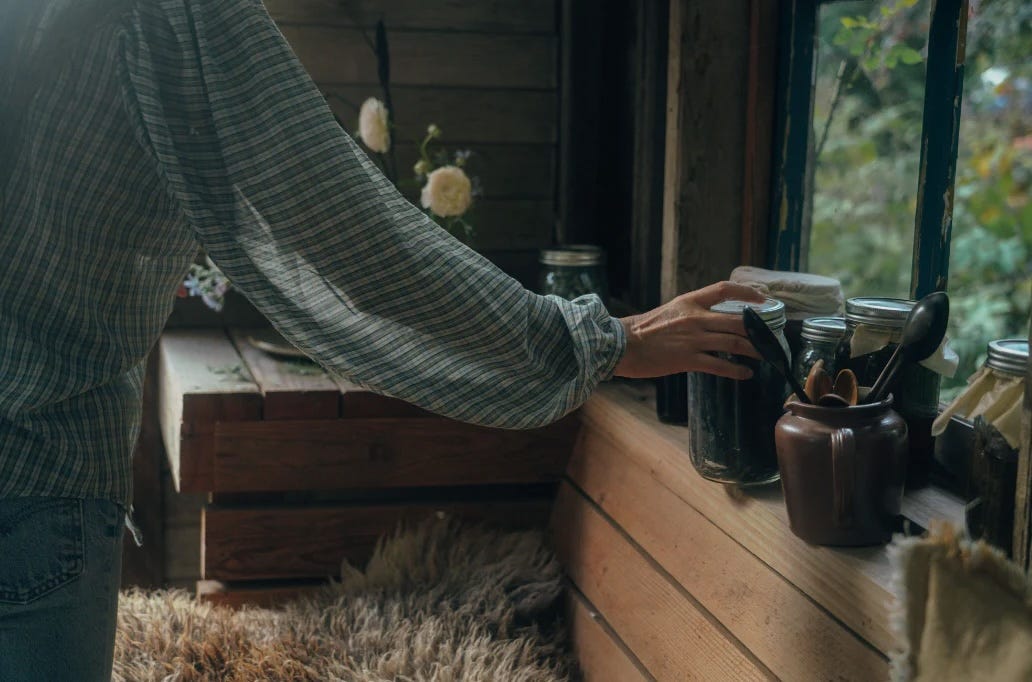
Where does intuition or experimentation show up in your work or cooking? Do you have any favorite “trust your gut” moments?
I love this question! It brings out my herbalist self. Herbalism, for me, has been a profound pathway into trusting my intuitive listening. One of the ways this shows up most simply is through tea. Making tea has become a daily practice of attunement, a way of checking in with my body, my emotions, and the more subtle undercurrents of how I’m moving through the day. Rather than reaching for the same blend each time, I pause and listen.
What feels needed? What is asking for support?
From there, I let the herbs guide me. Certain plants seem to step forward, almost as if they’re in conversation with what I’m sensing. Over time, this has become a kind of creative trust-building in my intuitive knowing, less about getting it “right,” and more about staying in relationship.
In many ways, this is how I understand herbalism itself. It isn’t just a system of knowledge, but a practice of listening, of being in dialogue with the plants, with the body, and with the moment we’re in.
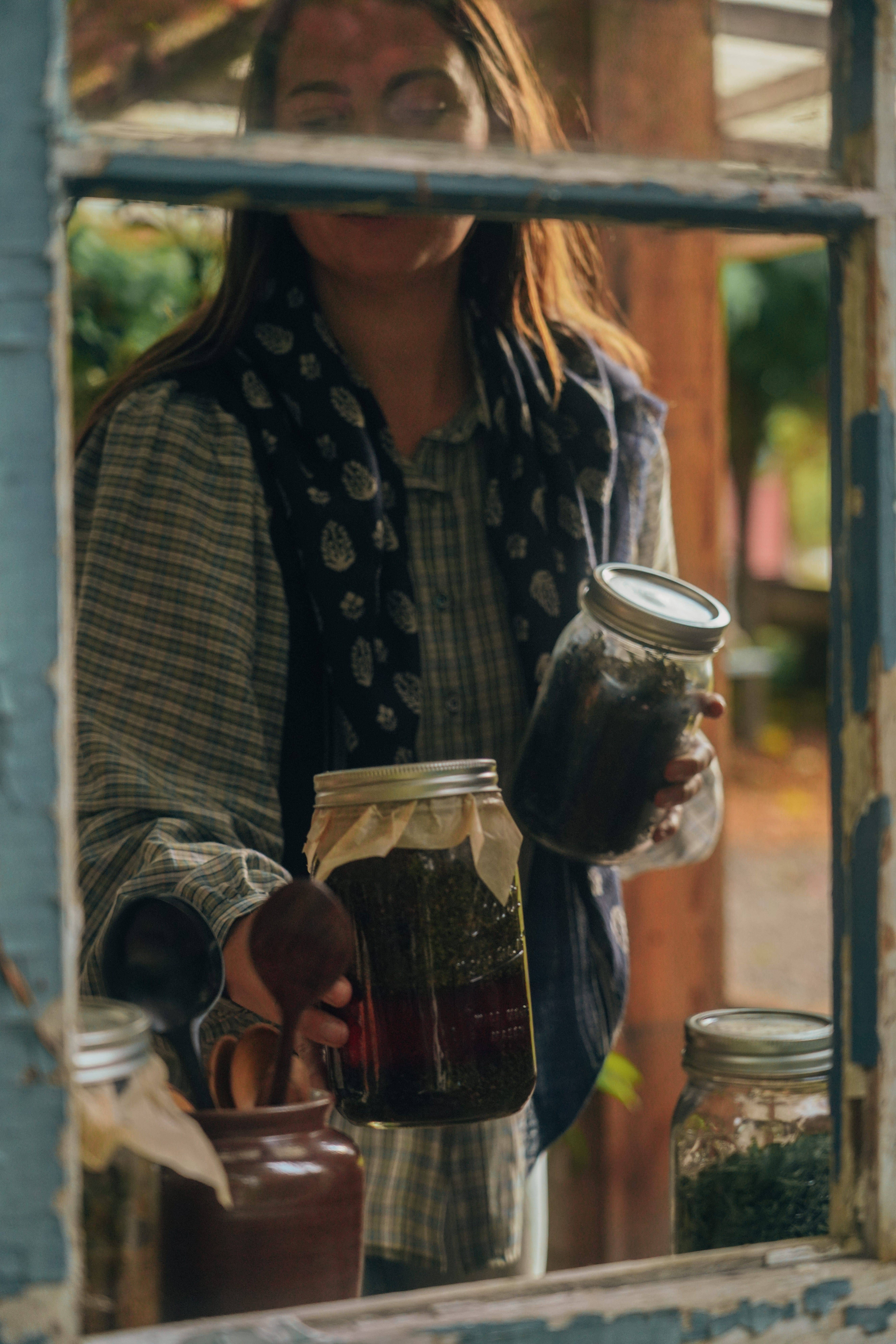
Who or what has shaped your approach to plants and food the most—teachers, family, books, landscapes, or something else entirely?
The seasons have been my most trusted guide. Each one carries its own intelligence, its own way of teaching, and somehow, they always seem to offer exactly what is needed. Spring arrives with its clearing and renewal, inviting movement and possibility. Summer expands us outward, into expression and vitality. Autumn draws us inward, asking for discernment and release. And winter… winter holds us in the quiet, in the unseen work of restoration.
Living in relationship with these cycles has shaped how I understand nourishment, plants, and even my own body. Nothing is static. Everything is in conversation with change.
Alongside the seasons, I’ve had many human teachers who have deeply influenced my path. But going to herb school and studying at the California School of Herbal Studies was truly life-changing. Being on that land, immersed in the plants and their medicine, shifted the course of my life. It’s what called me to move here, to root more fully into this work, and to trust that this way of living so intertwined with the Earth was not only possible, but essential.
What are you exploring, learning, or excited about in your practice right now?
Right now, I find myself exploring pleasure and joy as essential parts of my practice, not as something indulgent or secondary, but as something deeply medicinal. My own healing journey has been gently turning me toward where I seek reward, where I reach for that sense of fullness or relief. I’ve begun to notice how often that impulse can move outward toward validation, productivity, or being seen. And I’m learning, slowly, to turn back toward myself. To ask: what actually feels nourishing? What brings me into my body, into a sense of aliveness?
This has become a kind of reorientation, learning how to offer myself the care, attention, and love I once looked for elsewhere. And in doing so, something softens. There is more space to receive, more connection, more pleasure, more ease. It feels like a quiet but powerful shift. One that is less about striving, and more about allowing. Less about seeking, and more about remembering that so much of what I need is already here, waiting to be felt.
How do you stay connected to inspiration when you feel busy or creatively drained? This has been coming up for me a lot, especially as a new mom.
This has been coming up for me a lot, especially in this season of motherhood. I think what I’ve come to understand, through my own experience, is that I don’t always feel inspired, and that’s actually okay. More than trying to stay constantly connected to inspiration, I’ve been learning to trust the cycles of it. There are times of expansion, where ideas flow easily, and there are times of contraction, where things feel quieter, slower, even a bit out of reach.
Motherhood has deepened this trust in me. It has shown me that not everything needs to be pushed or produced on demand. Sometimes the most important thing is to rest, to tend to what is here, and to allow the creative well to replenish in its own time. I’ve built a kind of relationship with that rhythm now, a knowing that inspiration will return. That it’s not something I have to chase, but something that moves through me in its own timing. And in the moments when I feel disconnected, I try to meet myself there gently. To trust that even in the quiet, something is still unfolding beneath the surface.
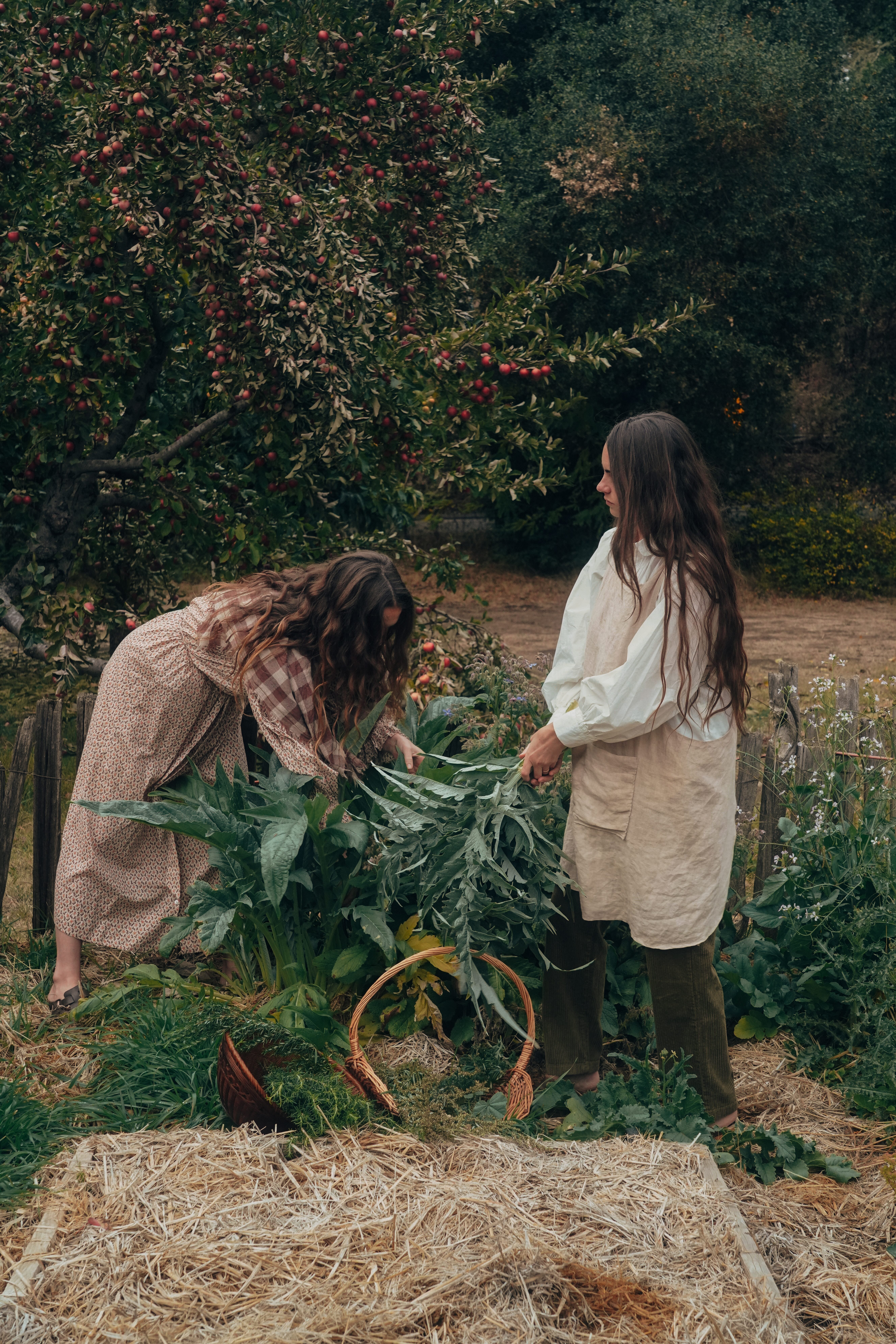
When you hear the word “nourishment,” what comes to mind beyond just food?
When I hear the word nourishment, I think of all the ways I attune— to nature, to my body, to my family, and to my community. It extends far beyond food. It’s in the quality of my presence, in the moments where I soften enough to really receive what is here.
Nourishment, to me, is a practice of receiving. Of allowing care, beauty, rest, and connection to land in the body. It lives in small things, a warm cup of tea, a shared meal, a quiet moment outside, the feeling of being held in conversation or in silence. It’s the subtle shift from doing to being with. More and more, I experience nourishment as something relational. Not something I create alone, but something I participate in, something that flows between myself, the people I love, and the living world around me.
If someone wanted to start bringing more herbal wisdom or mindful cooking into their life but feels intimidated, what would you tell them?
Start simply. Begin with one plant.
Sit with it. Taste it. Smell it. Take it in through all of your senses. Let yourself become curious about its subtle ways, how it feels in your body, what it evokes, what it seems to offer.
There’s no need to know everything at once. Herbal wisdom isn’t built through memorization, but through relationship. Let it be slow. Let it be intimate. Over time, that single connection begins to open into something larger, a way of listening, of noticing, of trusting your own experience. And from there, the path unfolds naturally, one plant at a time.
And lastly, where can readers find you, your work, or support what you’re doing?
I’ve been tucked away in a bit of a book-writing hobbit hole, here in the redwoods of Northern California, but I can feel myself slowly emerging as spring arrives.
Lately, I’ve been sharing more of my writing on Substack, Wider Circles. It’s a newer space for me, and one I’ve been deeply enjoying. Storytelling, whether visual or written, has always been at the heart of my work. It’s one of the primary ways I make sense of, and stay in relationship with, the world around me.
Alongside that, I’m feeling a renewed call toward creative collaboration. Before this chapter, I spent many years as a designer and creative—working with flowers, spaces, and brands to bring a sense of story and atmosphere to life. That thread is returning now, but in a more integrated way, woven with my work in herbalism, embodiment, and Earth-based practice. I’m increasingly drawn to supporting others in sharing their own stories through creative direction and brand stewardship, especially for those whose work is rooted in nature, the home, care, and connection.
And soon, my second book, The Seasonal Herbalist, co-written with my partner Sarah Dolan in Moon Canyon Healing, will be coming into the world. It’s a guide to working with plants through the lens of the seasons, bringing herbalism into the home as a daily, embodied practice of care, rhythm, and relationship. For now, Substack is the best place to find me, but more is slowly taking shape, just like the season itself.
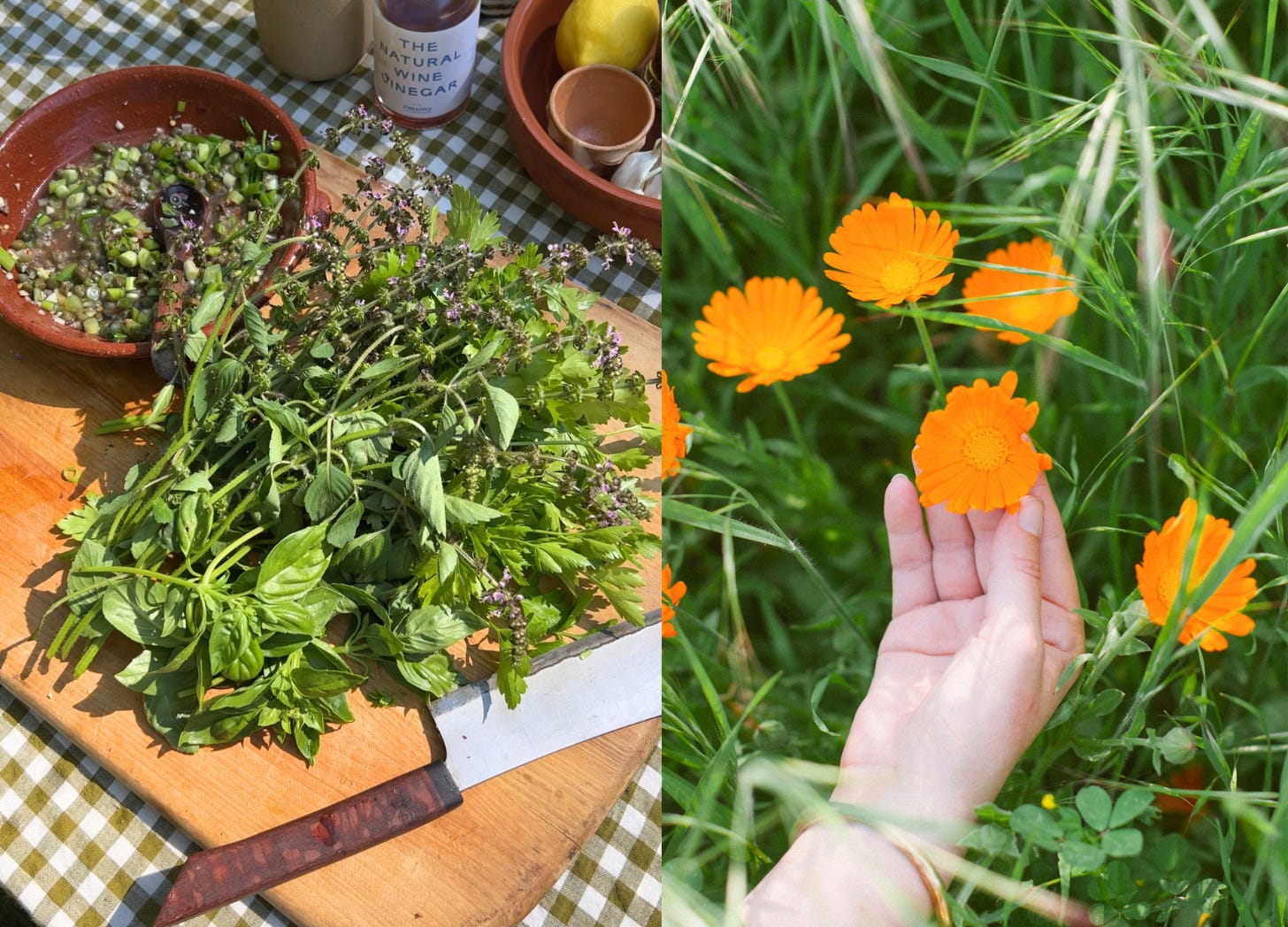
*All photos courtesy of Moon Canyon
If you enjoyed gathering around the table with us, I'd love to keep the conversation going. Join the Kosmic Cooking Club for seasonal recipes, herbal wisdom, and thoughtful stories delivered to your inbox. Free subscribers receive every new post, while paid members unlock my complete archive of over 150+ recipes, seasonal guides, and exclusive kitchen inspiration.
Comments
Nothing yet. Say the first thing.
Sign in to join the conversation.