
My mom had a favorite quote: “The lover of life makes the whole world her family.”
I grew up in a household that lived that out. New people at our table were normal. Strangers who eventually became family were normal. Someone my mom met through work who didn’t have local family. An immigrant family who could use a wider social network. An elderly distant family member who was lonely. They all found a seat.
That’s less common than it used to be..
The Growing Table sits at the center of something I think a lot of us are feeling right now. Note: This post is sponsored by Karis Parenting, the book’s publisher.
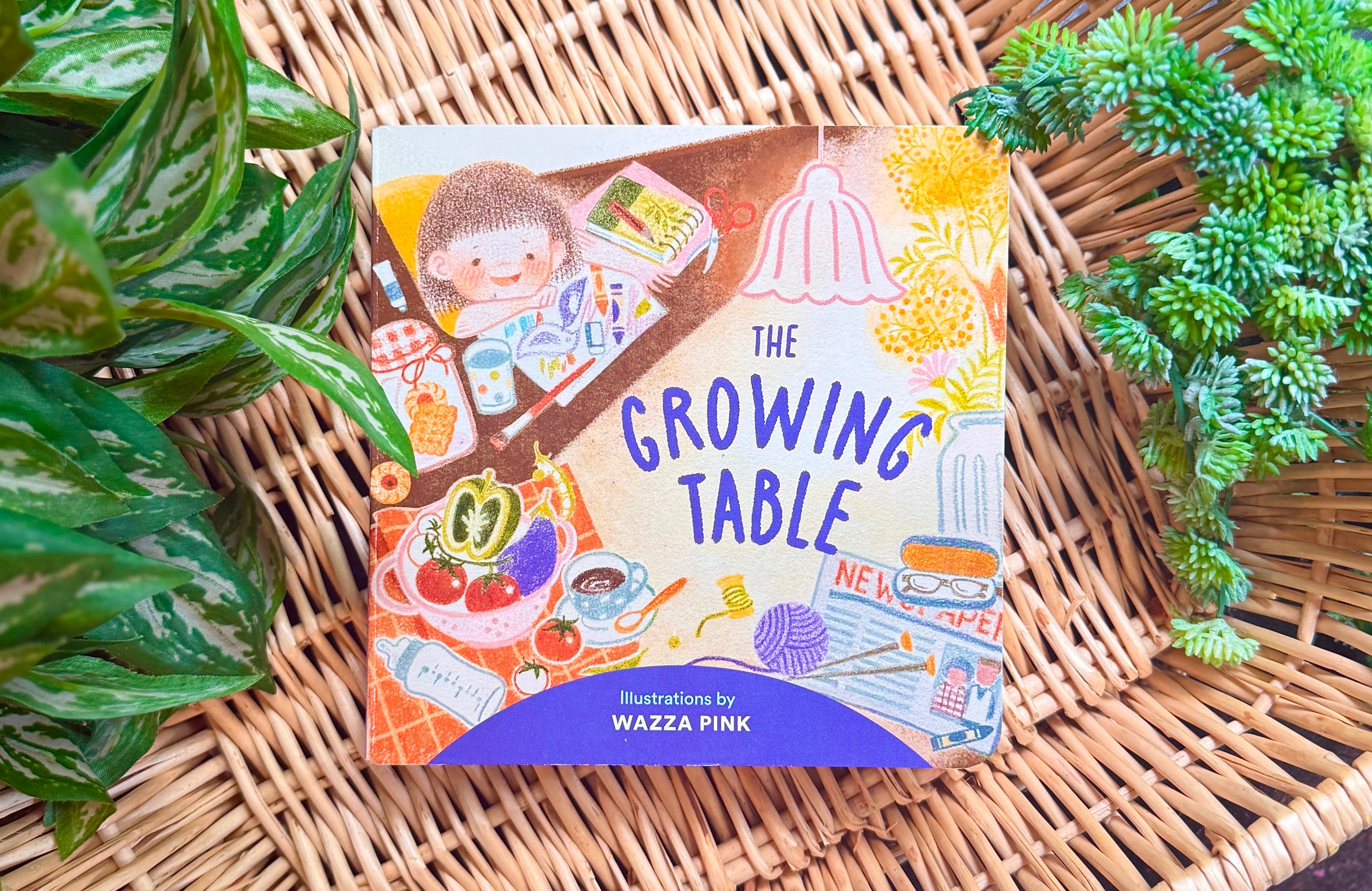
The table, in this book, isn’t just furniture. It’s a symbol. Of welcome. Of sharing meals and time together. Of making room, literally and figuratively, for others. That idea is ancient. It shows up in faith traditions, in culture, in the way communities have always been built. A table that is open to others is a countercultural act right now, and this book makes that concept accessible to the youngest among us.
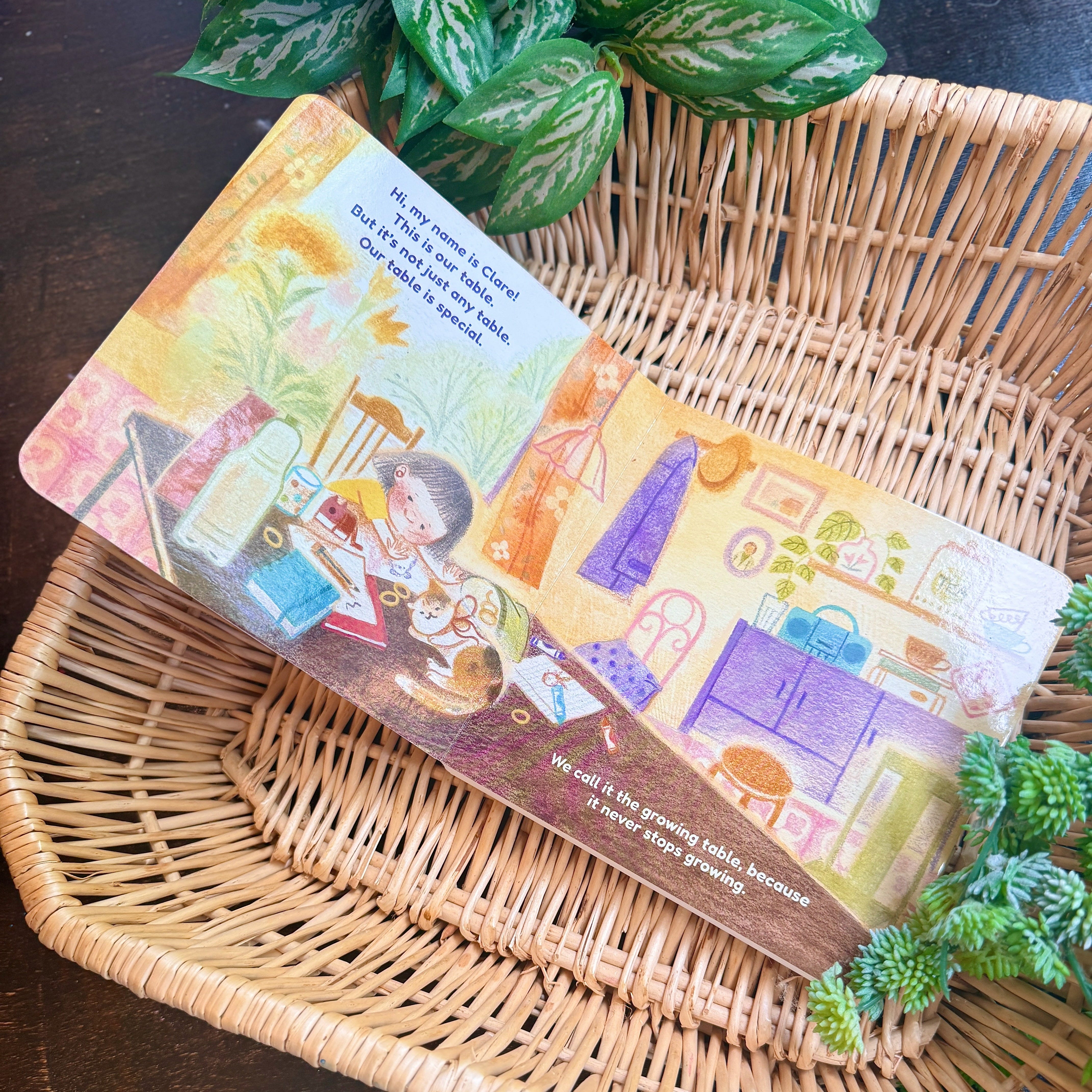
In The Growing Table, we meet Clare, whose table is the center of everything. It’s where her family connects, learns, heals, explores new foods, crafts, reads, and prays. When her little sister June arrives, she joins at the table too. Mess is fine. They clean it up and make more room, for family, neighbors, and friends.
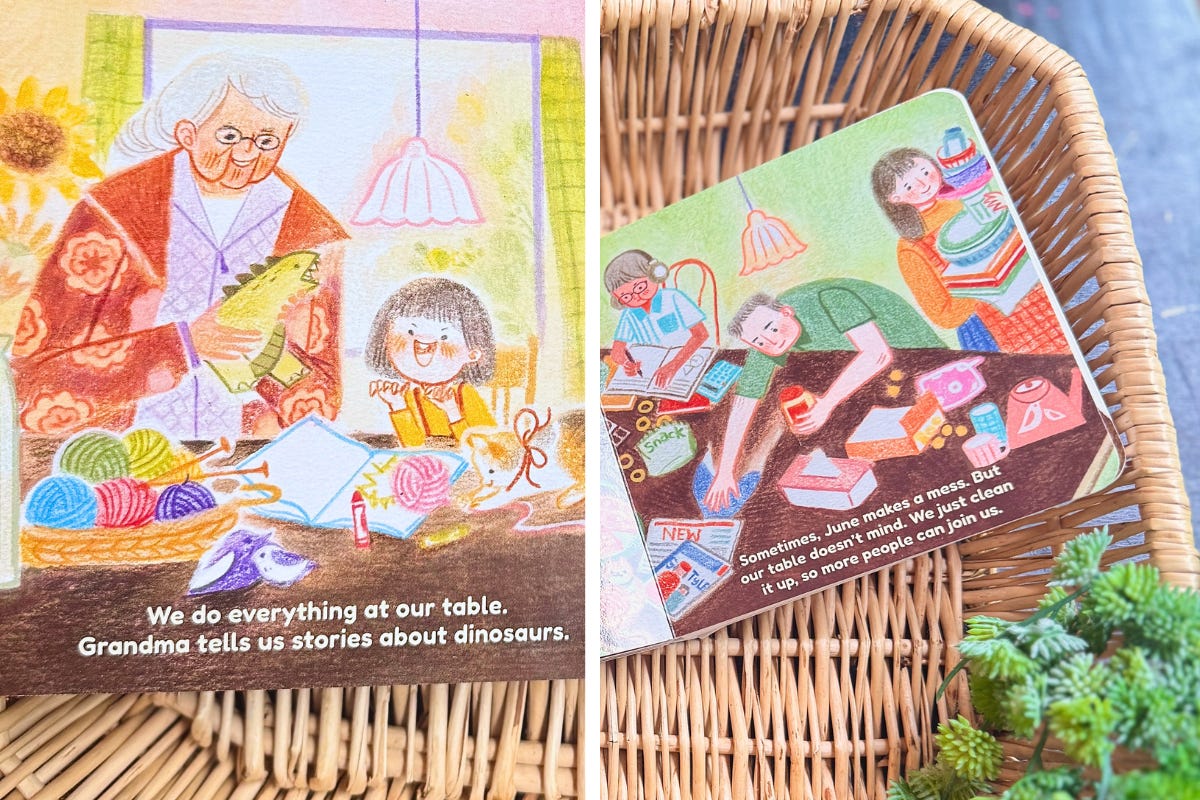
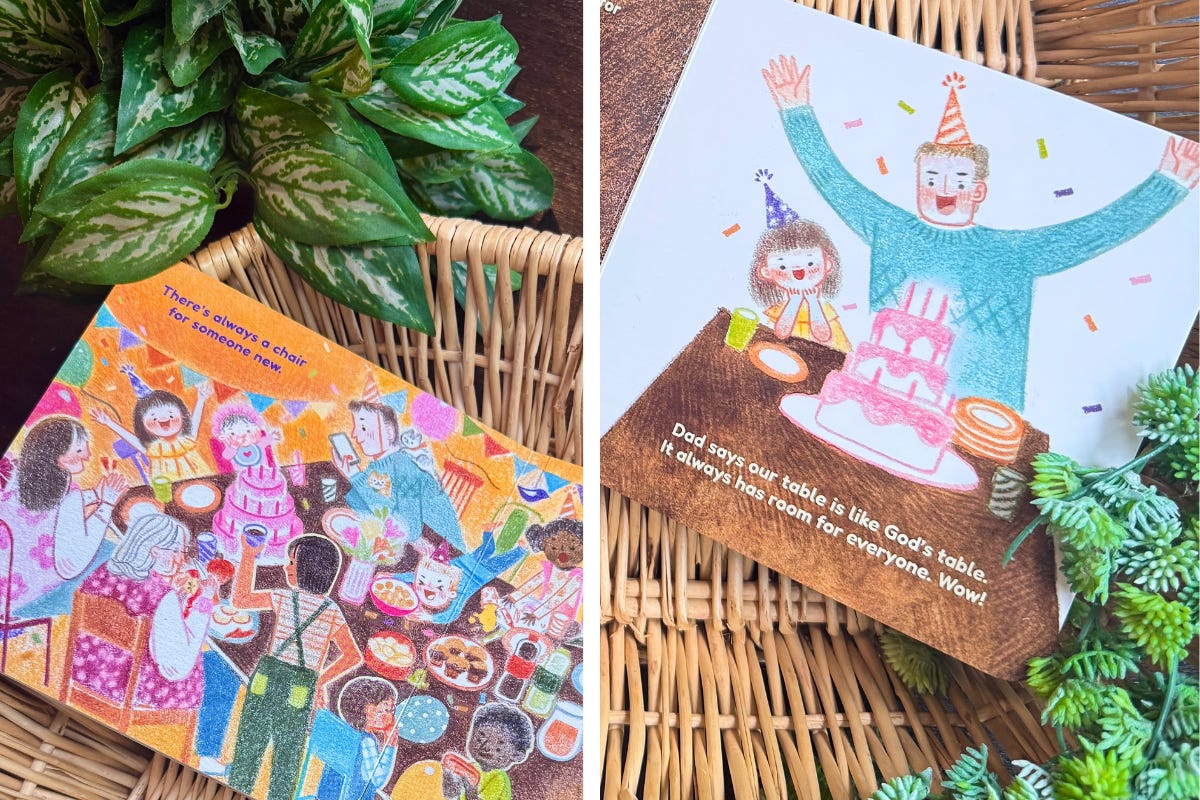
“Dad says our table is like God’s table. It always has room for everyone.”
You don’t have to share this theology to feel the loss of community in our culture. I think we’ve overcorrected.
Boundary-setting language has its place. Healthy boundaries and hospitality aren’t mutually exclusive. But we’ve swung too far away from communal connection and started using boundaries to create divisions between us. Making space for others, welcoming people in even when it’s not always comfortable or convenient, used to be just how life worked.
In The Growing Table, the table grows. For new activities, new siblings, new people. It makes room. That’s the whole idea, and it’s a powerful one to plant early in a child’s understanding of how we treat others and who belongs with us.
If you’re in a season of thinking about who’s at your table, and who isn’t, this is a beautiful place to start that conversation with your little one. It is also a lovely way to inspire conversations about how faith can align with and influence our day-to-day lives.
Comments
Nothing yet. Say the first thing.
Sign in to join the conversation.