
With one Catholic parent and one Lutheran parent, and peers from a range of church traditions, I grew up attending a variety of churches and exposed to different expressions of Christian faith. That diversity taught me early on that I cared less about what made each denomination distinct and more about what they all shared: God as love, the inherent worth of all human beings, the importance of kindness, the beauty of the earth, and the wonders of science.
This foundation makes it difficult to watch some churches align themselves with exclusionary politics. This is why discovering resources like Karis Parenting feels like finding solid ground again.
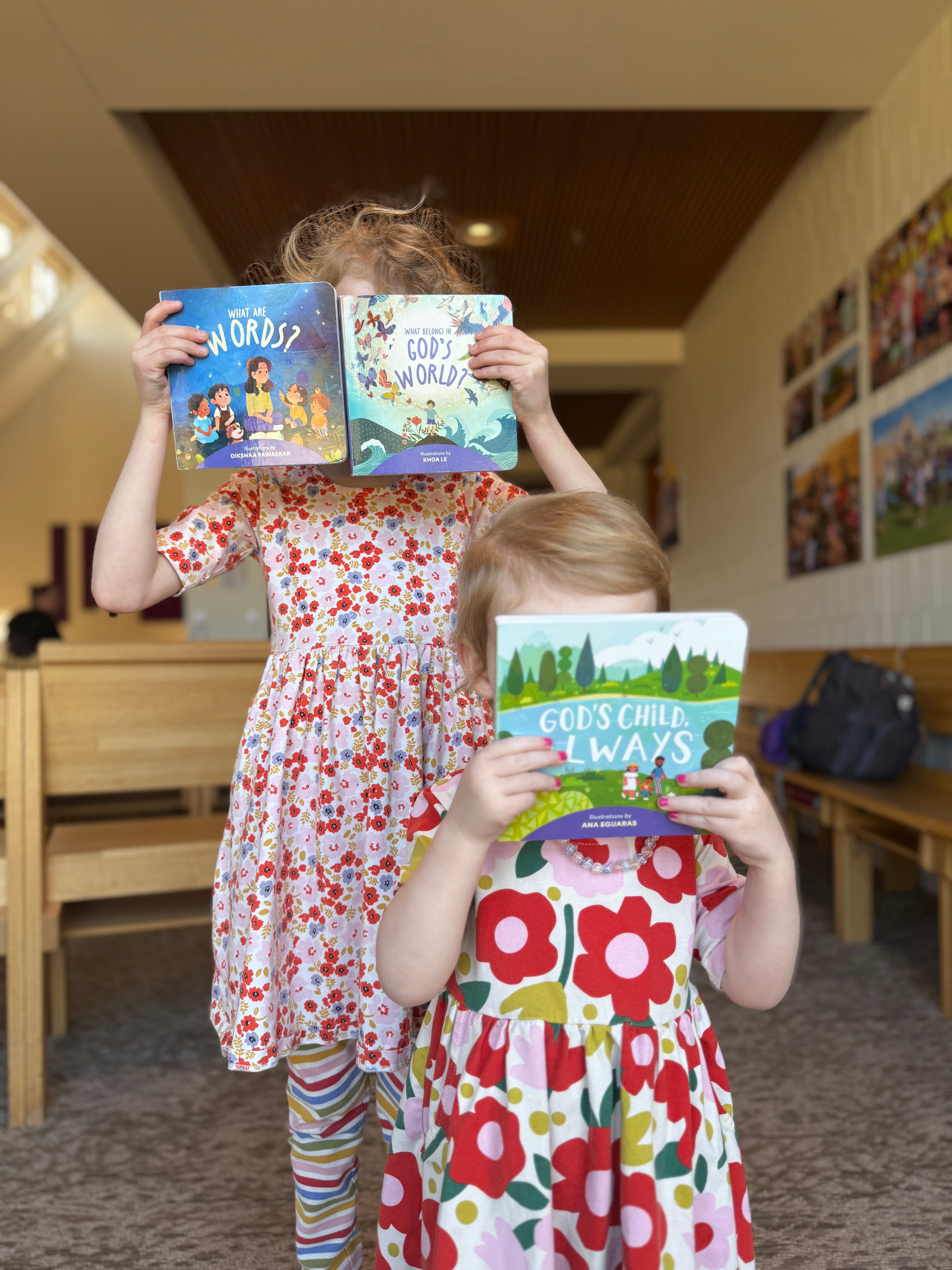
Thank you to Karis Parenting for sending us your beautiful books and for sponsoring this post. This is the first post in a series highlighting their titles!
What is Karis Parenting?
Karis Parenting, a ministry of the First Baptist Church of Asheville, creates resources that help parents of young children (ages 0-4) integrate faith into everyday moments—playtime, nature walks, bedtime routines—without adding more tasks to an already full schedule. Their approach combines Christian teaching with evidence-based early childhood development practices.
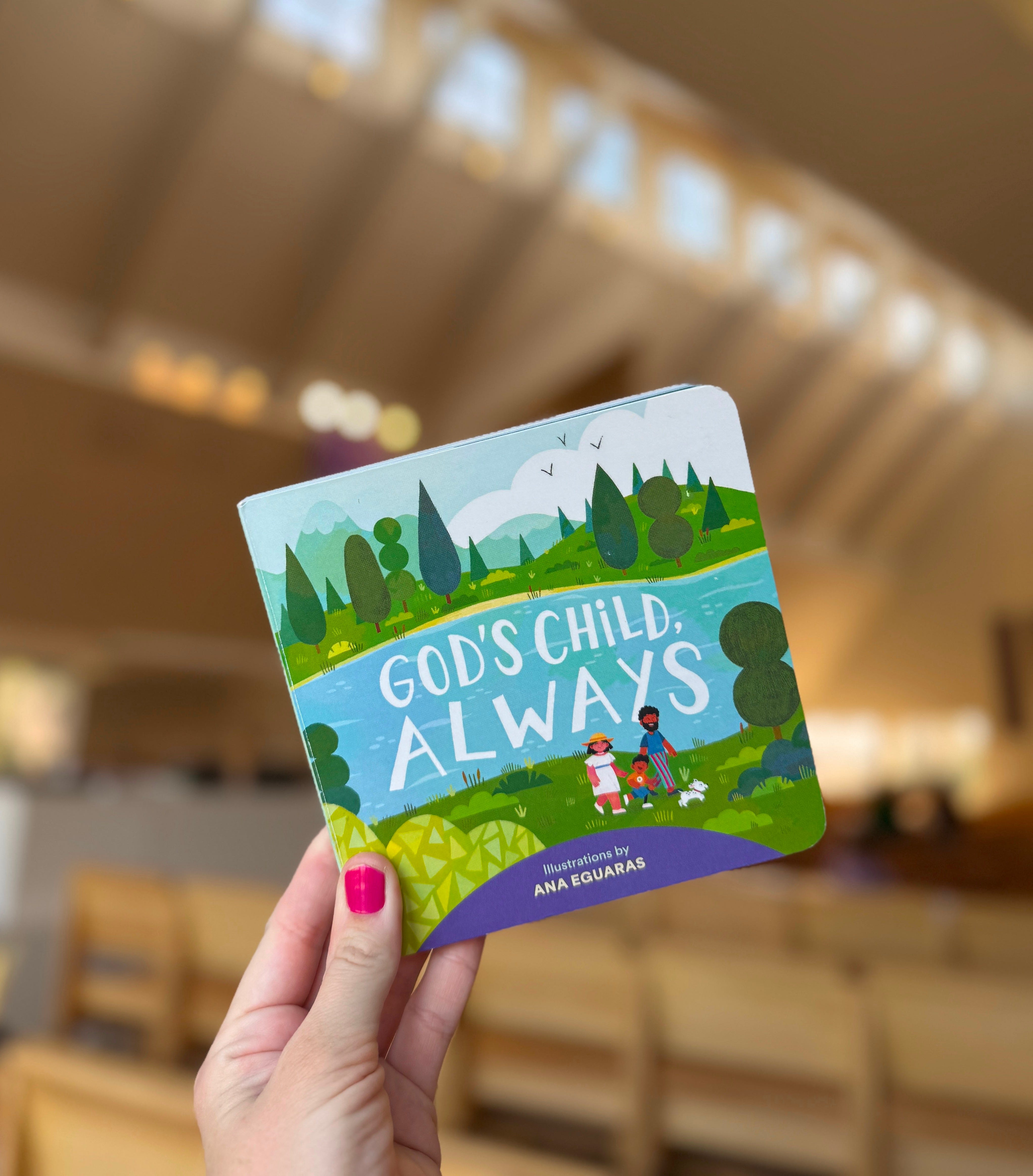
Their new board books come from their Via Karis (”Way of Grace”) framework, which centers on five spiritual practices: Water, Word, Table, Body, and Creation. God’s Child, Always focuses on Water in particular.
What the book does well
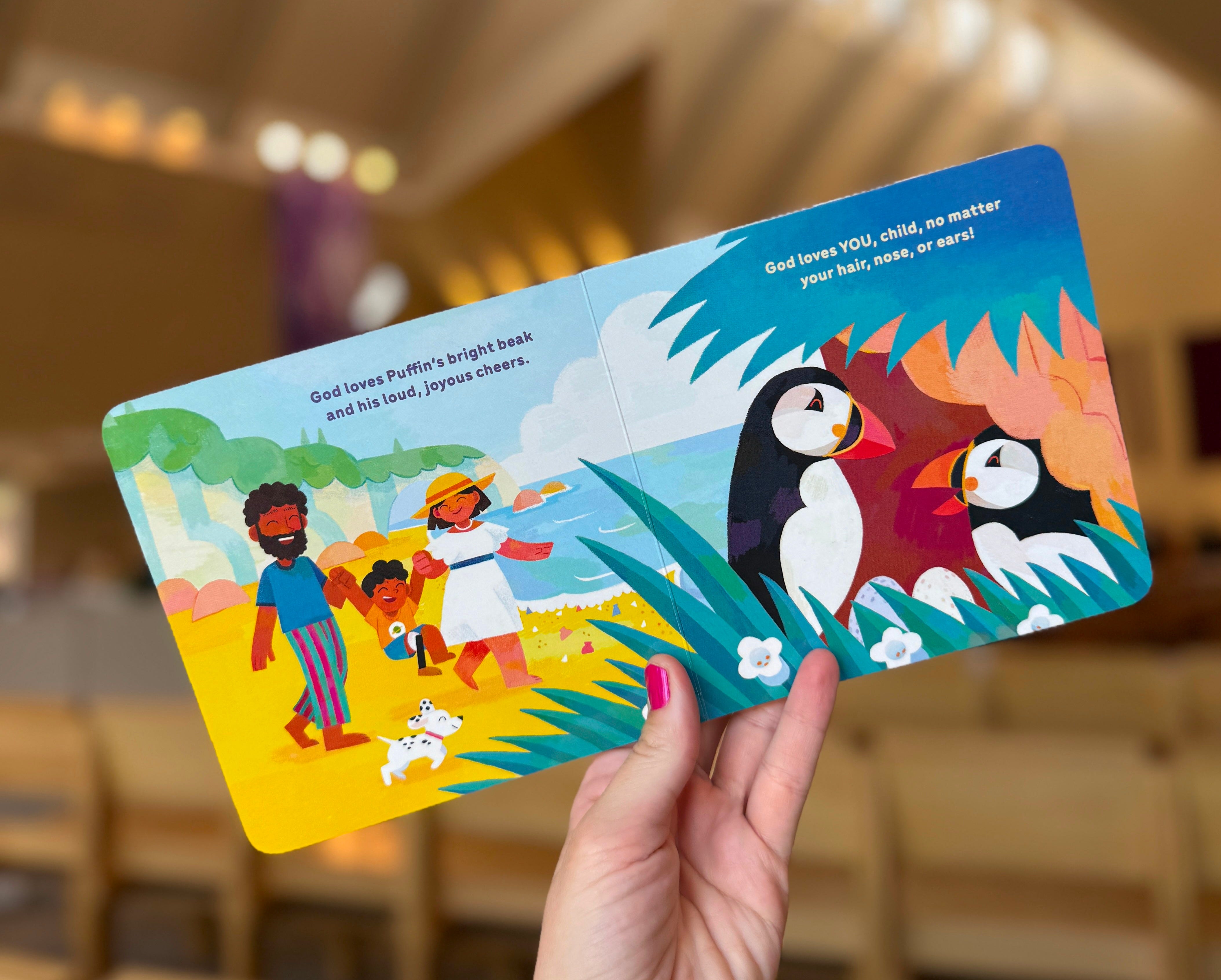
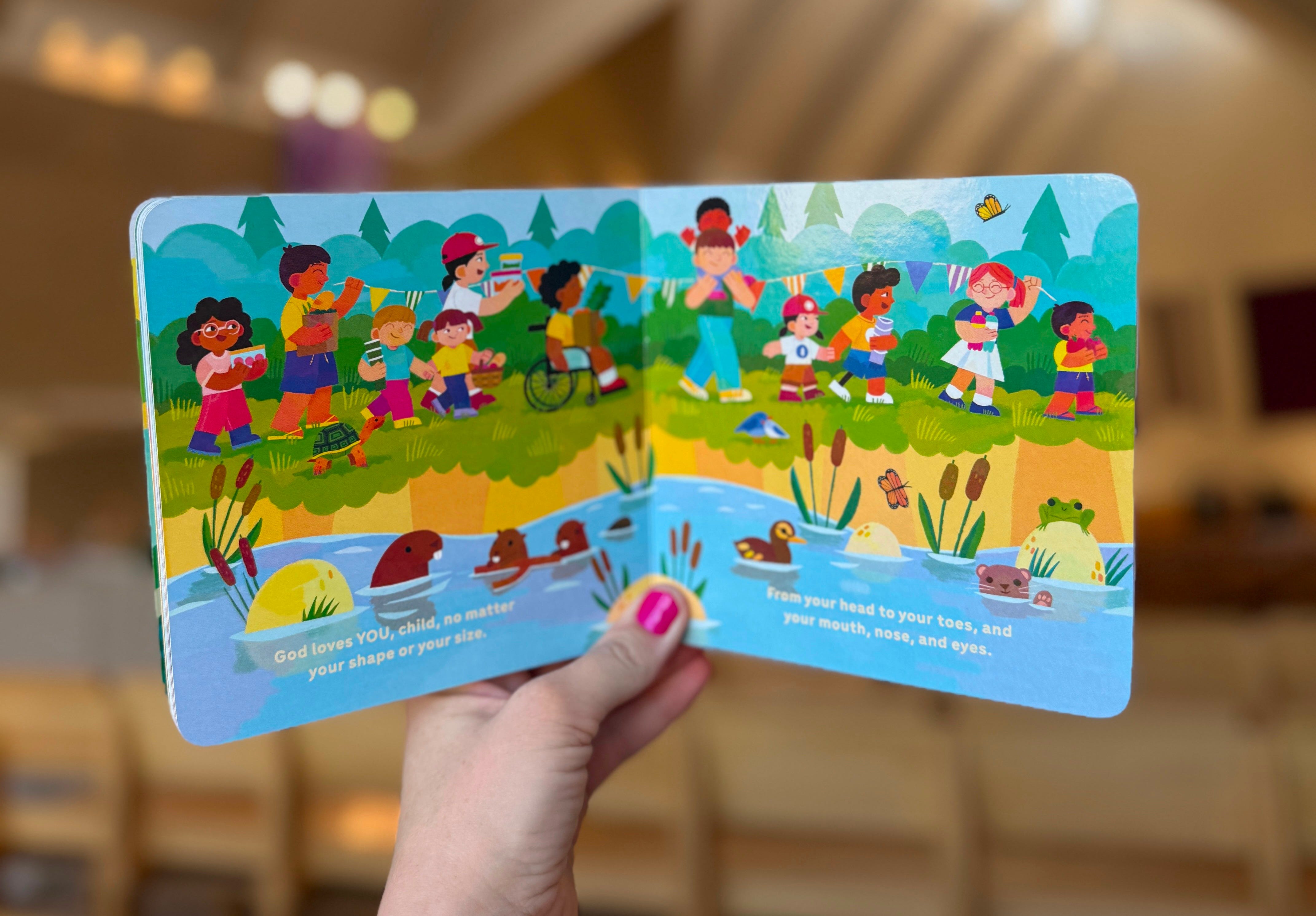
God’s Child, Always uses toddlers’ natural interest in animals to communicate unconditional love. Through simple rhymes and water-based settings—otters, ducks, children playing at the beach—it affirms that children are loved by God no matter how they change and grow. The tadpole-to-frog and caterpillar-to-butterfly metaphors reinforces this message of love even during transformations. “God loves YOU, child, whoever you grow up to be!”
The illustrations include children with limb differences, BIPOC and multiracial families, and intergenerational relationships. For families seeking faith-based children’s books with inclusive representation, this delivers.
The rhyme scheme and repetitive structure support early language development while introducing the concept of God’s consistent love—a foundational theological idea presented without doctrine or complexity.
How it works in practice
My two-year-old and I have been reading this one on repeat. She loves pointing out the different family structures and types of animals on each page. I’m looking forward to the natural connections the water theme will create—referencing the book when we walk around our local lakes, when we swim in our favorite creek during summer, and during our annual beach trip (which we dream about the rest of the year).
Karis Parenting also offers Nature’s Wonders Activity Cards, a deck of 40 outdoor activities organized by environment (Land, Sky, Water, Animals) that require no advance planning. The cards are designed to work wherever you are—backyard, park, neighborhood walk—making it easy to connect faith and nature exploration in the moments you’re already outside with young children.
This is what Karis Parenting delivers: faith woven into the everyday places we already go, not requiring separate “lesson time.”
Why this matters
At a time when some Christian messaging emphasizes exclusion and conditional acceptance, God’s Child, Always (and the other titles in the Karis Parenting book series) offers a different model: faith rooted in love, backed by developmental science, and welcoming to all families. For parents looking for board books that reflect both their values and their children’s developmental needs, this is worth examining.
As a parent still figuring out where I stand on faith and how I want to pass it along to my kids, resources like this feel like breathing room rather than indoctrination. They introduce foundational concepts—unconditional love, wonder at creation, belonging—without demanding theological certainty from me or rigid adherence from my children. That’s the kind of faith formation I can work with: one that leaves space for questions, growth, and becoming.
Comments
Nothing yet. Say the first thing.
Sign in to join the conversation.