
For most of history, our childhoods existed largely in private. A scraped knee, a first heartbreak, or a tantrum on the living room floor were fleeting moments witnessed by family, and perhaps immortalized in a dusty photo album tucked away on a shelf.
Today, a child’s first words, first bath, first heartbreak, first period, first punishment, first panic attack, and even medical appointments, can become permanent internet content across every platform imaginable.
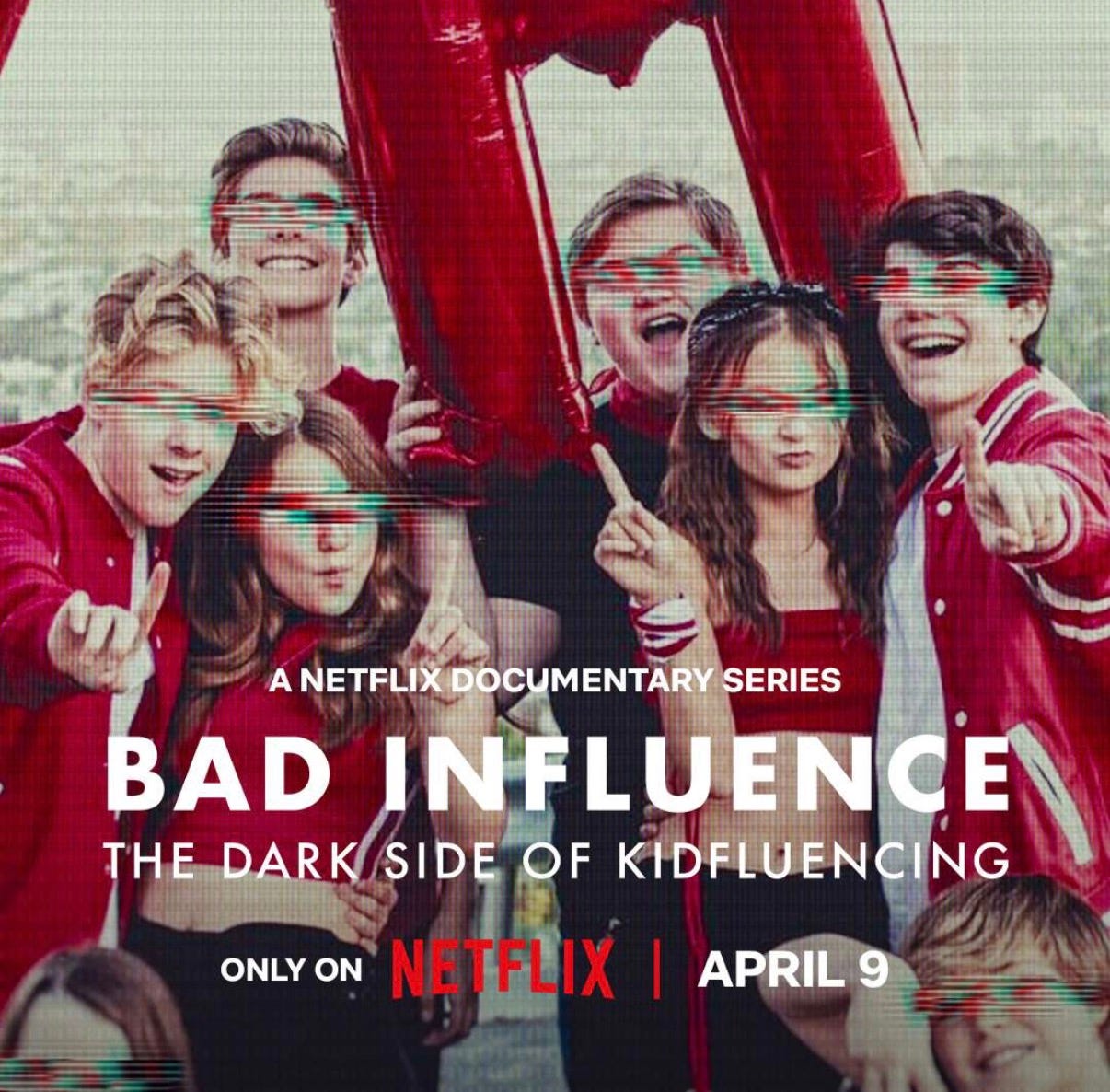
If you haven’t watched the Netflix documentary Bad Influence: The Dark Side of Kidfluencing, you need to. I personally found it chilling… and confirming.
The three-part series follows the rise of YouTube star Piper Rockelle and the group of child influencers known as “the Squad,” managed by Piper’s mother, Tiffany Smith.
In 2022, eleven former members of this squad sued Smith, alleging a horrifying environment of emotional, physical, and sexual abuse, which is clearly caught on camera. The case eventually settled for $1.85 million.12
One parent in the documentary described the settings they were pulled into as a cult. Children were pushed to film “crush content,” forced into uncomfortable and highly sexualized situations, and made to work grueling 12-hour days. Former squad member Sophie Fergi described her experience as “some of the hardest years of my life, and I’m only 12.”
Parents were not allowed inside the filming house, and instead waited outside while their children were, according to the lawsuit, being exploited.
When we hear stories like this, condemnation comes first: How could a mother do that? How could those parents let their kids participate?
But focusing only on the extremes lets the rest of us off the hook. The issue isn’t just money and mega-influencers; it’s our everyday lives.
Here’s where the story of Piper Rockelle stops being a cautionary tale about one bad mother and becomes something far more systemic and disturbing.
On January 1, 2026, the day she turned 18, Piper Rockelle launched an OnlyFans account. She claimed to have earned $1.4 million within the first hour. By the end of the first day, she reported earnings of $2.9 million.34
Men had been waiting for this moment for YEARS.
Piper herself acknowledged it in a TikTok video with a candor that should stop every parent cold:
It’s because I look so young. I mean, I am really young. I’m literally like fresh turned 18… and people kind of like that, unfortunately.5
Doesn't that make your stomach churn?
The audience that had been watching her since she was a child was the same audience that the documentary reveals included adult men in predatory group chats praising “momagers” for making child content accessible to them.
These men didn’t suddenly appear on January 1st. They had been there for years. Watching. Waiting. Choosing, again and again, to fixate on a child. The countdown to her 18th birthday was not just Piper's. It was theirs.
The child influencer industry cultivated an audience of men who deliberately chose to follow a child—to track her face, her body, her personality, and her life as she grew up in public—and then rewarded that predatory patience the moment the law permits. These men sought this out, and the industry handed them exactly what they were waiting for.
Bhad Bhabie, who became famous at age 13 on Dr. Phil, launched her OnlyFans the day she turned 18 and claimed to make over a million dollars in the first six hours.6 Lil Tay, another child viral star, did the same.
There’s a clear pattern emerging.
The documentary forces us to see the full arc: the family vlog is the top of the funnel. The OnlyFans launch is the bottom. And the child never had a say in any of it, in the same way a child cannot consent to sex.
This ties directly into the dynamics of coercive control because consent is impossible here. Children cannot meaningfully consent to worldwide distribution, permanent digital records, monetization, parasocial relationships, or having millions, or even hundreds, of strangers know the intimate details of their lives.
Even if they enthusiastically participate, and even if they beg to be in the video, they do not understand the consequences.
And the internet never forgets.
Some of us adults are only now discovering the cost of having too much of our lives online. We’re grappling with the permanence of our own digital footprints, regretting things shared during vulnerable moments, while discovering that the internet holds receipts.
These children never even got to make that decision. Their digital identity was created before they could read.
Here’s a question about family vlogging almost no one is asking out loud:
When a parent builds a business on their child’s face, voice, tears, and milestones, who does that money belong to?
In most of the United States, the answer is still: the parents. All of it.
As of early 2026, only four states had passed laws specifically protecting child influencers’ earnings, and only sixteen had expanded existing child performer protections to cover online content.7
In the remaining thirty states, a child can generate millions of dollars in advertising revenue, brand deals, and sponsorships, and have zero legal right to any of it. Their parents can spend every cent. There are no trust account requirements, no court oversight, no minimum wage, no hour limits, and no one watching.
This is by design.
The original Coogan Law was passed in 1939, written for studios and production companies, after child actor Jackie Coogan discovered his parents had squandered his entire $4 million fortune. What it never anticipated was a world where the parent is the studio, the producer, the manager, the director, and the primary financial beneficiary, all at once.
When a parent runs a family YouTube channel as an LLC, the law’s family business exemptions effectively swallow up any child performer protections.
So we must ask the harder question.
When a parent’s only source of income is the content their child produces—when the mortgage, groceries, and car payment all depend on that child performing on camera—at what point does that stop being a family hobby and start being labor trafficking?
The documentary Bad Influence makes this uncomfortably clear. The Squad was a revenue engine. Children worked twelve-hour days, and their YouTube account credentials were handed over to an adult who optimized them for profit.
Their personalities, relationships, and bodies were directed and monetized. And the parents who initially signed on were seduced by money that arrived so fast and in such quantities that it felt unreal.
“We’re talking life-changing money,” said one parent in the documentary. “You don’t know what to do at first. You’re like, is this real?”
Yes. It was real. And the children paid for it.
Ruby Franke was a Utah family vlogger sentenced to prison for child abuse. She ran a channel called 8 Passengers that documented her family’s life for millions of viewers. Her children were the product. And when the content stopped being enough, the abuse escalated because the channel had been her family’s primary income. Her malnourished son eventually escaped to a neighbor’s house.8
This is the pattern. Not the exception.
And yet we keep watching. Because it feels real.
That’s the most cunning part of all of this. What separates family content from scripted television, and what makes it feel intimate and trustworthy, is the promise of authenticity.
This is our real life. These are our actual children. This is what it’s really like.
Except it isn’t. Not most of the time.
The documentary shows us how the Squad’s content evolved from genuinely spontaneous moments into tightly directed productions, scripted for maximum engagement. Pranks were staged, relationships were manufactured, and the popular “crush content” was a business strategy, not a reflection of actual feelings.
Children were told what to say, how to react, and when to cry. And the audience believed they were watching real life. Instead, they watched a performance of real life, optimized for the algorithm.
But this is not unique to the mega-influencers. It’s the nature of the medium at every level…
The carefully lit “candid” family breakfast. The “spontaneous” milestone photo that was actually taken twelve times. The emotional post about a hard week that was drafted, edited, and timed for peak engagement. The “authentic” parenting moment that happened to be filmed from the most flattering angle.
And our children are in that window… without their consent, performing a version of their childhood that has been edited for public consumption.
This is an invitation to be honest. We’re all guilty of some version of this. The question is not whether we perform, but whether we are willing to look at what that performance costs the most vulnerable people in the frame.
Here’s where the controversy becomes genuinely uncomfortable.
If we condemn the obvious exploitation documented in Bad Influence, where exactly do we draw the line?
Is it daily vlogs? Sponsored family content? Filming tantrums? Filming punishments? Posting embarrassing moments? Giving children their own social media accounts? Turning childhood into engagement bait?
The documentary forces us to admit that there isn’t a bright line. There’s a spectrum. And many of us may be farther along it than we’d like to admit.
The documentary also highlights a critical legal gap that only recently began to close: child influencers had none of the labor protections afforded to child actors in traditional media. The Coogan Law was only expanded in 2024 to cover child influencers.9
As culture commentator Taylor Lorenz stated:
Until we start viewing influencing as labor, those kids are screwed.
This is the part that’s hardest to lean into.
Nearly every parent today has, in some small way, become a family publisher. Social media has posed a question that previous generations never had to answer:
Which parts of your child’s life belong to the family... and which belong to the internet?
That question is worth asking even if your audience is fifty people instead of five million. The scale may be different, but the principle is not.
The Wall Street Journal and the New York Times have both reported that male predators are the dominant audience for young female content creators.10
That’s not a fringe statistic. It’s the documented reality of who is watching. Every parent who posts their child publicly is, knowingly or not, posting to that audience as well.
Social media has turned the private act of raising a child into a public performance. It’s made memory into content, milestones into metrics, and children into characters in a story they didn’t agree to star in.
Bad Influence is chilling because it doesn’t just expose one abusive environment. It forces us to ask where the line actually is, and whether we’ve drawn it in the right place.
Again, the question is this:
Until we’re willing to answer that honestly, we’ll continue condemning only the most extreme cases while ignoring the conditions that made them possible.
Childhood is not content.
A child is not a brand.
And some things are simply too valuable to monetize.
Kelsey Decker writes about cult dynamics, coercive control, exploitation, and survivor recovery from both lived experience and independent research. She is the founder of Morning Glory Global, a nonprofit supporting women impacted by sexual exploitation, and the creator of the Exit Costs framework exploring the immediate and long-term effects of leaving high-control environments.
Comments
Nothing yet. Say the first thing.
Sign in to join the conversation.