
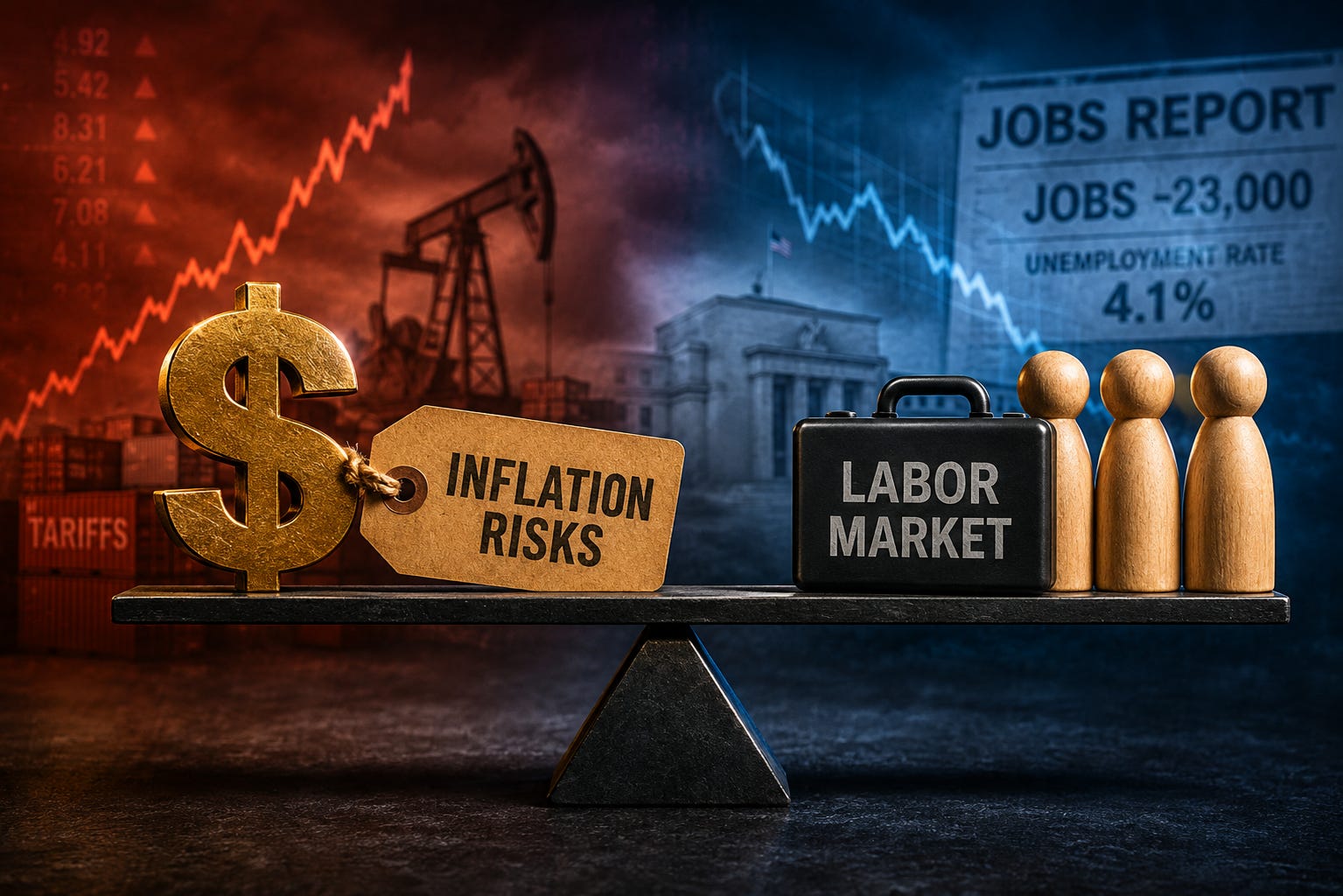
Recent economic data show that the U.S. economy is moving into a more complex period. Inflation has dropped a lot since its 2022 peak, but it is still present. The job market, which stayed strong after the pandemic, is now showing more signs of weakness. Meanwhile, tariffs, energy prices, and global tensions are still putting pressure on inflation.
That combination makes the Federal Reserve’s job harder.
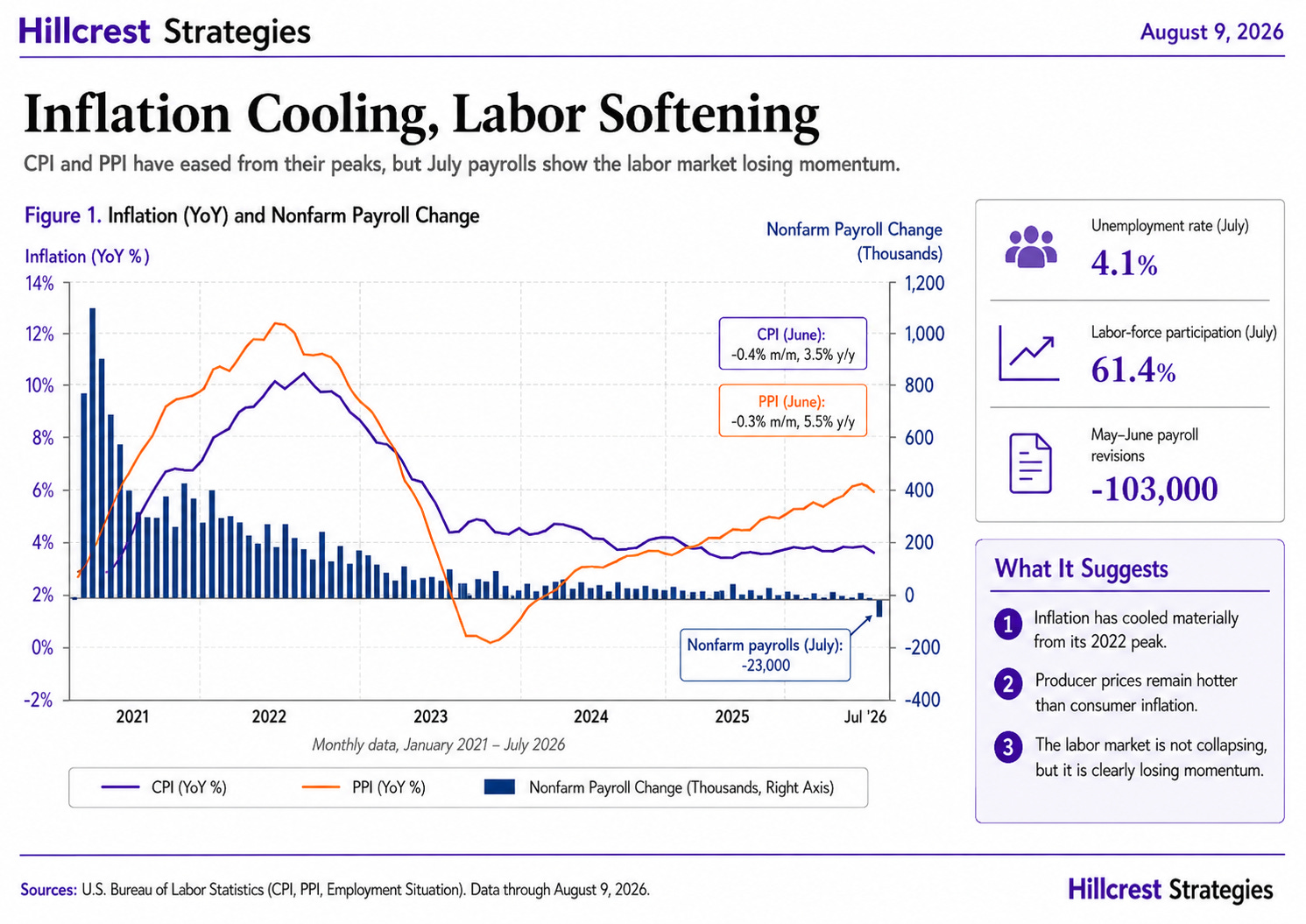
Consumer inflation, measured by the Consumer Price Index, has dropped a lot from its June 2022 peak of 9.1%. In June, the CPI fell 0.4% from the month before, while core inflation, which leaves out food and energy, stayed the same.
That was a good sign, but producer inflation is more complex. The Producer Price Index fell 0.3% in June, but producer prices were still 5.5% higher than a year ago. In comparison, the CPI rose 3.5% over the same time.
CPI and PPI look at different parts of the pricing system, so you cannot swap them. PPI tracks the prices that U.S. producers get, while CPI measures what consumers pay. Still, the difference is important. It shows that price pressures are higher earlier in the supply chain. When producer and input costs go up, those costs can eventually reach consumers.
How and when this happens depends on the industry. Some businesses take on higher costs by accepting lower profits. Others raise their prices. Most do a mix of both. Now, the labor market is becoming part of the equation.
In July, the U.S. economy lost 23,000 jobs, which was a surprise since economists expected job growth. This was the first monthly drop in payrolls since February.
But the main number might not be the most important detail in the report.
Payroll growth for May and June was revised down by a total of 103,000 jobs, showing that hiring was already weaker than first reported. The unemployment rate dropped to 4.1%, but this number needs context. Fewer people are participating in the workforce, so the lower unemployment rate partly means more people left the job market, not that more people found jobs.
That distinction matters.
A lower unemployment rate is usually a good thing. But if it drops because fewer people are looking for work, not because more people are getting hired, it means something else. The job market is not crashing, but it is definitely slowing down.
Until recently, steady jobs let the Federal Reserve focus more on inflation. The latest jobs report makes that balance harder.
June’s good inflation report was helped a lot by lower energy prices. Gasoline prices fell 9.7% that month, which helped bring down the main CPI number. But the conflict with Iran has shown how quickly things can change. Oil shocks do not stay confined to the gasoline pump.
Energy affects almost every part of the economy, including transportation, manufacturing, farming, chemicals, plastics, logistics, and retail. When oil prices jump, the effects eventually reach trucking companies, airlines, farmers, manufacturers, retailers, and nearly every business that moves goods.
This means higher energy prices can add to the producer-price pipeline, which is already showing high inflation pressure. Tariffs are another factor.
Tariffs can make imported goods, parts, and equipment more expensive. At the same time, higher energy prices raise the cost of making and moving those goods. When both happen together, businesses face cost pressures from several sides. This is exactly the kind of problem the Federal Reserve has warned about.
In its July Monetary Policy Report, the Fed clearly connected this year’s new inflation pressures to higher tariffs, which raised prices on some imports, and to the energy shock from the Middle East conflict.
This matters because these forces are not the same as demand-driven inflation, which central banks are better at handling. The Federal Reserve can raise interest rates, but it cannot make more oil, reopen shipping lanes, or remove tariffs. Still, if these shocks start to affect overall prices or inflation expectations, the Fed is still responsible for keeping prices stable.
That difference is very important. A central bank can ignore a short-term jump in gas prices if it thinks the problem will go away soon. But it cannot easily accept a short-term shock that starts to affect wages, pricing, and expectations throughout the economy. That is how a supply shock can turn into lasting inflation.
Until recently, a steady job market let policymakers take their time. Now, things are more complicated. If the Fed cuts rates too soon, it could boost demand just as tariffs and energy prices might push inflation up again.
If the Fed keeps rates high for too long, it could put more strain on a job market that is already slowing down. This is the tough balance policymakers face. On one side is inflation, on the other is jobs. The Federal Reserve is in the middle. The Fed’s dual mandate of maximum employment and stable prices is simple when both goals align, but much harder when they do not.
Friday’s jobs report told us a lot about one side of the Fed’s dual mandate. In the next few days, we will learn more about the other side. The July Consumer Price Index comes out Wednesday morning, then the Producer Price Index on Thursday. On Friday, retail sales will show if consumers are still spending as the job market slows.
This makes the next few days of economic data especially important. If CPI and PPI keep falling while jobs weaken, the Federal Reserve will have a stronger case to ease policy. But if inflation rises, especially if tariffs or higher energy costs show up more in the data, the Fed’s job gets much harder.
Policymakers might have to deal with a weaker job market while stubborn inflation limits their options to help. Retail sales will help answer another key question: Are consumers starting to slow down along with jobs, or is household demand still strong enough to keep the economy going?
Weak jobs, less consumer spending, and lower inflation would look like a normal economic slowdown. That would give the Fed more room to cut rates. But weak jobs with stubborn inflation would be much harder to handle. Policymakers want to avoid that situation.
The data now suggest the economy is moving through a tighter space: slower job growth on one side, ongoing inflation risks on the other, and less room for the Federal Reserve to make mistakes.
Some of the biggest factors shaping this situation, like tariffs, oil prices, and global conflicts, are mostly outside the Fed’s control. That is what makes this moment so complex.
By Friday afternoon, we should have a much better idea of just how tight that space has become.

Comments
Nothing yet. Say the first thing.
Sign in to join the conversation.