
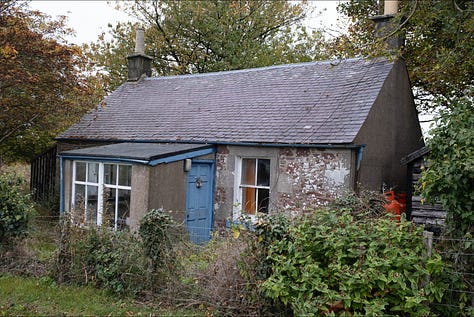
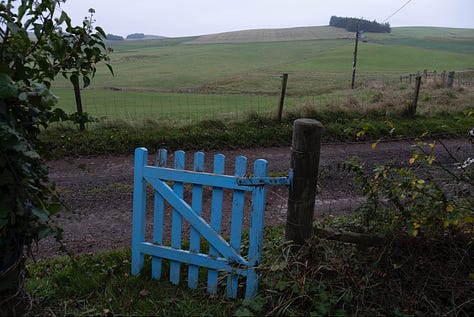
A low mist lies on the Peebleshire hills. The morning air is still. At Brownsbank Cottage the garden is overgrown and the gate is unhinged. Looking out over the fields I can make out the remains of a Roman road. A relic of an imperious past.
Brownsbank is just a few hundred yards from the busy A702 and a short drive from Biggar. Yet it feels isolated. No other dwellings are in sight. There is no sound from the main road. No wind in the trees. Brownsbank is a world to itself.
The cottage is sandstone, maybe early 19th century with a more recent storm porch out front. Drainpipes, sills and the wonky gate had been painted a bold cerulean blue. The paintwork is now faded and chipped. A horseshoe is nailed to the inside front door. Alongside it are postcard-sized flags of Scotland, Cornwall, Ireland, the Isle of Man and Brittany: a Celtic commonwealth. A rusted oil lamp sits on the floor, unlit for half a century.
The first two flags represent the nationalities of Brownsbank’s most famous residents. Christopher Grieve, better known as the poet Hugh MacDiarmid, and his Cornish wife Valda lived here together for 37 years. At first they had no plumbing or electricity and existed in great poverty, Valda pickling onions and making huge curries on the open fire. Friends and admirers later provided the storm porch and rudimentary utilities. Ultimately, as MacDiarmid’s reputation grew, Brownsbank became a kind of literary court receiving eminent pilgrims from around the world to what one visitor described as a kind of “Left Bank meets sheep country”.
MacDiarmid died in 1978. Valda died in 1989. From 1993 to 2003 there were seven writers-in-residence at Brownsbank. One was the novelist James Robertson who later wrote of his experience:
I remember lying on top of Valda’s bed in my sleeping bag that first night, wondering if I had made a terrible mistake. In the roof space overhead, a large company of mice was practising eightsome reels. Outside, all was still and – in stark contrast to the southside of Glasgow I had left – the darkness was solid, ink-black. Whether it was colder outside than in, however, seemed debatable.
Waking each morning to multiple images of MacDiarmid staring at me from the walls as if urging me to get up and work, I got up and worked. I fitted my own few possessions in among those of the previous occupants – MacDiarmid’s collection of pipes, rows of green Penguin crime novels, in the bathroom the henna sachets Valda used to keep her hair startlingly orange – and lived for two years as a kind of tangible ghost haunting the past.
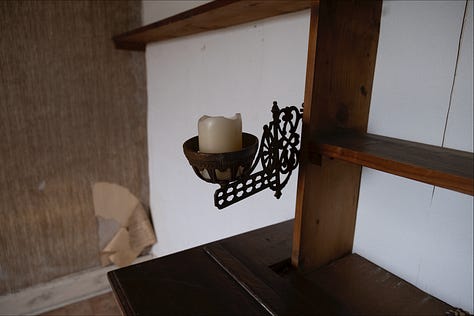
The decor was almost entirely Valda’s: curtains sewn from odd scraps of material, bookcases hammered together from crates, wally dugs, Cornish fishing floats hanging from the ceiling, bric-a-brac occupying every horizontal surface; outside, there were flower beds she had patiently created by collecting earth from molehills.
Valda was the powerhouse who kept things going. The poet did the washing up, but recognised how much she had sacrificed to his art. In one anthology of twentieth-century verse, still on a shelf, his handwritten dedication reads, “To Valda with all my love. Where would I – or Scots poetry – have been without her?”
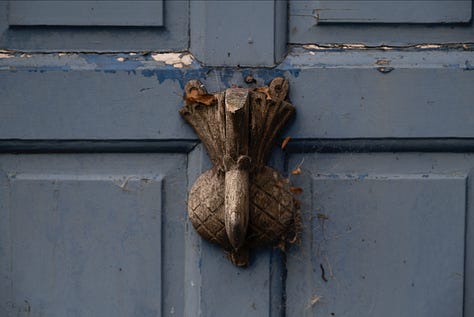
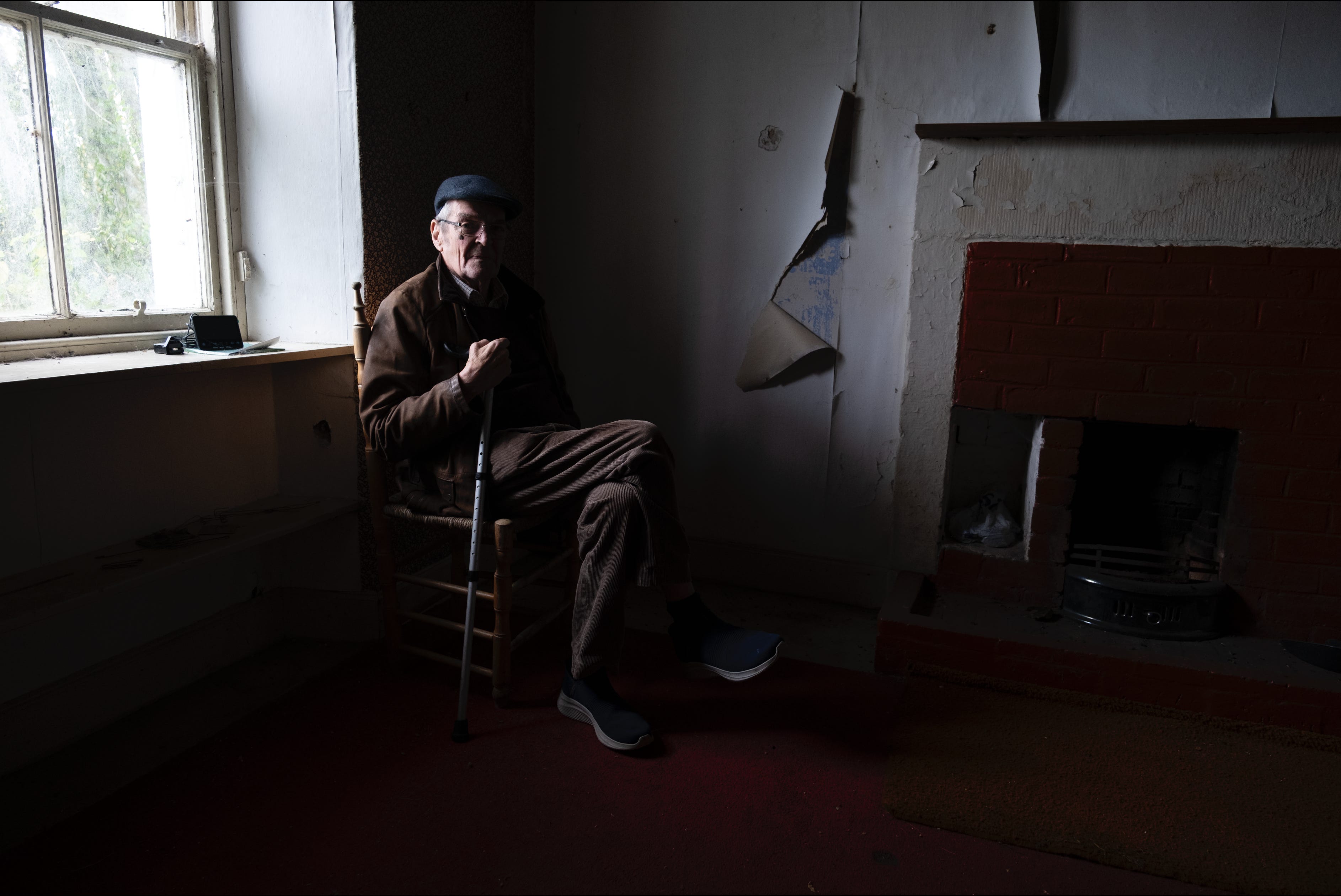
A car pulls up. The driver is Denham MacDougall, one of the trustees of the charitable trust that aims to restore Brownsbank to its former glory and build a writer’s cabin next door. MacDougall, 75, started out an engineer but became a social worker. A dead poet has consumed his retirement. He unlocks the front door, which has a wooden knocker in the shape of a thistle, and lets me in.
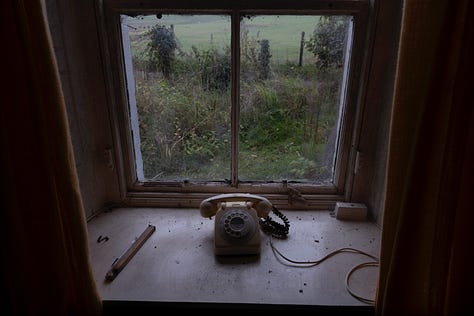
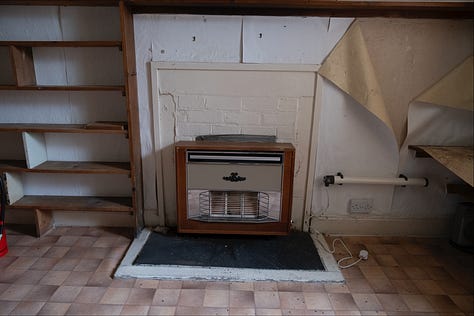
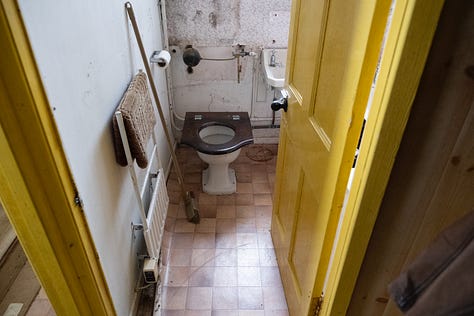
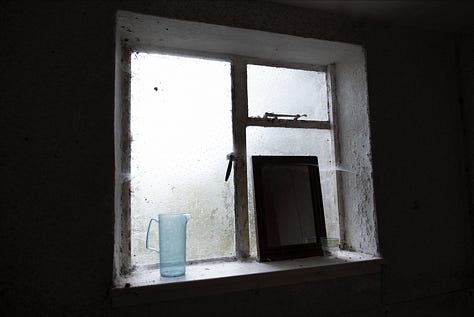
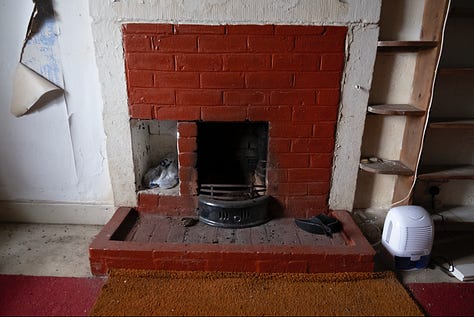
Inside, Brownsbank is bare. The paint is peeling and the wallpaper torn. All the contents have been removed and put in storage, but not before a careful inventory was compiled and many photographs taken of exactly how it had been.
I immediately knew what Robertson was talking about when he mentioned ghosts. MacDiarmid is a presence in the empty cottage. His hurdies were warmed at this fireplace. His hand produced the patina on this door handle. His arse rested on this old-fashioned square wooden toilet seat. Was that a whiff of pipe smoke? No, surely just my imagination.
I told MacDougall I was writing an essay to mark the centenary of MacDiarmid’s masterpiece, A Drunk Man Looks at the Thistle, first published in 1926. He cooed with pleasure. What, I asked him, did he think the poem says to us today, 100 years on?
MacDougall pondered for a moment. “We’re a very different society,” he said. “We’re a very different Scotland. What can it say to us? Well, unto thine own self be true, really.
“And after that, treasure Scotland. Just treasure it. Open your eyes. Breathe it in. Yeah. And don’t be ashamed of being yourself.”
-o0o-
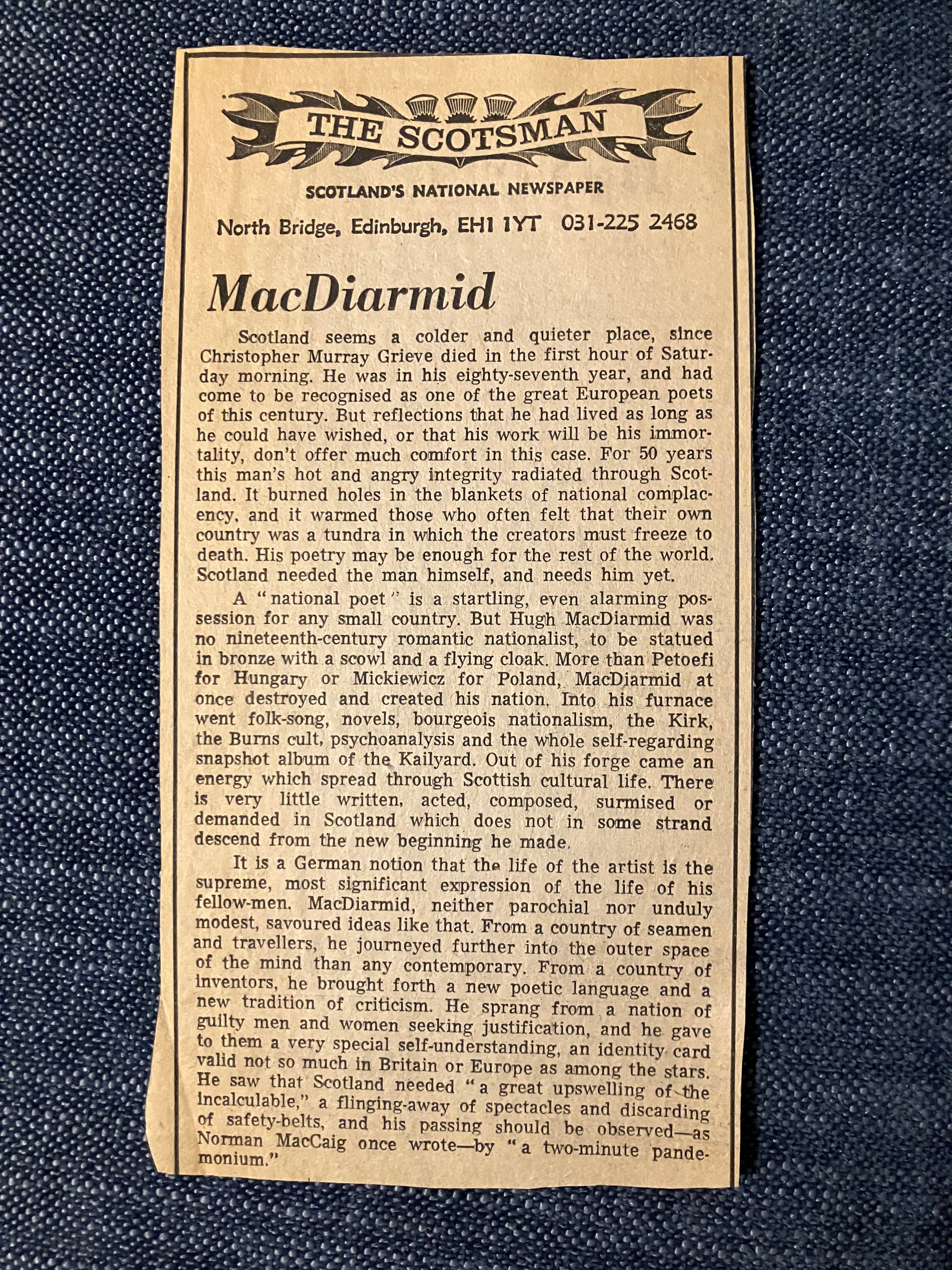
The consolations of secondhand bookshops are sweet and many. For example, sometimes you open a book and find a yellowing newspaper cutting about the author. An interview. A review. An obituary. For saddo bibliophiles like me, such moments pass as thrills.
So I was delighted as I stood in McNaughton’s, one of Edinburgh’s finest bookshops, with an opened copy of A Kist of Whistles in my hands. Inside was a newspaper cutting of a leader column from The Scotsman, published on Monday, September 11, 1978.
The headline was a single word: “MacDiarmid.”
I reproduce it here in full:
Scotland seems a colder and quieter place, since Christopher Murray Grieve died in the first hour of Saturday morning. He was in his eighty-seventh year, and had come to be recognised as one of the great European poets of this century. But reflections that he had lived as long as he could have wished, or that his work will be his immortality, don’t offer much comfort in this case. For 50 years this man’s hot and angry integrity radiated through Scotland. It burned holes in the blankets of national complacency, and it warmed those who often felt that their own country was a tundra in which the creators must freeze to death. His poetry may be enough for the rest of the world. Scotland needed the man himself, and needs him yet.
A “national poet” is a startling, even alarming possession for any small country. But Hugh MacDiarmid was no nineteenth-century romantic nationalist, to be statued in bronze with a scowl and a flying cloak. More than Petoefi for Hungary or Mickiewicz for Poland, MacDiarmid at once destroyed and created his nation. Into his furnace went folk-song, novels, bourgeois nationalism, the Kirk, the Burns cult, psychoanalysis and the whole self-regarding snapshot album of the Kailyard. Out of his forge came an energy which spread through Scottish cultural life. There is very little written, acted, composed, surmised or demanded in Scotland which does not in some strand descend from the new beginning he made.
It is a German notion that the life of the artist is the supreme, most significant expression of the life of his fellow-men. MacDiarmid, neither parochial nor unduly modest, savoured ideas like that. From a country of seamen and travellers, he journeyed further into the outer space of the mind than any contemporary. From a country of inventors, he brought forth a new poetic language and a new tradition of criticism. He sprang from a nation of guilty men and women seeking justification, and he gave to them a very special self-understanding, an identity card valid not so much in Britain or Europe as among the stars. He saw that Scotland needed “a great upswelling of the incalculable,” a flinging-away of spectacles and discarding of safety-belts, and his passing should be observed — as Norman MacCaig once wrote — by “a two-minute pandemonium.”
I spent many years writing newspaper leader columns and I know a good one when I see it. This was perhaps the best I had ever read. Inquiries later confirmed my suspicion it was written by Neal Ascherson, later to be one of our nation’s most celebrated intellectuals but in 1978 just a young journalist on the Scotsman’s politics staff.
For any Scot trying to live an examined life, Ascherson’s words are balm and affirmation. Scotland is a complex and confounding nation, full of wonders and exasperations. Couthiness passes as culture. Taking a scythe to tall poppies is the national pastime. Holy Willies break three commandments before breakfast. Joy, sex and intellectuals are frowned upon. Even the Catholics are Presbyterian.
MacDiarmid was, and remains, the antidote. Kicked out of the communists for being a nationalist and the nationalists for being a communist, he was a contrarian who pished on the chips of the po-faced and middle-browed. A national hero, he scorned the national movement and its “Scots Wha Ha’evers, village idiots, leaders of white-mouse factions and Commercial Calvinists”.
My essay was about a poem, yes. But it was also about a man and a nation and an entire world of possibility.
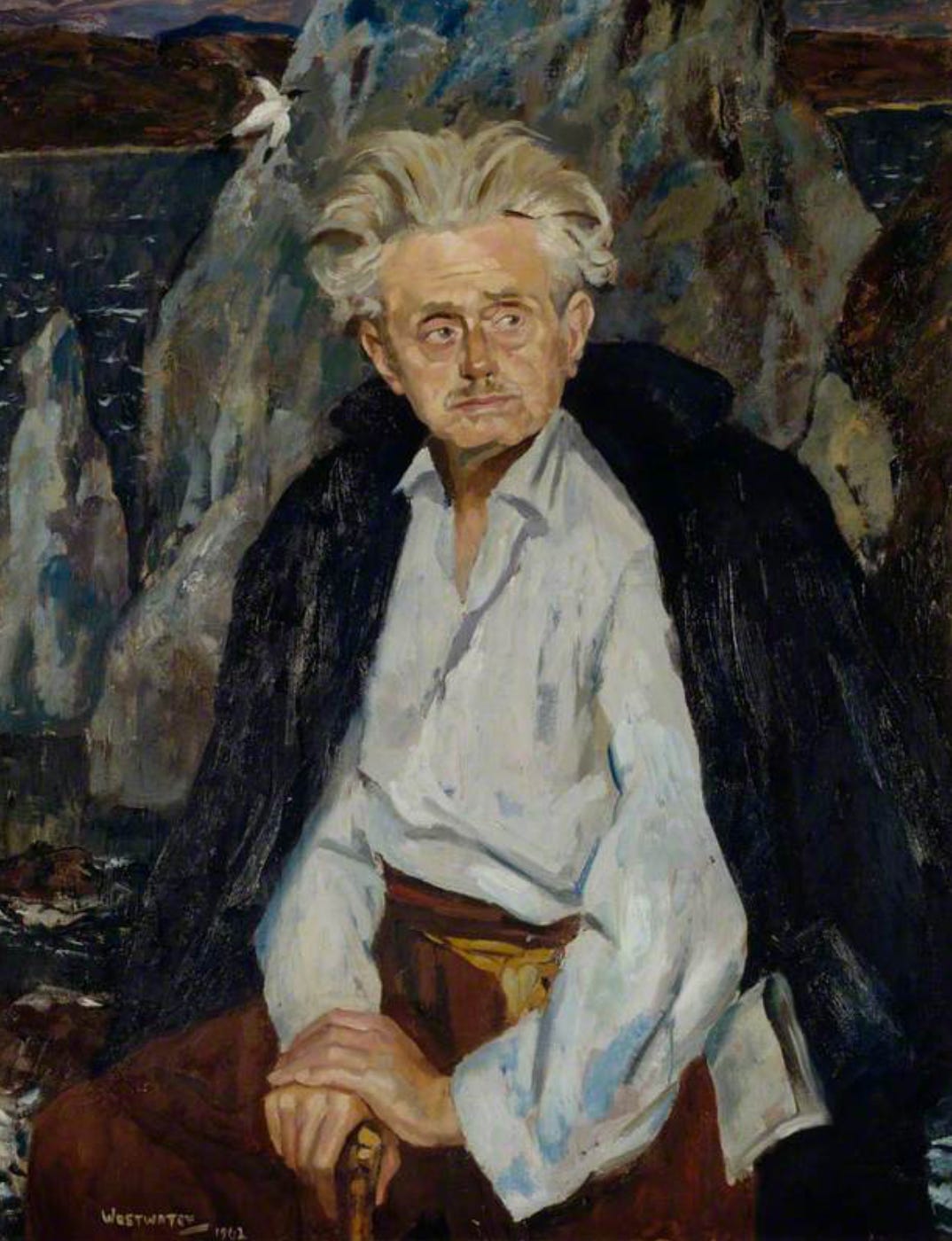
As a young student I had a postcard pinned to a wall next to the desk where I did my typing. It was a reproduction of an oil painting of MacDiarmid, looking heroic and windswept, by the artist Robert Heriot Westwater.
The postcard was an exhortation. To do what was unclear. But to do something, despite everything. And to do it while being true to myself.
MacDiarmid insisted we be ourselves and whoever we wanted to be. Rooted in the local, he was the prism through which we could see the infinite, the universal.
-o0o-
On October 22, 1992, Seamus Heaney stood up in a hall at Oxford University to give a lecture on Hugh MacDiarmid. In a five-year stint as professor of poetry he was contracted to give three public lectures a year, ten of which would later be published by Faber as The Redress of Poetry. In 1995 Heaney would be awarded the Nobel prize for literature. His Oxford lectures would come to be regarded as his definitive statement on his art form.
Some of the world’s finest poets were examined in the lectures: Christopher Marlowe; W.B. Yeats; Dylan Thomas; Philip Larkin. MacDiarmid was perhaps the least known of Heaney’s selection, at least within the Oxbridge-anointed canon of Eng Lit.
Heaney’s lecture was notable first for the unsparing way he exposed MacDiarmid’s many and egregious flaws. Much of the poet’s later work was machine-gunned. MacDiarmid, he said, was “one of the most excessive writers of the twentieth century”. He was guilty of “astounding self-inflation” and often “strayed into megalomaniac fantasy”. His work had “a disconcerting unevenness”.
Heaney deals with this head-on:
Anybody who wishes to praise the work has to admit straight away that there is an un-get-roundable connection between the prodigality of his gifts and the prodigiousness of his blather.
Heaney accepts this was a deliberate choice on the part of the poet. In a letter to a BBC producer in the 1960s, MacDiarmid wrote:
My job, as I see it, has never been to lay a tit’s egg, but to erupt like a volcano, emitting not only flame but a lot of rubbish.
Heaney believed MacDiarmid was worth the hard work. His achievement, said the younger poet, was unquestionable on two fronts.
First, MacDiarmid more or less singlehandedly created an entire literature from what Heaney called “the vernacular Scots of the Borders and Lowlands”, generously seasoned with antique words culled from Scottish dictionaries. The poems he wrote in this “synthetic Scots” stood comparison with anything else written anywhere in the first half of the 20th century. MacDiarmid saw in this language the possibility of opening a Scottish window on the human condition. He would be rooted in place but not constrained by place. Not in the slightest. In fact the unapologetic Scottishness of MacDiarmid’s poetry would be the secret of its universality.
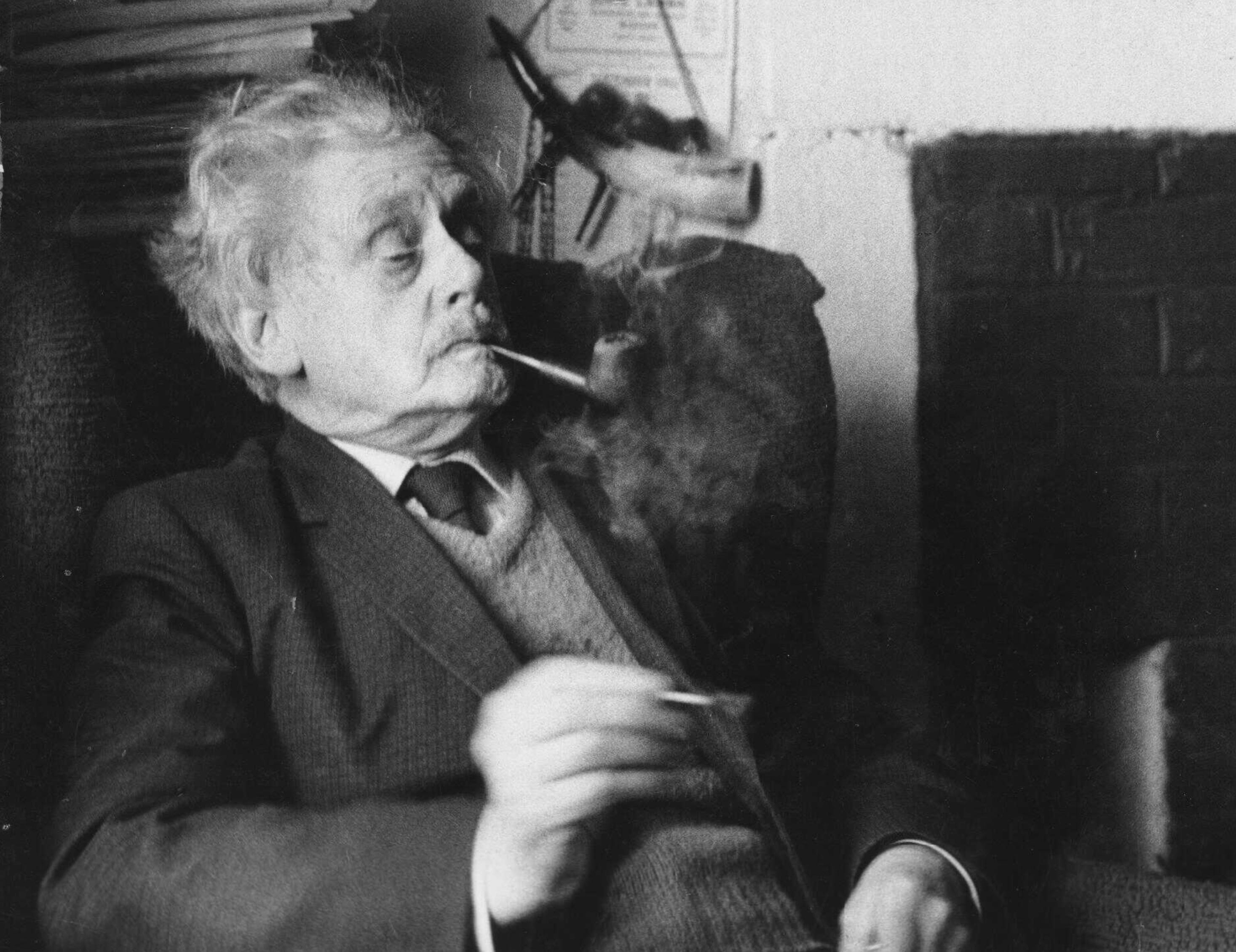
Second, Heaney saw MacDiarmid as “in many respects analogous” to Ireland’s W.B. Yeats. Both men were cultural and political nationalists who reimagined their nations on an epic scale, liberated from English rule, free to exist truly as themselves. Both poets embarked on this task of national renewal with extraordinary intellectual energy and ambition.
Yeats and MacDiarmid actually met, although Heaney does not mention this in his lecture. The encounter happened on a Friday night in the summer of 1928 in the Dublin home of a prominent Irish journalist called George William Russell. The evening was dominated by an unsatisfactory discussion about economics. When Yeats got up to leave in the small hours of Saturday morning, MacDiarmid went with him and they walked the nighttime streets of Dublin for around an hour. In MacDiarmid’s telling, at one point Yeats excused himself and said: “I must urinate.” MacDiarmid joined him and they both peed in the middle of the road.
MacDiarmid would later recall that moment:
I crossed swords with him and we became very friendly after that.
Now that would be a fine addition to Dublin’s collection of literary sculptures. A poetic Manneken Pis, with a water feature.
Heaney is full of admiration for A Drunk Man Looks at the Thistle. The title of his Oxford lectures was The Redress of Poetry, the word redress being a hunting term meaning to bring hounds back onto the proper scent. MacDiarmid’s greatest poem, says Heaney, demonstrates poetry’s power:
This poem is MacDiarmid's masterpiece. Even if his political programme failed to materialize, even if the nationalism and socialism which he espoused found themselves unrealized and unpopular, even if his vernacular republic did not attain constitutional status, the fact is that A Drunk Man Looks at the Thistle did achieve the redress of poetry. MacDiarmid created a fully realized, imaginatively coherent work, one that contained such life-enhancing satire, such emotional weight and such specific imaginative gravity that it could be placed in the mind's scales as something both equal to and corrective of the prevailing conditions. It was a magnificent intervention by creative power into an historical situation. Its force was the force of the glimpsed alternative and it still gives credence to MacDiarmid's wonderfully stirring affirmation in another context that poetry is human existence come to life. In the year of its publication, it may have sold only ninety-nine copies, but already it was on its way to that most important audience of all, 'the reader in posterity'.
-o0o-
A Drunk Man Looks at the Thistle is 2,685 lines long and was a year in the making. The idea for the poem came from a friend of MacDiarmid, a composer called Francis George Scott, who said to him one day: “Write a poem about a drunk man looking at the thistle.” Scott also helped shape and guide the work in the course of its creation and compilation.
In his later years MacDiarmid recalled:
The idea stuck in my head. And I realised he had presented me with a viable idea. The thistle wasn’t only the symbol of Scottish nationality but it was also a symbol of the miseries and grandeurs of the human fate in general.
Most of the poem was written when MacDiarmid and his first wife Peggy were living in Montrose, a seaside town halfway between Dundee and Aberdeen on Scotland’s east coast. Aged 34, he was working as a journalist on a local newspaper, the Montrose Review, cycling from story to story on a pushbike. The hours were nine to five, Monday to Friday, and nine til twelve on a Saturday. Home was a white-harled, semi-detatched council house at 16 Links Avenue, with a book-filled shed in the back garden where MacDiarmid would write his poetry as well as articles for a range of literary and political periodicals. He was also serving on the town council as an Independent Socialist, campaigning unsuccessfully against wage cuts for council workers. In photographs from that time MacDiarmid looks gaunt, a fact he attributed to having most of his teeth removed while in the army, using a half bottle of whisky as an anaesthetic.
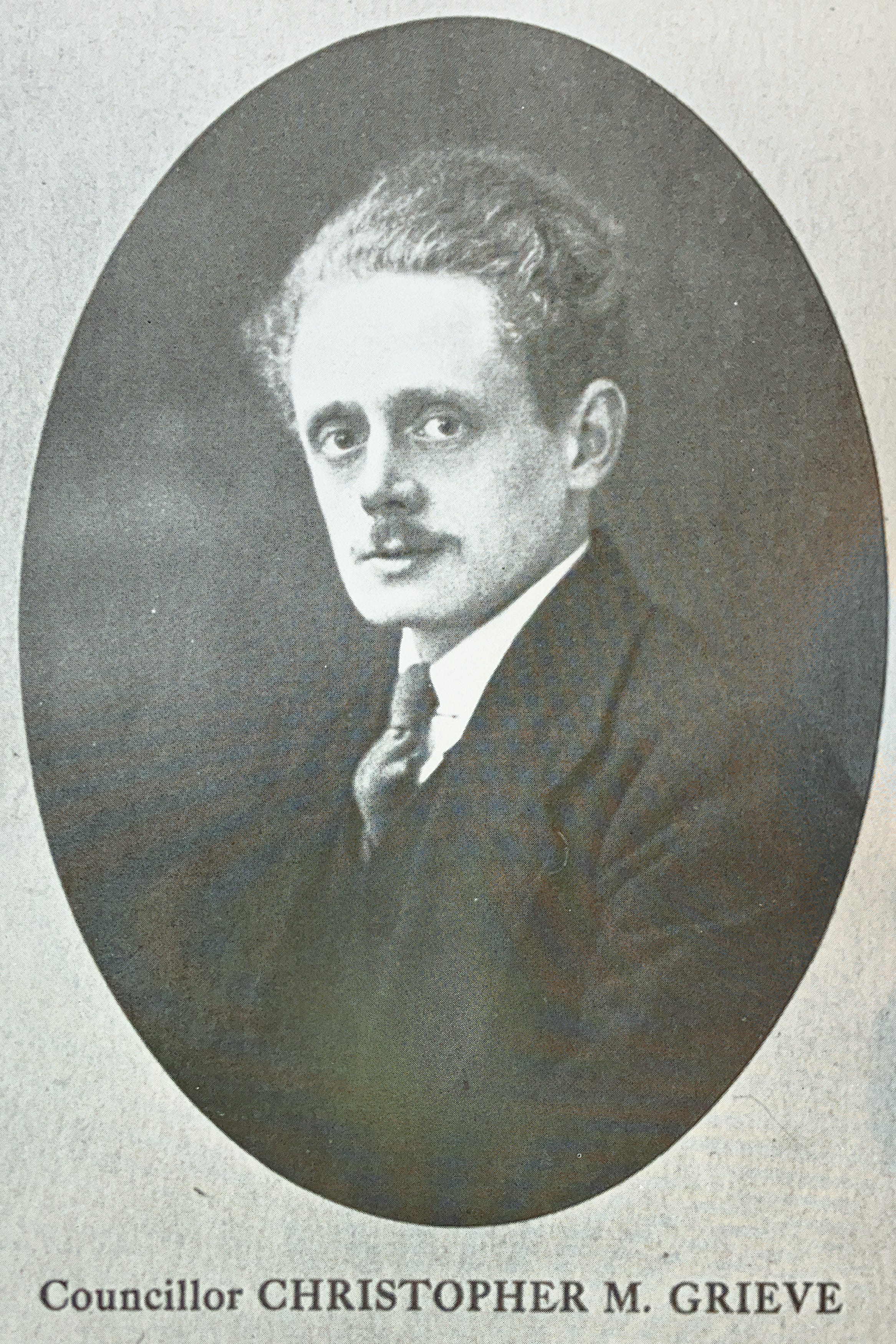
On February 12, 1926, the Glasgow Herald published six extracts from what would become A Drunk Man Looks at the Thistle. This was a tiny fraction of the poem as a whole but it displayed for all to see the scope of MacDiarmid’s ambition. As Alan Bold, in his meticulous biography of the poet, said of the extracts:
In these poems MacDiarmid addressed Dostoevsky, catalogued hallucinations, compared his thought to the movement of moonlight, contrasted the wanderings of the Drunk Man with the odyssey of Ulysses, translated Ramaekers, and picked the skeletal bones of Truth.
Notice had been duly served.
Originally conceived at 600 lines, the poem kept growing. Bold says MacDiarmid was “possessed by the spirit of the poem”. Lines were scribbled on fag packets and toilet paper. Cues were taken from the news of the day. That year saw the General Strike, and MacDiarmid’s dismay at the outcome - “the fond hope brocht to nocht” - inspired 24 verses.
MacDiarmid was disputational by temperament. If he had no-one to argue with he could always argue with himself, the Scottish antisyzygy personified. As Bold put it:
By being both Grieve and MacDiarmid there was a bonus that the poet appreciated: he could generate a movement from the friction of one mind on the other.
At the poem’s heart is the jaggy thistle, which also happens to be the emblem of this Substack newsletter. The thistle is a symbol of the pride and prickliness of Scotland and the Scots. You can find it on pound coins, on Timorous Beasties wallpaper, on the masthead of The Scotsman newspaper, on the Peter Blake-designed carpet in the Supreme Court of the United Kingdom and Northern Ireland. In the poem the thistle shapeshifts to express the political, the personal, the philosophical.
And so the thistle is, variously:
“A symbol o’ the puzzle o’ man’s soul”.
“The tree that fills the universe”. Like Yggdrasil, the giant ash in Norse mythology that spans the ancient world, its roots tapping into magical wells.
A cross on which every Scot is crucified.
A phallic symbol, giving the term “grasp the thistle” an obviously sexual connotation. Paging Dr Freud.
In Bold’s biography there is much discussion of the Russian and European thinkers who influenced the poem. Such discussion is daunting. Or at least it is to me. I admit I know nothing of Shestov, Solovyov, Tyutchev and Spengler. I imagine some Jaggy Thistle readers will be aghast at my ignorance. But I would argue you do not need an encyclopaedic knowledge of early 20th century political philosophy, nor even the complete canon of Scottish literature, to appreciate MacDiarmid’s greatest work.
To my mind there are two ways to read this poem. I tried both while preparing this essay. I started out with an annotated volume (Kenneth Buthlay’s Scottish Academic Press edition, from 1987, if you must know), taking time to check the meaning of every unfamiliar Scots word and every obscure cultural or political reference. The problem with this approach is it takes you down a succession of rabbit holes. A reference appears. Oh, that’s interesting. Ten minutes later you are still on the same page of the poem, but have a greater understanding of Nietzsche or Melville or Schoenberg or Dunbar.
About a third of the way through I started reading the poem straight, letting unfamiliar words and names wash over me, enjoying them purely for their music and sensation. At one point I tried reading the lines out loud falling, despite myself, into a declamatory tone of voice that was part Burns Supper recitation and part Wee Free sermonising.
The poem is full of squalls. But then all of a sudden the rough seas are silenced and calm descends. I was reminded of a Nick Cave and the Bad Seeds concert I attended when, after half an hour of experimental noise making, of scratchy guitar and screeching violin, Cave sat down at the piano and, with great tenderness, sang Into My Arms.
A Drunk Man Looks at the Thistle was published by Blackwood & Sons on November 22, 1926, with a nine-page glossary of Scots words, in an edition of 500 copies, selling at five shillings and sixpence a copy. I am very happy to say I have one of those first editions, bought from the aforementioned McNaughton’s bookshop.
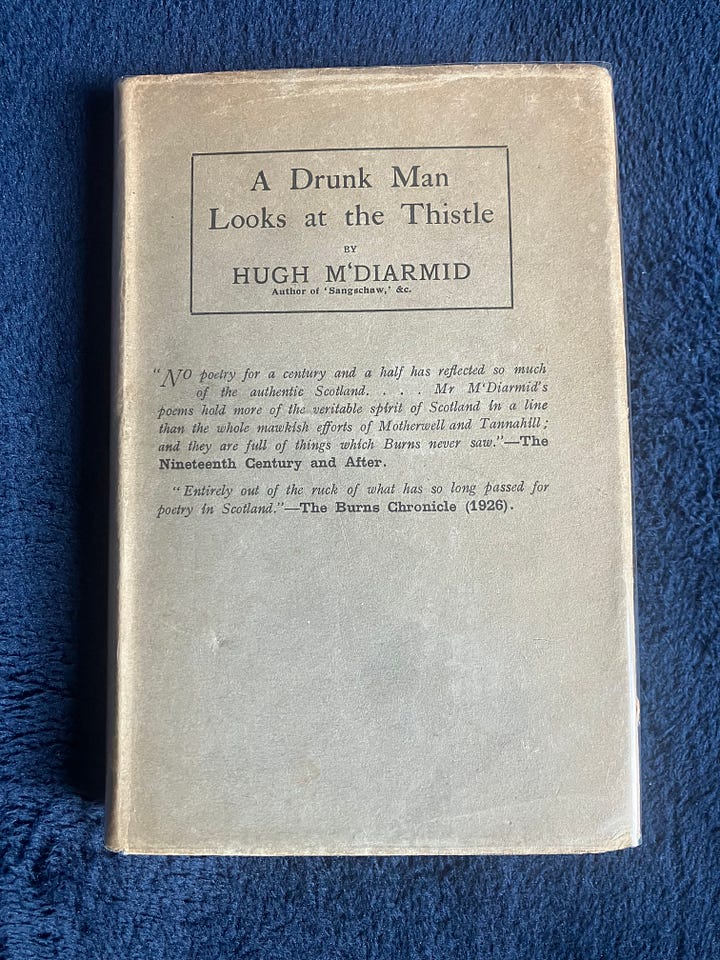
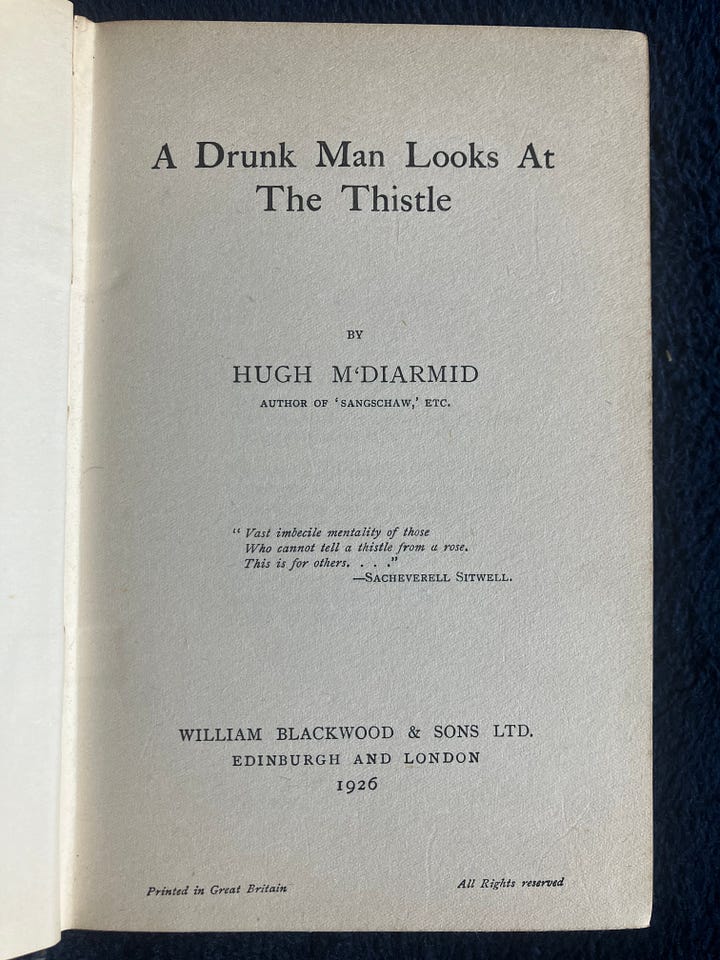
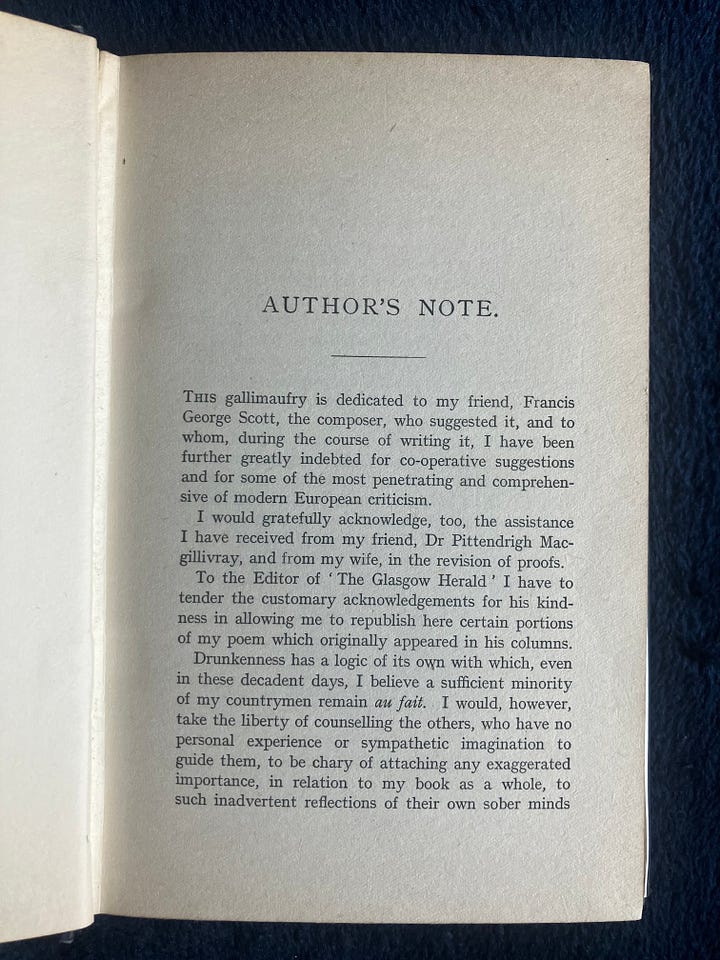
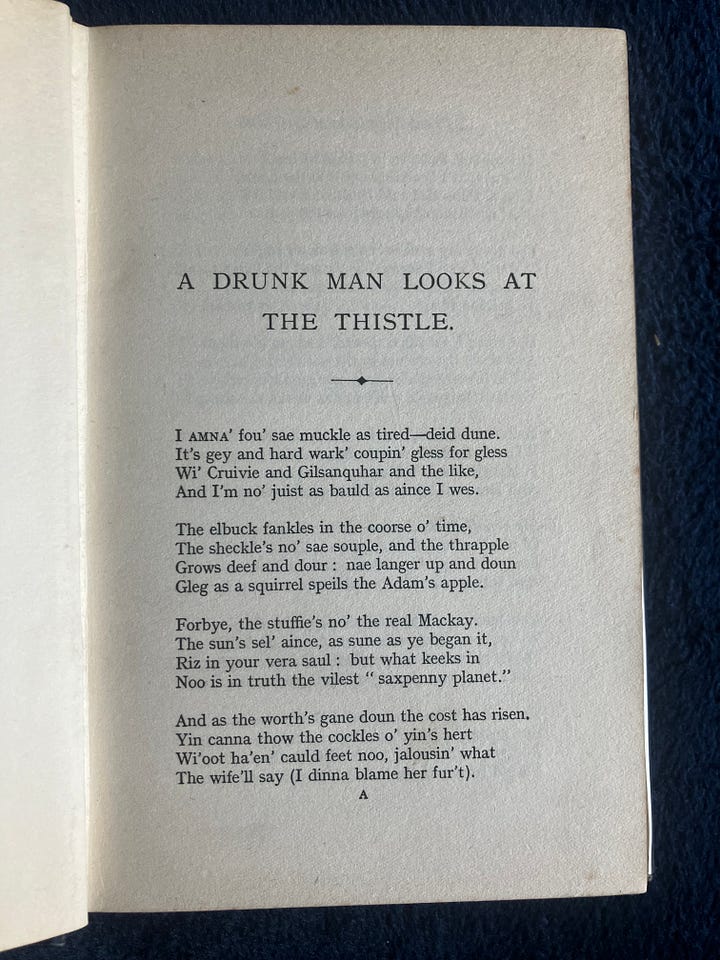
MacDiarmid wrote to a friend: “I expect little kudos, and less cash, for it.” Early reviewers were unimpressed. The Glasgow Evening News said: “All the worst faults of Mr Grieve’s literary ideals will be found fully exemplified in the long poem which he has just published under his mysterious pseudonym of Hugh MacDiarmid.” The Press & Journal in Aberdeen noted MacDiarmid’s “constant plangent grieving over his inhibitions”.
MacDiarmid pored over every word in every review and took the criticism badly. A more positive review in the Irish Statesman restored his confidence somewhat, as did one from fellow poet Edwin Muir:
The flow, vigour, variety, wit and originality of [Drunk Man] are its greatest virtues…this is probably the only poem of importance which has appeared in Scots since the death of Burns.
Recognition from the rareified heights of English Literature was scant. To a certain kind of English ear, MacDiarmid was unbearable. Philip Larkin’s Oxford Book of Twentieth Century English Verse ignored Drunk Man entirely. In a letter to a friend, Hull’s finest librarian wrote of MacDiarmid: “I am so averse from his work I can hardly bring my eyes to the page.”
-o0o-
Every five years, after elections to Holyrood, the reigning British monarch attends the official opening of a new Scottish parliament. These are festive occasions. Everyone is dressed in their Sunday best. Scottish National Party MSPs all wear a small white rose as a buttonhole, as if they are at a wedding.
They do so in honour of Hugh MacDiarmid and a short poem he published in 1934, his collection Stony Limits:
The rose of all the world is not for me.
I want for my part
Only the little white rose of Scotland
That smells sharp and sweet — and breaks the heart.
This always struck me as curious. This is a party eager to present itself as internationalist. The SNP spent decades countering the accusation it was a redoubt of 19th-century blood-and-soil nation-state nationalism. And yet its parliamentarians, every five years since 1999, proudly wear a symbol of declaratory isolationism.
MacDiarmid’s relationship with mainstream Scottish nationalism has always been tempestuous and contradictory.
In 1928 he was a founding member, alongside the great adventurer R.B. Cunninghame Graham and former Glasgow University student leader John MacCormick, of the National Party of Scotland. This would merge in 1934 with the Scottish Self-Government Party to form the SNP.
Almost immediately, MacDiarmid pissed everybody off. MacCormick, in his memoir The Flag In The Wind, expressed dismay at the way MacDiarmid “hurled contempt at everything English”.
Although I have no doubt that he has done invaluable work in the whole field of Scottish literature I am certain that C.M. Grieve has been politically one of the greatest handicaps with which any national movement could have been burdened. His love of bitter controversy, his extravagant and self-assertive criticism of the English, and his woolly thinking, which could encompass within one mind the doctrines both of Major Douglas [C.H.Douglas, the economist behind the concept of social credit] and Karl Marx, were taken by the more sober-minded of the Scots as sufficient excuse to condemn the whole case for Home Rule out of hand.
It was MacCormick who would send the letter informing MacDiarmid he was expelled from the National Party for extremism.
In 1923, three years before the publication of A Drunk Man, MacDiarmid published two essays in Scottish Nation called ‘Plea for a Scottish Fascism’ and ‘Programme for a Scottish Fascism’. He called for a “native species” of the fascism displayed by Mussolini on his October 1922 march to Rome.
MacDiarmid wrote:
We want a Scottish Fascism which shall be, where such laws are concerned, a lawless believer in law - a rebel believer in authority.
MacDiarmid was not the only writer in the 1920s to flirt with fascism. Alan Bold points out that Eliot, Pound, Yeats and Wyndham Lewis - “all egoists with an elitist outlook” - were similarly entranced.
You might have thought MacDiarmid’s dalliance with Mussolini reason enough for 21st century politicians to have some reservations about celebrating him. You would be wrong. Even in an SNP that has followed to the letter the Philip Gould programme for political modernisation, MacDiarmid remains the spirit animal of Scottish nationalism, his instincts shared by people who will never read a line of his poetry.
Why?
I think it’s because MacDiarmid represents l’Ecosse profonde, a deeper and sometimes darker Scotland than the chirpy, shiny one presented to the world today. This Scotland is obstinate rather than proud; antagonistic rather than passionate; nationalist rather than internationalist. It makes little effort to conceal its aversion to England and the English. MacDiarmid once told his friend Norman MacCaig his general rule in life was: “Think of the English and do the opposite.”
L’Ecosse profonde, in this nationalist manifestation, sees opposition to independence as a moral deficiency, a character flaw.
As MacDiarmid wrote in Lament for the Great Music:
These denationalised Scots have killed the soul
Which is universally human; they are men without souls;
All the more heavily the judgment falls upon them,
Since it is a universal law of life they have sinned against.
Adherents of a United Kingdom are, it seems, barely human.
MacDiarmid specifically drew attention to these lines when he gave a political speech to the 1320 Club, in April 1968, in which he denounced “the particular kind of treachery found in those Anglo-Scots intellectuals” who “bleat” about independence.
Accusing fellow Scots of treachery and questioning whether they have souls is not the nationalism of the modern SNP. In fact successive SNP leaders over the past decade have given thoughtful interviews in which they have expressed disquiet with the presence of the word “national” in the party name. Many left-leaning SNP folk bristle if you dare call them nationalists.
So how do we explain the small white rose worn by SNP MSPs? I see it as an aberration, but a revealing one: a rare moment when the party behaves like the broader nationalist movement, and hopes nobody notices.
MacDiarmid is a hero of the movement rather than a hero of its political wing. The two sides have always had an uneasy relationship. The tension between them is an under-explored facet of contemporary Scottish politics.
Only a fool would try to divine what MacDiarmid would make of the modern SNP. So here goes.
MacDiarmid would be appalled. He would scorn the sight of John Swinney singing God Save the King at the opening ceremony of the Commonwealth Games in Glasgow. He would see devolution as a betrayal, a lickspittle accommodation with perfidious Albion. But his distaste for the SNP’s politics would be as nothing compared to his distaste for its culture.
He would see a national party wilfully blind to the national faults he spent a lifetime skewering without fear or favour. To declare, as MacDiarmid did, that the nation’s malaise could be attributed to Scottish national traits - couthiness, conformity, Calvinism - is today a solecism. It is bad manners. It is anti-social behaviour. Scotland today can only be conceived as an unalloyed good: idealised, homogenised, and much less interesting than the complex reality.
The modern SNP’s kumbaya Caledonianism is an ill fit with the party’s favourite poet.
If MacDiarmid’s political aim for Scotland remains unfulfilled, his linguistic legacy is all too successful.
The Scots language these days gives the impression of being in robust health. No longer is it beaten out of children at school. On the contrary, it forms part of how children learn to read, write and talk. But it comes in many forms and its impact is uneven.
Scots is strongest when it is local. I was born in Dundee, in a working class community on the Hilltown. Scots is my native tongue. But the Scots I spoke at home and in the backlands of our tenement was very different to the Scots spoken by children in Forfar or Arbroath, 14 and 17 miles away respectively. The way those teuchters spoke - their syntax, their lexis, their accent - was barely comprehensible to me. It still is.
When I first started listening to Billy Connolly records in the 1970s, I did not understand the words he used. What was a wean? Did he mean a bairn?
What passes these days as “the Scots tung”, in forms as varied as children’s literature and the official pronouncements of the Scottish Parliament, is a gallimaufry. It is drawn from the poetry of Burns and Henryson; from the rich and complex language spoken at all levels of Lowland society in the 17th century and earlier; from a random plundering of Jameson’s Scottish Dictionary, published in 1867, unearthing words buried for hundreds of years; and from the diverse strains of local vernacular spoken today across the nation, differing wildly from coast to coast, from housing scheme to farmyard.
All these elements are vital on their own terms. All should be celebrated. All should be cherished. And yet their synthesis today is strangely lifeless.
Why? Because nobody speaks Synthetic Scots. Scots speak the Scots of their home town or home county. Someone in Ayrshire does not use the Doric of Aberdeenshire. Glaswegians speak like Glaswegians. Border chiels speak like Border chiels. Dundonians speak Dundonian.
Scotland is multicultural and multilingual. Marvellously so. So why bland it out? Why chuck it all into a linguistic Magimix? For what purpose?
I have a book on my shelves called Unstated: Writers on Scottish Independence, which can kindly be described as a mixed bag. One of the best contributions comes from Tom Leonard, a sceptic about independence, with a two-line poem:
The local is the international.
The national is the parochial.
Would it make sense for someone in England to create a new language made up of local dialects from Devon, Yorkshire and Norfolk, lumped together with Chaucer, and teach it in schools as English? No. That would be inauthentic. It would be, well, synthetic. And yet this is the orthodoxy in Scotland.
MacDiarmid was clear about the artificiality of what he was doing. Alan Bold describes Synthetic Scots as “a fusion of all Scotland’s linguistic resources - the oral rhythms of the various dialects, the lexical density of dictionary Scots, the lyrical qualities of literary Scots”.
A literary device, then, not a living language.
Synthetic Scots only works, insofar as it works at all, on the page. Tom Leonard taught us that language does not come from the written word. In the beginning, he said, was not the word but the sound. And the sound can only be local, not national. The opposite of synthetic is organic. Organic Scots, not Synthetic Scots, is what we should be teaching in our schools.
MacDiarmid’s oeuvre is a bravura intellectual exercise, repurposing lost words from centuries past in order to find a new-minted way of being wholly modern. Freed from the cultural and canonical assumptions of English, a new world could be imagined. A new nation too, perhaps.
As Seamus Heaney noted, this was a literary achievement of the first order, placing MacDiarmid in the ranks of the greatest poets of the early 20th century. A hundred years on, it is for us to decide what to take from MacDiarmid’s legacy. We do not need to swallow it whole.
There are many lessons 21st century Scotland could have learned from MacDiarmid. He could have inspired us to new heights of courage, creativity, audacity. Such a bold, daring, mettlesome nation has proved elusive. Instead, on language, we have taken him literally.
It is not much of a leap from synthetic language to synthetic politics. The SNP is a national party. The clue is in the name. Other, more local identities are not to be encouraged. Localism must play second fiddle to nationalism. Many folk I know consider themselves first a Glaswegian, a Dundonian, a Highlander, a Shetlander, and a Scot second. This is awkward in a Scotland where national identity is primary and paramount.
And so, for example, regional police forces must be replaced with one national force. Before this “rationalisation”, most Scots could name their chief constable. Now, gey few can name the chief constable of Police Scotland, let alone the senior officer responsible for policing in Edinburgh or Glasgow or Dundee or Aberdeen. Local accountability is less important than the projection of national authority. Right now, under a new UK prime minister, English-style regional government with elected mayors or provosts must be resisted as if a contagion. City states cannot be allowed to rival the national parliament. All local difference must be subsumed to the national imperative.
Synthetic Scots may have begun as a linguistic device but it has become a political strategy. MacDiarmid would doubtless be appalled at the misuse of his creation. But he is still to blame.
-o0o-
Christopher Grieve died aged 86 at 3am on September 9, 1978, at the Chalmers Hospital in Edinburgh, where he had been receiving treatment for cancer. The funeral was in his home town of Langholm. Mourners gathered under umbrellas to stave off the drizzle. An oration was given over the grave by Norman MacCaig:
He would walk into my mind as if it were a town and he a torchlight procession of one, lighting up the streets of my mind and some of the nasty little things that were burrowing in the corners.
MacCaig could always be relied upon to find the right words. In a compendium of poems published to commemorate MacDiarmid’s life, the bard of Leamington Terrace again hit the mark, this time with a short work, almost a haiku, called Old Poet.
The alder tree,
shrivelled by the salt wind,
has lived so long
it has carried and sheltered
its own weight
of nests.
No-one who lives a life of the mind, whose job is to think and write, could hope for a finer epitaph. In those nests was fledged a flock of ideas that populate contemporary Scottish thought, for good and ill.
When Grieve was born, he was described by his mother as “an eaten and spewed lookin’ wee thing wi’ een like twa burned holes in a blanket”.
A century on from the publication of A Drunk Man Looks at the Thistle, those eyes stare at us still.
-o0o-
Agree? Disagree? What’s your view on the assertions and opinions contained in this essay? Have your say. Use this button:
If you liked this post please hit the heart symbol. It helps spread the word. Or why not share this post on Substack Notes or your own social media? Use this button:
Are you a paid subscriber to The Jaggy Thistle? If so, thank you! If not, would you consider becoming a paid subscriber and supporting my journalism?
For more details on becoming a subscriber, or upgrading to a paid subscriber, use this button:
-o0o-

“A chield’s amang you takin notes, And faith he’ll prent it.”
Robert Burns
-o0o-
Comments
Nothing yet. Say the first thing.
Sign in to join the conversation.