
Before we get into it, I wanted to share my latest story for National Geographic. TL;DR it’s about a good way to spend a weekend in Jersey City, New Jersey.
The longer version is that, a little over a hundred years ago, my maternal ancestors departed Napoli and, after a few weeks crossing the Atlantic, arrived at Ellis Island.
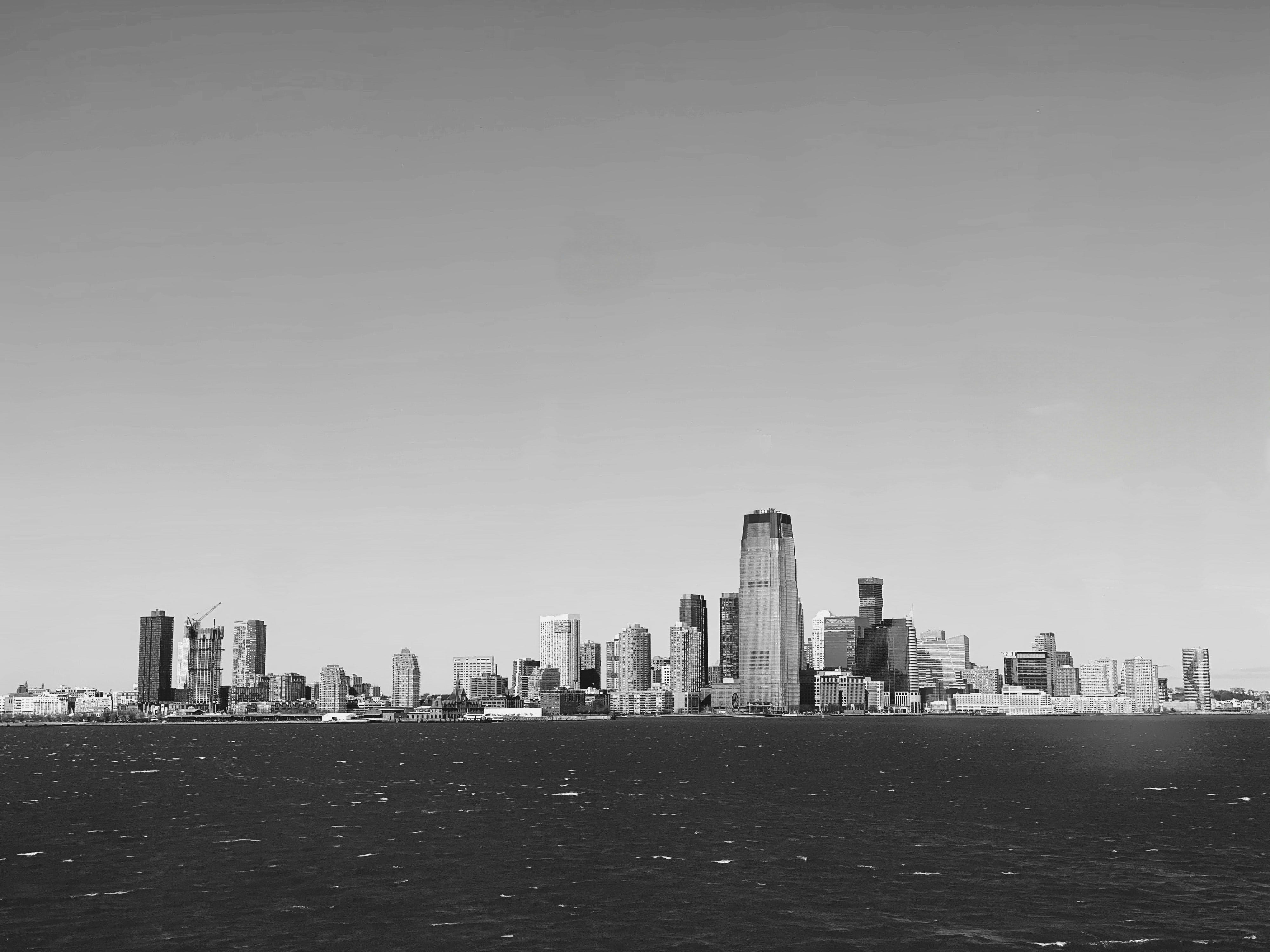
“That’s far enough,” they said (I don’t know this for a fact. But I like to think of it this way), settling a little over a mile away in Jersey City’s Downtown neighborhood. In the century since, Jersey City has always been home to at least one Venutolo and is one of the Rosetta Stones in the story of my mother’s side of my family.
It’s a city that is so deeply important to me, the place where I was born and lived when I was very little, where I returned after college and an all-too-brief sojourn to live in Rome, and a place that is imprinted on the DNA of just about everyone on that side of my family.
It’s a special place that represents so much of what makes America special. Or, at least the idea of America; what it could and should be.
I hope you enjoy it.
In the last installment of this newsletter, I asked to you play me your smallest violin; to feel piteous for someone who gets to travel around the world, having once-in-a-lifetime adventures and getting paid for it to boot.
Then I realized that most people don’t know exactly what a travel-writing life looks like. Sure, you probably have a general idea of what a sports reporter or a political reporter or even a features writer does. Or, more accurately, you know how those jobs get done. But I know many of you don’t know how travel writing works because when I mention that it’s part of my job, people usually ask “So how does that work?”
What they mean, most often, are the logistics of it: do I pay for these trips myself (sometimes) or do the magazines cover my costs (almost never)? Do I come up with ideas or do the ideas come to me (both)? How do I decide where and what to cover?
Well, first off, what many people don’t realize is that to write about travel, you often don’t have to travel at all. Because we aren’t writing for us. We’re writing for you, the reader. And maybe the reader has never been to, in my case, Chapel Hill, New York City, New Jersey, or Philadelphia—the places I am most intimately familiar with in the world. In fact, beyond ringing up my old pal Dancing Tony and Googling whether or not the places I wrote about were still open (sadly, we had to cut a paragraph about the much beloved Boulevard Drinks. All for a fucking Whole Foods), I didn’t have to do much research at all for the Jersey City story. It’s not like I flew to Jersey to write the thing. Similarly, I have written and am commissioned to write stories that highlight some areas of my own backyard here in North Carolina.
Actually, in the face of climate change and the growth of overtourism, a ton of people are advocating for this sense of locality and writing about our own backyards as opposed to traveling around the world in search of stories. So no, it’s not all jetsetting, bespoke adventures, and fancy dinners. But the biggest part of the allure of the gig, the dream really, is to be able to explore places we don’t know and to get paid to do it.
And so we explore. However, in the face of ever-dwindling budgets, it’s hardly realistic for most travel writers to pay their own way around the world, which is why we often take press trips. More on that in a second.
Because paying our own way is essential for a few of media’s biggest, oldest, and most cornerstone publications. Places like the New York Times, the BBC, and the Washington Post will not assign stories that come from press trips. Why? Because outlets like the New York Times, the BBC, and the Washington Post are built on a foundation of impartiality across all of their sections. (which is not to say that travel-only outlets are not!) And because maybe they feel that press trips veer into advertising or propaganda. However, I would argue that most travel writing is inherently propaganda. Because have you ever read a travel piece about a place the writer absolutely hated? Maybe. But probably not. More often—most often, in fact—we write about places we love, places that impressed upon us, places that we think other people might also love. We are nothing more than evangelists. And so, even if we didn’t take a press trip, I’d venture to say that the story we’re pitching is going to place the place in a similar light than if we did. All that said, I understand why those places don’t commission stories rooted in press trips.
But first, what is a press trip?
Basically, almost every city, country, region, attraction, and phenomenon on Earth has a travel bureau and part of their budgets go to getting people—writers, sure, but also influencers!—to visit their places and, again, evangelize. Often, those bureaus will work with public relations firms who specialize in travel. And the instant your byline appears in a major travel publication, those firms latch onto you and flood your inbox with press releases, requests, and, if you’re lucky, trip invites constantly.
If it’s a group trip or a trip to a special event, you’ll have to agree to a specific window of time. For example, I just got back from the Dolomites where I was riding in the Maratona dles Dolomites, one of the hardest amateur bike races in the world. As that only happens one day each year, my availability had to align with the event. Other times, especially if it’s a solo trip and a travel bureau is just hosting you, it’s more of a “when can we get you here?” type of thing.
So you’ll trade some emails, send along your frequent flier numbers and passport information, and eventually, get an itinerary that lays out what you’ll be doing when you visit a given place. Sometimes it’s literally hour-to-hour. Others will give you a bit more free time to roam. I, as well as most other travel writers I know, prefer the latter, as roaming is when we find the really good shit. But also because the roaming is a little bit more real. Or, conversely, those itineraries take you to the best places, for the best meals, for private tours, or to see the sides of cities that most people don’t get to see too often. The majority of people reading our pieces are roaming, so I do my best to put myself in their shoes when possible.
Isn’t that expensive?
Sure.
But it’s probably way cheaper than buying advertising.
Let’s say it costs a city $5,000 all in to host me for four days (including flights). That is, hotels, meals, intracity travel, attractions, adventures, et cetera et cetera et cetera.
Now think of all the editorial space a resulting story might take up. Go back to my National Geographic story and scroll through, see how much advertising space there is attached to that piece.
Now imagine buying all of that space in advertising. Five grand is probably a drop in a bucket compared to that. Anyway, advertising to people is far less effective than writing to them and people are more likely to trust the word of an expert than an ad almost 100% of the time.
So do you have to confirm an assignment before you go?
Sometimes. Especially if the trip is REALLY expensive. Travel boards want to guarantee they’re getting their money’s worth. However, confirming coverage beforehand isn’t always doable for a few reasons, not the least of which is the fact that you don’t really know what the story is before you go to a place. Sure, you have an idea. But the story usually doesn’t reveal itself until you experience it.
But, for the most part, press trips don’t require confirmed coverage. At least in my experience. PRs and the places and people they represent recognize how brutal this game can be and they know that we are all trying our damndest to land stories at the biggest and most impactful outlets. We’re not here for free trips. We’re here to make a living.
Anyway, a writer wouldn’t last very long in this trade if they took more than two or three press trips without producing a story.
They also look at our clips. Maybe they’ll take a flier on someone who has one or two stories in big outlets. But there is a level of trust when they see someone who regularly contributes to the biggest outlets around. That person knows how to sell stories and chances are, they’ll sell this one, too.
That said, I hatehatehate not having an assignment confirmed before I leave for a press trip. I feel an obligation to produce something and, in the rare occassions I have taken a trip without an assignment in hand, it tends to hang over my head the entire time, not really allowing me to fully enjoy and imbibe the experience. After all, producing a story is my side of the agreed-upon contract. Not to mention the fact that if I’m leaving my wife alone with the kids for a week, I had better make some goddamned money to make up for my absence. And so I do whatever I can to land something before ever setting foot on an airplane and jetting off on a press trip.
How many stories can you get out of a press trip? Or any trip, really?
That depends on how creative you are.
One thing almost all of my journalism students ask is how I find stories, travel or otherwise. And I tell them that everyone has antennae for a good story. But theirs are little nubs, whereas mine are big, flowing receptors. In otherwise, thanks to over a decade doing this work and much of a lifetime writing nonfiction, I’ve tuned my antennae to find stories everywhere I look. Because that’s where stories are. Everywhere.
And so, I usually try to set a goal to have at least two stories come out of a press trip if, for no other reason, than to financially cover the amount of time I was away. This isn’t vacation, after all, and, again my wife is home alone with our kids while I’m out having adventures. So I had damn well better be getting paid.
That said, the most fruitful trip I ever had yielded six stories, totaling somewhere in the vicinity of $5,000 in income. (I only linked to four because two were were on the industry/B2B side.) Five grand for less than a week away from home? That I can sell to my wife.
Of course, telling the same story for two different publications is a pretty big no-no, so I had to make sure each story had a unique angle. Again, thank the antennae.
Adventure? Excitement? A Jedi Craves Not These Things. (But Mike Does.)
Another universal truth in travel writing is that a lot of public relations professionals are really good at their jobs and a large part of their jobs is to find writers who can get the places and experiences they represent into print. As I said earlier, as soon as I started landing bylines in the big outlets, my inbox began to flood with press releases about hotel openings, new takes on old cities around the world, and all sorts of travel experiences. Most of it, I kindly pass on. Why? Because I want to spend as much time as possible with my kids. But also because don’t really have much interest in writing about certain topics. Nor do I care to desk report if I can avoid it (that is, to write about a place or a thing without experiencing it; ie: the Jersey City story). I’m fortunate enough to only take assignments and pitch stories that I really want to write. And great PR people know what kinds of stories I really want to write.
Because amongst the crop of really good PR people are the really GREAT PR people. And what separates those people is that they’ve done a ton of research on me or, over the course of an assignment or three, gotten to know me. And they know exactly the kinds of stories I love to do.
They know that I’m one of the writers to come to when adventure is on the offing, when they need someone to go to the North Pole or the Badlands; someone whose idea of a good time is riding one of the most difficult organized races on Earth; someone who loves being uncomfortable.
No, I’m not really interested in reviewing your new hotel in Monaco (break out that tiny violin again). Hell yes I would love to spend a week on an icebreaker in Antarctica (ahem, any PRs reading this, holler at me with that one ;).
The great PRs know me well enough to know what it is I’m most likely to get excited about and they come to me with those things. The good PRs find a way to tailor a place that might not be perfect for me. The bad PRs just keep sending me emails that I am almost 100% unlikely to cover (and the REALLY bad ones open their email with “Dear sir or madam”).
Now, I’ve never been a publicist so I don’t know the struggle, which I’m sure is very real. Not only that, but I’m sure it’s a numbers game. Email 300 writers, one is bound to say yes. Still, I can usually tell within the first sentence and often from the email’s subject line alone whether it’s a trip I’m likely to take or not. And I can tell how well a PR knows me and my focus.
And all that said, for the dozens of emails I get that I have absolutely no interest in, I do my best to reply to everyone, even if it’s a “This isn’t for me but best of luck with it!” response. Sadly, ghosting or non-responses are far too common in this industry (freelance writing, not just travel) and I’d rather not but another one of the people who can’t be bothered to take the four seconds required to say “thanks but no thanks.”
Sounds fun.
It is. It’s honestly one of the best jobs in the world. But, at its core, it’s a job. And jobs require work.
Yes, we get to experience the amazing, often at no cost to us. But we still have to bust our asses to get a commission, which, in the age of constant layoffs which tend to flood the freelance marketplace, is tougher than ever. We still have to be constantly taking notes, asking questions, and framing these experiences through the readers’ lenses. We still have to take time away from our loved ones.
It’s unbelievable work. But it’s still work.
Now, I’m not going to say it’s hard work. It’s not. Go be a roofer or a landscaper or a kindergarten teacher and then come tell me about hard work. But it’s work nonetheless. And though we go on trips, we don’t go on vacation.
So that’s it?
Kind of. The big stuff, at least. I mean, there are those little details like the fact that I sometimes have to pay for my own flight upgrades (at 6’4”, 250lbs, flying is not an easy task for me and I always do my best to sit in an exit row. Sometimes my host will cover it, sometimes they won’t, which is fine! I’m happy to pay $100 on top of the $ZERO I’m spending to go have amazing experiences) or the fact that personal expenses are not covered or the fact that sometimes, travel writers bring their partners or even their kids along with them, especially if it pertains to the story. Though, usually, that’s at their own cost. There is also a whole book that can be written about travel writing on your own dime or those aforementioned concerns of climate change and overtourism.
But those are the big swaths of “How” a person is a travel writer. Hope it was helpful to have a little peek behind the curtain.
Holler in the comments or via email if you have any other questions! I’d love to answer them.
Peace, love, and safe journeys!
No posts
Comments
Nothing yet. Say the first thing.
Sign in to join the conversation.