

Navigating Life with Hypothyroidism: Insights, Support and Advocacy.
2026 Best Hypothyroidism Website
2026 Best Thyroid Website
2025 Social Health Award Finalist
2022 Social Health Award Winner
2020 WEGO Health Award Winner
Did you know that low levels of iron, or ferritin (stored iron), are commonly seen in those with thyroid conditions such as hypothyroidism and Hashimoto’s?
However, many people are never checked for this common deficiency, despite symptoms of low thyroid hormone and low iron being virtually the same.
In fact, when I was diagnosed with hypothyroidism and Hashimoto’s, I was found to be anaemic at the same time.
This newsletter will cover this topic, while also including a blend of thyroid research, news, articles, social media posts, personal updates and more, all hand-picked and curated by myself.
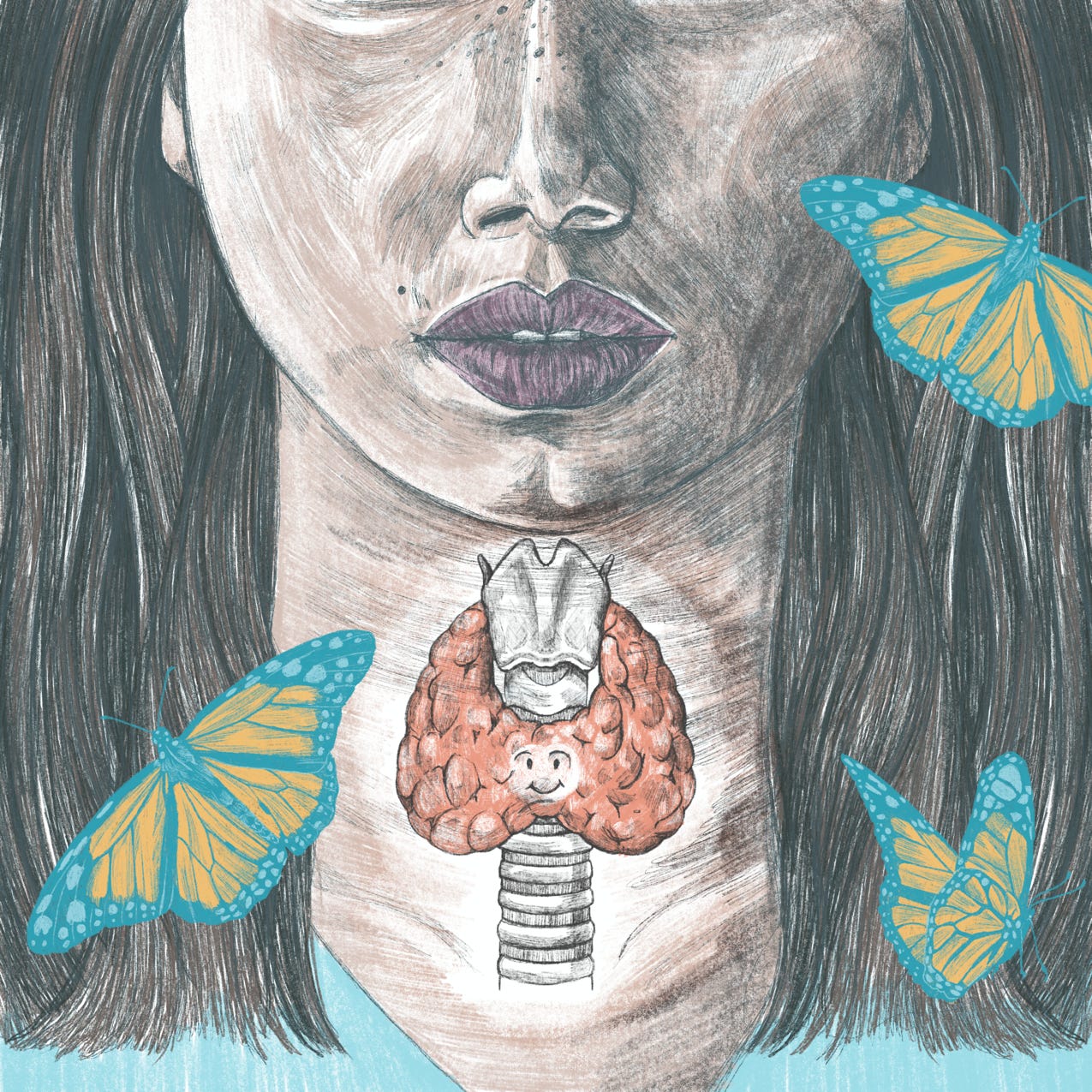
My informative newsletter goes out every Thursday and is the best way to:
Get regular support, insights and boosts of motivation for your thyroid condition
Keep up to date with thyroid related news, research and events
Hear directly from me without relying on social media algorithms to actually show you my posts
My newsletters alternate between Free Access and Paid Access in order to make this publication sustainable.
the full newsletter once a fortnight
previews of premium content
full access to all newsletters and posts
Access to an exclusive chat
to know they’re supporting thyroid advocacy, so I can continue to make these newsletters
Paying subscribers also get told first about exciting updates, events I’m running and behind-the-scenes news.
“The info in your newsletters has helped me get my Hashimoto’s in to remission!!”
“I have resubscribed [as a paying member] after a break. My health is super wonky again so I’m back to get some inspiration, good factual support and to not feel so isolated.”
“Thank you for such informative newsletters, Rachel. My first year of dealing with hypothyroidism, and your writing and posts have been absolutely invaluable.”
I’ve been creating these informative thyroid newsletters since March 2018. Thank you for being here!
Low levels of iron can mimic a lot of the same symptoms of a thyroid condition.

Do you experience any of these?
Tiredness/fatigue
Needing to nap often
Heart palpitations
Poor stamina
Dry skin
Brittle hair and nails
Hair loss
Breathlessness
Feeling cold
Depression
Body aches and pains
Pale or ‘washed out’ skin tone
Dark bags under the eyes
Brain fog
If yes, then have you had your iron levels checked, as well as your thyroid?
Low iron levels can be a major puzzle piece in the health and ongoing symptoms of many thyroid patients, and they’re easily checked with a blood test, so it’s often very quick and easy to find out.
Having good iron levels is important for many reasons. As well as Iron deficiency impairing thyroid hormone synthesis, correcting low iron levels when you have a thyroid condition can help lingering symptoms of fatigue, hair loss, dry skin, depression, brain fog and more.
The major reason everyone needs adequate iron levels is that it helps to transport oxygen throughout the body, which is why low levels of iron can cause breathlessness and poor stamina. Having low levels of iron can also affect your ability to fight off infections or illness.
You should always have your iron levels tested before starting an iron supplement, as taking extra iron when you do not need it can be dangerous.
However, if you are found to be low in iron, then Bisglycinate is a popular form as it doesn’t tend to cause stomach issues or constipation, unlike other types. Taking Vitamin C with iron triples the absorption rate.
Iron supplementation, increasing iron in your diet, optimal management of your thyroid condition, optimising gut health and treating heavy periods if present, is generally what’s needed in correcting iron deficiency. As well as improving my diet and gut health, I also needed to address my extremely heavy periods which were depleting my iron stores very quickly.
The highest dietary sources of iron are red meat and organ meat (such as liver).
Others include:
Pork
Poultry
Eggs
Mollusks (such as oysters, mussels, clams)
Lentils
Chickpeas
Pumpkin seeds and sesame seeds
Soybeans
Spinach
Dried fruit (such as raisins, apricots, and prunes)
Iron-fortified bread, pasta, or cereal
It is worth knowing that when on thyroid medication, any supplements containing iron should be taken at least four hours away from taking your thyroid medication, as taking these together interferes with the absorption of your thyroid meds.
Test results for Iron, Ferritin, T.I.B.C., Transferrin Saturation etc. should all be well within range to help avoid symptoms. Although a ‘normal range’ for women on many tests for iron is 20-200ng/mL, a lot of thyroid patients find that their symptoms improve upwards of 70ng/mL. The optimal ferritin level for thyroid function is between 90-110 ng/mL.
I have been working harder to stick to an evening routine so that I get better sleep and wake feeling refreshed in the morning. This has included an app blocking all social media on my phone after 5pm (or when I reach an hour of usage earlier on in the day), and half an hour of winding down before going to sleep - washing my face, brushing my teeth, doing stretches and reading my book until my eyes feel heavy.
It’s funny - I know this works but every now and then I drop out of the habit of doing it. For now, I’m back on to it and, shock horror, I feel a lot less fatigued and grumpy the next day!

⚠️ What Actually Causes a Low Sex Drive with Thyroid Issues
🥱 Why Social Events Are Hard With Thyroid Disease
🤕 Why Migraines Can Be Connected to Your Thyroid
My most popular posts in the last week were…

New evidence-based recommendations aim to guide clinicians and improve care for women across the reproductive continuum.
You can read more about this here.
Black Thyroid, also called Black Thyroid Syndrome or Black Thyroid Disease, is a rare pigmented change of the thyroid gland.

As this newsletter is a free issue, next week’s newsletter will only be viewable to paying subscribers.
Want to learn more about thriving with thyroid disease?
BUY ONE OF MY BOOKS // FOLLOW ME ON FACEBOOK, INSTAGRAM, THREADS // READ MY OTHER NEWSLETTERS // VIEW MY WEBSITE //
Please Note: The information included in this publication is not meant to substitute the clinical guidance provided by a healthcare professional. Rachel Hill / The Invisible Hypothyroidism is not medically qualified and does not offer medical advice. I suggest consulting your doctor before making any changes to your lifestyle or health regimen. By consuming this newsletter, you agree to this disclaimer. This newsletter may contain affiliate links where I earn a small commission if you purchase through them. This does not change your user experience or the products I link to, but does support the ongoing publication of my work. None of the statements in this publication should be taken as an official endorsement of any particular product. Disclosure statement.
All Content is Copyright © 2026 The Invisible Hypothyroidism. All rights reserved.
Comments
Nothing yet. Say the first thing.
Sign in to join the conversation.