
To fully appreciate satire, a key ingredient is understanding what’s been lampooned.
So, clearly, I did it backwards with the “Airport” and “Airplane!” franchises. As a kid, I never saw any of the four-part “Airport” series that preceded “Airplane!”, which I saw when it came out in 1980, along with its sequel a few years later.
But into this morning’s wee hours, I made up for lost time and saw two of the movies that were fresh in our recent collective memory when so many of the “Airplane!” movie gags came along.
One was the original “Airport,” the 1970 film starring Burt Lancaster, Dean Martin, George Kennedy and Jacqueline Bisset; the other, which I inexplicably started viewing when it was already well past 1 a.m., was its sequel, “Airport ’75.”
That star-studded cast featured Charlton Heston, Karen Black1 and—once again, Kennedy—among other luminaries.
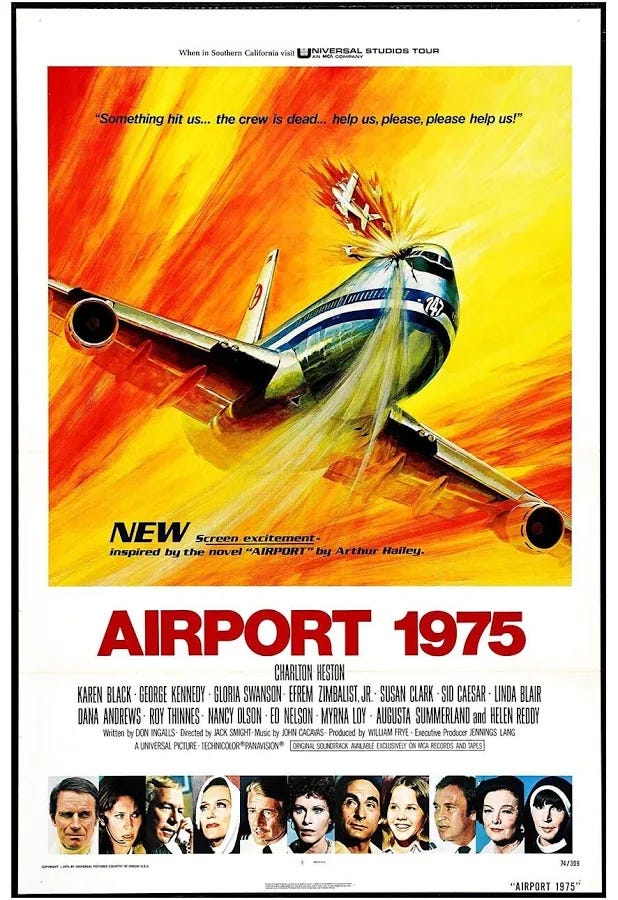
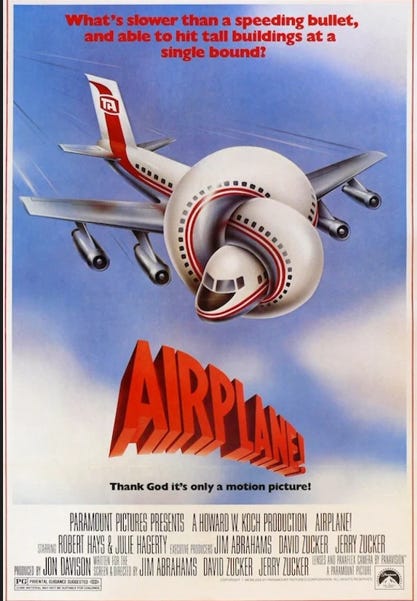
It was the Netflix-binge version of downing an entire bag of potato chips with a handful of Twizzlers thrown in for bad measure. Fun in the moment, but not a sustainable diet.
As I immersed myself in these movies, I had no idea that the more direct ancestor of the “Airplane!” series wasn’t the four-part “Airport” series (which culminated with “Airport '77” and “Concorde…Airport '79”). Instead, it was “Zero Hour!”
For a review of those parallels, check out Zero Hour! (1957) — The Forgotten Film That Airplane! Copied Scene by Scene!

In the hopes of redeeming my questionable timing-of-viewing choice, and perhaps inspiring you to watch or re-watch these films, here are some observations:
*The original “Airport” was actually quite good—its 10 Oscar nominations attest to that widespread respect.
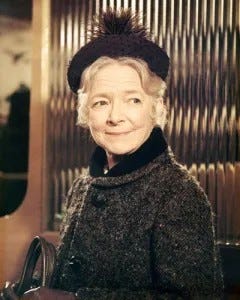
*I especially enjoyed Helen Hayes in her endearing role as Ada Quonsett, an incorrigible, manipulative, septuagenarian stowaway. Glad to see that she won the Oscar for Best Supporting Actress, an award for which fellow cast member Maureen Stapleton2 was also nominated.
*The subplot of Martin’s Captain Vernon Demerest being Bisset’s paramour (stewardess3 Gwen Meighen) was so stereotypically Hollywood—a leading man in his 50s in a relationship with a woman not even half his age (Bisset had just turned 25 when the film hit theaters).
*I found it intriguing and somewhat surprising that the movie was rated “G,” though it had an undercurrent of very adult themes. This includes recurring, though opaque, references to marital infidelity among flight crews and Demerest initially pushing for Meighen to get an abortion (in Sweden, he suggests, since this was pre-Roe vs. Wade).
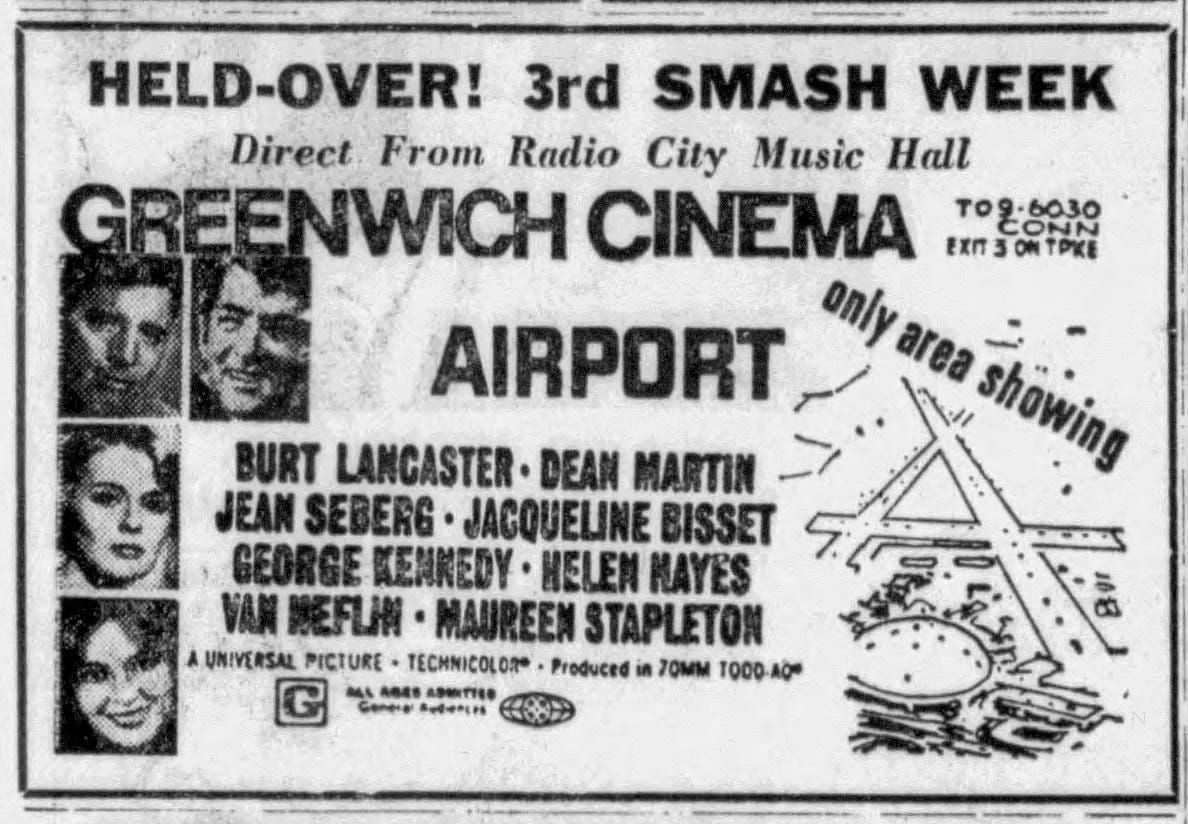
*The film was educational on a variety of fronts, including logistics and cockpit protocol. Per Wikipedia4, it was “based on Arthur Hailey’s meticulously researched novel, the movie is highly regarded for its highly accurate, analog depiction of mid-century airport management.”
Hailey was also the co-screenwriter on “Zero Hour!”, an adaptation of “Flight Into Danger,” which he wrote and was aired on Canadian television the previous year.
As with so many other sequels in the annals of cinema, “Airport ’75” fell far short of the original. Still, it was entertaining in its own way, almost as a parody of itself.
I found much of the entertainment value to come in the nostalgia represented by various actors, including:
Efrem Zimbalist Jr., the star of the “The F.B.I.” TV series for nine years. I vaguely recall watching that series, which J. Edgar Hoover leveraged for as much patriotic propaganda as he could muster. “The F.B.I.” last aired in Spring 1974, six months before Airport '75’s release. This flick freed up Zimbalist to sport a not-quite-Clark Gable-esque-but-thanks-for-trying mustache.
Erik Estrada, only 25 years old, playing a lecherous Lothario flight engineer despite having a wife and kids at home. Three years later, Estrada starred on TV’s “CHiPs” as California Highway patrol officer Frank “Ponch” Poncherello.
Jerry Stiller, Ben’s real-life dad who would land in notable casts such as “Seinfeld” and “The King of Queens,” who played a guy so hammered that he passed out/snoozed through the entire aerial crisis.
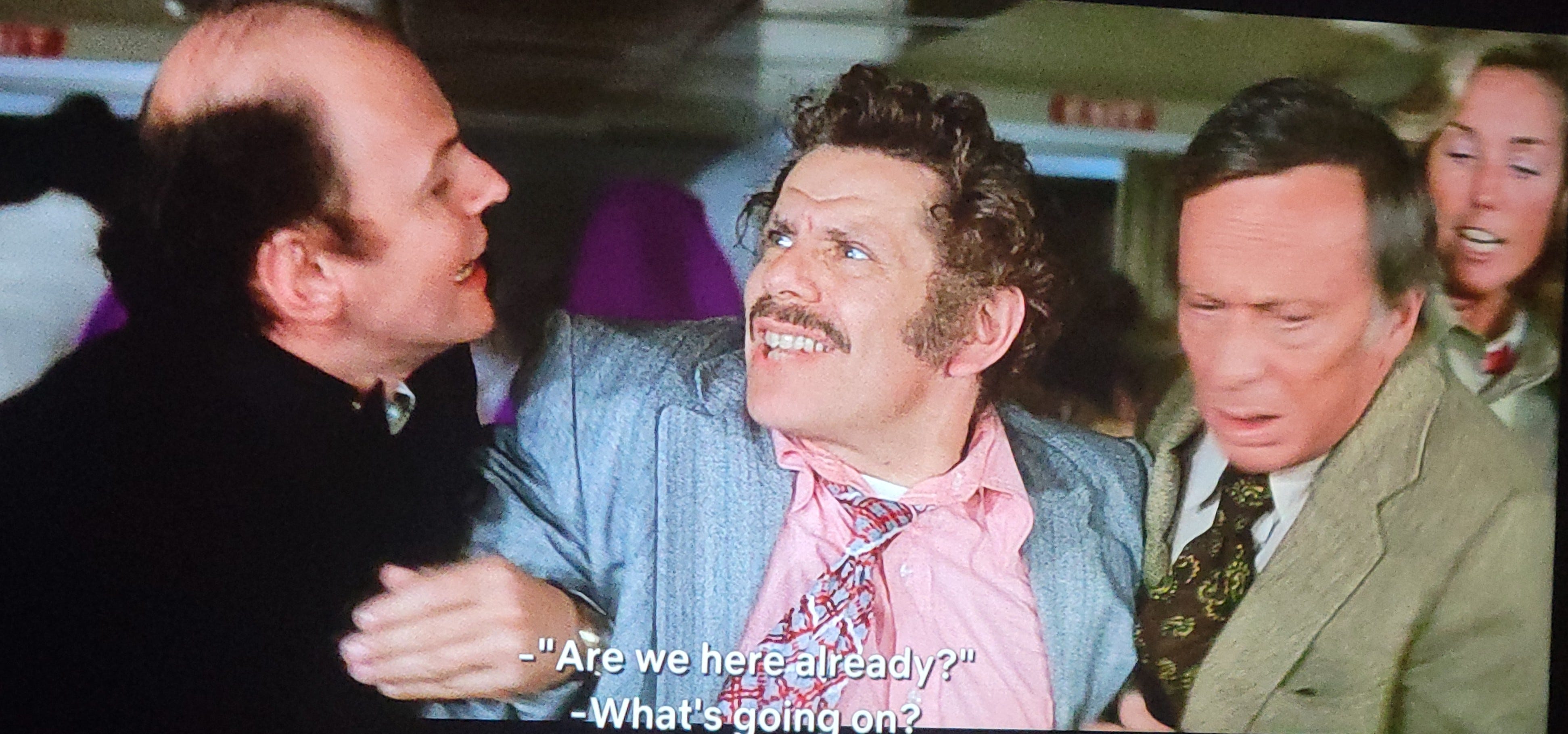
Conrad Janis, who portrayed a friend of Stiller. Every time I saw Janis, I envisioned him as Mindy’s dad in “Mork & Mindy,” which in four years would launch Robin Williams as a star.
Norman Fell, two years shy of starting his long, campy, chronically fourth wall-breaking nosy landlord role in the hit comedy TV series “Three’s Company.” Fell also played a landlord in “The Graduate”—apparently he got typecast as “the landlord type.”
Sid Caesar, playing a genial but hapless guy whose sole reason for coming aboard was to see the in-flight movie in which he played a small part as a restaurant cook. Alas, just as his on-screen appearance is about to happen—a moment he’s promoting to everyone around him—the movie goes on the fritz.
(Contrast that scene with my wife’s experience two months ago, when she captured a photo of her 16-year-old self in “Ferris Bueller’s Day Off,” but didn’t disclose it to anyone. For that recap, click on the link below.)
A small part by Larry Storch (from “F Troop”), playing a pushy TV reporter.
Singer Helen Reddy, at the peak of her fame with hits like “I Am Woman,” playing a nun who strums a guitar and sings a song to an ailing teen-aged girl racing against time to get a transplant.
Linda Blair, a mere 10 months after her head-turning breakout role in “The Exorcist,” who played that very ill girl.
Uncredited bit parts played by NFL quarterback Jim Plunkett5 and wide receiver Gene Washington, former Stanford football teammates who by 1974 suited up for the New England Patriots and San Francisco 49ers, respectively.
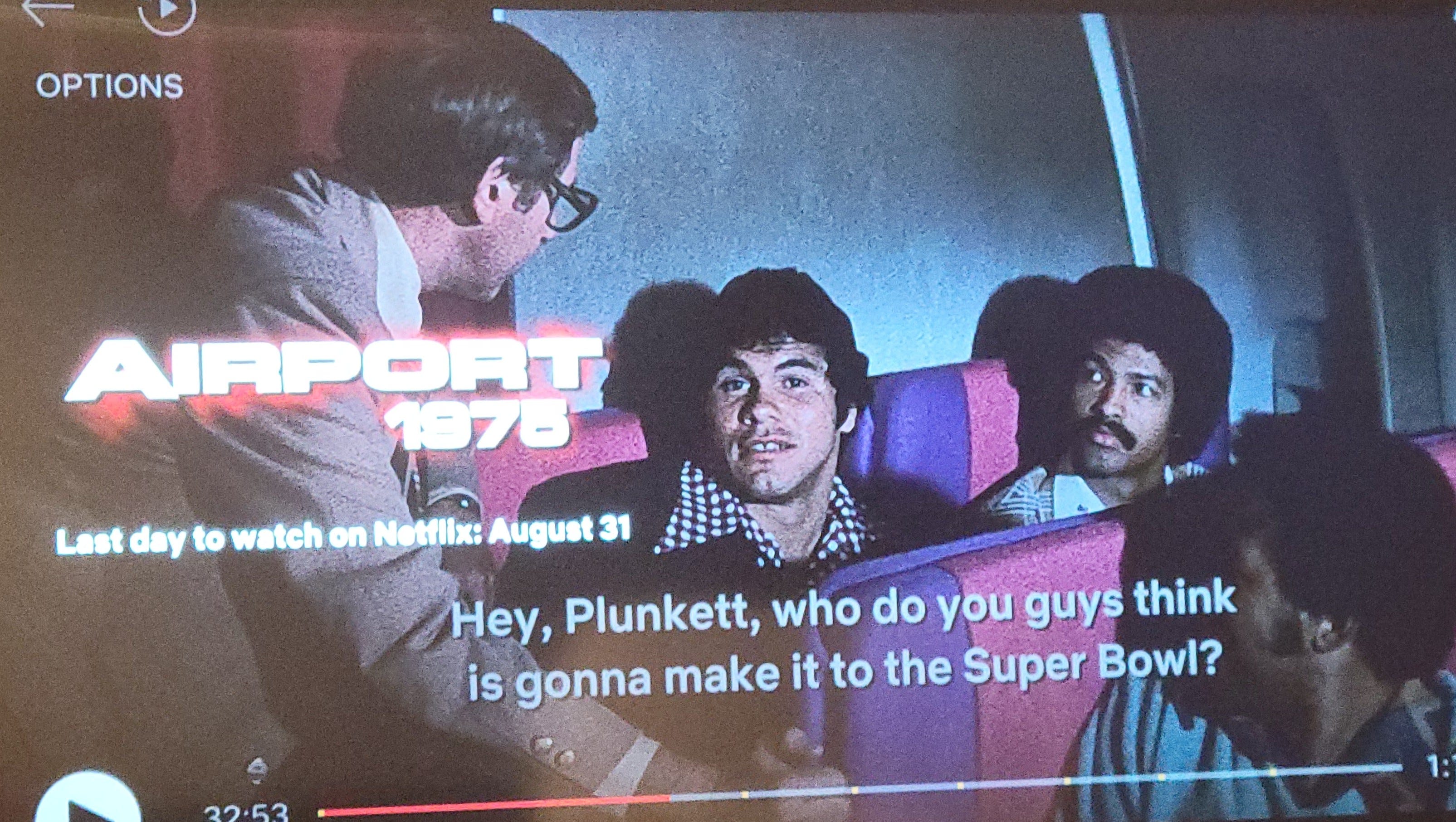
After the plane finally touches down in Salt Lake City, it’s Plunkett who lugs Blair’s character off the plane, and down the emergency chute. A two-time Super Bowl champion, Plunkett fumbled the ball 62 times in his pro career, but he managed to hold onto Blair the entire way before handing her off to medical personnel.
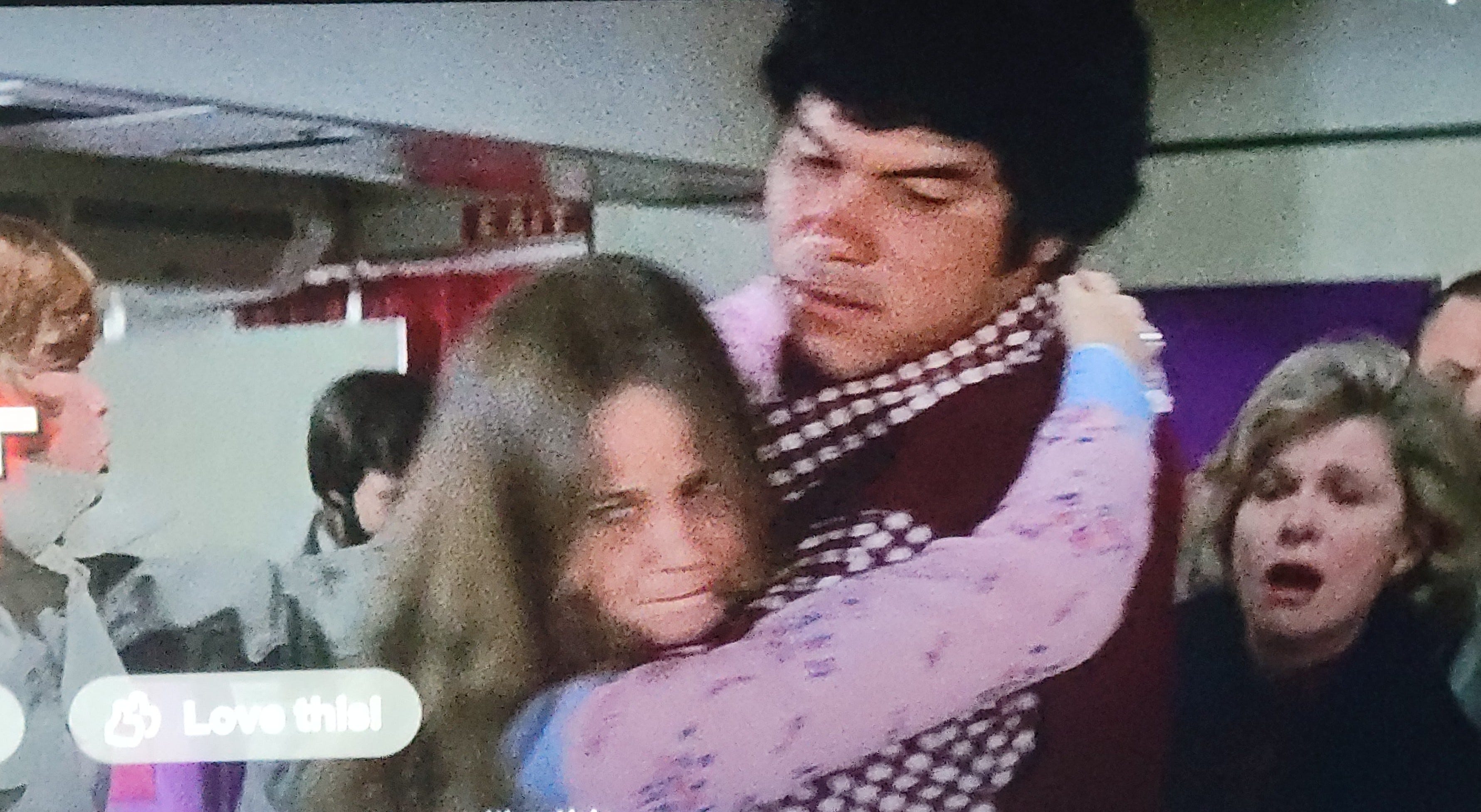
For both movies, the plot burned with this question: Would everyone survive this journey?
Back here in the real world, over 50 years later, it’s only natural that many of those on the screen are no longer among the living. But here’s a partial list of those still with us: Bisset (81 years old), Washington (79), Plunkett (78) and Blair (67).
Meantime, I was struck by how many of these actors were in their 40s or early 50s—and how many made it into their 90s (at minimum, this group includes Stiller, Fell, Caesar, Janis, Kennedy and Storch, who made it to exactly 99 ½).
Their longevity, I bet, is linked to their ability to afford high-quality healthcare, to say nothing of their real-life avoidance of airplane disasters.
I had some cross-eyed issues as a kid; am I alone in observing that it seems Karen Black’s issues continued well into adulthood?
It’s taken me until now to finally get it straight: Maureen Stapleton and Jean Stapleton (“Edith Bunker” in “All in the Family”) are NOT sisters. They’re not even cousins.
Yes, it’s “stewardess,” not flight attendant, since that was the vocabulary back then.
Why does Wikipedia get a footnote? It’s my occasional plug for supporting this great resource. I ponied up some dough this week, something I do annually. I professed my love for this fantastic resource three years ago. ICYMI, I encourage you to check it out here (and to donate to Wikipedia):
On Oct. 18, 1974, when the film opened at theaters, the Patriots were a perfect 5-0 and Plunkett was on fire, with his nine touchdown passes tied with Oakland Raiders’ QB Ken Stabler atop the NFL lead. Alas, the Patriots lost two days later to the Buffalo Bills, starting a 2-7 stretch that brought them down to Earth: a mediocre 7-7 for the season.
Buffalo superstar running back O.J. Simpson, who would go on to act in three of “The Naked Gun” movies—made by the creators of “Airplane!”, scored two touchdowns in that 30-28 victory over New England.
Comments
Nothing yet. Say the first thing.
Sign in to join the conversation.