
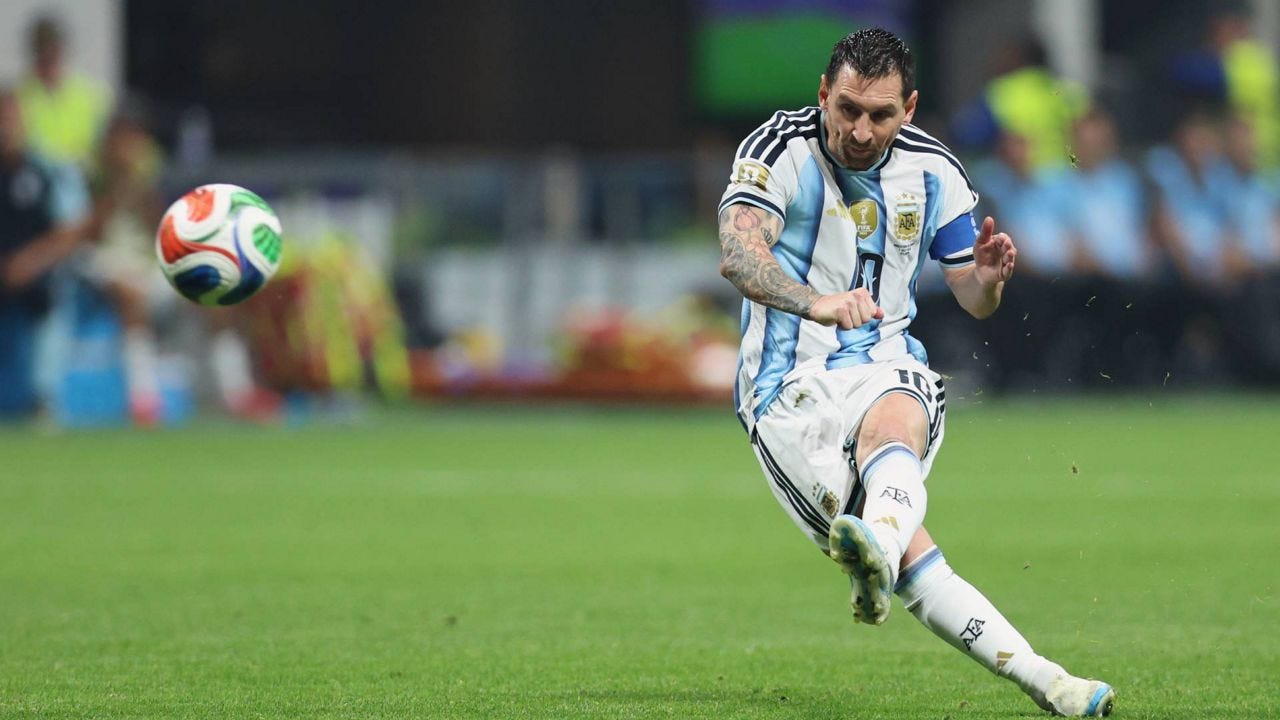
In the twenty-first minute on Tuesday night in Atlanta, Lionel Messi stepped to the penalty spot with Argentina trailing Egypt in a World Cup knockout match, and Mostafa Shobeir saved his shot. Egypt led 1-0, and now the best chance to equalize was gone.
What happened next is the subject of this newsletter. Messi did not chase the game or force shots from bad angles, and he did not let the miss follow him around the field. Egypt scored again in the second half, and with eleven minutes left Argentina trailed by two. Then Messi crossed for Cristian Romero’s header in the 79th minute, scored a first-time strike of his own in the 83rd, and Enzo Fernández won the match in stoppage time. Argentina 3, Egypt 2.
A note before we go on: this match won’t be remembered only for the
comeback. Egypt had a goal by Mostafa Zico ruled out by VAR in the 62nd
minute, a penalty shout waved away in the game’s final minutes, and a
shout on Mohamed Salah that never reached review — all in the stretch of
play that decided the result. The Egyptian FA filed an official complaint
against the officiating crew. Whatever you believe happened in Atlanta,
that frustration is real and it deserves more than a footnote. We’re
telling this story anyway — not to relitigate the whistle, but because
what follows is about something that has nothing to do with it: what a
mind does with a result it can’t control.
Remember the name Enzo Fernández. He comes back at the end of this story.
To understand those final eleven minutes, you have to go back four years, to a tunnel under Lusail Stadium.
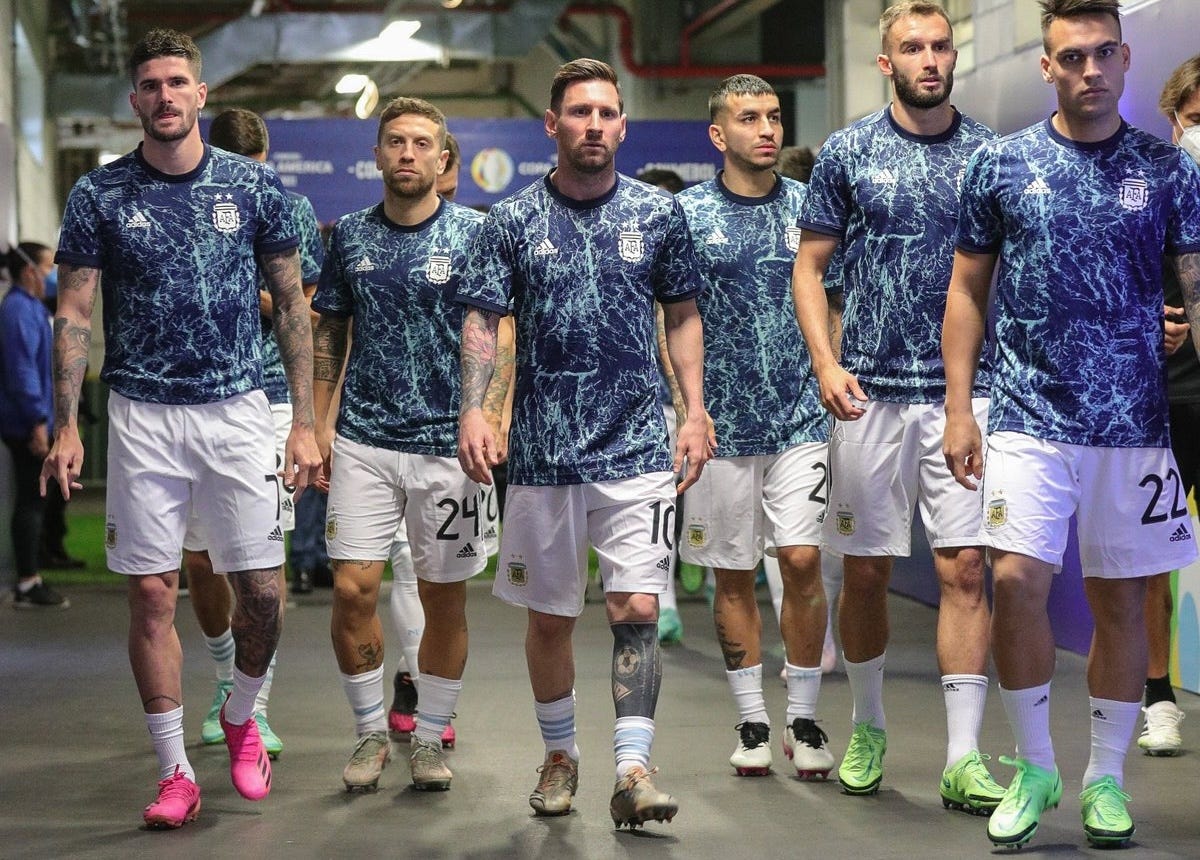
On December 18, 2022, before the World Cup final against France, Messi stood at the mouth of that tunnel adjusting a teammate’s jersey. The trophy that had escaped him for sixteen years waited ninety minutes away.
This was not the Messi who sobbed alone after the 2014 final, or the one who announced his retirement in despair after the 2016 Copa América. Those versions of him had carried a nation’s expectations everywhere they went, and they had tried to force greatness through sheer will, mistaking overwhelming effort for execution.
This Messi had learned to let go.
The skill had never left him. His left foot could still find impossible angles, and his vision still read defensive structures in milliseconds. What had changed was the relationship between his conscious mind and his body.
Self 1, the voice of judgment and control, had finally quieted enough to let Self 2, the body’s natural intelligence, perform without interference.
You could see it most clearly in his penalties. For most of his career Messi approached spot kicks with a predetermined plan, his decision made before the whistle blew, and his conversion rate hovered just under 78 percent, ordinary for a player of his caliber.
In Qatar he shifted to a goalkeeper-dependent approach on the attempts that mattered most. He would walk to the ball watching the keeper, wait for the first movement, and place the shot the other way at the last possible instant.
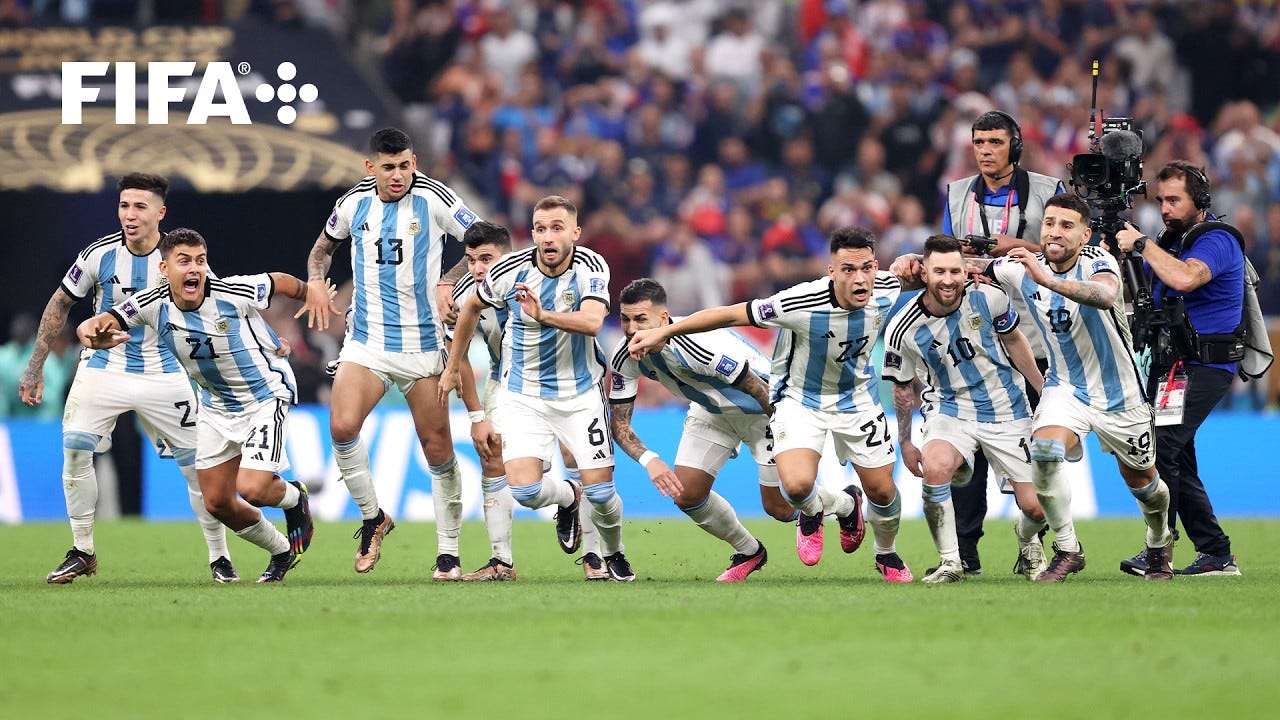
This technique demands complete trust in the body.
There is no time for Self 1 to second-guess or to tighten the wrist with over-trying, because the decision and the action have to happen together. Against the Netherlands in the quarterfinal he scored with calm precision, and in the final he converted twice, once in the shootout with everything on the line. He made six of seven penalties across that tournament. He had not gotten any better at kicking a ball. He had gotten out of his own way.
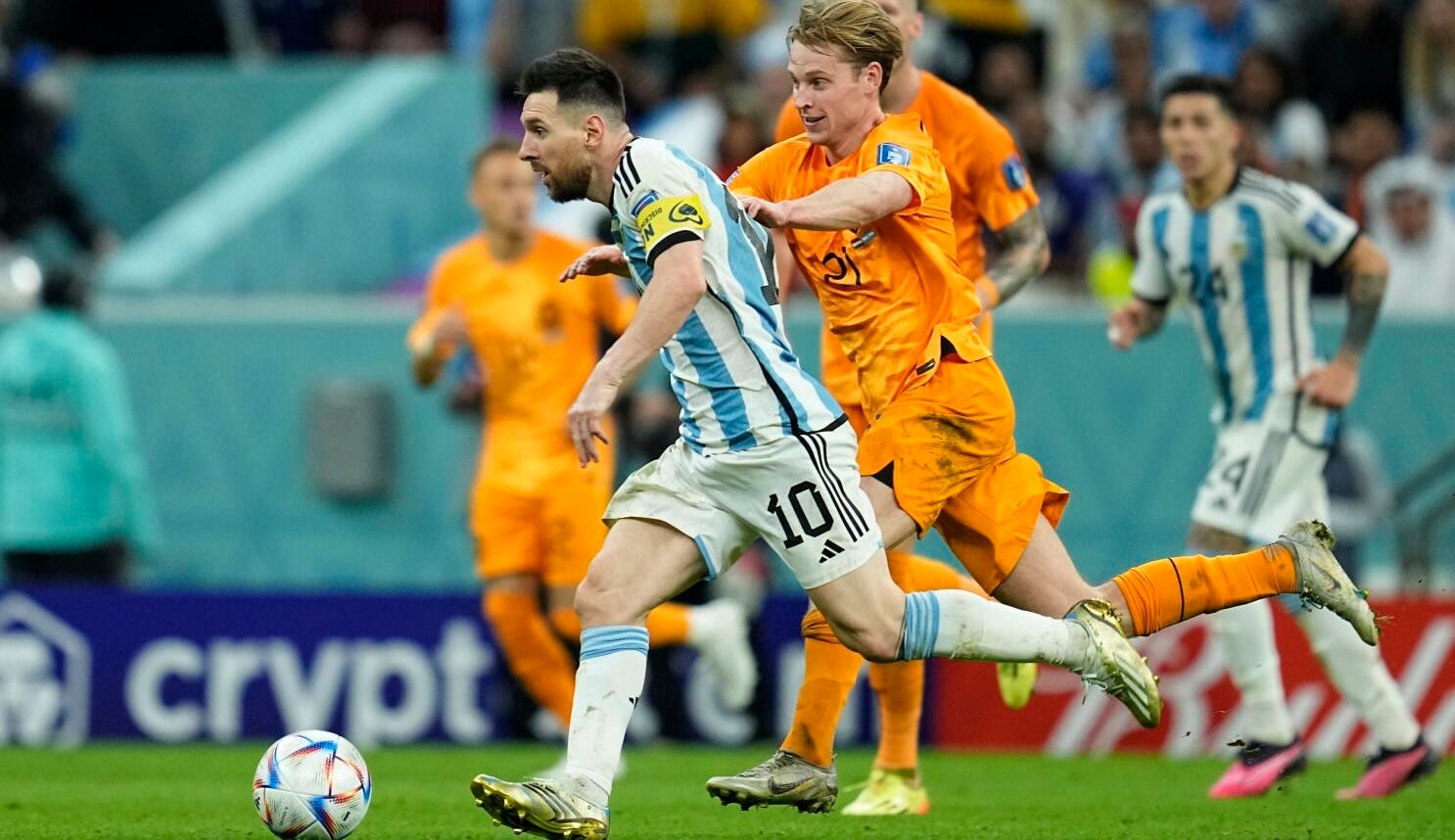
The same quality showed in how he met adversity. When France equalized late in the final, the cameras found no desperation in him. This is self-referenced competition. A setback carries no anger and no fear of consequences, it’s simply new information. In extra time he scored again, and then he prepared for penalties with the same composure he had shown in the tunnel.
What he did between the kicks mattered just as much. When teammates scored in shootouts he walked out of the center circle to meet them, against the rules, because he judged their state of mind worth the risk. And after Enzo Fernández missed in the quarterfinal shootout against the Netherlands, Messi left the huddle and went to him first, before anyone else could reach him. The message to every player was clear. If you miss, your captain will still come for you. The anxiety that destroys concentration in those moments faded because his presence communicated acceptance, whatever the result.
The road to that composure had been brutal. After the 2016 Copa América final he was found alone and crying. “I tried my hardest,” he said. “It’s been four finals, and I was not able to win. It hurts me more than anyone.”
He briefly retired from international football.
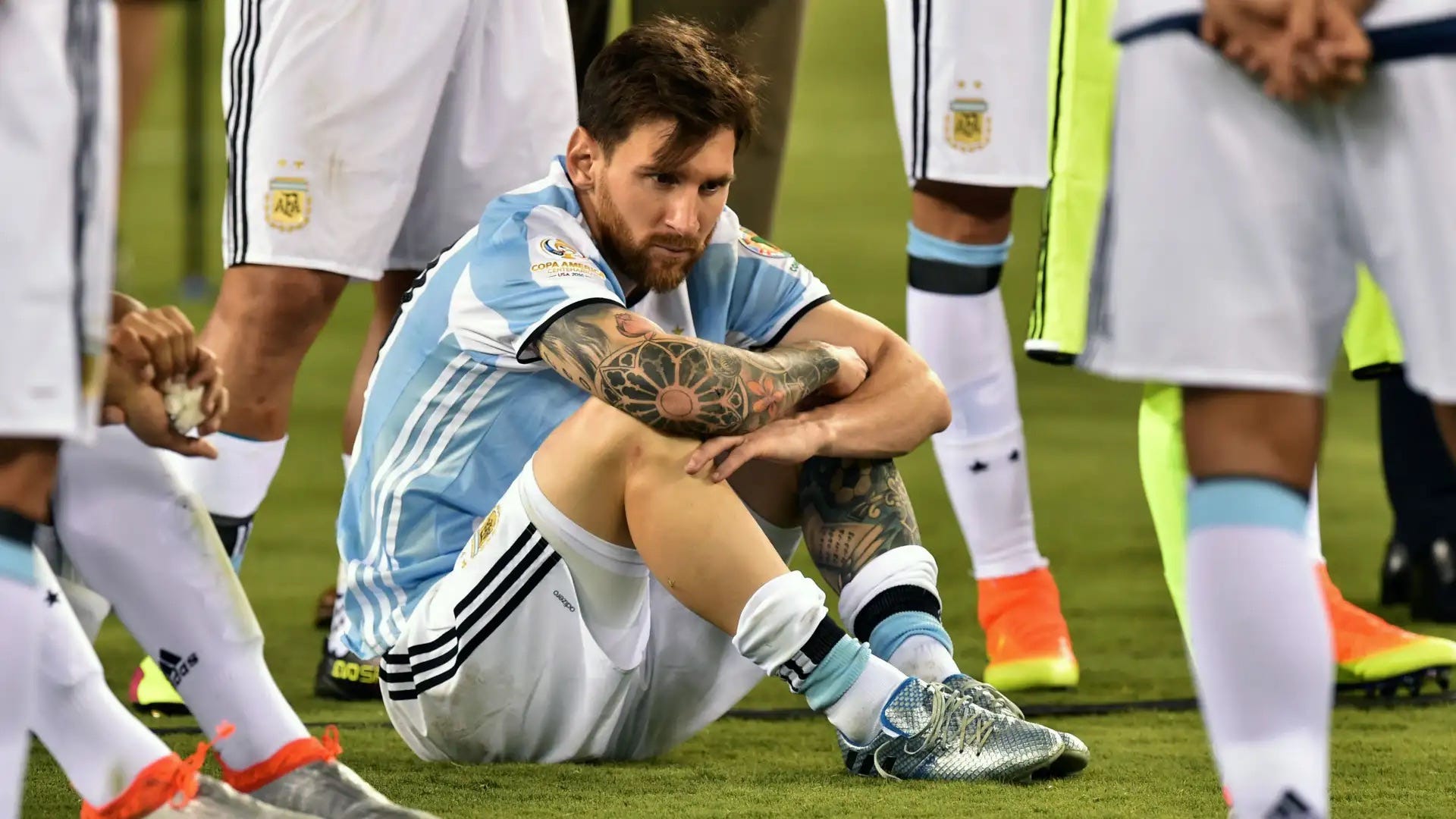
What changed between that low point and 2022 was more than maturity. The young Messi who moved through defenses at Barcelona played entirely from Self 2, from the body’s natural intelligence, and a decade of national failure had handed the controls to Self 1, which interfered with everything it touched.
The road back required him to learn the difference between productive focus and counterproductive control, between performing for his own satisfaction and performing to meet expectations, between making something happen and allowing it to happen.
Age forced the final lesson. By 2022 the explosive acceleration was gone, and a player motivated by trophies and validation often struggles when decline removes his primary weapon. Messi’s motivation was the craft itself, so the craft changed shape. He found his satisfaction in positioning, tempo, and the final pass, and his standards evolved with his body instead of against it.
Which brings us back to Tuesday.
The Messi who missed that penalty in Atlanta is the finished version of the man who walked out of the Lusail tunnel. A saved penalty in a knockout match is exactly the kind of event that wakes up Self 1, the voice that says you have ruined it, you are too old, you must fix this yourself and immediately.
For most of the second half Argentina trailed Egypt by two goals, and its captain treated the situation as information rather than a verdict. He kept scanning and kept probing, and when the moment came he produced a cross and a goal, his eighth of the tournament, more than any other player.
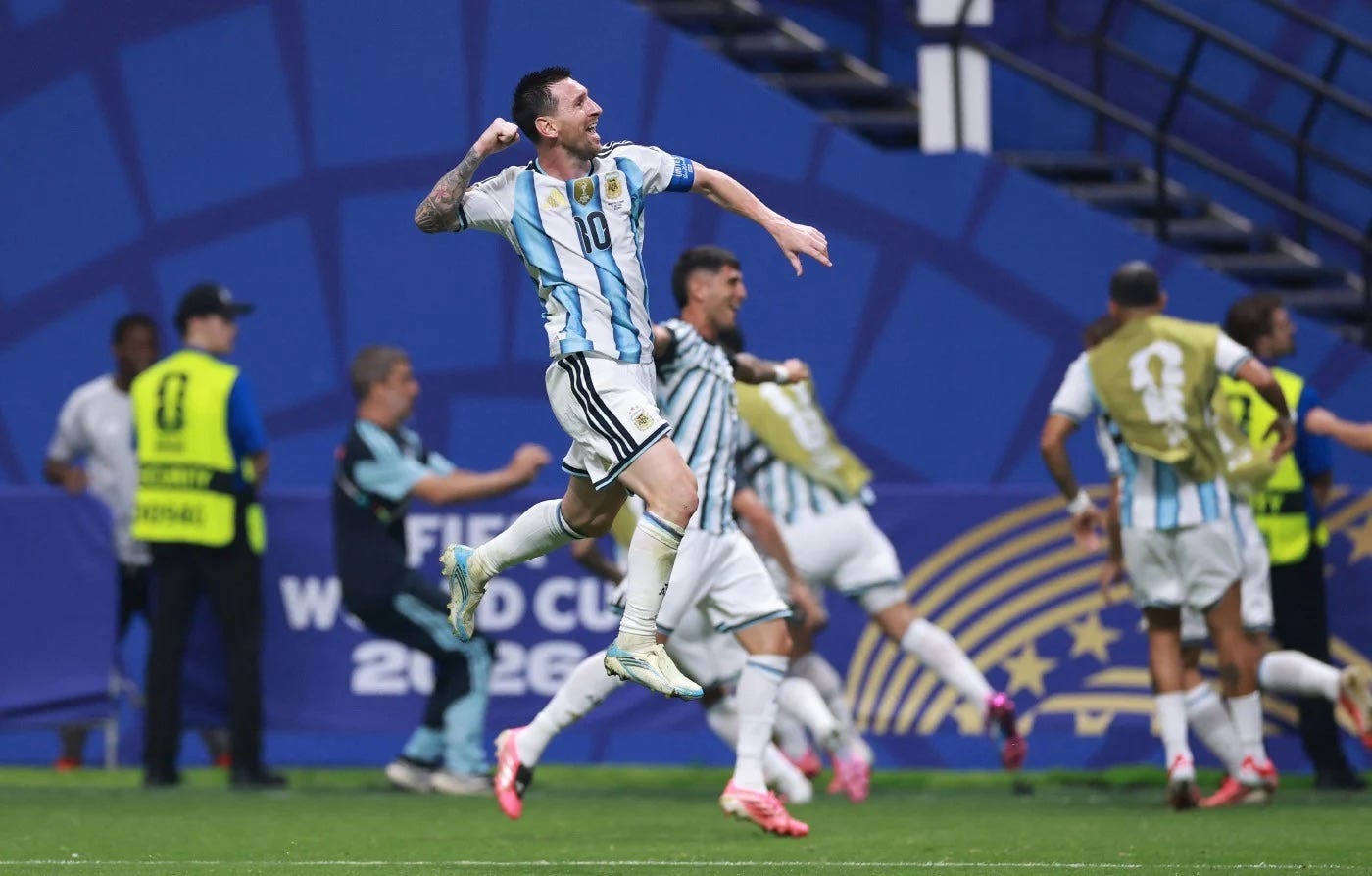
The winner belonged to Enzo Fernández, the same man Messi went to meet after the missed penalty in 2022. The captain who taught his team that failure would be met with acceptance watched that lesson come back to him four years later, in stoppage time.
Peak performance follows a total surrender of control to trust.
When Self 1 tries to govern every action, awareness collapses and the body loses access to its own intelligence. The more Messi’s conscious mind tried to force a World Cup through will, the more it interfered with the excellence his body was already capable of producing. His transformation added nothing new. It removed interference.
Effort is Self 2 using the muscles the task requires. Interference is Self 1 tensing the extra ones, overthinking the timing, attaching fear to the outcome. A missed penalty in the twenty-first minute becomes a catastrophe only if you spend the rest of the match replaying it. Messi did not, so the match remained winnable, and it was won.
The next time you face a moment that matters, notice the difference between productive focus and counterproductive control.
Take three deep breaths and feel your feet on the ground. Ask yourself whether you are trying to make something happen or allowing it to happen, and whether you are performing for your own satisfaction or to meet someone else’s expectations.
Then find the tension in your body, in the jaw and the shoulders and the hands. That tension is not helping you. It is Self 1 trying to force an outcome through muscles that have nothing to do with the task. Release it and move on. The intelligence that learned your skills in the first place is still there, waiting for room to work.
“Letting it happen is not making it happen. It is not trying hard. It is not controlling your shots. These are all the actions of Self 1, who takes things into his own hands because he mistrusts Self 2. This is what produces tight muscles, rigid swings, awkward movements, gritted teeth and tense cheek muscles.”
— Tim Gallwey, The Inner Game of Tennis
Qatar showed the principle. Atlanta showed it holds up. Trust is the bridge between mind and body, between intention and execution, between who you are and what you are capable of becoming.
Where is Self 1 blocking your path this week? What would change if you treated your next setback the way Messi treated a saved penalty, as information rather than a verdict?
Argentina plays Switzerland in the quarterfinal on Saturday. Whatever you believe about how they got there, watch what he does the next time something goes against him. And when you are ready to practice the awareness that carried him through sixteen years of heartbreak and one bad twenty-first minute, explore it inside The Inner Game App.
No posts
Comments
Nothing yet. Say the first thing.
Sign in to join the conversation.