
In this edition of The Indian Radius, we look at the recent visits by Indian officials to the UAE and Qatar, assessing how New Delhi is using Gulf diplomacy to manage the fallout from the war in West Asia.
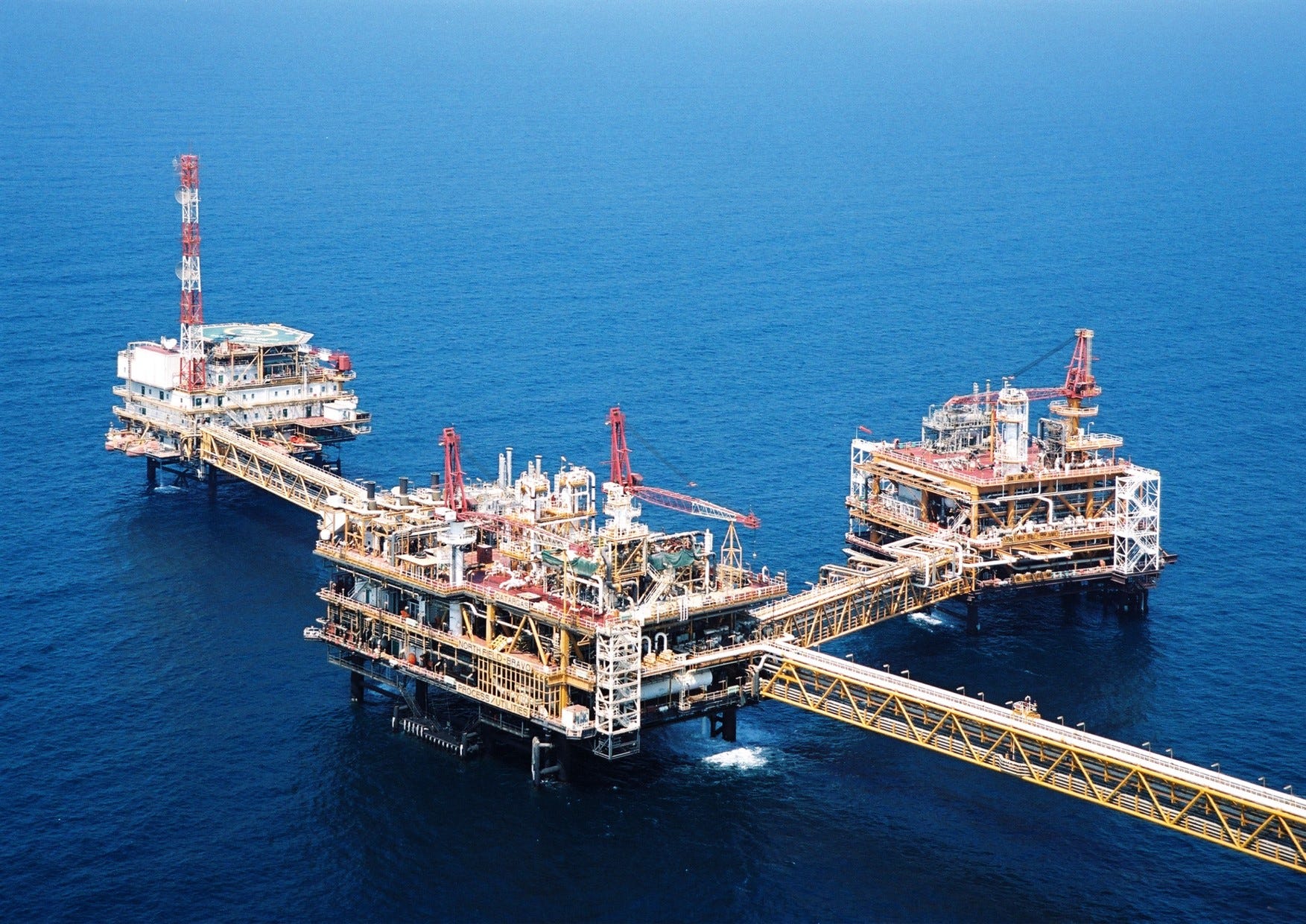
Credits: QatarEnergy LNGExternal Affairs Minister S. Jaishankar visited the United Arab Emirates earlier on this week. It is part of a broader government effort to strengthen outreach to Gulf countries at a time when the conflict has threatened shipping, energy supplies, and the well-being of Indian nationals in the region.
Why was the visit undertaken?
Officially, the trip was framed as a review and deepening of the India–UAE Comprehensive Strategic Partnership. But the timing makes the purpose clear. India needed political reassurance from one of its most important Gulf partners regarding the welfare of the large diaspora and continuity of trade. Indians constitute the largest expatriate community in the UAE, with an estimated 4 million residents, making up roughly 35% of the total population. This led the government to face immense domestic pressure regarding its safety.
Who did he meet and what was discussed?
Jaishankar called on UAE President Mohamed bin Zayed in Abu Dhabi and conveyed India’s gratitude for ensuring the well-being of the Indian community during the conflict. He also met Sheikh Abdullah bin Zayed, the UAE’s Deputy Prime Minister and Foreign Minister, where the conversation focused on “the evolving regional situation and its implications.”
In addition, he met Sheikh Hamdan bin Mohammed, Crown Prince of Dubai, and thanked the Emirati leadership for safeguarding Indians in Dubai. The visit began with an interaction with members of the Indian community, where he spoke about the Government of India’s efforts to ensure their security.
Discussions also touched upon the I2U2 (India, Israel, UAE, US) food corridor projects. Despite the conflict, both sides expressed a commitment to keeping these long-term economic projects on track to prevent a broader regional famine.
India-UAE Trade
Trade ties with the UAE have been buoyant lately. The Comprehensive Economic Partnership Agreement (CEPA), signed in 2022, has pushed bilateral trade toward the $100 billion mark for the 2025-26 fiscal year, and the two nations have now set an ambitious target of $200 billion by 2032.
India and the UAE have also coordinated on trade in local currencies (INR and AED) to reduce dependence on the dollar. A recent initiative has been to create a massive warehouse and retail space in Dubai for Indian MSMEs to showcase their products to the world. A significant portion of the discussion focused on moving beyond oil to fintech and renewable energy, which are seen as the region’s long-term stabilisers.
The UAE visit also needs to be read alongside Petroleum Minister Hardeep Singh Puri’s visit to Qatar in the same week. In Doha, Puri met Qatar’s Minister of State for Energy Affairs, Saad Sherida Al-Kaabi. The two sides welcomed the ceasefire, stressed the importance of restoring normalcy in global energy supplies, and emphasised unimpeded freedom of navigation. Most importantly for India, Qatar reaffirmed its commitment to remaining a reliable energy supplier.
What were some outcomes of these visits?
India’s interests in the region not only extend to preserving energy flows but also to maintaining air and maritime connectivity. In January 2026, India signed a 10-year LNG deal with ADNOC Gas. It is only natural then that India sought assurances that these supplies would remain prioritised and explored maritime corridors that could bypass the most contested zones if hostilities resume after the ceasefire expires on April 22nd.
One of the important outcomes was the move toward joint maritime monitoring. The UAE visit helped synchronise these tracking efforts with regional port authorities to ensure Indian tankers (like the Jag Vikram, which recently crossed the Strait) receive safe passage status.
The visit was a success in terms of de-risking. India managed to secure its energy interests and the safety of its diaspora without taking a side in the conflict. More importantly, various government ministries have been in touch with several Gulf counterparts by phone. Prime Minister Modi himself spoke with the leaders of Oman and Jordan. This is indicative of a broader whole-of-government approach, suggesting that India’s reaction was not handled by the MEA alone but involved coordination among the foreign policy, shipping, petroleum, and commerce ministries in tandem with one another.
In Other News
Since so many Indian ships were delayed or rerouted to Dubai and other Gulf ports over the last 14 days, the Jawaharlal Nehru Port Authority (JNPA) in Mumbai announced a major relief package:
100% waiver on ground rent and “dwell time” charges for stranded export containers.
80% waiver on “reefer” (refrigerated) plug-in charges for perishable goods.
This is intended to prevent Indian exporters from going bankrupt due to the delays caused by the conflict.
Iranian Ambassador to India, Dr Mohammad Fathali, held a media briefing in New Delhi to address the collapse of the ceasefire and the new U.S. naval blockade.
He explicitly confirmed today that Iran has not charged any tolls to Indian tankers passing through the Strait of Hormuz, stating that they have been treated as “friendly vessels.”
He expressed deep gratitude to the Government of India for being a reliable and compassionate partner, emphasising that Tehran views India as one of its top five priority diplomatic partners.
Regarding the U.S. naval blockade currently enforced by the USS Abraham Lincoln, Fathali warned that the U.S. is “very well aware of our capacity” and that Iran is fully prepared for all options, including a return to high-intensity conflict.
With the U.S. naval blockade of Iran now entering its third day and the collapse of the initial Islamabad talks, New Delhi is working the phones.
U.S. President Donald Trump and Prime Minister Narendra Modi had a long conversation. Modi described the exchange with his “friend” as a review of “substantial progress” in the India-U.S. strategic partnership, while also signalling India’s deep anxiety over the current naval blockade.
EAM Jaishankar spoke to the Israeli Foreign Minister Gideon Sa’ar, who pressed India on the need for firm action against Iran’s “economic terrorism” in the Strait. India reiterated its stance on freedom of navigation and the safety of Indian merchant shipping.
He also spoke to Australian FM Penny Wong on the regional fallout and how the blockade is impacting Indo-Pacific supply chains.
India is one of the few powers currently talking to the US, Israel, the UAE, and Iran simultaneously. That gives New Delhi a degree of reach that few others currently possess. It also means India is not merely an interested observer of the crisis but a state with access to all sides. This position carries both opportunity and responsibility. It allows India to protect its own interests and potentially contribute to de-escalation. New Delhi must remain conscious of the diplomatic capital it holds, and use that influence with prudence and strategic clarity.
What We’re Reading and Listening to
[Brief] Read Anushka Saxena’s latest issue brief on The Shahed Drone: Life Cycle, Supply Chain, and Lessons
[Opinion] Read Lokendra Sharma’s recent piece on why Kalpakkam’s fast breeder reactor alone will not lead to nuclear rejuvenation
[Video] Watch the latest episode of The Gist, where Manoj Kewalramani and Anushka Saxena discuss our new book, Taming The Dragon: A Manifesto For A New Modus Vivendi With China.
If you’re in Bangalore, join us on Friday, 24th April, for the launch of this book for an interactive discussion on India’s China policy! RSVP here.
Thank you for reading this edition of the Indian Radius.
Comments
Nothing yet. Say the first thing.
Sign in to join the conversation.