
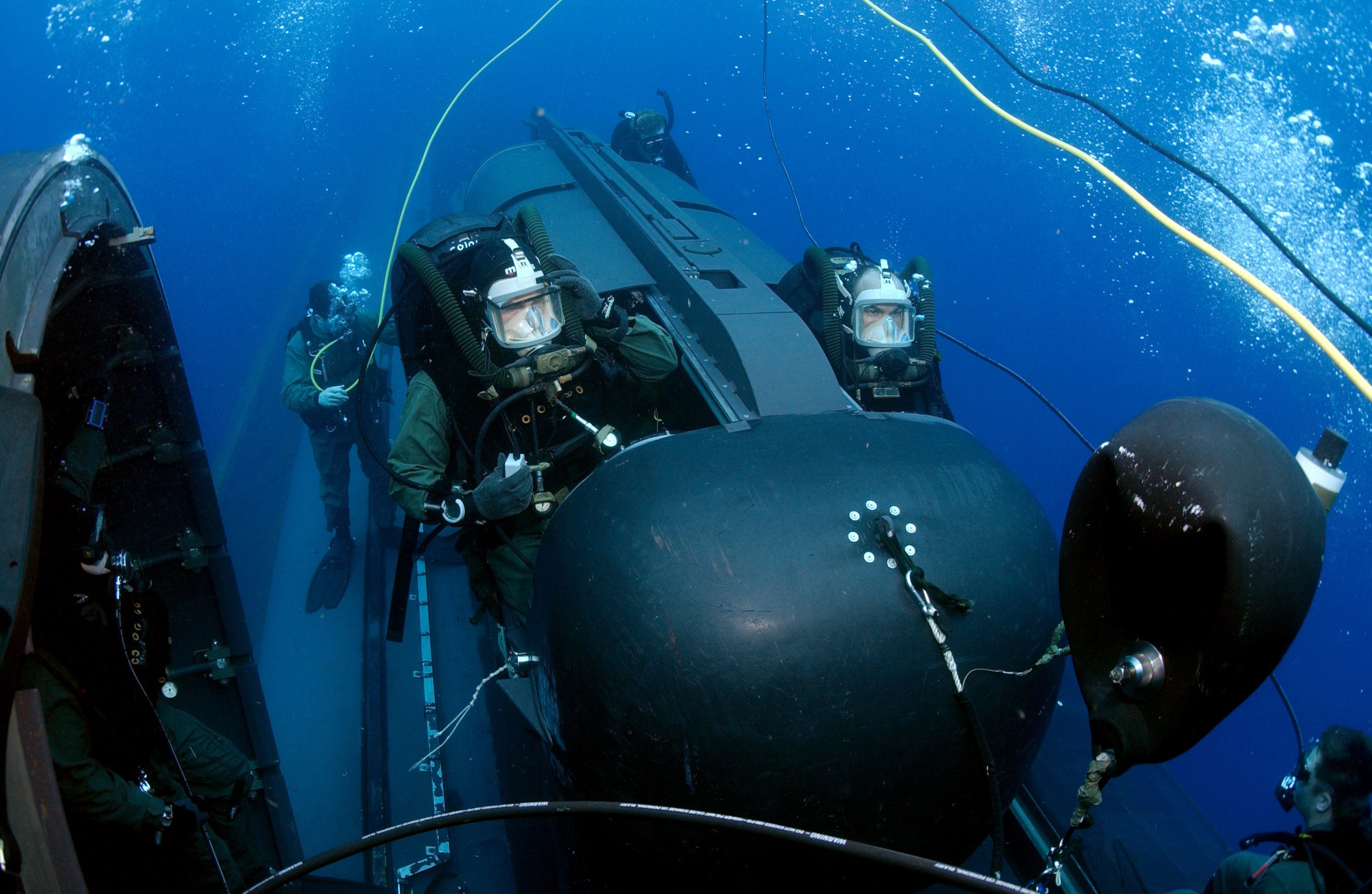
Last September, freelance journalist Matthew Cole and New York Times reporter David Philipps revealed one of the most highly classified military missions in a generation: a 2019 SEAL Team Six operation in North Korea that killed civilian fishermen, fell apart before it could be completed, and was apparently never disclosed to Congress.
I had been hearing rumors about the story from my own sources with the tantalizing detail that US forces had set foot in North Korea, albeit briefly. But I didn’t have the sources to pull it together and, to be honest, it sounded like the kind of story that could cause trouble, both for the government and for the reporters who published it.
Nearly a year later, we’re learning just how much trouble.
The New York Times reported Saturday that freelance journalist Matthew Cole has spent months fighting a subpoena issued by prosecutors in Newport News, Virginia, seeking to force him to reveal his sources. FBI agents showed up at Cole’s New York apartment in February to serve the subpoena, which seeks two years of his contacts and conversations. The Times is defending Cole. “It’s something to see when people and institutions stand up and fight for a free press,” he wrote on Instagram.
It’s the latest in a string of aggressive actions the Trump administration has directed at journalists this year. In January, the FBI raided the home of Post reporter Hannah Natanson, seizing her computer, phones, and a Garmin watch as part of an investigation into one of her sources. In March, the administration demanded records from Wall Street Journal reporters to identify the sources in a story on warnings from senior military leaders about the risks of an extended war with Iran—warnings that have proved to be dead on. In July, the Justice Department subpoenaed three Times reporters, along with two of their spouses and one reporter’s mother, to unmask sources for a story on security concerns about the president’s new Air Force One. (The government later agreed to withdraw the subpoenas to the Times and Journal reporters.)
Cole, who has reported for ABC News, NBC News, and The Intercept, developed sources inside the highly secretive and insular world of SEAL Team Six, one of the nation’s elite Tier 1 units alongside Delta Force, while reporting on war crimes there. He later expanded that material into a 2022 book, Code Over Country, a searing exposé of the unit’s corrupted culture, including the startling revelations of how Team Six’s Red Squadron issued custom hatchets that team members allegedly used to kill and mutilate militants in Iraq and Afghanistan.
Red Squadron was once again at the center of the North Korea story Cole reported with Philipps, a two-time Pulitzer winner. The unit was tapped to plant a high-tech listening device to intercept Kim Jong Un’s communications ahead of a high-profile nuclear summit in February 2019 in Hanoi. The mission reportedly involved maneuvering a nuclear submarine near the North Korean coast and launching two SEAL delivery vehicles to ferry Red Squadron members underwater close enough to swim ashore. But things unraveled when the SEALs spotted a small boat near the landing zone. Fearing compromise, operators onshore opened fire, killing the crew, who turned out to be North Korean shellfish divers. The team withdrew without installing the device.
Reporters who publish government secrets have to be able to justify why, and the answer here is clear. The mission's extreme secrecy became a shield against accountability. That concern, Cole explained in a Substack post, prompted his original source to come forward, worried that the SEALs involved had escaped scrutiny simply because so few people knew what happened—a pattern that has plagued SEAL Team Six for years. I've run into the same brick wall in a Freedom of Information fight I've been waging against the CIA for years, in which the agency claims secrecy prevents it from releasing details of how a CIA "ghost detainee" died in a torture position at Abu Ghraib prison in 2003, an act that was also a possible violation of the law.
In the North Korea story, further digging turned up a deeper accountability gap. According to the Times, the Trump administration never notified congressional committees that oversee military and intelligence activities, either before or after the mission, an omission that may have violated the law. Congress only learned of the mission once Trump left office, when Biden took over. But it's not the SEALs or the Pentagon officials who may have broken the law who are facing a subpoena. It's the reporters who told the public.
So this was not a reckless leak. It wasn’t WikiLeaks dumping the names of thousands of local informants on the Internet just because it could. The North Korea story was two years in the making and the product of painstaking reporting.
Cole has written that he learned about the North Korea mission in 2023 from “a trusted and vetted source,” and that he sat on it for eight months, making no other calls, specifically so he wouldn’t expose that source. He didn’t start reporting in earnest until mid-2024. In early 2025, worried about the high risks of disclosure and still needing to fill in some details, he brought in Philipps, who’d done his own exposé of the Navy SEALs in Alpha, his 2021 book about the Eddie Gallagher case.
The final report drew on interviews with two dozen people, all of whom spoke on condition of anonymity because of the mission’s classified status. The Times said it had withheld sensitive information that could affect future missions, and the published account named no one involved in the operation and specified no location. The newspaper also published over the objections of the Trump White House, which had warned of all sorts of strategic repercussions.
Cole’s caution about the story stemmed from experience. “Perhaps because I have experienced the consequences of moving too aggressively on a story that deserves public disclosure, I erred on the side of discretion and patience,” he wrote on Substack.
The government has gone after Cole’s sources before, and some have paid the price with years in prison. Former CIA officer John Kiriakou and former NSA contractor Reality Winner both went to prison after being linked to leaks to Cole.
Kiriakou disclosed to Cole, then a freelance reporter, the name of two CIA officers involved in the agency’s post-9/11 torture program. Without Kiriakou’s knowledge, Cole passed one of the names to a defense investigator working for lawyers representing Guantánamo Bay detainees, and the name ended up in a confidential court filing, which got the FBI’s attention. Kiriakou ultimately pleaded guilty to leaking the name of Thomas Fletcher, the head of the CIA’s Rendition, Detention, and Interrogation group, and was sentenced to 30 months in prison in 2013. Kiriakou blasted Cole as a “coward” who failed to protect his sources.
Cole was also the lead reporter on The Intercept’s 2017 story about a leaked NSA report on Russian cyberattacks on American voting software in the 2016 election. The report had been mailed in by Reality Winner, then an NSA contractor. Attempting to verify the document, Cole revealed to a source that the letter Winner had mailed it in was postmarked from Fort Gordon, Georgia — home to the NSA’s Cryptologic Center. Winner was sentenced to more than five years in federal prison in 2018.
Cole knows what it costs the people who trust him, which explains why it took so long to get the North Korea story in print. When I first heard rumors about it, I wondered how Kim Jong Un would react to what was, after all, an unprovoked attack on unarmed civilians. It turns out the danger came from somewhere else entirely, not Pyongyang, but Washington. That’s the lesson in what secrecy costs a journalist: the danger was never really the enemy abroad. It was always the government at home.
No posts
Comments
Nothing yet. Say the first thing.
Sign in to join the conversation.