
I didn’t put this behind a paywall. The reporting matters too much to lock up. This work stays free and open for anyone who needs it, and readers are what keep it that way. If you want it to continue, become a paid subscriber at $8 a month or $80 a year. If you can’t, share the piece. That matters too.
Sixty-one years ago today, Lyndon Johnson signed the Voting Rights Act with fifty pens.
They were Esterbrooks, steel-nibbed, six and a quarter inches, black grip and clear barrel, the kind of pen a bank chains to a counter. Kennedy had used the same stock. Each one went out in a plain cardboard box with a typed card inside, and the card said what the pen had done: signed S. 1564, an act to enforce the fifteenth amendment to the Constitution of the United States.
The fifteenth amendment was ratified in 1870.
Look at the photograph from that room and you see men. Dozens of them, shoulder to shoulder, Martin Luther King among them wearing a wary half-smile.
Rosa Parks was in that room. She first went to register in 1943, was turned away three times, and got her name on the rolls in 1945 only after passing the literacy test (the tests that asked applicants to name all sixty-seven county judges in Alabama) and paying the poll tax.
She had been fighting for the ballot for twenty-two years before that morning.
Jim Clark had been sheriff of Dallas County since 1955, and the courthouse was his to defend. Once the marches began he moved his family into the jail beside it, which put him steps from his desk and gave him a window onto the SNCC office across the street.
He was six foot two and 220 pounds and he wore an Eisenhower jacket and a military helmet and a black-and-white pin on his lapel that read Never, and he carried a cattle prod, and he modeled himself on General Patton. Ramparts magazine called the pin his answer to “We Shall Overcome.”
Four hundred people came to register on January 18, 1965. Clark put them in the alley at the back of the building and kept them there until dark, and nobody reached a registrar. Sixty-two arrests followed the next morning on unlawful assembly, and five others on a charge the county called criminal provocation. A New York Times photographer caught him with Amelia Boynton, who had been registering Black voters in Selma since the 1930s, by the collar, steering her toward the car, and the picture ran on the front page.
Two weeks later, five hundred schoolchildren went to jail.
Inside the building he was defending, the registrar opened two days a month. The literacy test asked an applicant to name all sixty-seven county judges in the state of Alabama. Two percent of the county’s Black residents were on the rolls.
Clark met John Lewis outside those doors that same January. Lewis was twenty-five, five feet six, 155 pounds, and he spoke with a stutter. “John Lewis, you’re an outside agitator,” Clark told him, “and an agitator is the lowest form of humanity.”
Years later Clark wrote a book about what he believed had been done to his town, and he titled it I Saw Selma Raped.
In the 1970s the journalist Howell Raines found one of the men who had ridden in Clark’s posse and asked whether Black people in Selma had held a single legitimate grievance. “I’m tryin’ to think of one,” he said.
He never came up with one.
Well before the night in Mack’s Café, Jimmie Lee Jackson had climbed the courthouse steps in Marion five separate times to put his name on a list, and five times the registrar sent him back down.
He cut wood for six dollars a day. He was the youngest deacon in his church, and he was twenty-six years old on February 18, 1965, when Alabama state troopers followed his family through the café door, beat his mother to the floor, and shot him point-blank in the stomach as he moved to cover her.
While he lay in the hospital the state served him with a warrant for assault with intent to murder a state trooper. He died on February 26.
So what does a country do with a man who keeps coming back? It charges him.
The troopers had gone for the cameras first that night, spraying black paint across the lenses, and then they went for the reporters. Richard Valeriani of NBC took an axe handle to the back of the head. A trooper took the axe handle away from the man who swung it, told him he had done enough damage for one night, and let him walk off. Valeriani stood in the street with his hand in his own blood, and a man from town came up and asked whether he needed a doctor. He said yes, he thought he did. The man looked at him and said, “We don’t have doctors for people like you.”
On March 7, six hundred people walked onto the Edmund Pettus Bridge. Clark's posse waited behind the state troopers. Some had come on horses. They carried whips, and clubs wound in barbed wire. The troopers gave the marchers two minutes to turn around and came at them after one. Amelia Boynton was beaten unconscious. John Lewis walked away with a fractured skull.
Ardies Mauldin was fifty-two, a nurse. Her husband drove deliveries for a grocery wholesaler. Her seventeen-year-old son had marched behind John Lewis on the bridge. She had tried to register twice already that year and been rejected both times.
“When things were going along smooth, I didn’t think much about it,” she said. “But when they started running horses over people, then I got mad.”
Four days after the signing, she and her husband climbed the stairs to the third floor of the federal building, past a sign warning that it was now a federal crime to deprive any person of any right secured by the Voting Rights Act. Federal examiners asked her eleven questions. Ten minutes later they handed her a white card with a number on it.
Hers said 1.
“It didn’t take but a few minutes,” she said. “I don’t know why it couldn’t have been like that in the first place.”
Behind her, people filled the staircase and the lobby and stood outside to the end of the block. Examiners registered 1,114 people across nine counties that day. By Friday, seven thousand. By the twenty-first, twenty thousand.
Clark watched it from the courthouse. “The whole thing’s so ridiculous I haven’t gotten over it yet,” he said. “In fact, I’m nauseated.”
None of that was a new right. The Constitution had said it since 1870, and it had said it through every one of Jackson’s five trips up those steps. What arrived in 1965 was somebody whose job was to make Alabama obey, and the law did it two ways: certain states had to get federal permission before changing any voting rule, and any voter could sue over a map that shut them out.
In Shelby County v. Holder, decided in 2013, the Supreme Court struck the formula deciding which states had to ask permission. Texas announced its voter ID law was back in effect within minutes. Ginsburg wrote in dissent, “The sad irony of today’s decision lies in its utter failure to grasp why the VRA has proven effective.”
They ended it because it worked.
On April 29 of this year, in Louisiana v. Callais, the Court took most of the second one too. Six to three. Showing that a map shuts Black voters out is no longer enough; a plaintiff now has to prove the legislature meant it. Kagan wrote that the decision renders Section 2 all but a dead letter. Florida passed a new congressional map the same day. Tennessee passed one eight days later. Louisiana canceled its congressional primary outright, and absentee ballots people had already filled out and sealed and mailed were set to be thrown away.
In Alabama they proved intent anyway, in front of three federal judges who found the map was drawn to spread Black voters thin at least in part because they are Black. On June 2 the Supreme Court set that ruling aside in an unsigned order and let the state use the map, reasoning that the election was too close to change anything.
Nobody repealed the Voting Rights Act. They struck one formula out of it, and left the rest on the books, where it sits this morning.
Jim Clark ran for reelection in May. He had traded the Never pin for one that read For law and order.
The number of registered Black voters in Selma had gone from 1,516 to 10,186. On primary day the line outside the courthouse stretched six blocks.
“I’m going to vote just as far against Jim Clark as I can anybody in this world,” said Mary Reese, an elderly woman standing in it. “I been waiting him out for a long time. A LONG time.”
Clark lost.
He did not lose because the Constitution said so. It had said so his entire life, while he was herding four hundred people into an alley behind his courthouse and leaving them there until dark.
He lost because for one year there was somebody standing on the third floor of the federal building with the authority to write a name down.
So much is locked behind paywalls now, and I would love to keep this open. But that can only happen if there are readers who pay and keep it free for everyone else.
We are building historical literacy here. The ability to see the pattern as it is being written in real time is what makes you harder to lie to, at a moment when the lies are coming faster than most people can track.
If this made the pattern clearer, become a paid subscriber at $8 a month or $80 a year. That is what keeps it here.
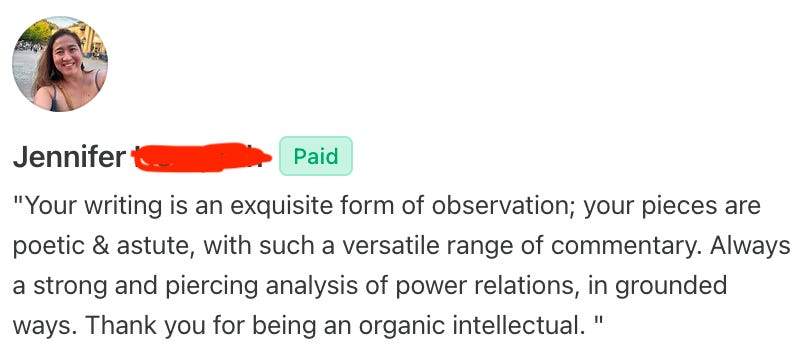
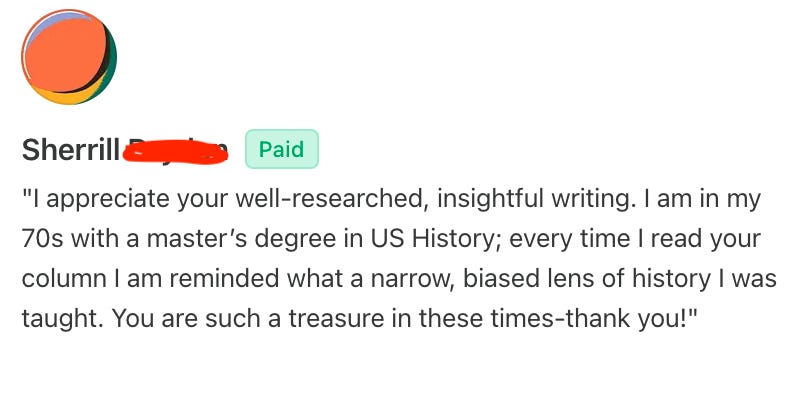
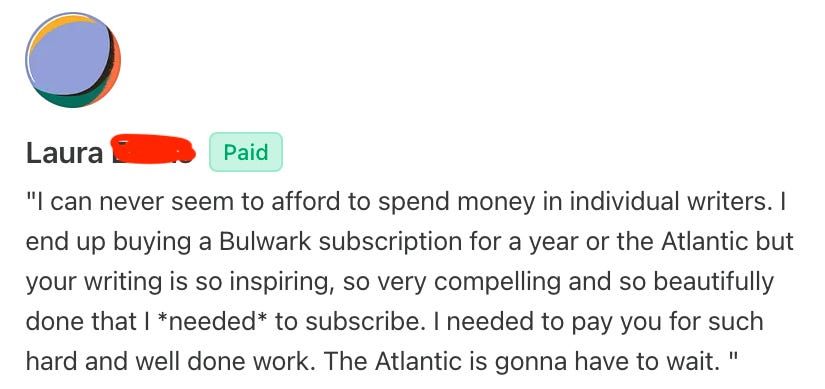
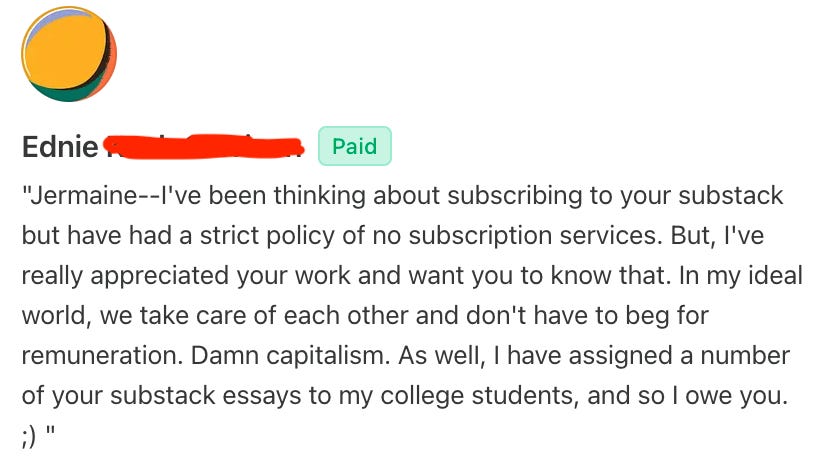
Words From Subscribers:
The National Museum of African American History and Culture holds one of the fifty pens, an Esterbrook with a black grip and clear barrel, framed with a copy of S. 1564, the act to enforce the fifteenth amendment.
https://nmaahc.si.edu/object/nmaahc_2010.45.1a-dYoichi Okamoto’s photograph of the signing in the President’s Room of the Capitol, from the Lyndon B. Johnson Presidential Library.
https://www.lbjlibrary.org/object/photo/signing-voting-rights-act-9Ari Berman, Give Us the Ballot: The Modern Struggle for Voting Rights in America (Farrar, Straus and Giroux, 2015). Source for the fifty pens, Rosa Parks’s registration, Jim Clark’s record in Dallas County, the Marion shooting, Ardies Mauldin’s registration on August 10, the Selma registration figures, and the 1966 sheriff’s race.
The Man at the Courthouse
Stanford’s Martin Luther King Jr. Research and Education Institute on the Selma campaign, Sheriff Jim Clark, and the two percent of Dallas County’s Black residents who were registered.
https://kinginstitute.stanford.edu/selma-montgomery-marchHowell Raines, My Soul Is Rested: Movement Days in the Deep South Remembered (G. P. Putnam’s Sons, 1977). Source for Clark’s remark to John Lewis, the posse member unable to name a grievance, and Richard Valeriani’s account of the night in Marion.
Marion
The National Park Service dates the attack to February 18, 1965, and Jimmie Lee Jackson’s death to February 26 at Good Samaritan Hospital in Selma.
https://home.nps.gov/semo/planyourvisit/index.htmThe Park Service account of the marches that followed, and the six hundred who set out from Brown Chapel on March 7.
https://home.nps.gov/articles/selmatomongtomerymarch.htm
August 10, 1965
The Congressional Research Service explains how Louisiana v. Callais raised the standard of proof for Section 2 claims and quotes Kagan’s dissent.
https://www.congress.gov/crs-product/LSB11431The Brennan Center’s tracking of Section 2 at the Supreme Court.
https://www.brennancenter.org/our-work/research-reports/section-2-voting-rights-act-supreme-courtFlorida’s legislature passed a new congressional map the day the ruling came down.
https://floridaphoenix.com/2026/04/29/florida-legislature-passes-desantis-congressional-redistricting-map/Tennessee passed one eight days later.
https://tennesseelookout.com/2026/05/07/tenn-passes-new-potential-9-0-gop-u-s-house-map-eight-days-after-scotus-guts-voting-rights-act/Louisiana canceled its congressional primary, leaving already-cast absentee ballots to be discarded.
https://www.csmonitor.com/USA/Politics/2026/0513/gerrymandering-congressional-maps-midterms-louisianaLouisiana then passed a map eliminating one of its two majority-Black districts.
https://www.nbcnews.com/politics/2026-election/louisiana-passes-new-congressional-map-dismantling-one-majority-black-rcna347575The Supreme Court’s unsigned June 2 order in Allen v. Milligan, Sotomayor’s dissent, and the three-judge panel’s finding that Alabama’s 2023 map was drawn to dilute Black votes at least in part because of race.
https://alabamareflector.com/2026/06/02/supreme-court-allows-alabama-to-use-2023-congressional-map-in-august-special-primary/The Legal Defense Fund and ACLU response to that order.
https://www.aclu.org/press-releases/supreme-court-reinstates-racially-discriminatory-map-for-alabamas-2026-congressional-elections
No posts
Comments
Nothing yet. Say the first thing.
Sign in to join the conversation.