
Have you ever wondered why we are called the ‘Energy for Growth Hub’ and not just ‘Energy for Growth’? It’s because the ‘Hub’ part of our name is really core to who we are. While our core team has deep policy experience, we’re also a global network of researchers and advocates at leading universities and think tanks.
The Hub is proud to work with 28 fellows across academic, consulting, government, and development sectors with deep expertise in energy tech, utilities, energy finance, development finance, and more.
Working with fellows is the sweet in the Hub sauce. Our fellows help us take a step back and think deeply about how electricity can lift people out of poverty and turn the frontiers of research and evidence into digestible insights and actionable to-do lists for policymakers and donors. Best of all, our fellows expand our global energy-for-growth family. The work we do at the Hub is bigger than any team can take on alone, and we’re grateful to partner with them.
Read on for the latest insights from some of our top researchers.
By: Naa Adjekai Adjei, Senior Associate, Sustainable Energy for All
May 18, 2026
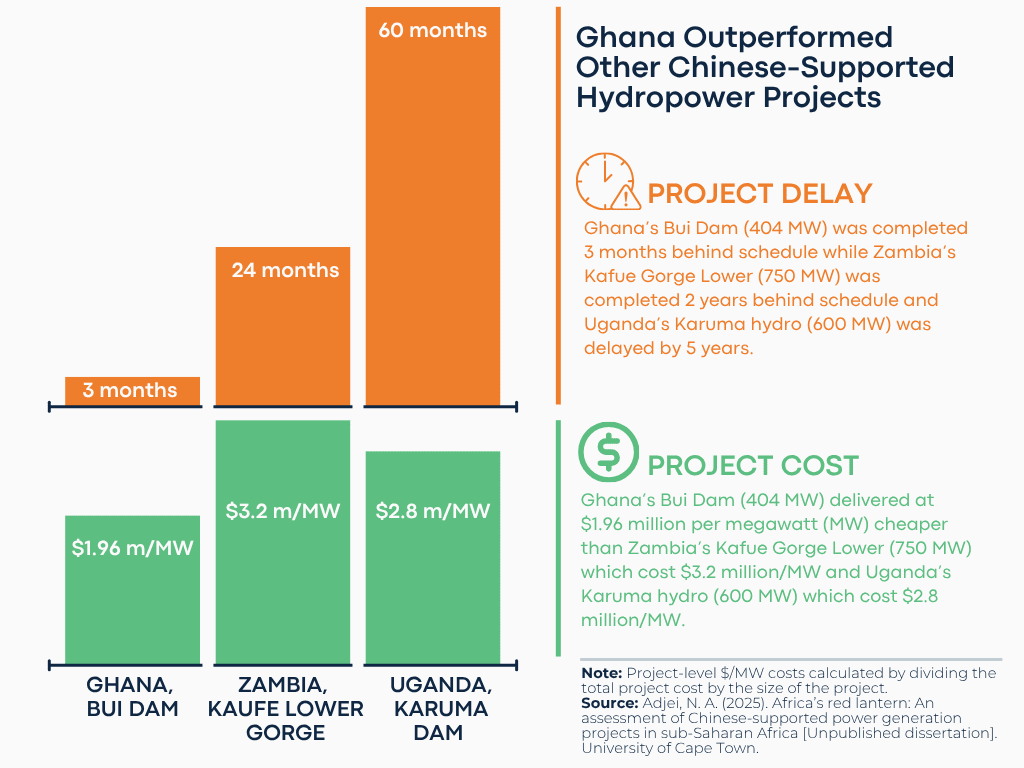
The literature on African energy project finance centers largely on Western-supported investments. This creates a blind spot for decision makers in sub-Saharan Africa, where China funds or builds approximately 20% of power plants. Unlike other international partners, China typically delivers power projects as integrated packages, with financing tied to state-backed engineering, procurement, and construction contractors. Some host countries, underprepared for this model, face delays, cost overruns, and lower-quality outcomes.
Naa Adjekai Adjei pinpoints the faultlines, shows how Ghana navigated them through cost benchmarking, competitive procurement, stronger finance negotiation, and project oversight expertise to achieve better results.
Read the full memo.
Read more of Naa’s other writing on this issue.
By: Ama Baafra Abeberese, Associate Professor, Wellesley College
May 5, 2026
Achieving universal access to affordable electricity can conflict with ensuring the financial solvency of utilities. In the same countries where over 600 million people are without connection to electricity, fewer than 40% of utilities are able to recover their costs, which in turn affects the ability to deliver service to those who need it. Is there an electricity tariff structure that can simultaneously achieve both objectives?
Ama Baafra Abeberese weighs the pros and cons of research on three common tariff approaches and recommends increasing block tariffs as the best positioned to balance these competing objectives in developing markets.
Read the full memo.
Read more of Ama’s brilliant takes here.
Share this post with your energy-policy nerd friends:
By: Habiba Ahut Daggash, Senior Associate, RMI
February 10, 2026
Many funders now measure the success of their electrification or productive use programs not just by megawatts deployed, but also by the number of women who receive appliances, jobs, skills, or lead enterprises. While well-intentioned, these targets can be counterproductive when they overlook local norms, community power dynamics, or the structural barriers rural women face — particularly around domestic work, land ownership, and autonomy.
Habiba Ahut Daggash writes that for energy interventions to truly empower, donors and policymakers must prioritize expanding and improving public services that reduce the domestic work that consumes women’s time and limits their choices.
Read the full memo.
To dig into more of Habiba’s takes, go here.
By: Jessica Lovering, Postdoctoral Researcher, Uppsala University, and Hamna Tariq, Research Associate, Energy for Growth Hub
January 26, 2026
As the United States, China, and Russia race to build and export next-generation nuclear reactors, critics warn of increasing risk of weapons proliferation or deadly radiological release from potential terrorist capture in emerging economies.
Our fellow Jessica Lovering and our staff research associate Hamna Tariq took this one on directly. And here’s the TLDR: Though valid, these concerns are overstated. The institutions and technologies that govern nuclear power make weaponization extremely difficult.
Read the full memo.
Learn more about Jessica here.
Written by Meron Tesfaye and Jillian Mock.
Comments
Nothing yet. Say the first thing.
Sign in to join the conversation.