
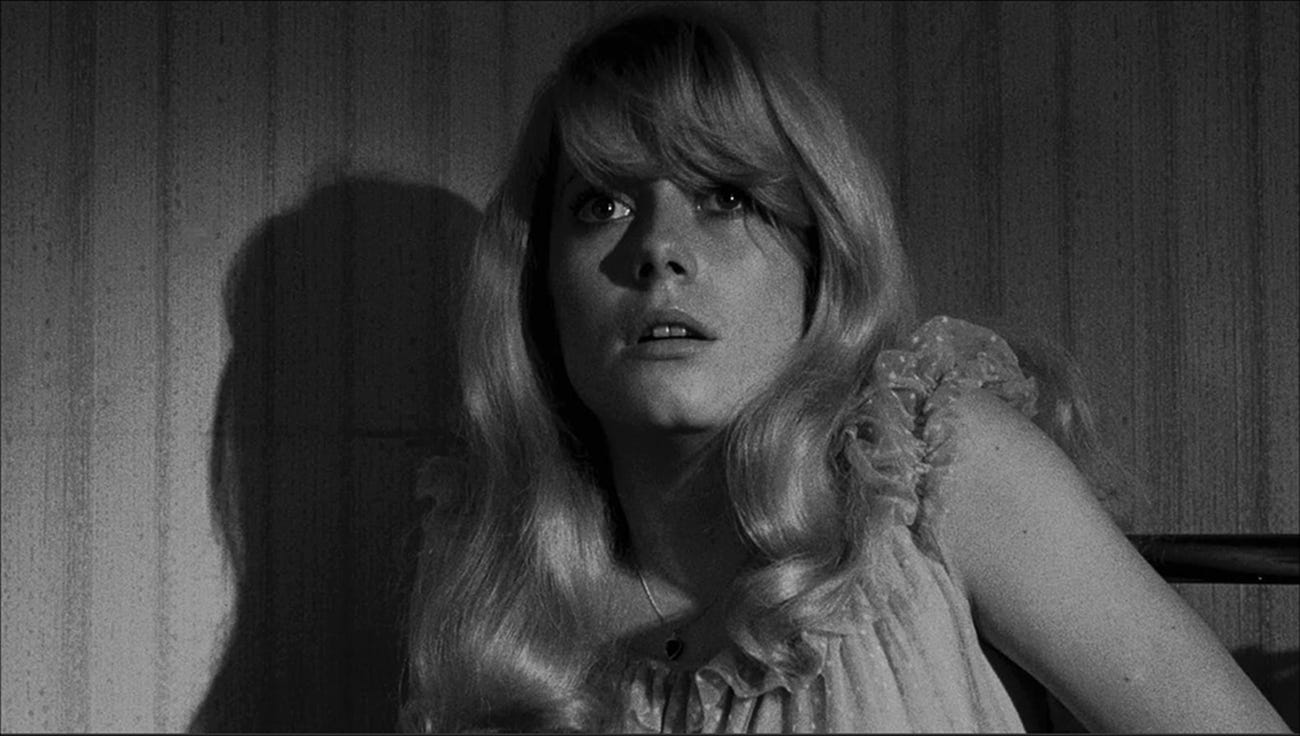
When Catherine Deneuve took the part of Carol in Repulsion (1965), she was 21 years old and already famous thanks to her starring role in Jacques Demy’s gorgeously melancholic musical The Umbrellas of Cherbourg. Repulsion was Deneuve’s first English language film, and a bold choice for the young actress. Having been slapped with the label “French sex kitten,” Deneuve slapped back by playing a schizophrenic woman pushed over the edge by male aggression and sexual objectification. For Carol, what society considers her greatest assets – physical perfection and youthful allure – are cancers that lead to a psychotic break and multiple homicides.
Repulsion was directed by Roman Polanski, from a screenplay by Polanski, Gérard Brach, and David Stone. It was Polanski’s first film after his breakthrough Polish thriller Knife in the Water, and the first of three films he would make in the U.K. The director’s visual style and talent for building suspense were already in place; he knew exactly what he wanted and how to get it. (He shot a single close-up of Deneuve’s hand 27 times.) We are locked inside Carol’s head, watching her already haunted life become a nightmare. Three years later, with Rosemary’s Baby, Polanski would put us inside another troubled woman’s head with even more spectacular results.
Following is expert testimony on Repulsion and its continuing relevance 60 years after its release.
Author, House of Psychotic Women
Carol is a young, sexually repressed woman who lives in an apartment with her sister, who is much more outgoing and has a boyfriend. She’s much more socially adept. Her sister leaves Carol alone in the apartment, and her life begins to unravel. She starts to see a lot of men in her life as these very predatory characters. The apartment gradually begins to transform into a place that is obviously meant to reference the breaking down of her interior space, her psychic space. There are people constantly trying to get in her apartment, usually just for very banal reasons, but through her heightened sense of fear about these people from the outside world, she feels more and more threatened. And she begins hallucinating. She’s seeing the apartment turn against her in certain ways. She’s reliving past trauma. Eventually she has a full mental breakdown and ends up hurting people.
Author, Un-American Psycho: Brian DePalma and the Political Invisible
Repulsion is very much in the Diabolique tradition of atmospheric European horror – the close lens on someone disintegrating. American films aren’t so much concerned with character and personality. They’re concerned with cause and effect, and with tumbling dominoes. Repulsion is about a person, and she’s very much a sort of constructed literary conceit, but it’s still a personality that’s the center of the film.
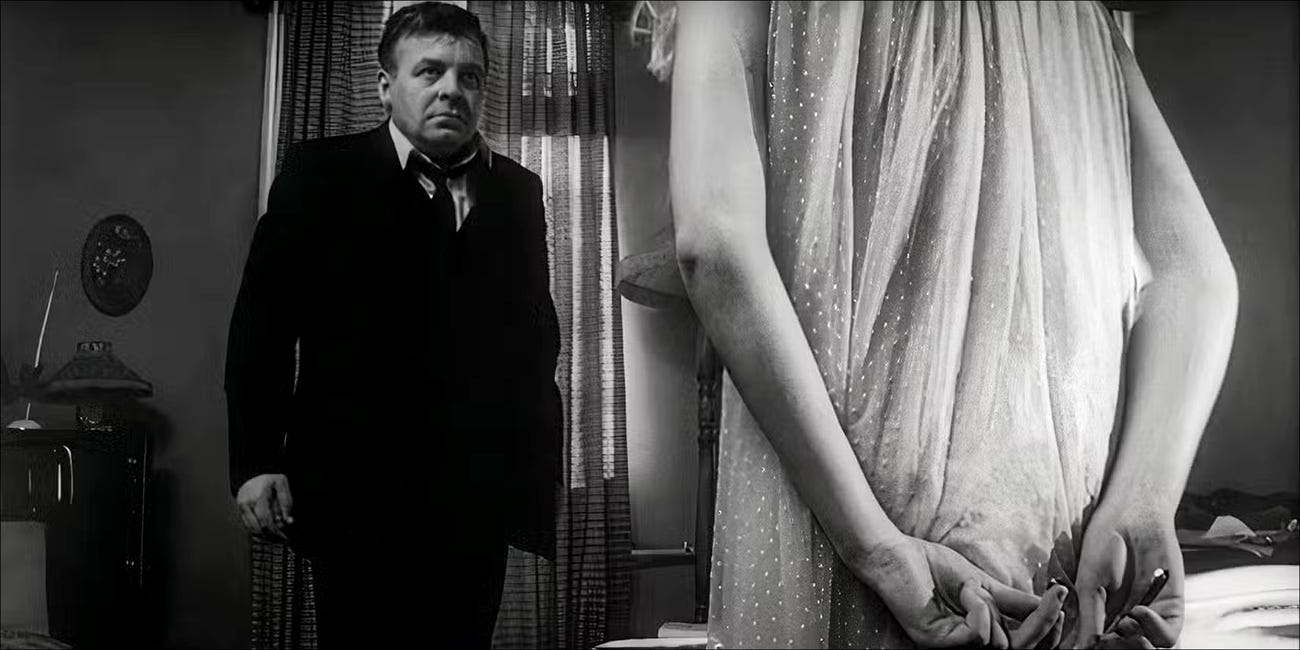
The film portrays her as an unreliable narrator to a certain extent. You don’t know how much of this is meant to be her [skewed] perception because of her past trauma, or whether every single person really is staring at her constantly throughout the film. It’s likely that it’s both. Catherine Deneuve is a breathtakingly beautiful woman. So a lot of it is about this beautiful woman constantly being looked at, constantly being objectified, and how that in itself can be a very threatening, frightening thing for a woman who lives on her own in a city. There are lots of scenes of her walking down the street and people looking at her and men constantly hitting on her. For somebody who’s already sexually repressed because she’s reacting to past trauma to begin with, this is very threatening in a way that it’s not threatening to her sister. Her sister is much more of a free spirit, but she’s also not meant to be as angelically beautiful as Catherine Deneuve. I mean, she’s obviously still very beautiful, but Catherine Deneuve is this beautiful blonde woman with an exotic accent walking through the city, and men are just falling at their feet trying to woo her. And she doesn’t want any part of it, she just keeps retreating further and further into herself to get away from this.
Director, Sleepwalkers, The Stand, Desperation
People are always coming on to her, they want physical pleasures with her, and that seems to repel her more than anything, it disgusts her. In her madness, she never bathes and she is surrounded by decay – the fruits and vegetables are rotting, a rabbit that is meant to be prepared for dinner just stays there collecting flies, a corpse in the bathtub. She’s home alone, but not in a Macaulay Culkin way.
Director, Gremlins, Matinee, Innerspace
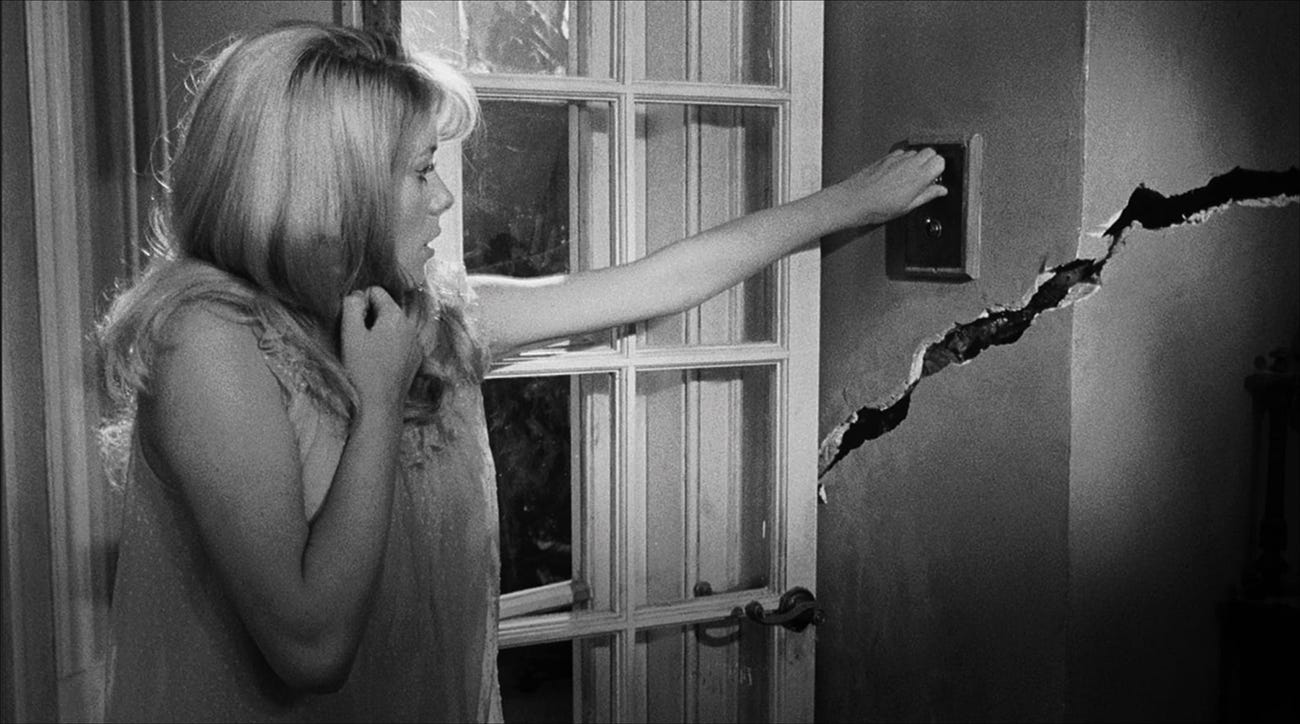
She goes madder and madder and madder as the movie goes on, and as her mind goes the actual spatial quality of the sets and the lenses used completely change. It’s a nightmare dreamscape that really draws you in. There are hallucination scenes in it that are really terrifying. And there’s a couple of great jump scares with mirrors – she closes a mirrored door and there’s a man in the mirror, but he’s not really there. It’s all from her point of view.
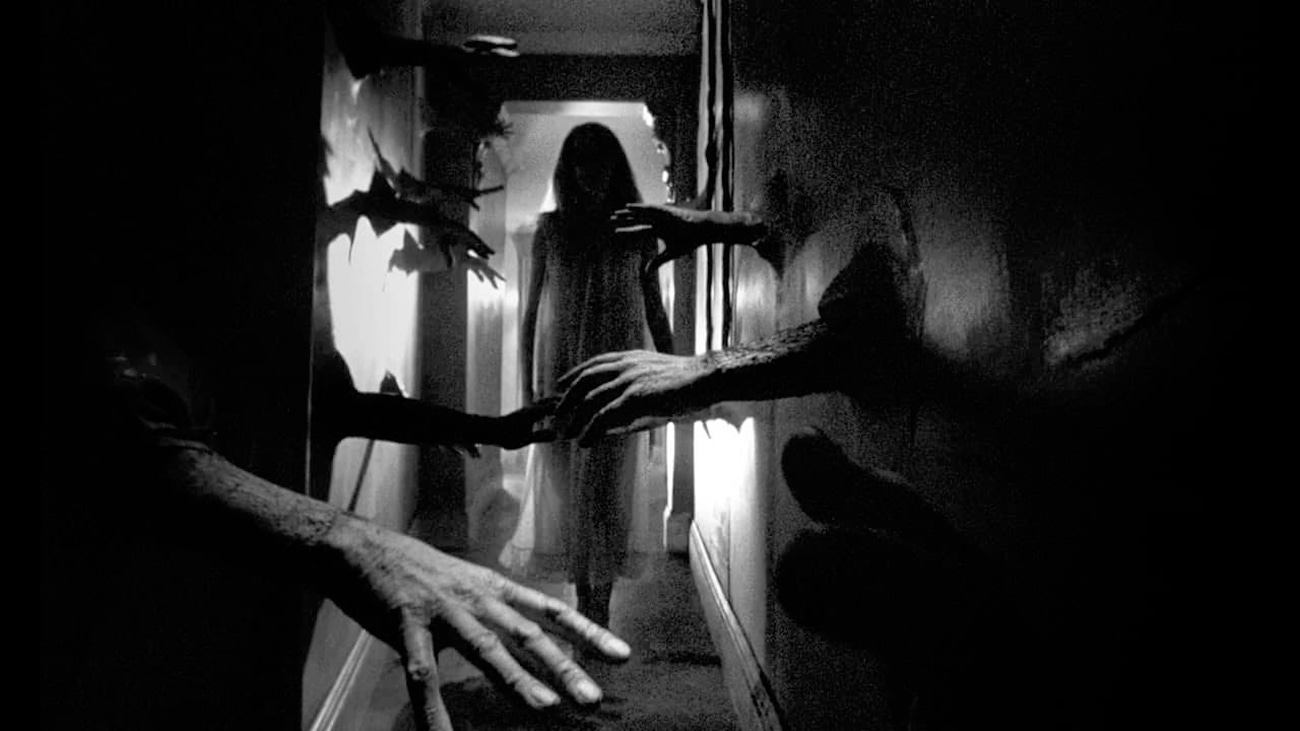
Her descent into madness is made real as she tumbles down a hallway and the walls are soft like clay and leave impressions of her hand. There are hands in the hallway that come to life and grab at her and reach at her. It takes its time, it’s a slow burn, but it’s this woman’s loneliness and her inability to deal with people and her being closed off by her own little cocoon that’s self-imposed as the web of her mind becomes unstrung. It’s a really amazing performance in an amazingly original film by a filmmaker working at the height of his talent.
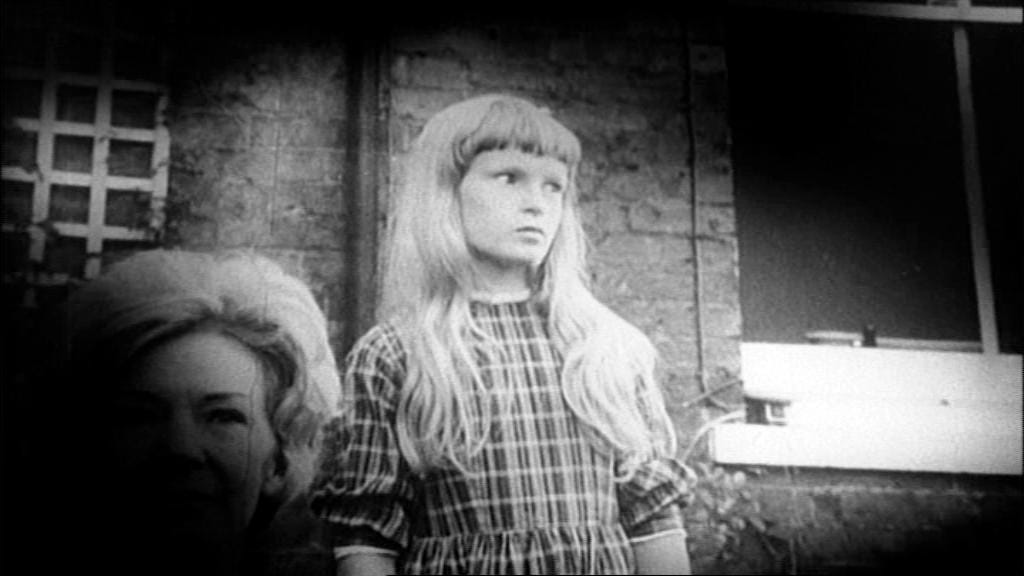
Everything she does is in response to foundational trauma. What was the trauma? It’s very vague, so it’s open to interpretation. There’s a scene where she’s sexually assaulted. How much of that is she imagining? You know from everything in the film that this is the trauma: she was sexually assaulted at some earlier point in her life. And at the very end of the film, there’s a shot that ends on a family photograph. You see her as a little girl, and she’s got this very dark expression on her face. And it follows her gaze to the picture of a man. I don’t know if that’s her father, I don’t know who it’s supposed to be, but it’s clearly a family photograph, and the camera is directly leading you to make that association, that this person harmed her as a child. She’d already had that trauma from a young age, she’d been sexually assaulted as a child by someone in her family. That’s what I always got out of it.
Director, American Psycho, The Notorious Bettie Page, I Shot Andy Warhol
Now it seems to be one of the most prophetic films, because it is about sexual abuse, and it is about the madness triggered. This is all coming from a traumatic childhood of abuse. That anger that she has and the desire to act out, it felt very much ahead of its time. Victims can become killers. It’s important to remember that. A lot of the time the male view of women in cinema is women are victims and they stay victims. But there’s a whole category of films in horror of women turning. That’s an important message to send: don’t think you can just abuse people and get away with it.
It’s a really important film because it’s probably the first modern depiction of the Psychotic Woman film, or the Neurotic Woman film, these stories that are focused on female characters suffering mental breakdowns and hallucinations. This is something that goes back much further in literature, but Repulsion is one of the first ones that was a really widely distributed and celebrated film, that depicts a single woman living on her own in a modern apartment in a bustling city. It became the template for a lot of Neurotic Woman films to follow, just in terms of the setup, the structure of the film.
It’s a very harrowing film. And I like that.
No posts
Comments
Nothing yet. Say the first thing.
Sign in to join the conversation.