
by Kurt Sayenga
André Øvredal grew up in Norway making home movies with his friends and neighbors, went to film school in California, then went back to Norway and directed commercials and short films for 10 years. His first feature was the found-footage horror/comedy Trollhunter (2010); his second was the supremely creepy The Autopsy of Jane Doe (2016). His other films are Scary Stories To Tell in the Dark (2019), The Last Voyage of the Demeter (2023), and Passenger (2026).
KURT: What’s the appeal of the horror genre as a filmmaker?
ANDRÉ: What I love about the horror genre is that there is some kind of a layer of dread, for lack of a better word, that is on top of everything that you do. If you’re able to put that in the movie, then it’s something that is unique to the horror genre. The horror genre is communicating with the audience in such a visceral way. The audience is jumping, they’re feeling, they’re leaning in, they’re reacting physically. That is very rewarding both when you shoot – planning for that, thinking about it – and also obviously watching it in a theater with an audience. If the movie works, it’s amazing to watch the audience scream or react physically. I love creating suspense. I love building a scene piece by piece by piece by edits, or by not using edits, using whatever the tools are. Horror lets me use every tool in the cinematic toolbox. The sound can tell a story, or silence. Anticipation is obviously the biggest thing of all. I think that is so much fun. It feels like a puzzle that you’re constructing. It’s almost like a symphony to make a movie. So many pieces…and obviously we have so many crafts involved in making a movie…it’s just an amazing experience. I’m lucky to be able to do it.
KURT: Do you storyboard your films?
ANDRÉ: I plan everything very carefully, but not necessarily by storyboards, because I do love creating the image with what I have in front of me. But I will know exactly what kind of image I’m looking for. It’s gonna be a low angle, it’s gonna be a high angle, it’s gonna be this, it’s gonna be a two-shot, a three-shot, or whatever. The construction of the movie, I need to plan that so carefully. When are we on a closeup, when are we in a wide shot, every little decision is deliberate. But storyboarding itself is very boring to me. Only for special effects scenes do we really storyboard. We plan with overheads – plan views and with shot lists and those basic tools.
KURT: Do you show films to inspire your crew before you start a film?
ANDRÉ: No, I don’t actually. I don’t like referencing other films. I’m terrified of it, so I avoid it as much as I can. There are obviously moments between the Director of Photography and myself and maybe the production designer where we have to talk about certain other movies. Like Se7en, we had to talk about for The Autopsy of Jane Doe, but we never really watched it. When I was doing Trollhunter, I avoided The Blair Witch Project like the plague. We were in the woods. We were running around with a camera. We’re gonna do that anyway. We don’t need to watch The Blair Witch Project to know how to do that.
KURT: What’s Trollhunter about?
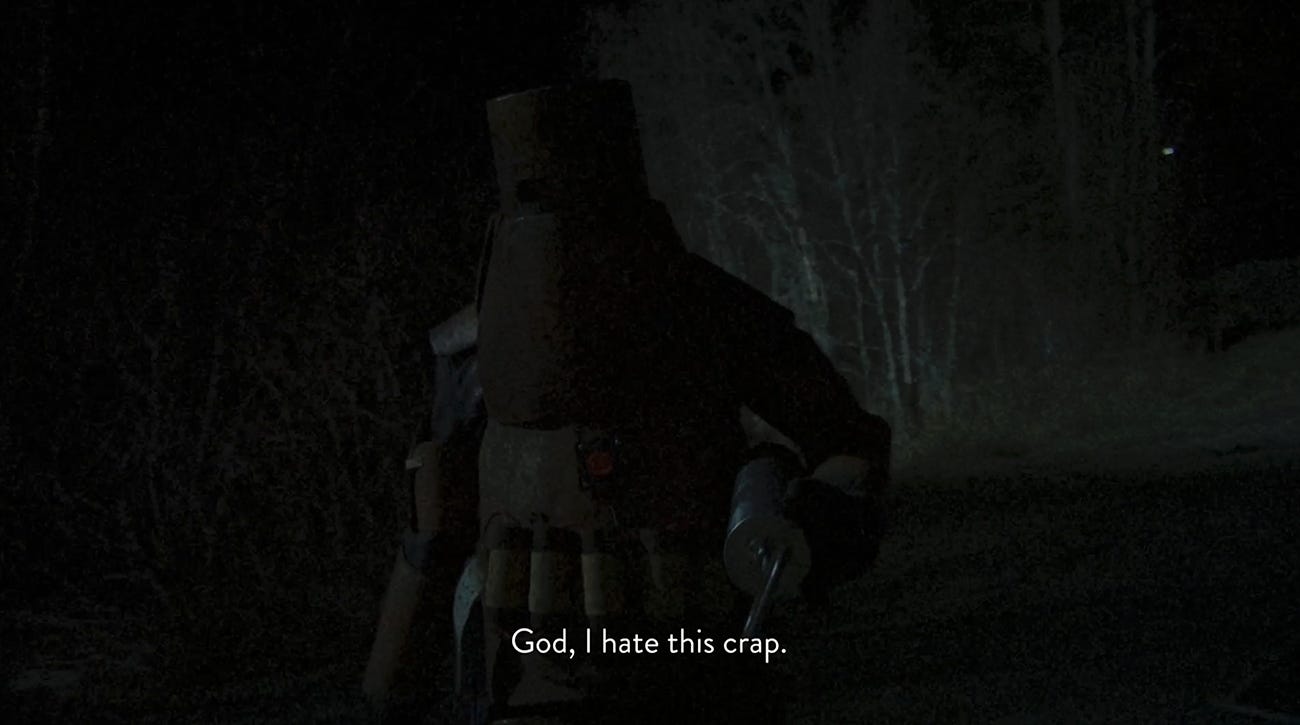
ANDRÉ: Trollhunter is about a student documentary team that is somehow able to follow a guy who turns out to be protecting Norway from these enormous monstrous trolls. And through the documentary and through the experience, they reveal this world that nobody knew existed, that’s been kept secret through a governmental system.
KURT: How did you develop the look of the trolls?
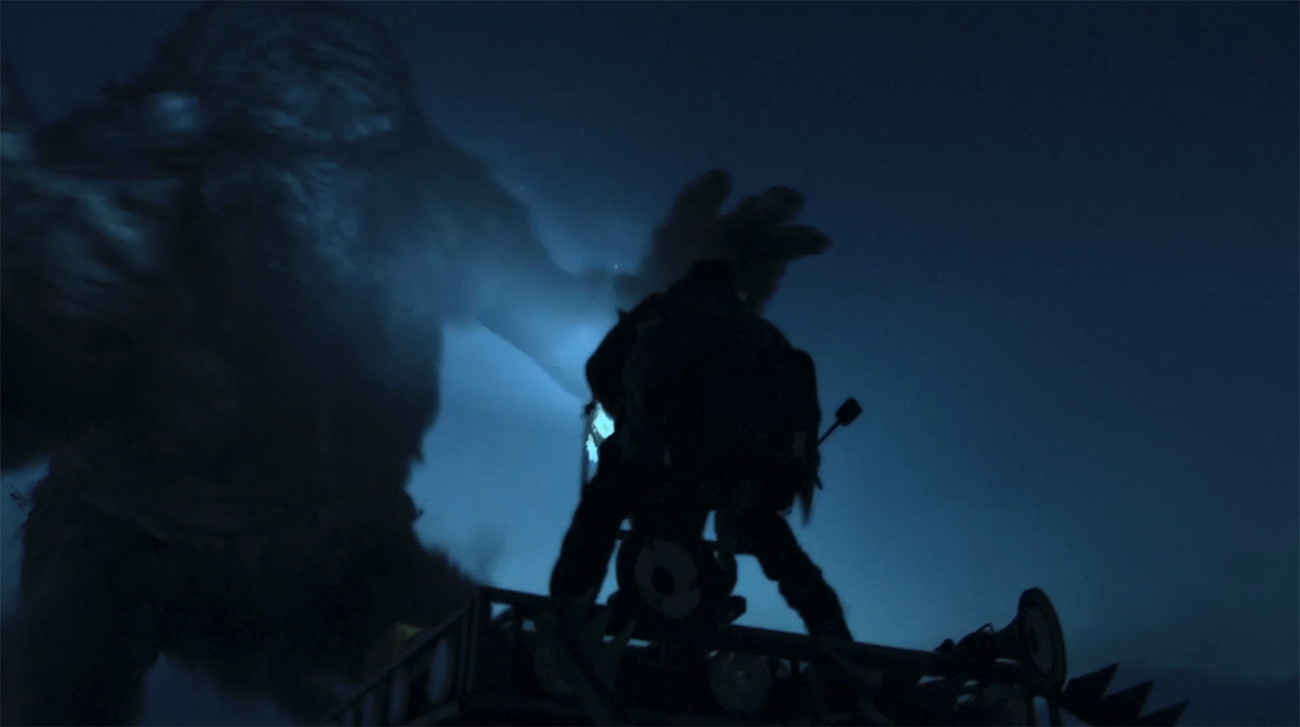
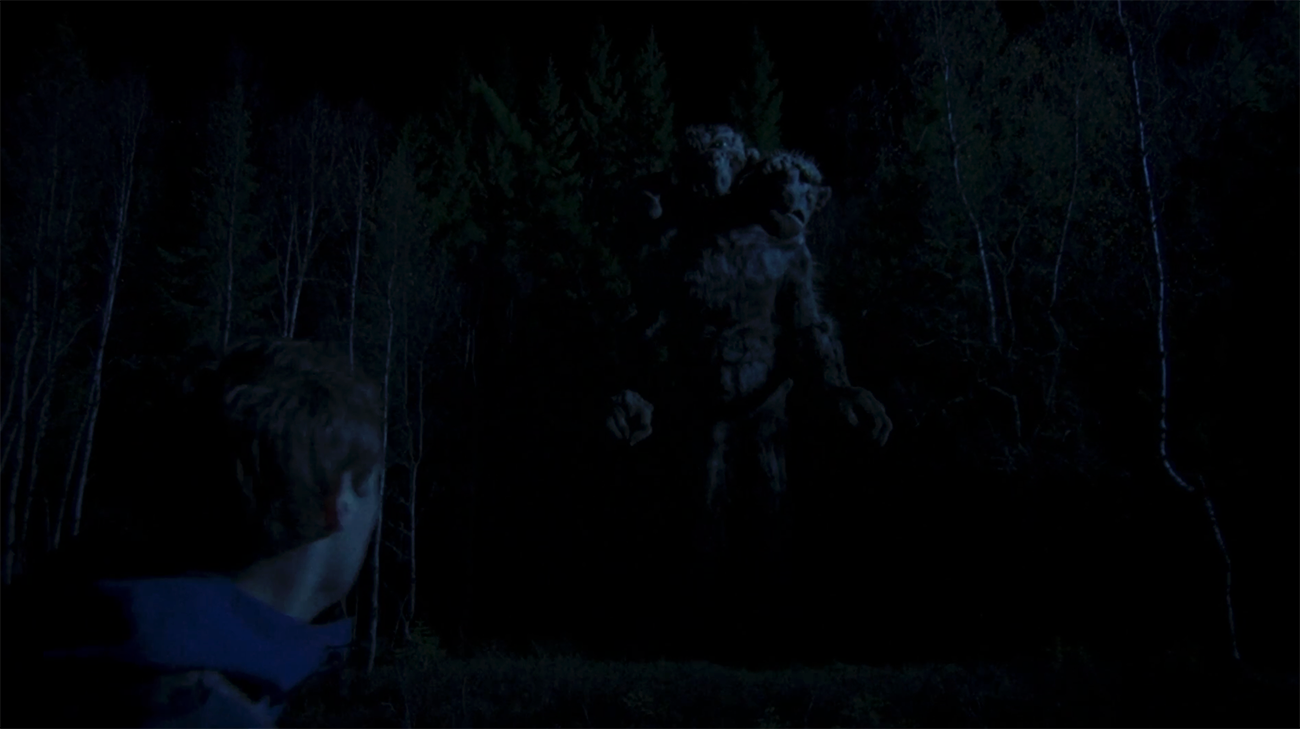
ANDRÉ: All the trolls in Trollhunter are based on drawings from a book that was written in the 1800s. The drawings are iconic to Norwegians – it’s our image of what a troll is. They’re usually huge and could have three heads, they could have nine heads, they could be as huge as mountains and really scary. Some of the drawings are really dark and sinister, and to me, the movie had to really capture those trolls because we were gonna do so much else with them. We were gonna make the audience hear Norwegian trolls for the first time and watch them move – that’s never been done in horror before. So it was very important to nail that specific look. We stuck very closely with the design from those drawings.
KURT: Is Trollhunter a uniquely Norwegian film?
ANDRÉ: Trollhunter is very culturally specific, I think, for Norway. It’s so much our vision of trolls. Whenever I see trolls in other movies, other cultures, they’re different than what we call trolls. Obviously the nature of the film is very Norwegian, and there’s something about the sarcastic attitude of the characters, a kind of droll sense of humor about a community worker and the perils of his day. He’s not very impressed by having to deal with trolls. It’s just a job, you know.
KURT: Was getting the balance of the dry humor and the serious threat a challenge?
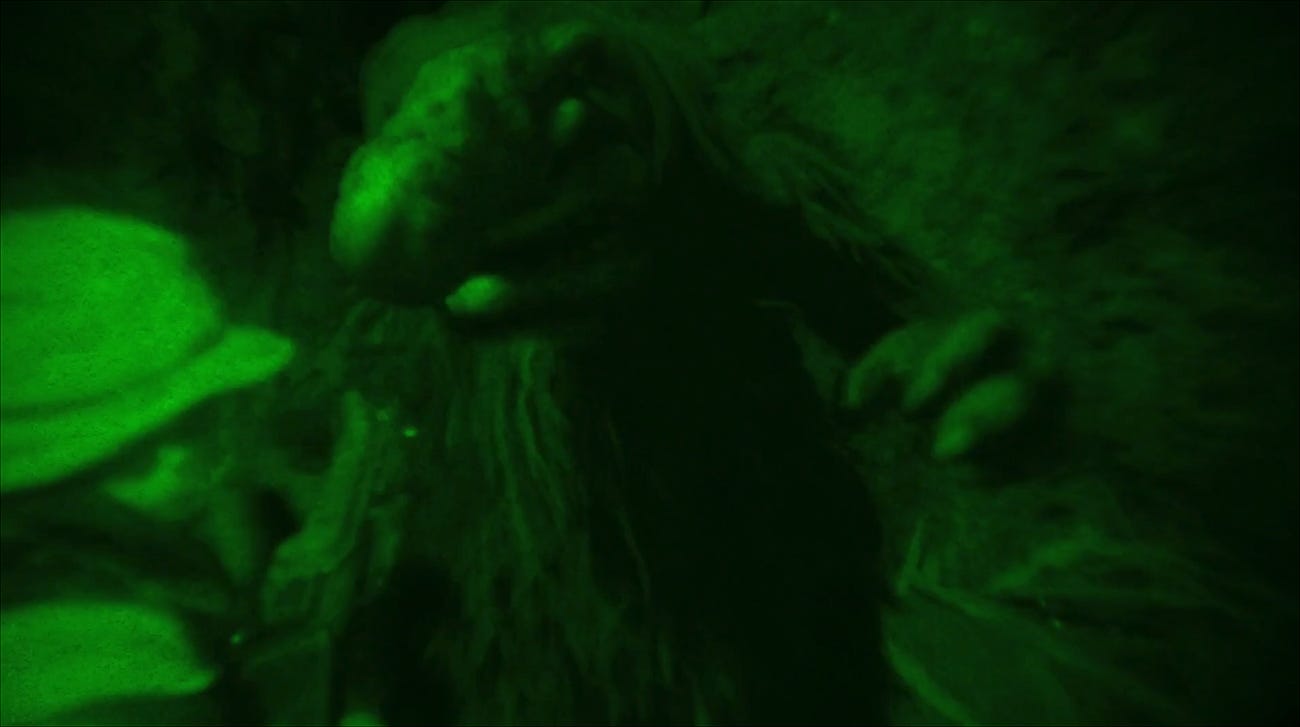
ANDRÉ: It was inherent in the whole concept for me that it had to be a documentary for two big reasons. The first reason is that it has to be absurd. The fact that we are pretending these trolls are real and that they’re alive, the more real we can make that, then doing it as a documentary, the more absurd the situation is gonna be. So for humor it was really helpful. And the other thing is obviously we were working with a low budget comparatively of just a few million dollars, and we had to be able to turn the camera away and run away from the troll when we couldn’t afford having more troll shots. [LAUGHS]
KURT: Were you surprised it became so successful outside of Norway?
ANDRÉ: It was an amazing experience to see how it was received worldwide. I was hoping that because it’s a monster movie, some people would take it in. Our very first screening of the film was in Texas at Fantastic Fest and we were terrified – what if the audience here doesn’t understand anything of the humor? It was so geared with inside jokes for Norwegians. But they loved it. They just ate it up, and they understood the humor. People were laughing at the right moments and it was like, “Wow, okay, it translates culturally. That’s wonderful.”
KURT: How did you come to direct The Autopsy of Jane Doe?
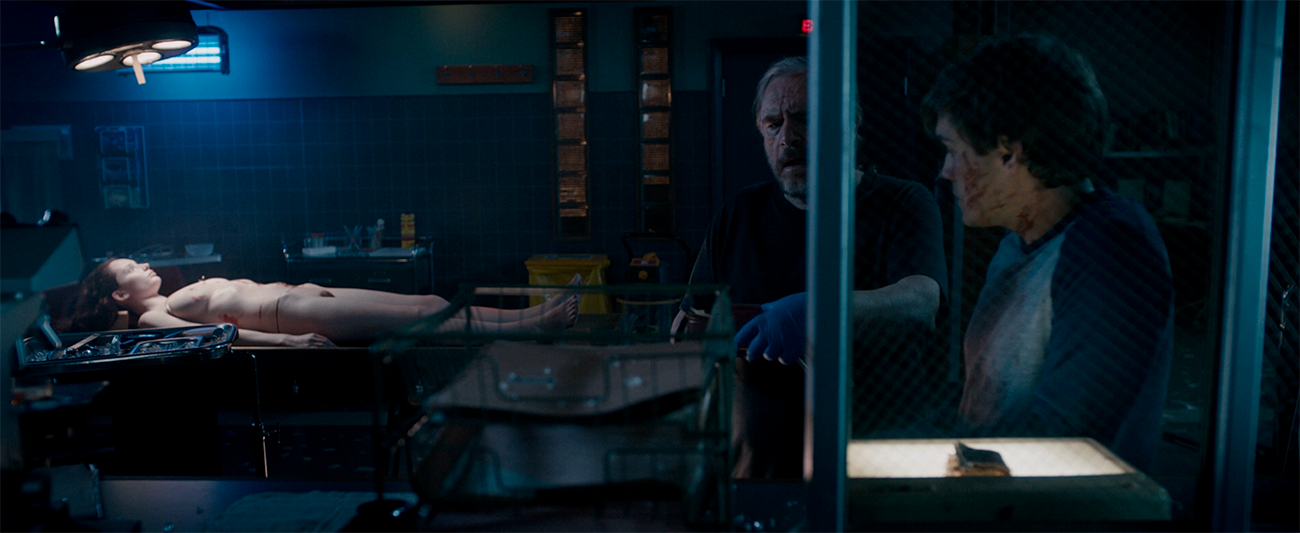
ANDRÉ: After Trollhunter, I spent a couple of years trying to figure out what to do next and discussing several movies in Hollywood and some stuff at home in Norway. Eventually the script for Jane Doe came on my email and I just loved it. The script was so terrifying. I was really looking for a movie that could be the opposite of what Trollhunter was ‘cause Trollhunter comes off as out of control in a way, like there was no director. A big part of what I had to do on Trollhunter was to step back and not direct, or that’s what I had to at least give the impression of. So I wanted to make a real movie in a way, if you can call it that, where I control everything. The Autopsy of Jane Doe with its setting and with its sense of dread and horror and building momentum and all the mysteries and all the revelations and everything, it was such a joy to be able to piece that together. It was just the kind of movie I was looking for. I was just really looking to be the one that ended up directing that film.
KURT: What is The Autopsy of Jane Doe about?
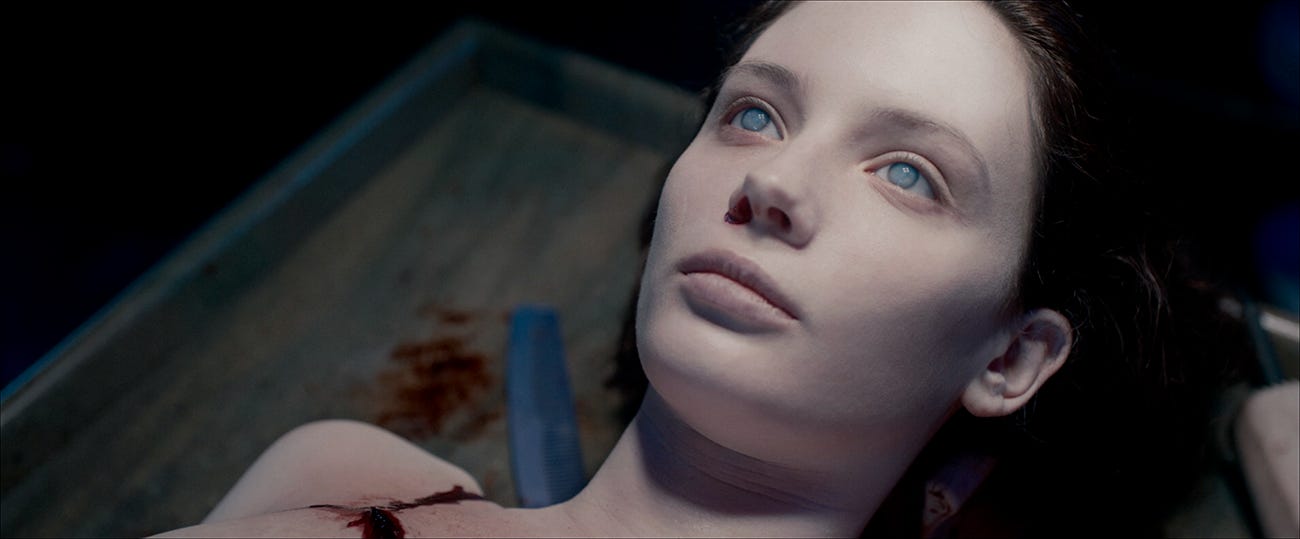
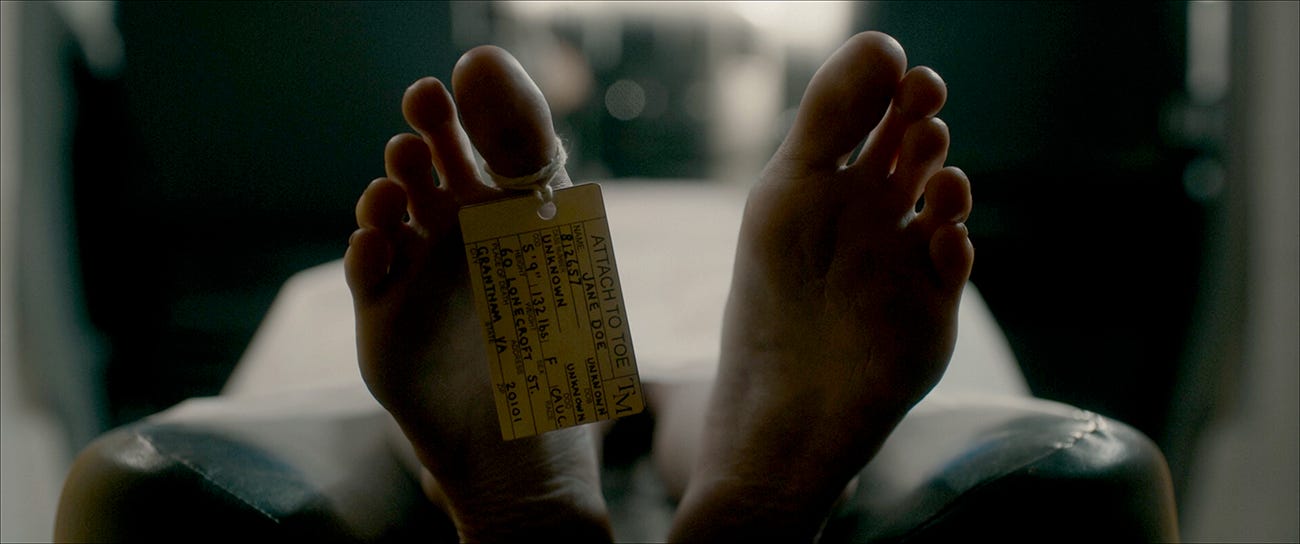
ANDRÉ: The Autopsy of Jane Doe is about the corpse of a young woman that is found in a basement in a house and they cannot fathom how she got there and what happened to her. The police bring her to a local coroner – a father and son team. They start the autopsy, trying to figure it out, and it just gets weirder and weirder the further into the process they get.
KURT: Does the movie force a rethinking of the villainous witch?
ANDRÉ: What was so fascinating was at the center of the movie you have a person who’s the least likely to be the demon of the movie, to be the antagonist of the movie. She’s dead, and they’re tearing her apart, and they’re proving she cannot do anything. She’s absolutely dead. And to have that as a centerpiece was a wonderful twist to an antagonist in a movie.
KURT: The more they cut into her, the more she starts tearing them apart.
ANDRÉ: Yeah, and she uses psychology in a way to do it, to tear them apart.
KURT: Would you say the film is about the after lingering after-effects of violence and abuse on the innocent?
ANDRÉ: Oh definitely. At the core Jane Doe is a revenge film. It goes to the abuse and the horrors that she had gone through.
KURT: The acting in the film is really first-rate.
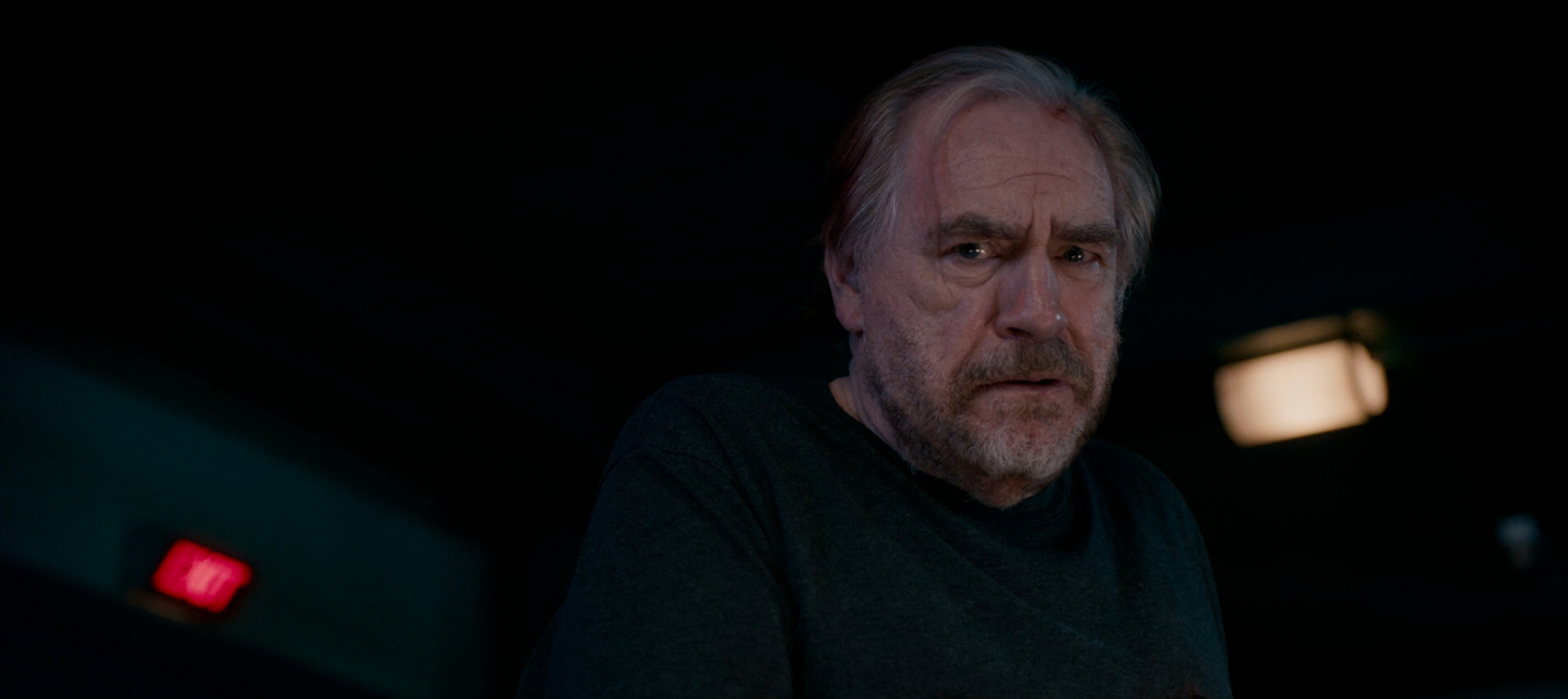
ANDRÉ: As with any movie, casting is 90 percent of the job in a way. To have Brian Cox and Emile Hirsch, two amazing actors of their generations, play those parts was a gift to the movie. They bring so much gravitas. They bring so much reality to the parts that you really believe them. They’re so in tune with the characters, on how to project it in a natural way. Sometimes we didn’t need to talk about it because they just nailed it. They’re so experienced. They’re so good. For a fresh director that I was, it was a gift to work with them.
KURT: Jane Doe is a naked corpse undergoing an autopsy, which obviously involves a lot of cutting and extraction. How much of that was done with practical effects?
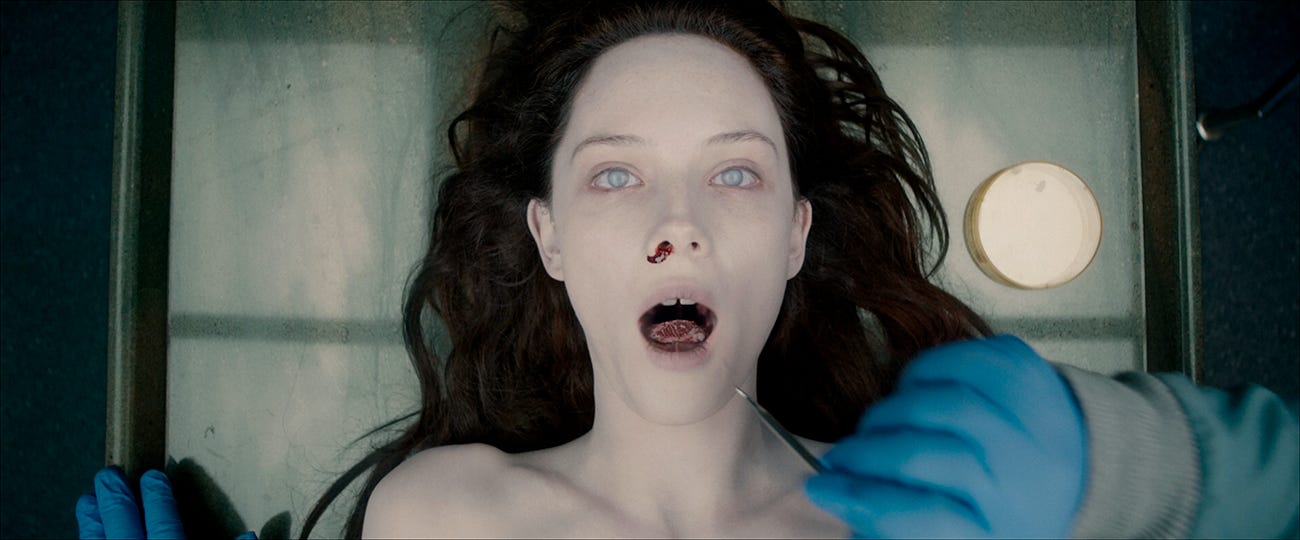
ANDRÉ: Olwen Kelly, who plays Jane Doe, was there for most of the shoot, and we would only, every now and then, replace her with a doll that was made to look like her. For one fire scene we had a black doll and a green doll that we used just for special effects reasons. But only for the moments when we were really digging into her are we using prosthetics. Mostly it’s her with layers of stuff on. Even when we were cutting up with the knife, it was her with a very flat layer of metal between her and the knife.
KURT: It all looks very real.
ANDRÉ: Yeah, but we allowed her to blink throughout the whole show. So when we’re looking at the dailies, she’s lying there blinking. All that had to be removed. It’s incredible when we looked at the big screen to see how many little twitches and how many little things the body does that we had to clean up afterwards with CGI. You stare at a hand and suddenly there’s some little movement and when it’s up on a big screen, it’s big.
KURT: Despite playing a corpse she manages to convey a lot of emotion.
ANDRÉ: She was amazing. We were trying to tell a story with what position she was lying in, so through the movie we’re telling a story with vulnerability, power, all kinds of stuff like that. We were trying to use her facial expressions that come with that. With her mouth open, closed, how we film her, specifically in what angle, low angle, high angle.
KURT: About 95% of the film takes place in a country house with an autopsy room and a morgue in the basement. How did you design that space and change its character as Jane begins to act on it?
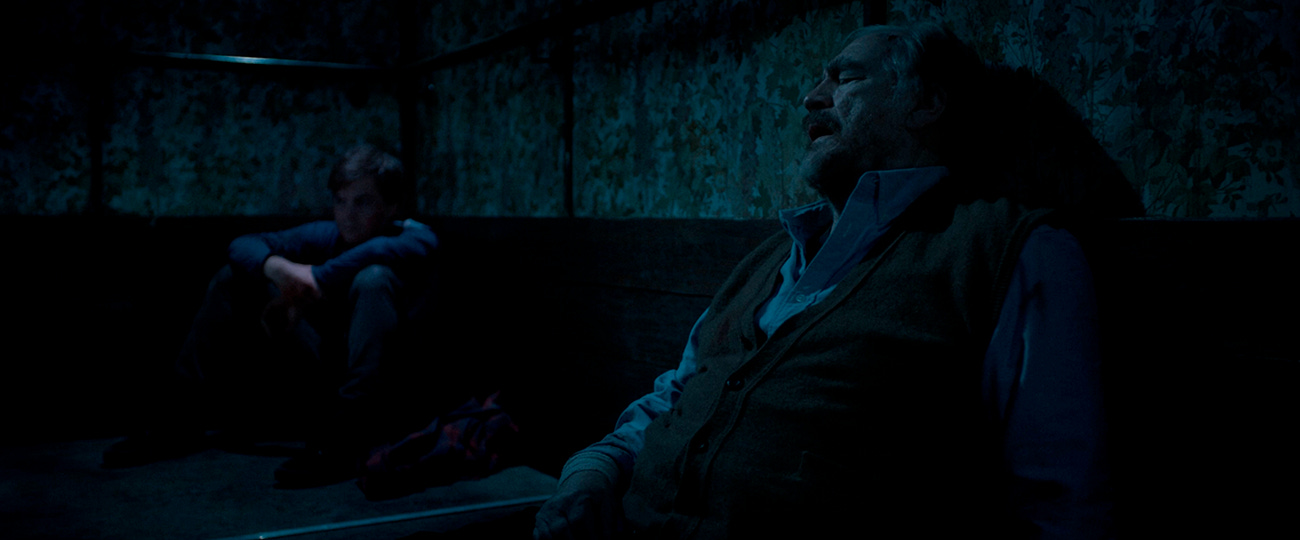
ANDRÉ: We created a set based on the script, so we walked through the script in our heads – “They want to go over there in that scene, and then there has to be a door to their right, there has to be a door to their left, and that room has to be there.” That became a plan view of what that place looked like. Another very important thing to me was that it had to feel very comfortable. It had to feel warm and inviting and like it was their home. Their home is literally on top of the autopsy room, but then at the certain point it needed to twist and turn hostile, so that was a big thing – how do you do that? How do you make that comfortable space hostile basically at the midpoint of the movie? We had a specific set of lenses we used for the first half of the movie, then we changed over to another set of lenses for the second half of the movie, and also of course we had a huge lighting change. The way the actors related to the environment was different. We tried to use all the elements that we could, and also the angles got more skewed.
KURT: What lens packages did you use?
ANDRÉ: For the beginning of the film I always shot in wide lenses because I think, on just anamorphic or 1.8:5, 40mm to 18mm is the range for me and for my Director of Photography. We kind of found that out together and for the beginning of the film we stayed in 28 to 40, maybe going to 50 on the occasional shot. One big inspiration for the movie is the movie Se7en, which has a lot of scenes with two people walking around in rooms with a corpse in the middle. The way they shot it was really inspiring, really interesting, with the low angles and the lens choices. We stayed in that basic world, but for the second half of the movie we went wider to 21, 24, and then at the longest 35.
KURT: Those are subtle choices people don’t really notice when they’re watching.
ANDRÉ: Yeah, I really believe the audience takes in things subconsciously and you, as a filmmaker, it’s your job and your joy to help them get there.
KURT: Why is the radio turning on by itself always so creepy?
ANDRÉ: [LAUGHS] I don’t know. I mean, I loved it in Christine. You have it in Close Encounters obviously. Something about an object that can create sound and make something come alive is just really creepy.
KURT: The sound design is a big part of what makes the film effective.
ANDRÉ: In Jane Doe, silence is a big thing. Every sound becomes a piece of storytelling. It’s a tool that I am very obsessed with, and specifically on that movie. We also did it on Trollhunter, but that was more organic for the movie. Here it was more like a deliberate director’s choice – always with every edit, you break the sound so that it never flows. You should feel the cut to a different perspective. We cut close to the fridges where all the bodies are. We cut away, we cut further back in the room, and the humming from these fridges should change so it’s always unsettling. You never get to relax. These are extremely subtle things that don’t scream at you, but I believe that over the sustained length of a movie, 90 minutes or more, it will be part of that feeling of dread.
KURT: Small actions in the movie turn out to be very important.
ANDRÉ: The movie is built on tons of small events. Doing autopsies every day, it’s all very mundane to them. It’s only when they start discovering that this is not quite right…it shakes their reality, especially Brian Cox’s character, his sense of reality. He’s so grounded. He doesn’t believe in anything he can’t touch, and when it gets weird, he’s not really capable of grasping the supernatural level of it because of who he is in a way. All these details are significant. It’s like a trail of evidence that leads to the big conclusion.
KURT: What’s your feeling about VFX versus practical effects?
ANDRÉ: My experience with visual effects versus practical effects is that it should actually be based in practical effects. The VFX companies like it. It’s great for being on set to actually start with something – it might not be fully formed, it might be a work in progress even, but it’s actually in the scene, it’s lit by the natural light, it’s interacting with the characters and the textures are gonna be real, so then the VFX companies can work with that rather than start from scratch. There is something really unique about having something real and tangible. If you watch older movies like The Thing or Gremlins or E.T., they were physical, and it feels more real.
KURT: How do you motivate actors when they are acting against something they can’t see?
ANDRÉ: In Jane Doe we had really everything there in front of them so they could actually react to whatever’s going on. They never had to act against nothing. On Trollhunter, the trolls were CGI, so they had to do it. It’s about engaging emotionally with a situation – a physical aspect of where are you looking that’s very simple. But it’s also, I have to walk them through the scene. “This huge troll is gonna come running at this pace, so I will cue you guys on when you have to turn and run.” It becomes very practical, and then they have to make it real with their performance. They have to make that fear come across, whatever it is they’re feeling. So you have to have good actors; they have to come with an emotional instinct, which they’re cast for in a way. That’s why we liked them, that’s why we chose them, because they are able to portray that. The actor has to be able to experience emotionally what’s going on, whether it’s a monster or it’s a middle of a divorce, whatever it is.
KURT: Do you shoot a lot of coverage?
ANDRÉ: It depends. If I’m very confident this can be done in exactly this way, we’re gonna shoot it that way. There are absolutely tons of scenes where you don’t do it from any other angle. But most of the time, I’m very obsessed with the edit. I’m very obsessed with where the camera is at every stage in the script, at every line, every moment, every this, every that. Sometimes it’s great to have one camera angle that covers everything, but a lot of times you wanna shoot suddenly from behind people just to create a feeling of being observed from behind on that specific line, or that has to be accounted for in this shot list, so then coverage becomes necessary. But it’s not necessarily coverage. It is storytelling to me. Coverage has almost like a negative connotation – you’re just shooting it from different angles – but it has to be really carefully planned.
No posts
Comments
Nothing yet. Say the first thing.
Sign in to join the conversation.