

Some cases don’t just tell a story — they reveal a pattern.
This one began with a 65‑year‑old male who, like many navigating the long tail of COVID, felt as though something in his body had shifted and never fully returned to baseline. Months after infection, he continued to experience chest heaviness, unpredictable fatigue, and a sense that his system was running “off‑frequency.”
He wasn’t looking for a diagnosis.
He was looking for clarity.
His first CT angiography (CTA) provided the first piece of the puzzle.
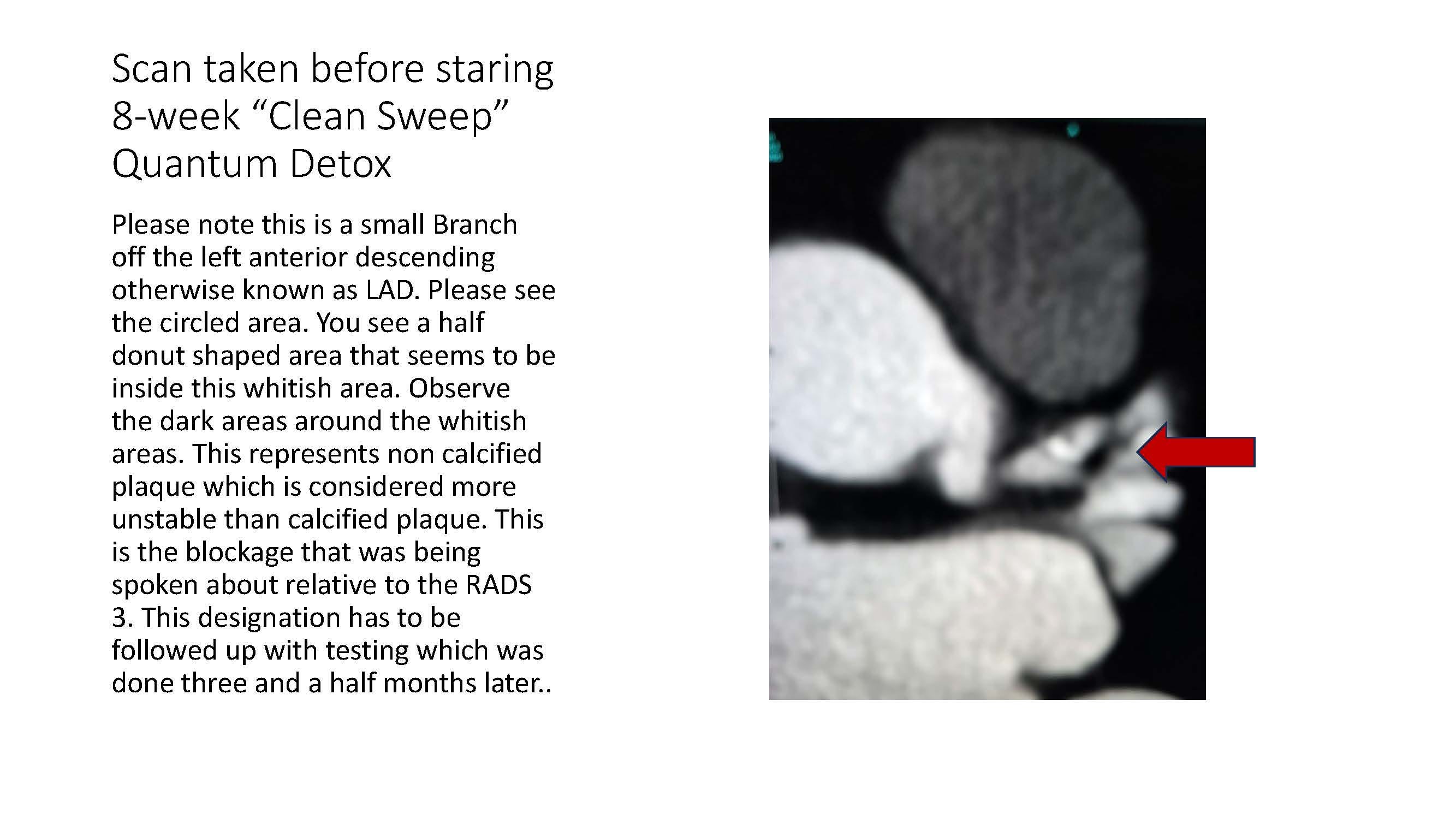
The initial CTA revealed a non‑calcified plaque at the ostial D1 branch — a small but important branch off the LAD. The radiologist classified it as RADS 3, a category that requires follow‑up imaging due to moderate risk.
The image showed:
a half‑donut‑shaped non‑calcified plaque
dark areas around the lesion indicating unstable plaque
narrowing of the vessel lumen
This was not a benign finding.
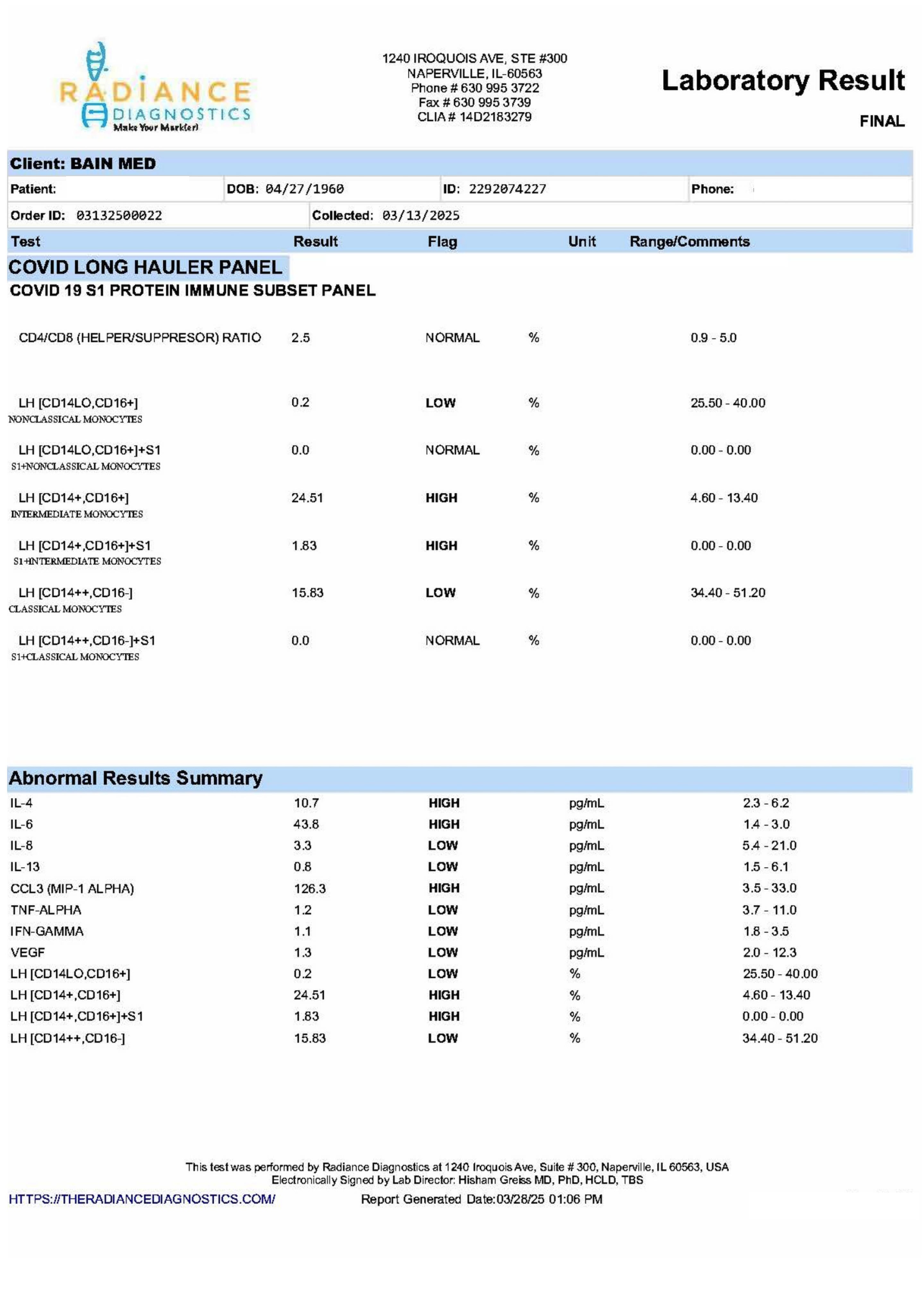
Around this time, he completed his first S1 spike protein blood test of 2025.
S1, spike protein POSITIVE — detected in intermediate monocytes (white blood cells)
From the report:
“LH [CD14+,CD16+]+S1 — 1.83 HIGH”
This meant:
spike protein was present
specifically inside intermediate monocytes, a subset involved in inflammatory signaling
This aligned with his symptoms — and with emerging research on Long COVID physiology.
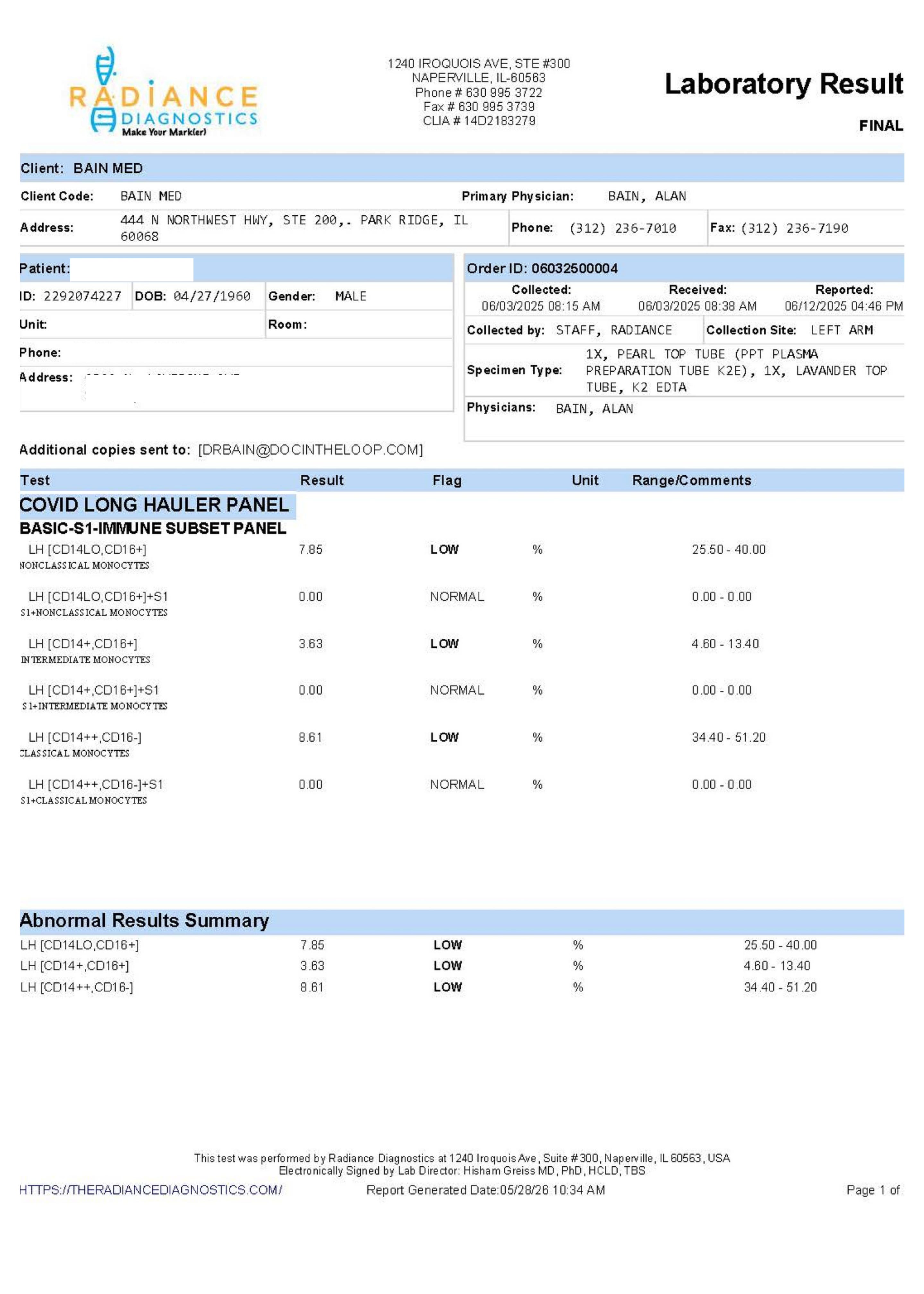
S1 spike protein NEGATIVE — full clearance
From the report:
All +S1 markers = 0.0 NORMAL
This was the first true negative S1 test of 2025.
The spike protein had cleared from:
nonclassical monocytes
intermediate monocytes
classical monocytes
This aligned with his improving symptoms.
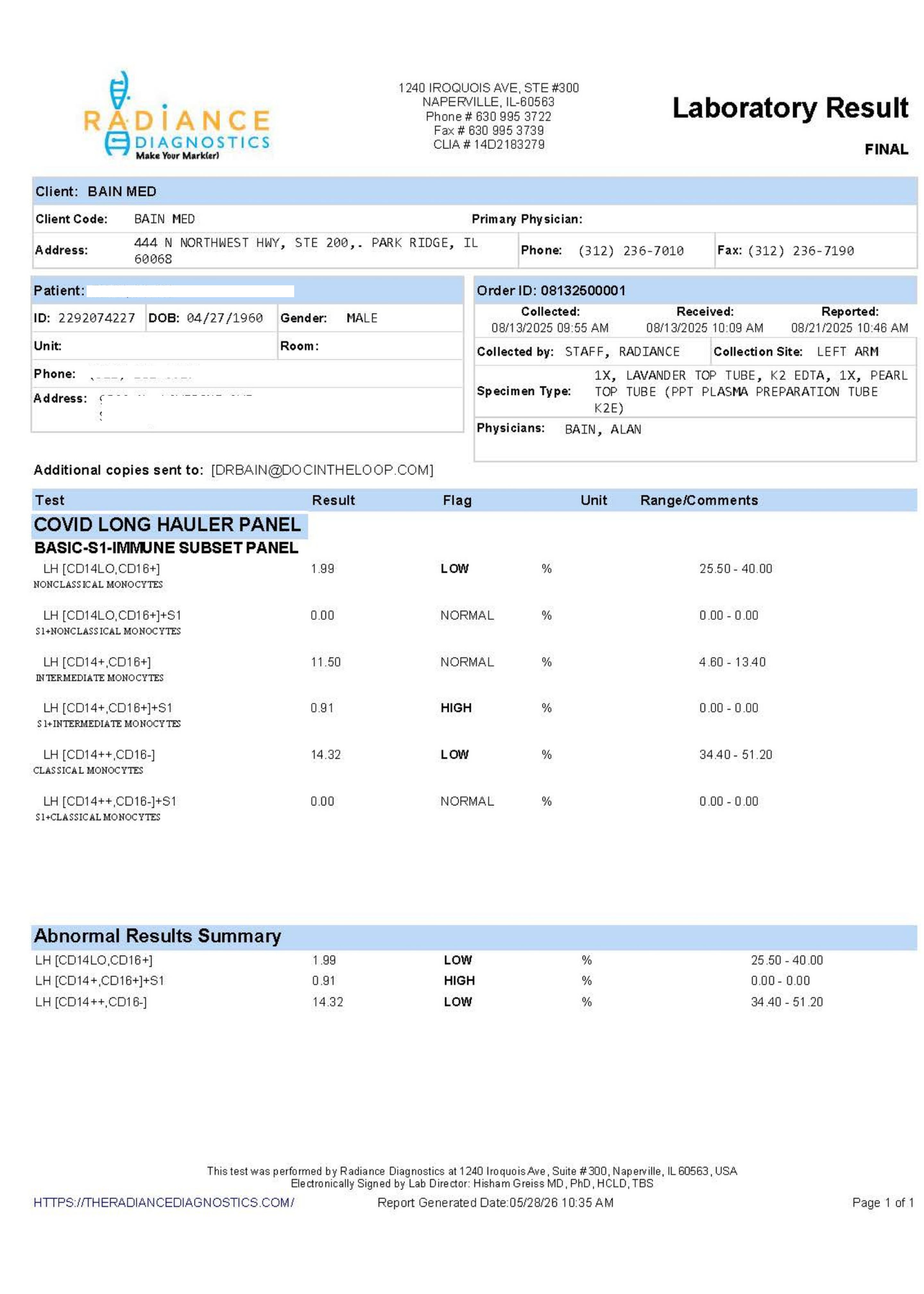
S1 Now Positive! — Could the HSD “Clean Sweep” Detox have pulled the spike protein out of a different compartment of the body?
From the report:
S1 Intermediate Monocytes marker = 0.91 HIGH
This confirmed that there was more spike protein remaining in the body that needed to clear.
Therefore he continued another 4 weeks of the Clean Sweep Detox.
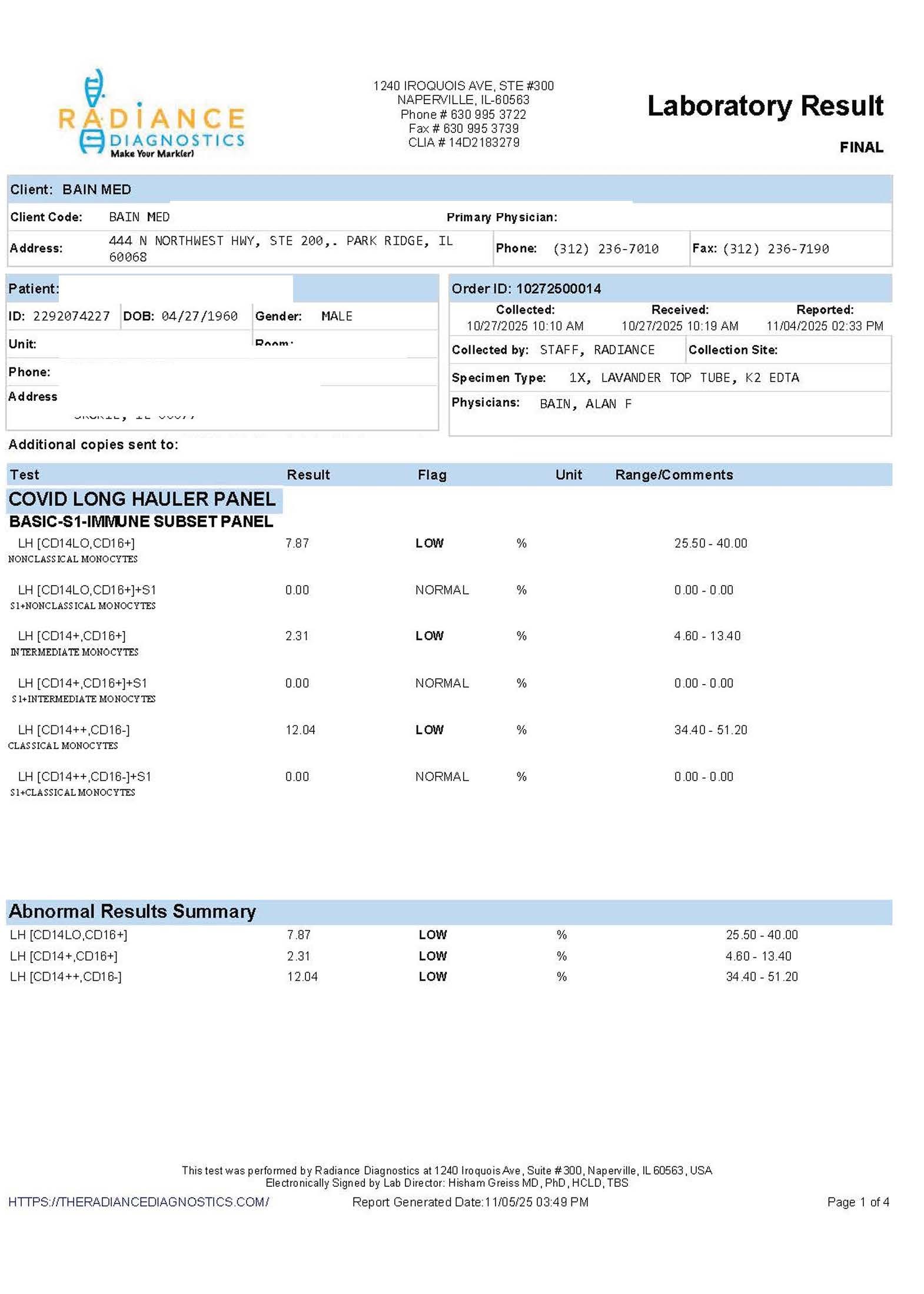
S1 NOW BACK TO NEGATIVE — continued stability
From the report:
All +S1 markers = 0.0 NORMAL
This showed:
no recurrence
no residual spike protein
stable immune recovery
This is important, as some individuals experience recurrence months after clearing S1.
In this case, the clearance held through the end of 2025.
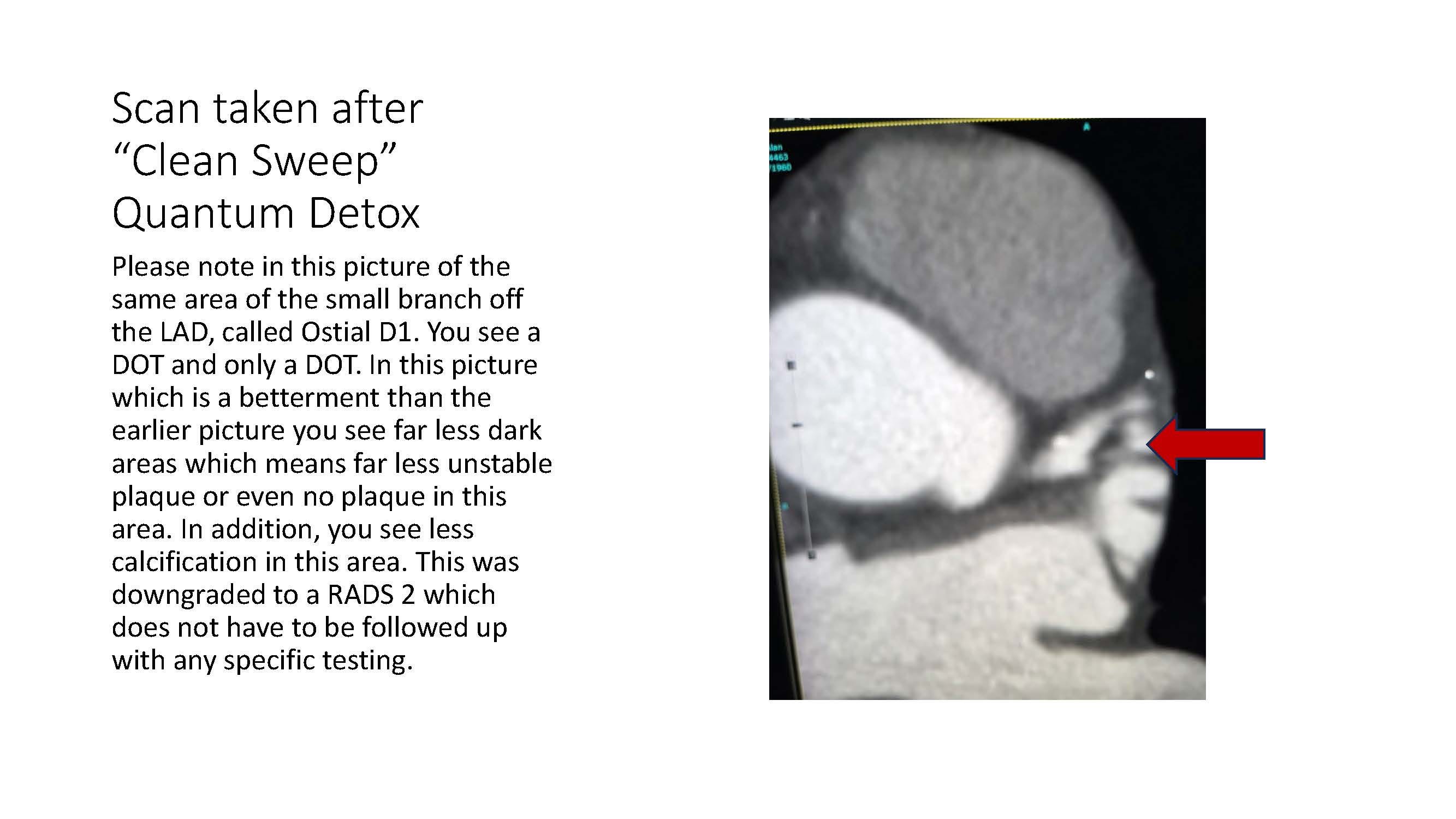
Three and a half months after the first scan, a follow‑up CTA was performed.
The radiologist’s report contained a phrase that made everyone pause:
“Improvement noted.”
The plaque had changed — visibly.
The lesion was less prominent
The lumen was more open
The unstable dark areas had diminished
The classification shifted from RADS 3 → RADS 2
And here’s the clinically significant part:
This wasn’t just improvement — it was a reclassification of cardiovascular risk.
This case brings together four elements rarely seen in the same narrative: a structural cardiovascular change documented on imaging, a spike‑protein signal that cleared and stayed clear across four tests, a patient whose symptoms resolved, and a bio‑electric protocol used during the same period. By the end of this process, he reported no more chest pain, no more heaviness, and a complete resolution of the chronic fatigue that had shadowed him for months. His energy returned, his daily functioning improved, and he described feeling “lighter” — as if his system had finally reset.
This case doesn’t offer all the answers, but it offers a signal — one that suggests the body may be capable of far more recovery than we assume when given the right support. Bio‑electric cell signaling may hold keys to therapeutic pathways we’ve never fully explored before, opening the door to new possibilities in how we understand and support human healing.
To learn more about the HSD “Clean Sweep” case study and ongoing research, visit:
getdetoxed.us or docintheloop.com
To learn more about the Quantum Factor product line, visit:
quantumfactor.net
No posts
Comments
Nothing yet. Say the first thing.
Sign in to join the conversation.