
Welcome back to our course on Women in Late Medieval England! This course is available for all level of paying subscriber to The Historian’s Desk.
You can watch today’s lecture in the above video (click “watch now” to pull up the page for this lecture) and you can adjust the playback speed of the lecture using the arrows in the bottom righthand corner of the video player.
You can also find the written copy of the lecture below, just in case you’d like to follow along with the recording. You can find a list of suggested readings at the bottom of the written lecture. Please feel free to post any thoughts, questions, or ideas you’d like to discuss in the comments.
I hope you enjoy this lecture about medieval women and their personal relationships!
We spent the last lecture getting to know one particular medieval noblewoman – Blanche, the Duchess of Lancaster. But while that lecture focused mostly on Blanche’s relationships within her family, this will explore other types of relationships, particularly through a closer look at the life of one of Blanche’s dearest friends, a member of the ducal household named Katherine Swynford.
Over their years together, Blanche and Katherine would develop a close relationship. With Katherine being a foreign knight’s daughter and Blanche being one of the wealthiest and best politically-connected women in all of England, a friendship may have seemed unlikely between the two. But a deep friendship developed, with the duchess and her servant forging a bond that would outlast even death.
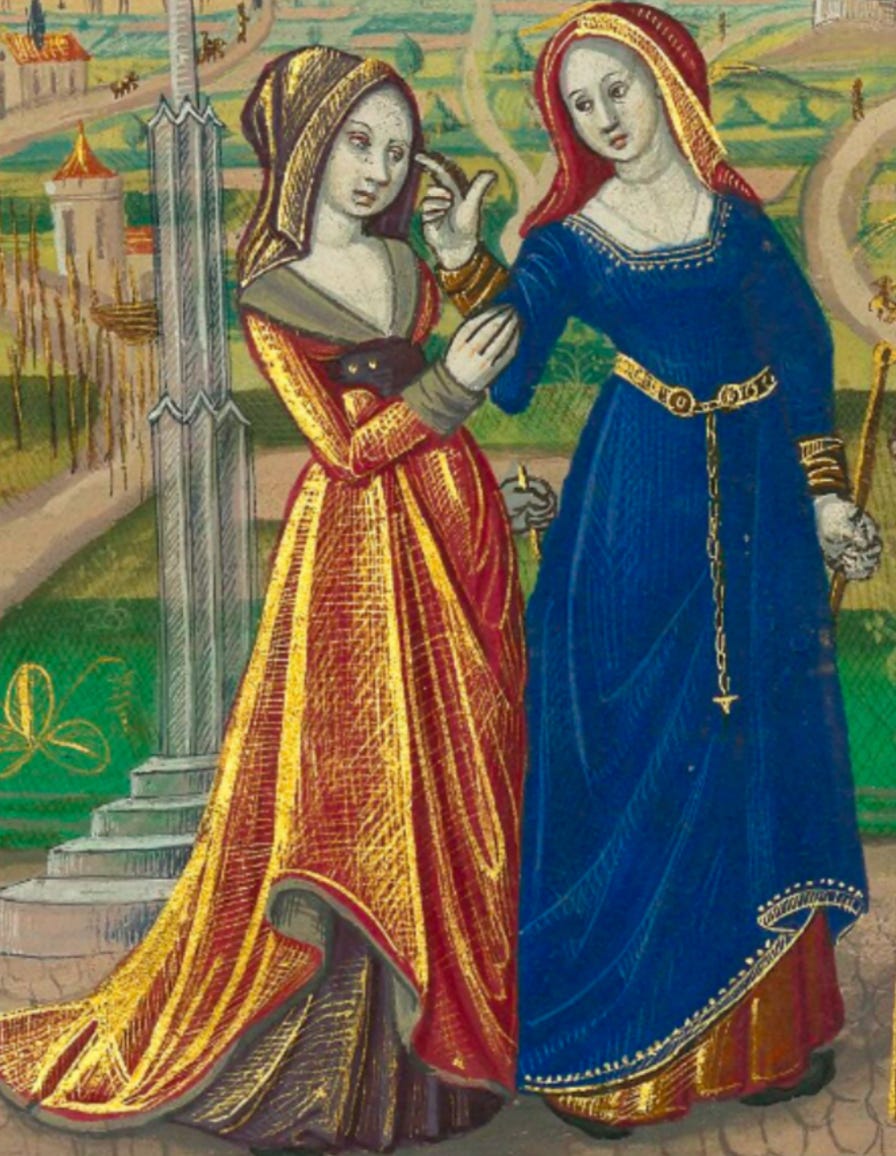
We talked a bit earlier in this course about Katherine when we discussed her sister, Philippa, who would go on to marry the most famous author from medieval England: Geoffrey Chaucer. Katherine and Philippa came to England as children, where they were raised in Queen Philippa of Hainault’s nursery alongside the royal – and many noble – children.
It was likely in Queen Philippa’s household that Katherine and Blanche first met. As Katherine would later work as a governess herself (to Blanche’s children, no less, as will be discussed below), it is likely she had some sort of education while living in the queen’s household, with the chronicler Jean Froissart claiming that Queen Philippa had actually employed Blanche as the tutor for some of the young girls in her care, Katherine included.
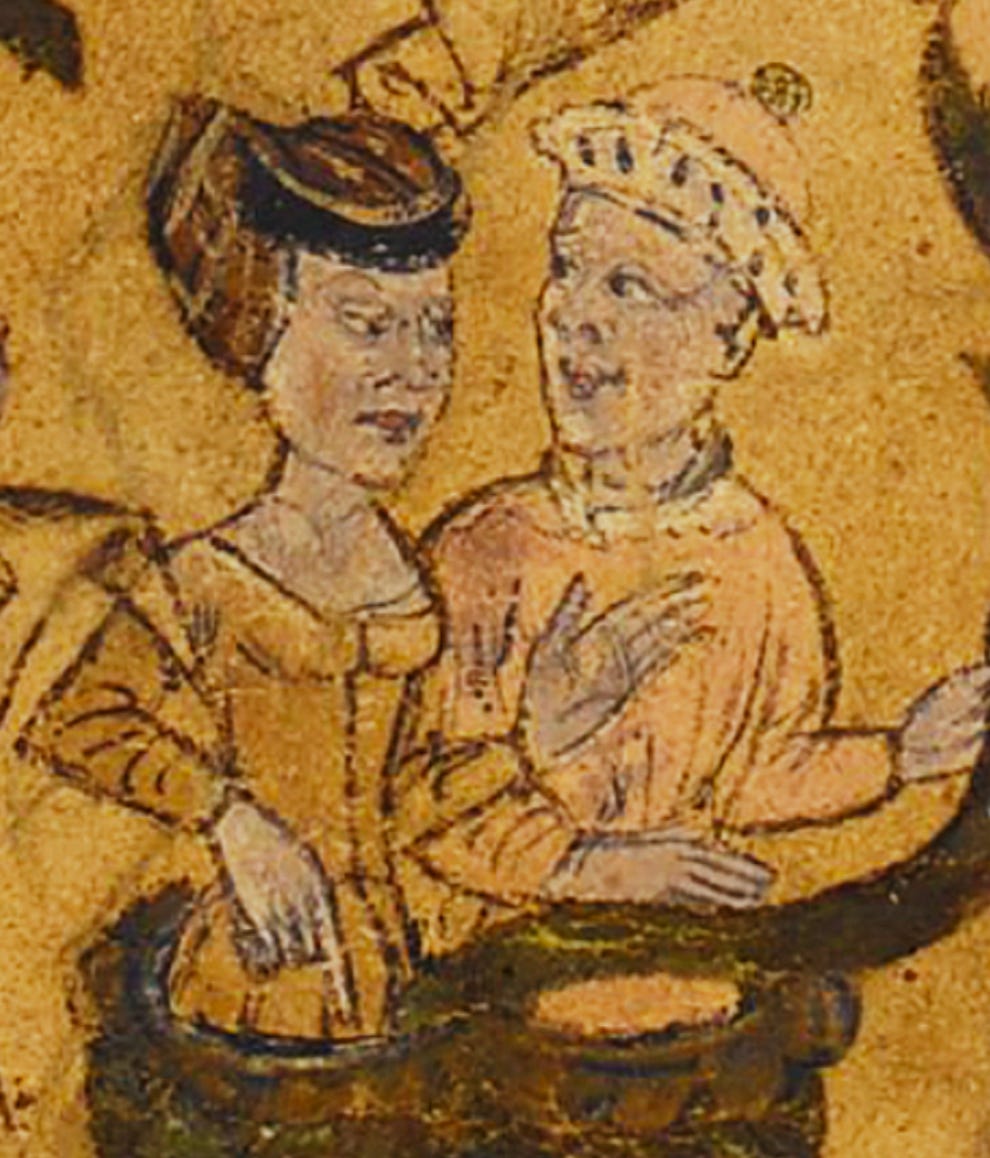
At some point, Katherine left Queen Philippa’s household, instead taking up a new position in the household of the duke and duchess of Lancaster. We know that Katherine had made this move by at least 24 January 1365, with some scholars arguing that she was actually in the Duchess’s household at the time of the birth of Blanche’s daughter, Philippa, in March 1360. If this was the case, the eleven-year-old Katherine would have likely been employed as a caregiver in the infant’s nursery.
If Katherine was in the ducal household by the time she married in 1362, then it is likely that the thirteen-year-old girl had her marriage arranged for her by her employers, Blanche and her husband, John of Gaunt. This is perhaps further suggested by the fact that Katherine married another servant within the ducal household, Sir Hugh Swynford, a soldier who was in the employ of John of Gaunt by 1361. It is around this time that the thirteen-year-old Katherine was married to Sir Hugh, likely aged around twenty-one or so himself.
Katherine would have several children with Sir Hugh, with her own pregnancies often overlapping with those of Duchess Blanche. By the time of Katherine’s first pregnancy, Blanche likely already had two children of her own – Philippa, discussed above, and a son named John after his father, likely born at some point in early 1362.
Katherine likely gave birth to her first child – a daughter named Blanche in honour of the Duchess – in 1363, possibly right around the time that Blanche gave birth to her third child, a daughter named Elizabeth, on 21 February 1363. By the time Katherine’s Blanche was five years old, she was placed in the chambers of the ducal daughters, becoming a playmate and lady-in-waiting to both Philippa and Elizabeth, Blanche’s daughters.
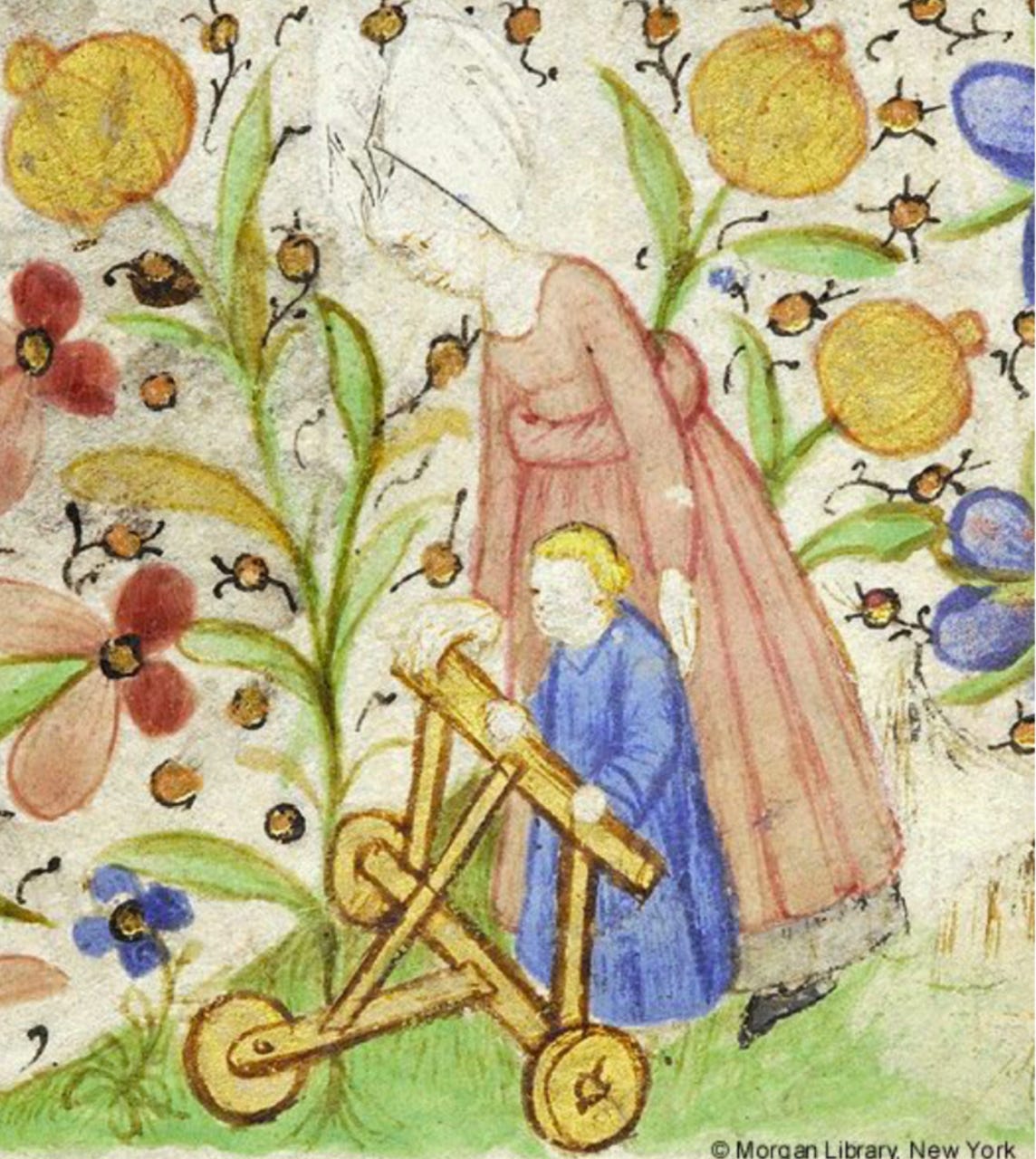
The names of so many children can make things a bit confusing, but it goes to show that Katherine and Blanche were living intertwined lives, with the two women being near constant companions while they were each experiencing pregnancies and childbirth. When she was not in her own confinement, Katherine would have continued to serve her Duchess and friend, likely working in the ducal nursery and possibly even tending to her own children on a daily basis alongside those of Blanche and Gaunt.
Katherine would have been a constant source of help and companionship to the Duchess, and it’s easy to see how the two of them would have bonded over shared pregnancies, deliveries, and experiences in the trying days of early motherhood.
Katherine’s next daughter, Margaret, was born around 1364 or 1365, with Blanche having another baby – a second son, named Edward after the king – also in 1365. Blanche would almost immediately become pregnant again, giving birth to a third son, also named John on 4 May 1366 – indicating that the first John, born in 1362, had likely sadly passed away by that point.
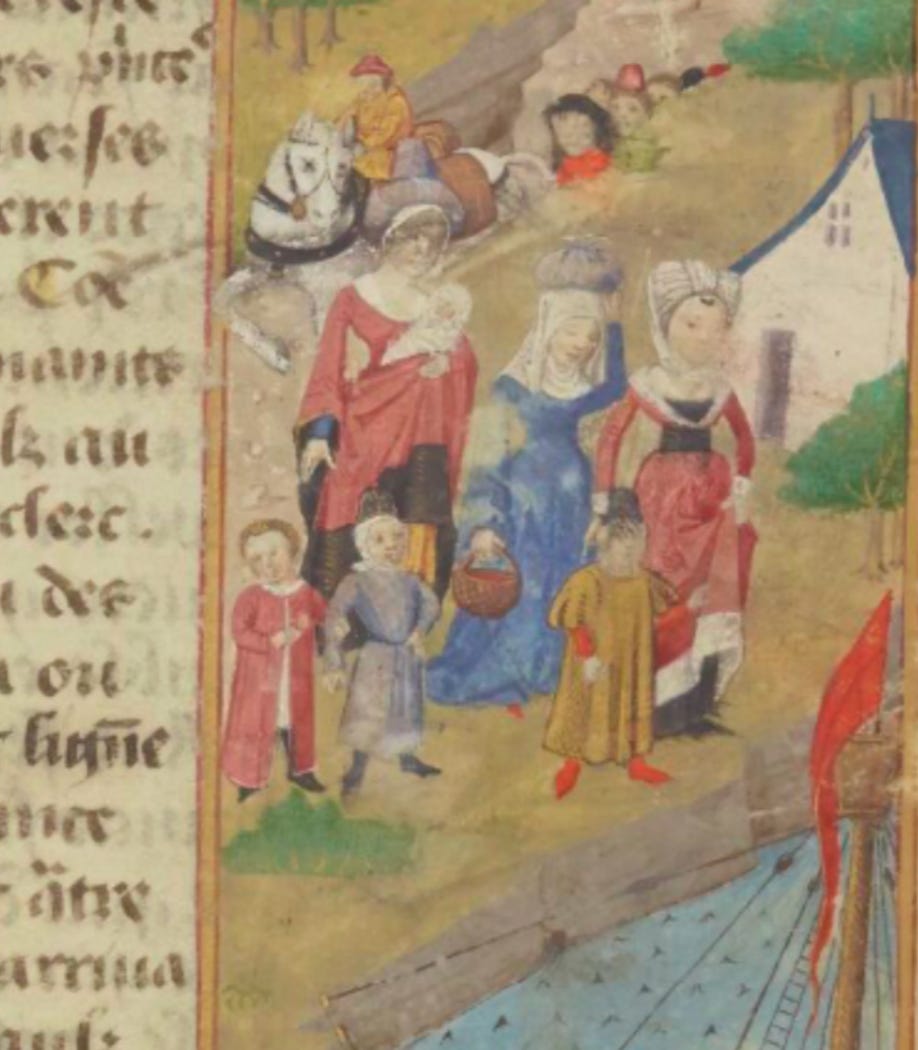
Child loss was an unfortunately common occurrence in the Middle Ages, with even children from royal and noble families falling victim to a range of diseases and ailments that regularly struck them down in their early years. Despite what some scholars have tried to allege, medieval parents would have been devastated at the loss of their children, who they cared deeply for as individuals. Blanche would have undoubtedly been in need of comfort following this traumatic event, and it is likely that Katherine was there for her friend, helping her process her grief and try her best to move forward for her husband and surviving children.
Both Blanche and Katherine found themselves in England without their husbands in the autumn of 1366, with Gaunt and Sir Hugh both on the Continent attempting to pursue Castile. A pregnant Blanche and a heavily-pregnant Katherine spent Christmas 1366 at Bolingbroke Castle in Lincolnshire.
They were likely joined by their children: Blanche’s two daughters, Philippa and Elizabeth, and possibly Edward and the seven-month-old infant, John, along with Katherine’s two daughters, Blanche and Margaret. The mothers celebrated the Christmas season together with their children, forming a sort of blended household similar to the royal nursery where they had both grown up.
Sometime in mid-February, Katherine left Blanche’s side to travel to Lincoln, where she would give birth to her first son, Thomas. Blanche meanwhile would stay at Bolingbroke Castle, where she would give birth in April to her only son to survive to adulthood, Henry, who famously came to be known as Henry Bolingbroke and eventually King Henry IV.
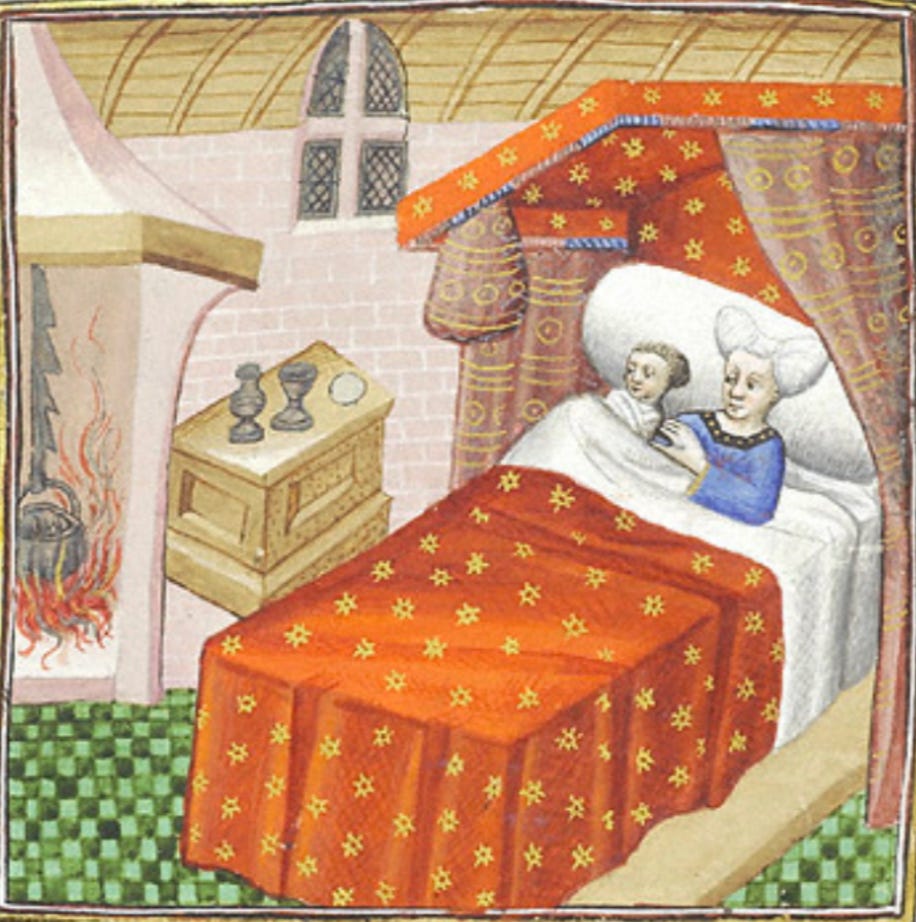
Thomas would be the last child Katherine would have with Sir Hugh and Henry would be the last child to survive to adulthood that John of Gaunt would have with Blanche. Blanche would give birth one more time, though, to a daughter named Isabel, likely after her own mother, some time in 1368. But neither the baby nor the Duchess were to live to see the end of that year.
The twenty-six year old Blanche would die at Tutbury Castle in Staffordshire on 12 September 1368, to the devastation of her husband and her household staff. Like her parents and sister, it is likely that Blanche was killed by another resurgence of the Black Death. Gaunt, who was abroad at the time, would go into an elongated period of deep mourning upon hearing the news of the death of his young wife.
Katherine similarly went into mourning for her Duchess and friend. She and Blanche had likely spent more time with one another throughout the past seven years than they had spent with their husbands, experiencing pregnancies and raising their children together. Although we do not have definitive proof, it is possible that Katherine was with Blanche at Tutbury, possibly caring for her Duchess through her final illness. We do know that Katherine accompanied Blanche’s remains to London, where she likely attended the Duchess’s elaborate funeral at the Old St. Paul’s Cathedral.
Exactly what happened to Katherine career-wise in the first few months following her Duchess’s death is unclear: she may have stayed on in Gaunt’s employ as a familiar face to help care for the grieving children, or she might have relocated to her own home of Kettlethorpe. Katherine’s eldest daughter, Blanche, continued to live with the duchess’s children and it is possible Katherine lived there as well, but no historical record survives to confirm Katherine’s presence.
What is clear is that at some point by the early 1370s, Katherine had begun a great love affair with Gaunt – her deceased friend’s husband: a love affair that would scandalise the realm.
Katherine’s husband Sir Hugh had died in late 1371 in Aquitaine where he had been serving Gaunt, who himself had just married Princess Constance, the daughter of King Peter of Castile. Although hostile chroniclers would later state that Katherine and Gaunt’s infamous affair began during the life of Hugh – or, according to some, even the life of Blanche – there is no evidence that this was the case.
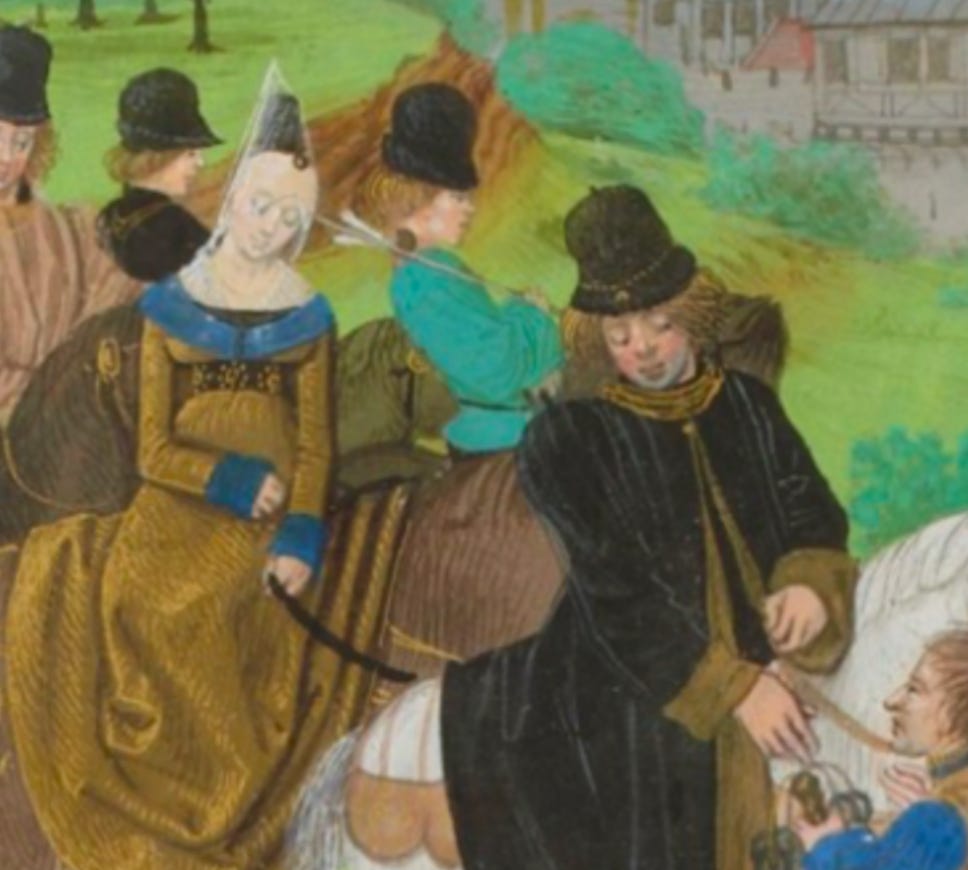
Katherine and Gaunt likely began their affair in early 1372, when Katherine and her sister, Philippa, were probably serving as ladies-in-waiting to the new Duchess – Constance – in the ducal household based out of Hertford Castle, where they were joined by Blanche’s children.
The twelve year old Philippa, eight year old Elizabeth, and five year old Henry would have been comfortable with Katherine, having likely all known their mother’s friend from their earliest memories. At a time when they were having to adjust to the arrival of a new mother-figure, it would make sense for Katherine to be living with them to provide guidance and moral support.
But it seems this support extended beyond the duke’s children. The affair between Katherine and Gaunt was likely already in full force by 1 May 1372 when Gaunt – living at his extravagant London residence, the Savoy Palace – gave £10 “to our very dear damoiselle Katherine de Swynford.”
This was quickly followed two weeks later by an increase in Katherine’s annuity by 30 marks, which Gaunt claimed was due to her close friendship with his first wife, explaining that the increase in pay was “for the good and pleasant services she rendered to our dear companion” – meaning Blanche – “and for the very great love which our companion rendered to Katherine.”
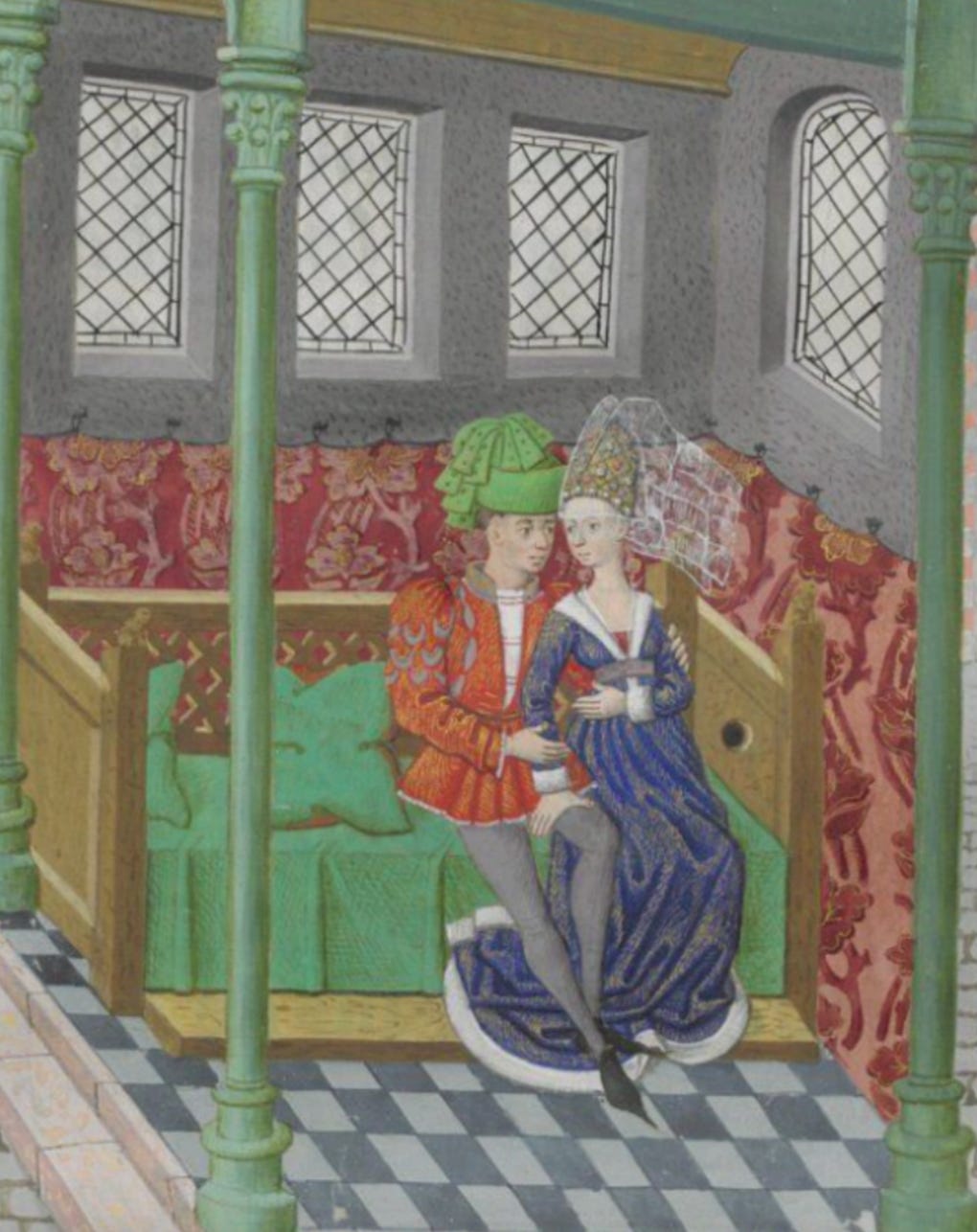
The next month, King Edward III gave Katherine control of the Swynford properties that her husband had left to their son, allowing her to run the properties until Thomas came of age; in return, Katherine had to take an oath not to remarry without the permission of the king.
By the next spring, Katherine was openly living with Gaunt at his Savoy Palace. It was at this time that she was likely given the position of governess to Gaunt and Blanche’s daughters, ensuring that she would be spending the vast majority of her time with Gaunt, travelling with him and his daughters between their large collection of properties.
Katherine likely helped Duchess Constance deliver her first child – ironically named Catherine – and possibly served her in the same childcare capacity as she had served Gaunt’s first Duchess during Constance’s postpartum recovery. Following the birth, Katherine was paid to deliver the news to King Edward that he had another granddaughter.
Constance would have a second child with Gaunt – a son named John after his father – but the baby would sadly die in infancy. While Constance likely knew about her husband’s affair, she seems to not have been overly concerned with it. Or she knew she had no real say over her powerful husband’s actions.
The affair would have been hard to miss. Around the time of the birth of Constance’s daughter, Katherine was likely also pregnant with the first child she would have with Gaunt – a son, named John for his father. When it came to choosing a surname for the baby, neither Swynford nor Roët nor Plantagenet seemed appropriate; instead, Gaunt and Katherine chose the surname Beaufort, a name that would be used for all of their children together.
Katherine would have at least another three children with the duke – Henry in 1375 (likely named after Blanche’s father, the first duke of Lancaster), Joan in 1377 (Joan Beaufort – the matriarch from the vast Neville family we discussed a few lectures back and the mother to Cecily Neville), and Thomas in 1381.
Gaunt recognized all of Katherine’s children as his own, and he seemed to have no qualms in showing Katherine off as his mistress. In addition to openly living together at the ducal residences, Gaunt sent his lover regular gifts of money, wine, firewood, and building materials.
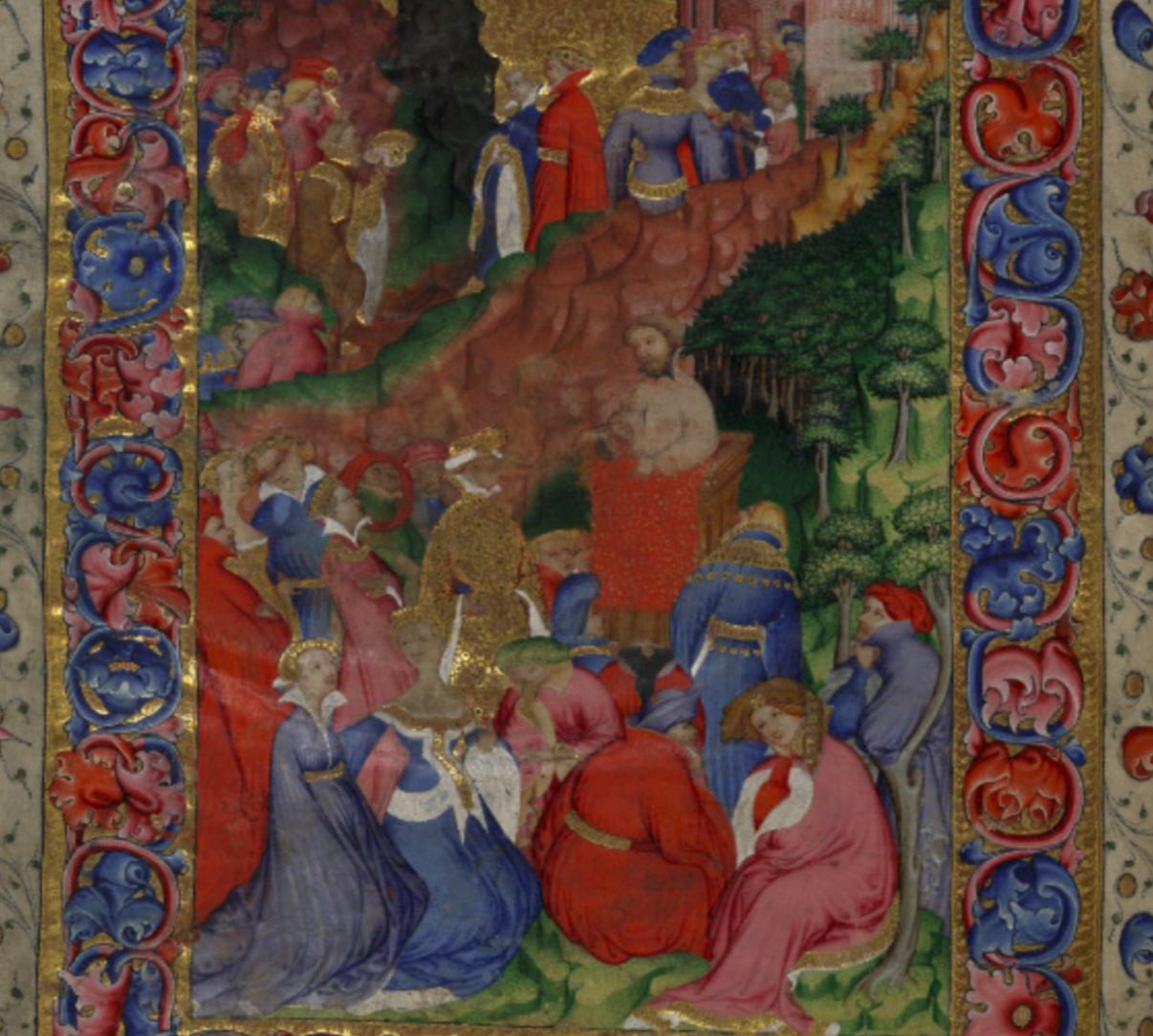
Gaunt kept Katherine with him at almost all times while he was in England. She was regularly in attendance at court and official functions, often in a highly visible position directly beside her lover, sparking outrage and accusations of impropriety against the two of them. In another work by Chaucer, it is possible that Katherine is portrayed in her new role as mistress to one of the most powerful men in the country.
Katherine is likely the woman featured front-and-almost-centre in the below frontispiece to Chaucer’s Troilus and Criseyde, surviving today at Cambridge University as Corpus Christi College MS 061.
The image depicts a scene at the court of King Richard II, the young grandson of Edward III (and nephew of Gaunt) who took over as king upon Edward’s death in 1377. Chaucer is shown reading to a crowd of gathered nobles – including the king himself.
The woman thought to be Katherine is dressed in great finery, wearing a blue, ermine-lined gown with golden embroidery and a golden headdress. She has her arm draped around a younger woman in a similarly lavish dress, identified by some scholars as Joan Beaufort, Katherine’s daughter with Gaunt and the future mother of Cecily Neville.
Gaunt is possibly also depicted in this image, likely on the far left dressed in the long red robes, making the frontispiece possibly function as a family portrait with Gaunt, his mistress, and one of their beloved children.
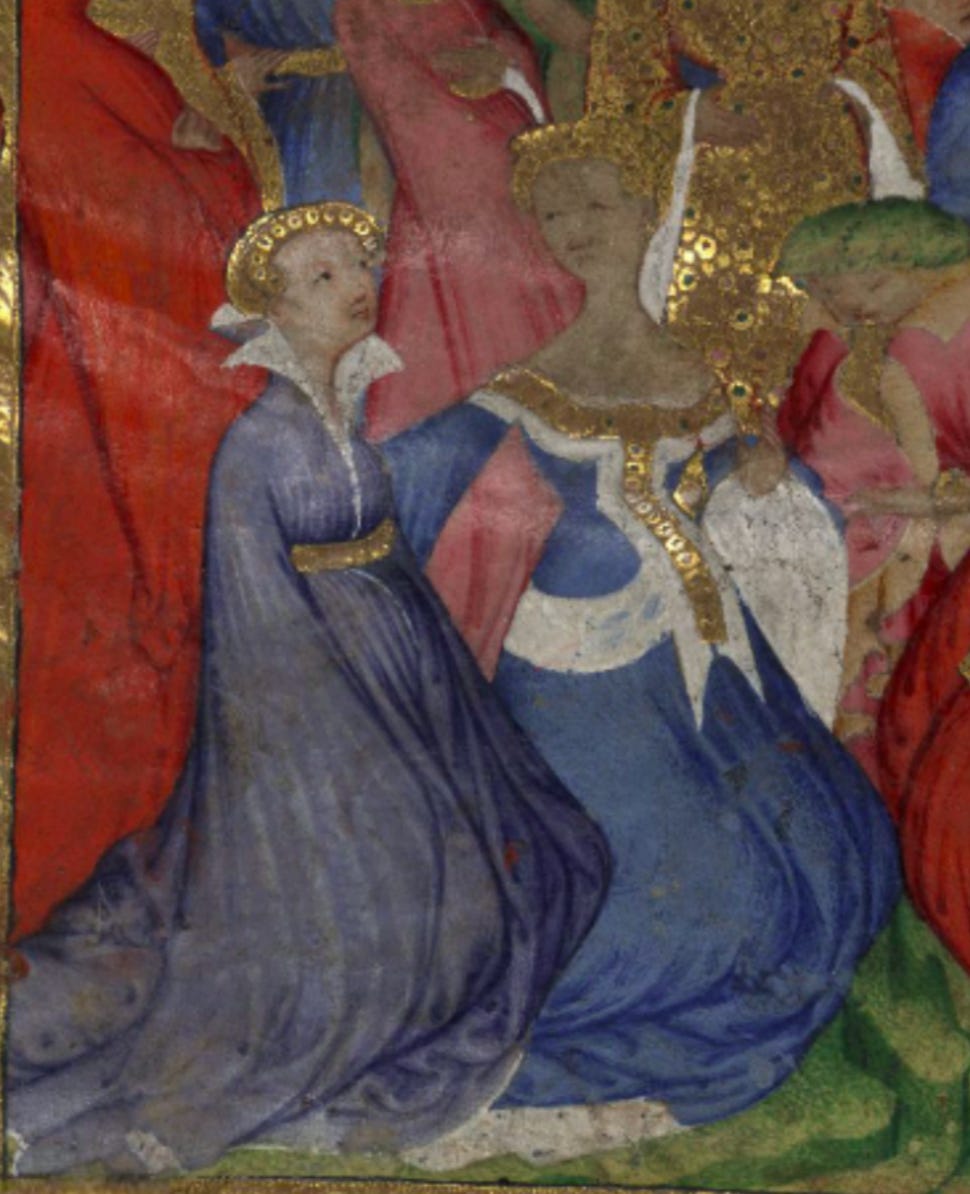
Katherine was not just a mother to her own children with Gaunt and those from her first marriage, but she also served as a step-mother to Gaunt’s children with Blanche: Philippa, Elizabeth, and Henry. As was the case with so many families at the time, widowhood and remarriage necessitated the blending of families, as children were often left without mothers and fathers and husbands and wives were often left without spouses.
In the case of Gaunt and Katherine, this mixing of families seems to have been met with great success. Possibly because the children had all grown up together or possibly due to Katherine’s kind and caring nature – or, perhaps most likely, both – Gaunt’s children with Blanche, Katherine’s children with Hugh, and Gaunt and Katherine’s children together all appear to have gotten along very well and remained extremely close into adulthood.
For his part, the future Henry IV always considered Katherine to be a mother to him and considered her son, Thomas, to be like a brother. Both Thomas Swynford and Henry’s Beaufort half-siblings were instrumental in providing support to Henry when he usurped the throne from Richard II in 1399, becoming King of England himself. As the new king’s family, they were all richly rewarded and honoured early on in his reign.
Although their families blended seamlessly and the two of them seemed to be genuinely in love, Katherine and Gaunt were not without their detractors. Gaunt was condemned for his open relationship with Katherine during his marriage to Constance, leading the two to take a more private approach to their relationship following the criticism Gaunt faced during the Peasants’ Revolt of 1381. Although the two likely kept seeing one another, their relationship was much less openly visible and the condemnation of their affair seemed to die down.
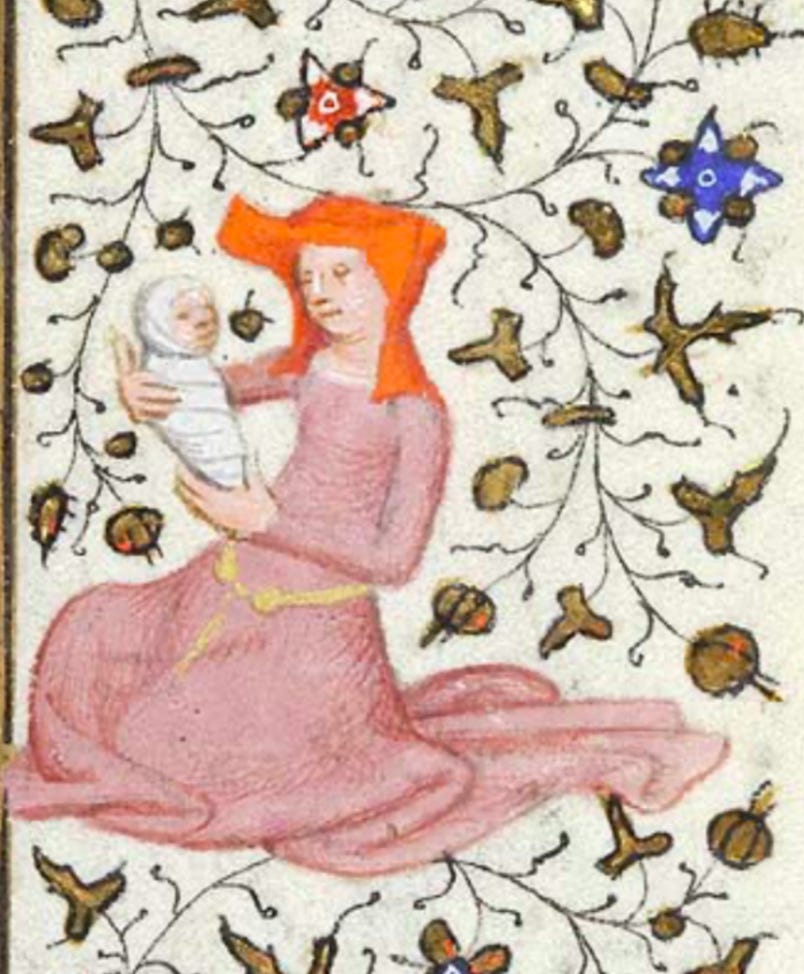
During these years, Katherine would spend more time at her own homes, mostly Kettlethorpe Hall. She and her daughter, Joan Beaufort, often visited Mary de Bohun, the young wife of Gaunt and Blanche’s son Henry Bolingbroke, with both of them eventually entering into Mary’s household in 1387.
Again one of Katherine’s duties was likely taking care of Henry and Mary’s infant son, Henry of Monmouth – the future King Henry V. It was also in this year that King Richard II made Katherine a Lady of the Order of the Garter, the highest honour an Englishwoman could receive, likely again indicative of the close relationship she and Gaunt continued to share.
When Constance of Castile died on 24 March 1394, Gaunt was quick to act. He applied for a papal dispensation to marry his long-time mistress, with the wedding taking place on 13 January 1396 at Lincoln Cathedral. Later that year, all four Beaufort children were legitimised, increasing their marriage prospects and social positions, as was discussed with the case of Joan Beaufort.
Finally, after about twenty-five years of patiently waiting, the Duke and his Duchess were able to make their relationship official. She unfortunately would not get to enjoy her position as Gaunt’s official wife for long, as just over three short years later, Gaunt himself would die, leaving Katherine behind to remember the great love they had shared.
Katherine Swynford wasn’t the first nor would she be the last woman in late medieval England to embark upon an illicit affair. Unlike most of these other women, Katherine actually benefited from doing so. Most women in that type of a situation would have faced public outcry and shame, particularly if they fell pregnant outside of marriage as Katherine did.
Due to her high connections with both John of Gaunt and two kings – Gaunt’s father Edward III and nephew Richard II – Katherine was able to weather any political or personal turmoil thrown her way and still manage to die peacefully on 10 May 1403 in quiet dignity, the step-mother of the new King of England.
Amin, Nathen. The House of Beaufort: The Bastard Line that Captured the Crown. Stroud: Amberley Publishing, 2017
Bolton, Kirsty and Lauren Sisson, eds. Motherhood in the Medieval World: Mothers in Literary and Textual Sources, c. 300-1400. Turnhout: Brepols, 2026
Cantor, Norman F. The Last Knight: The Twilight of the Middle Ages and the Birth of the Modern Era. New York: Free Press, 2004
Carr, Helen. The Red Prince: John of Gaunt, Duke of Lancaster. London: Oneworld Publications, 2021 (This book just so happens to be our next non-fiction bookclub read - send me a message if you’d like to join!)
Goodman, Anthony. John of Gaunt: The Exercise of Princely Power in Fourteenth-Century Europe, 1992
Leyser, Conrad and Lesley Smith, eds. Motherhood, Religion, and Society in Medieval Europe, 400-1400. London: Routledge, 2011
Sandidge, Marilyn and Albrecht Classen, eds. Friendship in the Middle Ages and the Early Modern Age, 2010
Weir, Alison. Katherine Swynford: The Story of John of Gaunt and His Scandalous Duchess. London: Vintage, 2008
Wheeler, Bonnie. Medieval Mothering. New York: Routledge, 1999
For a fictional account of Katherine Swynford’s life, I recommend Anya Seton’s 1954 novel Katherine
Comments
Nothing yet. Say the first thing.
Sign in to join the conversation.