
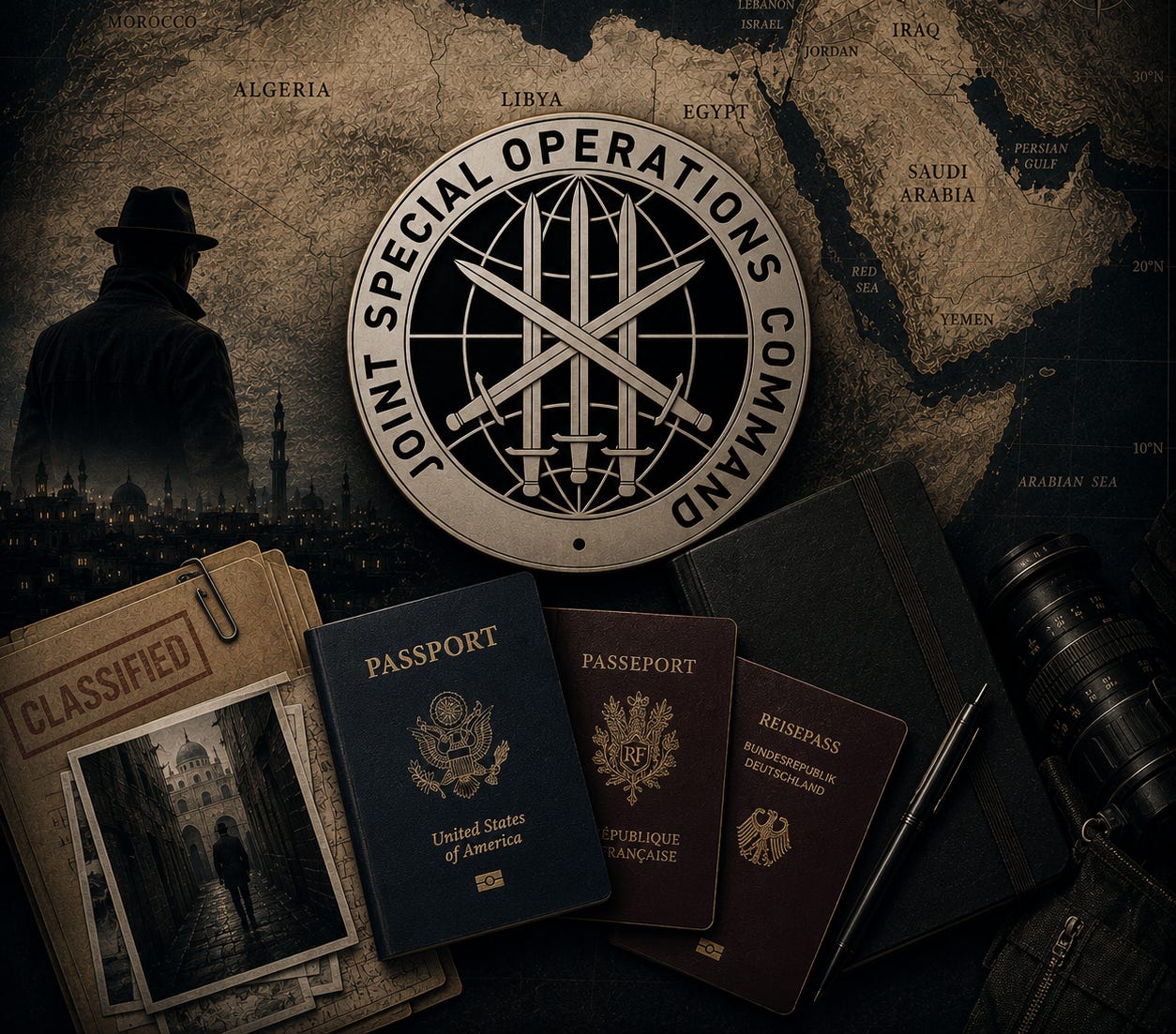
When the elite forces of Joint Special Operations Command sprang into action in April to rescue a downed F-15 weapon systems officer in Iran, it created countless headlines. But it was far from the first time this century that JSOC (pronounced “jay-sock”) personnel have conducted daring missions into that country.
In the early years following the 9/11 attacks, at least two JSOC personnel made repeated undercover trips into Iran, and another pair of operatives — pretending to be a romantic couple — flew into the country and stayed in a hotel for several days, according to Sean Naylor’s “Relentless Strike: The Secret History of Joint Special Operations Command.”
Those personnel, however, belonged to an even more rarified group than most special mission unit operators.
In airports around the world, members of this small, secretive club sometimes recognize but never acknowledge each other. Traveling under alias, they stroll through terminals in Eastern Europe, the Middle East, and elsewhere.
They could be coming from Fort Bragg, North Carolina; Dam Neck, Virginia; or any one of numerous off-site locations maintained by the U.S. government. Walking past airport stores, they sometimes spot someone they know: Perhaps they were in the Ranger Regiment together years before, or they’d worked together on a deployment. Maybe they are even in the same unit currently.
They notice one another in passing but each quickly averts his or her gaze. A handshake, a greeting, or even a lingering stare could potentially blow an operative’s cover, as well as the cover of his or her colleague. They travel the world like this, living under an assumed identity to the point that some operatives lose track of their real names and identities. This is the clandestine world of JSOC’s non-official cover program.
Or that, at least, is how JSOC’s non-official cover veterans (or NOCs, pronounced “knocks”) talk about their lives. But a former contractor to the military’s special operations forces described the work of seasoning these elite operatives for life under deep cover in somewhat less glamorous terms.
That work begins long before operatives’ deployment abroad. While taking an advanced training course, for example, JSOC’s NOC trainees have joined other special operators and flown into U.S. airports. For the purpose of the exercises, these airports are “located” in a fictional foreign country. The trainees are supposed to arrive in non-military clothes and be able to pass as civilians as they transit the airports.
“Part of the class is moving through an airport nonchalantly, undetected, and not raising your profile,” said the former special operations contractor. But many would-be operatives have stood out, recalled the former contractor, who said he has warned trainee NOCs that instructors would be able to easily identify them.
The special operations personnel would be betrayed by their military bearing and appearance. “We would always pick just about every one of them out,” he told The High Side. “It’s because they looked alike … They had the Merrell boots, they had the cargo pants, sunglasses, the ball cap, the beard.”
The course instructors would also inform the local police about the training exercise, and the cops would duly detain the trainees, who only moments earlier had been “yucking it up” together after deplaning, the former special operations contractor said. “It was hilarious because they were totally unprepared. They didn’t have the right identification. They didn’t have a cover story,” said the former contractor.
The contractor’s account highlights what several observers said has been the JSOC NOC program’s Achilles’ heel: It is fiendishly difficult to train armed forces personnel to play civilian roles convincingly, and even when that is achieved, the rapid spread of digital technology and artificial intelligence is making it almost impossible to mask their military backgrounds.
As a result, insiders say, a program that at its height in the 2010s was running source networks across Africa, the Middle East and Central Asia may soon be reduced to short, “singleton” (i.e., solo) missions with cover identities that are used once then discarded, rather than adopted for long-term operations of lasting value.
Comments
Nothing yet. Say the first thing.
Sign in to join the conversation.