
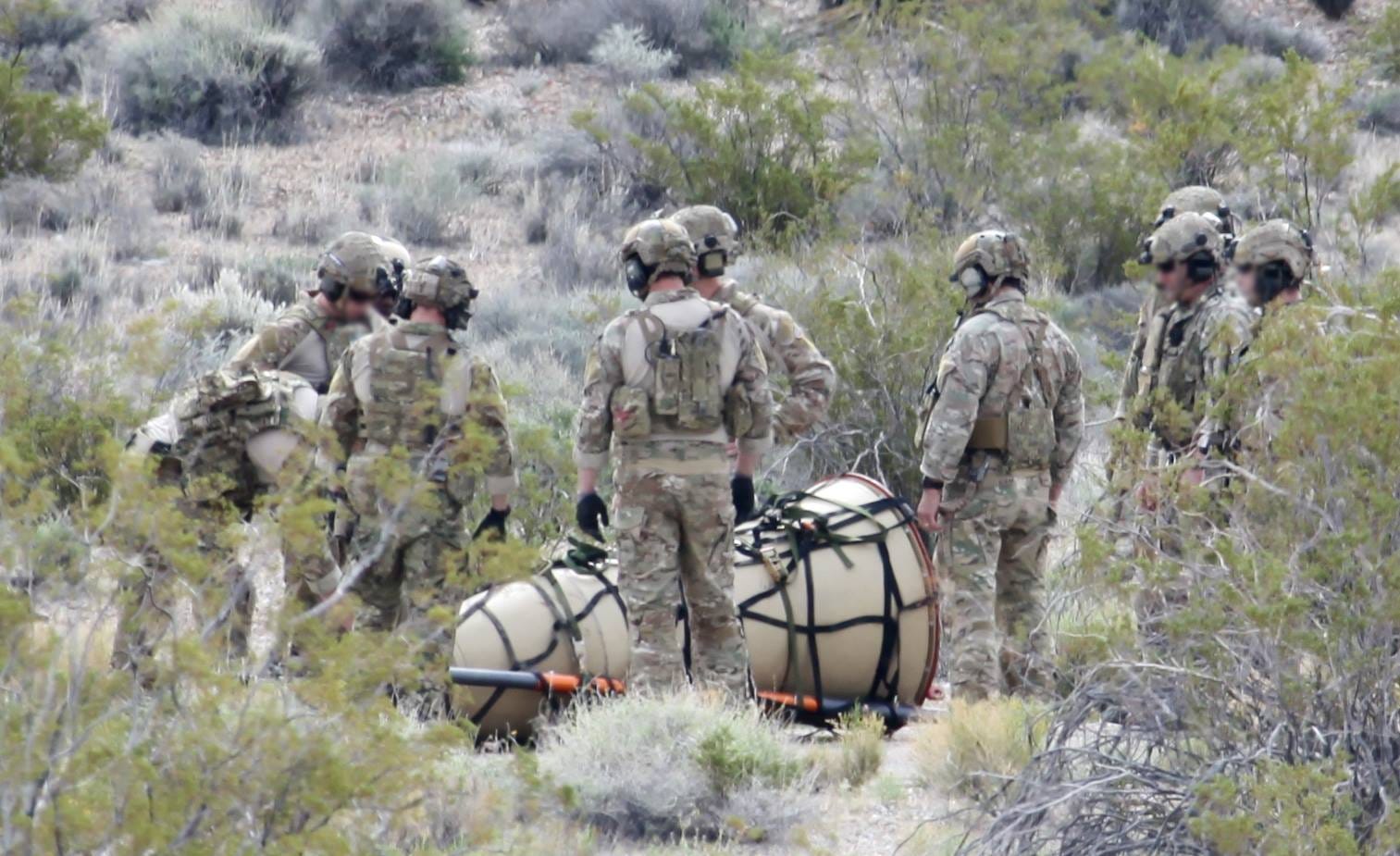
For more than three months, a Joint Special Operations Command task force has been standing by in the Middle East, prepared to execute what some insiders say would likely be the most dangerous mission the command has ever been assigned: recovering highly enriched uranium from underground facilities in Iran.
JSOC (“jay-sock”), which runs the military’s most sensitive special operations missions, has conducted extensive training for counter-weapons of mass destruction missions almost since its inception in 1980. But despite — or perhaps because of — that experience, some in the command are comparing a possible operation to retrieve Iran’s nuclear material to the failed mission that gave rise to JSOC in the first place. That mission was Operation Eagle Claw, the 1980 effort to rescue American hostages in Iran that was aborted after two U.S. aircraft collided with the loss of eight U.S. service members at an improvised landing strip inside Iran codenamed Desert One. Some JSOC insiders have begun referring to any effort to seize Iran’s highly enriched uranium by force as “Eagle Claw 2.0,” according to two defense contractors.
Comments
Nothing yet. Say the first thing.
Sign in to join the conversation.