
As the grip of authoritarianism tightens, it becomes increasingly common for people to make calls for violent resistance. Online leftists, and many in real life, love to repeat the Kwame Ture(Stokely Carmichael) quote, “In order for nonviolence to work, your opponent must have a conscience. The United States has none,” as a way to dismiss non-violent resistance.
There are a few problems with this quote, some of which I think bore out within the Black Power movement. But the problems I believe have strengthened today in 2026. While the quote was understandable within the context of its time, with the Civil Rights movement stalling out, and material change within Black America falling short. All while Black Civil Rights and Black Power leaders were being killed and arrested. Like now, avenues, legislative and judicial pathways became closed off.
What it misses, especially today, are the strategic effects of non-violent resistance, the costs of violent resistance, a strategic pathway to victory through violent resistance, and an understanding of state legitimacy. The last and first points are linked together, and we’ll start there.
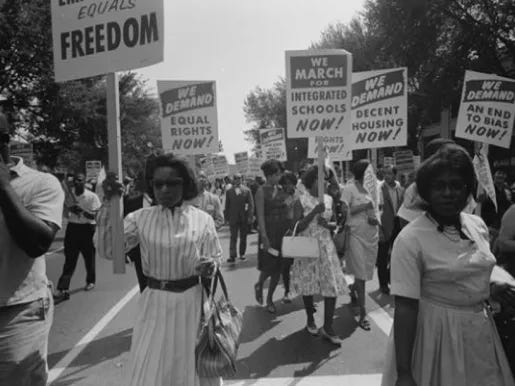
One of the largest strategic successes of the Civil Rights movement was undermining the legitimacy of democracy and freedom within the United States of America, especially on the world stage. It created social and political pressure for the United States to live up to its stated ideals of the “free world.” Through images of non-violent protesters, they undermined this legitimacy while also growing the legitimacy of their cause.
This duality of legitimacy deeply aided in creating conditions for change; it meant that violent crackdowns by the state on protesters were increasingly unpopular. While this doesn’t guarantee success, for those uninvolved, it reduces their consent to state suppression, and every time the state takes violent action to suppress, it continually undermines those actions.
To note: This is far easier in more open societies, where the press is less state-controlled. Where the rhetoric of “freedom” and “democracy” is common. The media in the United States is perhaps more state-controlled, or allied with the state, than it’s ever been. The current diffuse nature of our media ecosystem, while the general ideas of freedom, non-authoritarianism, and democracy still hold true among a sizable portion of the population, sets the conditions for such efforts to be effective.
Reading And Setting Conditions
The idea of reading and setting conditions is where violent resistance and revolutionary ideas often fail. If the conditions of legitimacy among large segments of the population are absent, the conditions for such actions aren’t there, no matter how much you believe violent resistance is justified.
On the opposite end, the Trump regime's failure to read and properly set conditions, with their hurried attempt to implement their white nationalist authoritarian agenda, has undermined their legitimacy. This failure is why visible and aggressive ICE raids in Minneapolis were such a failure to their agenda. The organized, non-violent resistance and the reaction to it continued to undermine the legitimacy of their actions and rhetoric. Propaganda only works if there is legitimacy among those spreading it— people didn’t believe the people they were capturing were dangerous individuals. In turn, the crackdown on people protecting their friends, family, and neighbors was seen as illegitimate.
The Cost Of Violent Resistance and Its Strategic Pathways
The use of violence to achieve strategic and political aims is difficult; even with tactical success, violence on its own does not advance political and strategic objectives. The war with Iran is a great example of this; this can be called the Operational Trap.
With Iran, the regime did not have clear and coherent political strategic objectives— what was their end goal? And even with their stated ones, which changed over time, it was clear there was no well-thought-out plan on how to use violence to achieve their objectives.
To put it differently, you can have the means to wield mass violence, but if you don’t know how to use that violence to achieve your political ends, you likely won’t achieve a welcome outcome.
To successfully wield violence and wage war, at the strategic level, you need
Clear strategic political goals and identifiable pathways to those goals.
The means to achieve those goals and execute at least some of the pathways.
An understanding of the best way to wield those means to achieve those goals.
All this to say, you can fully believe that the only way to achieve a good end for the people of the United States is through armed resistance and revolution. But the two major questions are 1. What is the strategic pathway to achieve those ends 2. And are the means to achieve those ends available to you?
Violent resistance, no matter how justified, without a clear strategic end, pathways to those ends, and means to get you there, is ripe for disaster.
This is before getting to the fact that most civil conflicts are horrifically destructive, leaving the most vulnerable to be slaughtered. The US Civil War, which is an outlier in that there were standing, state-sanctioned armies, with only WWII seeing more Americans* die on a battlefield.
*Note: I’m not counting those who fought and died for the Confederacy within these numbers. When combined, as they often are, they outstrip World War II. But that betrays the nature of the conflict.
And most civil conflicts don’t look like the US Civil War; there aren’t clear battlefields or fronts; they ebb and flow, often lasting far longer than the US Civil War. Leading to worse outcomes, power vacuums, and atrocities from all sides. It is wise to do all we can to achieve our ends while avoiding such a conflict.
And when even attempting to answer the questions, we quickly run into problems.
What are the strategic political goals?
The answer here depends on who you ask; many want the removal of the Trump regime, its accountability through trials, the dismantling of legalized political and economic corruption, and reinvestments in the people of America. There are variations to this, some more radical than others, but this is a core.
Others want to create a worker-led economy, a proletarian revolt, in the classical sense. again, with variations. Some want to see the complete end of the United States, effectively balkanizing the nation's current makeup.
So, if we go with the former, by far the most salient among the population, the question is what pathways would violent resistance open up to achieve such ends?
The Means to Achieve the Strategic Goals
You’re going to need far more than an AR-15-type rifle. To arm, train, keep supplied, and in the field, even a militia, is difficult work. In such a civil conflict, weapons would inevitably be imported into the country, but the firepower and supplies required to sustain an effort to meet those ends, even in the most far-fledged guerrilla war fantasies, are magnitudes larger than what is feasible.
How to Wield the Means You Have
So let’s say a group can even achieve the bare minimum in terms of resources to launch and sustain an effort. How will you achieve your strategic goals without hand-waving away large steps?
All this to say, you can believe what you want about what needs to happen. But if you can’t create clear strategic political goals, with pathways to achieve those political outcomes, your ideas are DOA. That is even before getting into larger philosophical and historically based questions about the use of violence to achieve those ends.
And when looking at history, the best examples are not Vietnam, the British Raj, or even Revolutionary America. One of their core strategic means was keeping the army in the field to outlast the will of their foreign adversary. In doing so, they made the cost of continuing the war or occupation far higher than that of withdrawal or peace. The political and strategic conditions were quite different from those of today.
There really are no great historical examples; perhaps the IRA, which led to almost a centuries-long conflict. Maybe recently in Syria, which came with massive amounts of violence and atrocities. In fact, some of the best examples are the color revolutions and what happened in Hungary, but those were not violence-based resistance movements; they were movements that hung on the legitimacy of the regimes in the eyes of the population.
Legitimacy is where non-violent resistance has a strategic advantage in many contexts. During the Civil Rights movement, it created friction within Jim Crow structures, challenged how those institutions fit within the broader United States, and created larger political problems internationally. The latter, due to the Cold War, put the United States' image of ‘freedom’ under great strain.
The Civil Rights movement understood strategy, especially in military terms. They marched with sustained organizing efforts and always responded to acts of violence by the state. But importantly, they understood that the wider political dynamics and operations, no matter how successful, rarely lead to strategic success without an idea of how to get there. And what separates strategy, and good military strategy, from bad or non-existent (the Iran War) is having clear political end goals and knowing the means to pursue them by understanding the wider political dynamics of your opposition.
Today’s political and social climate is primed for non-violent resistance because of the politics of the Trump regime and how they are attempting to implement them. While many of the stories of acts of resistance against the regime are being buried or covered far less due to the need for novelty in the modern news cycle, acts of non-violent resistance have created a crisis of legitimacy for the regime.
They expected people to go along with the very public and aggressive military raids on immigrant populations. What they didn’t expect was organized resistance, and their violent response to it, along with the violent imagery of the raids, activated people who had never been activated.
The cycle was this: The public imagery of the raids put people already activated in action, but it also made non-activated people question what was going on. And the response to those resisting closed the loop and activated them. It made the government's actions illegitimate. And highlighted the brutality of the crackdown. And while the raids and occupations in different parts of the nation have not ended, the people in Minneapolis forced a retreat of the US government, forcing a change in their tactics and strategy.
The other end of this is that it gave those resisting legitimacy; this is why rhetorically they have not been able to gain an advantage. They might throw specific polling questions, such as “Do you believe illegal immigrants should be here?” with many answering no. But when you get into the meat of it, people support much more progressive immigration policies, and Trump's polling is underwater on immigration.
Room has been created for pro-immigrant narratives from the Left, that create easier pathways to citizenship.
But back to the main point here, organized non-violent resistance- not just No Kings marches, but confrontation to authoritarianism, strategic confrontation, with clear goals and objectives, to create a specific political outcome- works. They force the regime into overreaction due to the nature of who they are, and even though they control much of the media, their overreaction is difficult to suppress.
While our short attention spans and the news cycle create a need for novelty, which is something that can be taken advantage of, flash points are hard to ignore. This brings us back to the understanding of PSYOPS and Propaganda: lean into the drama; create conflict through direct confrontation. If you’re not able to establish drama through confrontation, move on to another target.
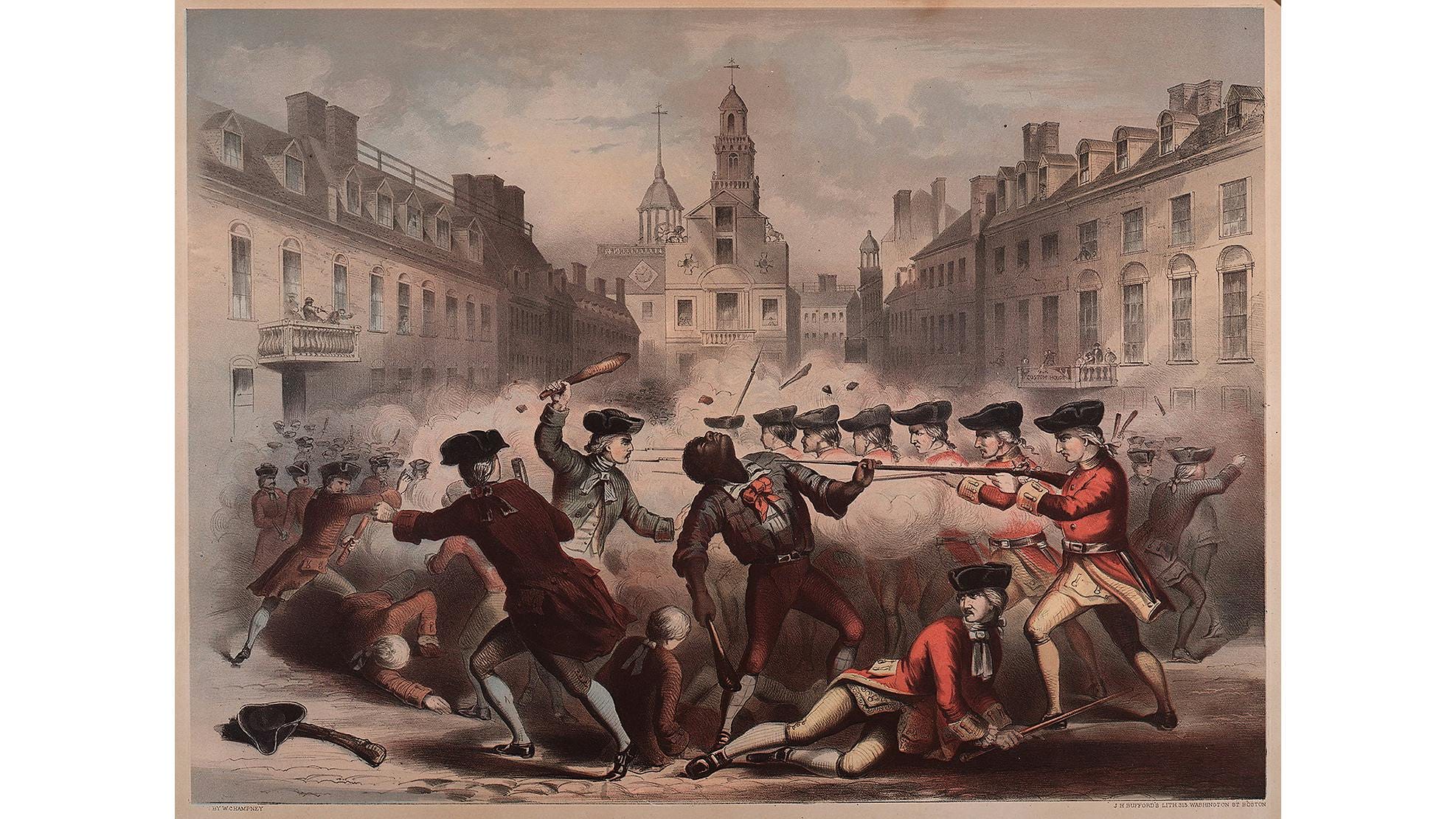
What forcing an overreaction also establishes is legitimacy for more radical confrontations. The founding of the United States has more than a few examples: The Boston Tea Party pushed the British Crown to overreact, leading to the Boston Massacre and lending legitimacy to revolutionary claims and rhetoric.
In fact, effective strategies in non-violent resistance share a lot of ideas with guerrilla warfare and asymmetrical warfare. You have to build infrastructure to sustain efforts, which is far easier done within non-violent strategies due to the type of resources needed to sustain, you have to create constant pressure, harass and withdraw to create constant friction (causing noise at hotels ICE agents are housed), minimize direct confrontations where they have the tactical advantage (i.e. don’t go on highways as you march), push them to overreact so local residents see their actions as illigetimate.
The goal is to make their overbearing efforts too expensive to maintain, undermine morale among their frontline troops, and undermine legitimacy among the “native” population. All while sustaining and building your capabilities, and expanding your legitimacy among the “native” populations.
Then they get caught in a cycle: the more they try to clamp down, the weaker their hold becomes, as their legitimacy decreases, and morale among their troops craters.
Other reasons why this works are.
Fascism behaves as if it is inevitable, as if it has already won. The more you demonstrate that it has not, the more cracks appear in their lies.
Their enforcers aren’t always hardcore ideologues, and because of that, they are susceptible to counterpropaganda and PSYOPS that degrade morale. Weakening their efforts while also creating opportunities to turn people on the inside into agitators or intel sources.
While there are enforcers who are ideologues who truly don’t care about being liked, we can see that many of these right-wing people want acceptance and don’t understand why we won’t accept them. Those people become frustrated and disillusioned in the face of resistance. Leaving behind only the most vile true believers, whose own efforts will undermine the legitimacy of their efforts.
While the economy continues to falter, people will see the regime spending money on increasingly unpopular efforts, all while their lives become more expensive. And while, again, ideologues will hold on to their beliefs, fascism requires non-ideologues, people just trying to live their lives, to go along with it. We can create a cycle that creates friction in that process.
Once a regime's legitimacy has been eroded to a certain point, as we can see in Hungary, its power plays, propaganda, etc., no longer carry enough weight or substance to stem resistance to the regime. They collapse.
While there is still much to be done after the collapse of this regime to ensure such people can never hold power again, those who enabled and carried out the regime’s agenda are held accountable—general corrupting forces are held accountable, and so on. We have to get to the point where we can first take the reins of power to enact that strategy. So first, we must undermine the regime and its legitimacy.
And, leaving ethical and moral arguments aside for the moment, the strongest strategic path to undermining legitimacy is through strategic non-violence.
I’m currently reading Waging a Good War: A Military History of the Civil Rights Movement, 1954-1968 by Thomas E. Ricks. This book explores the parallels between smart military strategy and the strategies of the Civil Rights movement. I’ll be exploring the ideas in this book in detail once complete, in bringing that analysis to everything previously covered. But these are ideas that still hold true, and these are ideas that, when you look at left organizing since the Civil Rights movement, have been largely abandoned.
No posts
Comments
Nothing yet. Say the first thing.
Sign in to join the conversation.