
Welcome to The Growth Signal.
Gummy supplements have transformed from a niche children’s product to a market powerhouse.
But are they truly effective?
TLDR;
Ranked lists of the ‘why’ and ‘what’ fueling the gummy market.
A deep dive into quality considerations and manufacturing.
Consumer concerns.
Key takeaways.
“What are consumers taking supplement gummies for?”
Growth Protocol simply searched for “gummy supplements” on our platform.
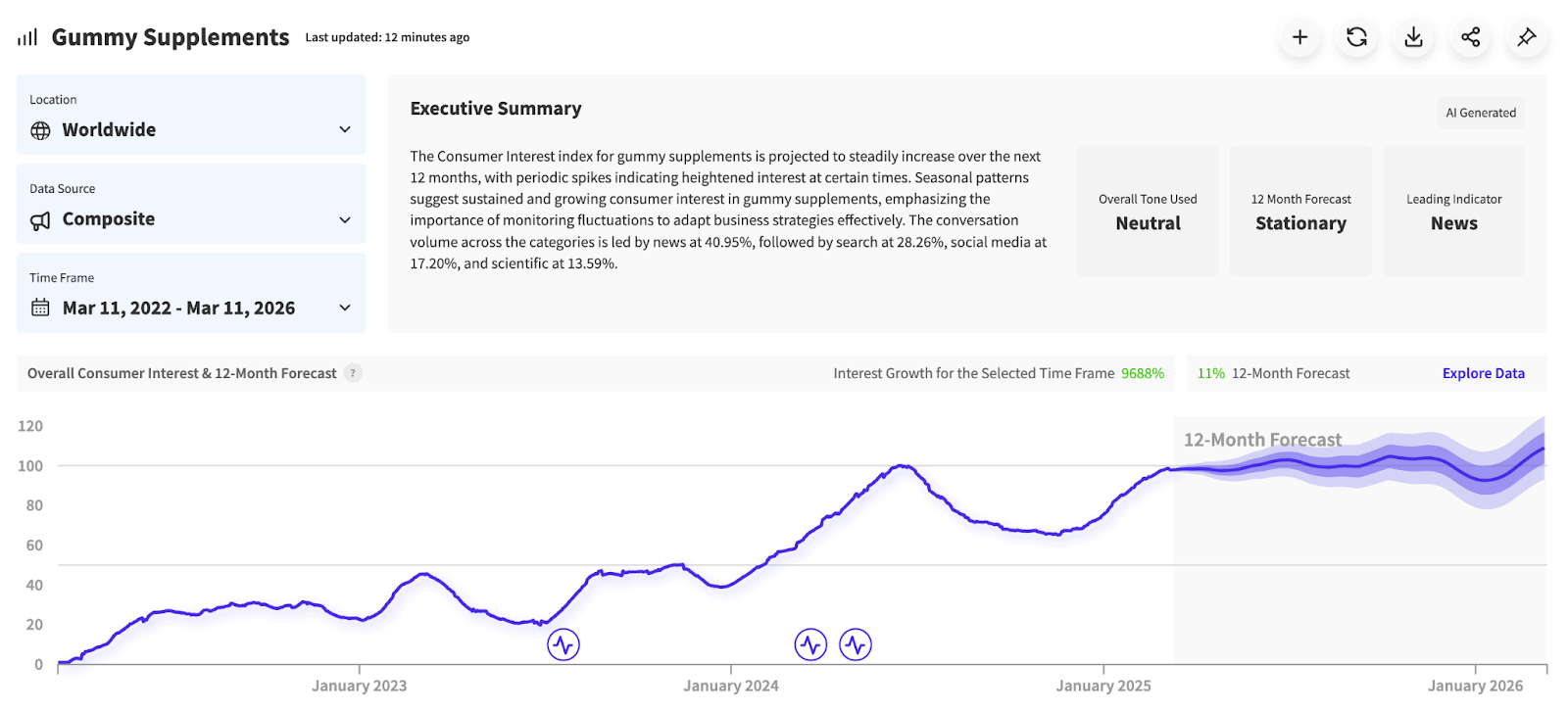
The above signal report shows that the global market interest in gummy supplements has significantly increased over the past three years and is forecast to grow steadily over the next twelve months.
Clicking on the microtrends section of the report, we filtered the custom search for ‘benefits.’
Relaxation
Digestion
Nootropics
Immunity
Adaptogens
Mushrooms
Antioxidants
Sleep
Energy
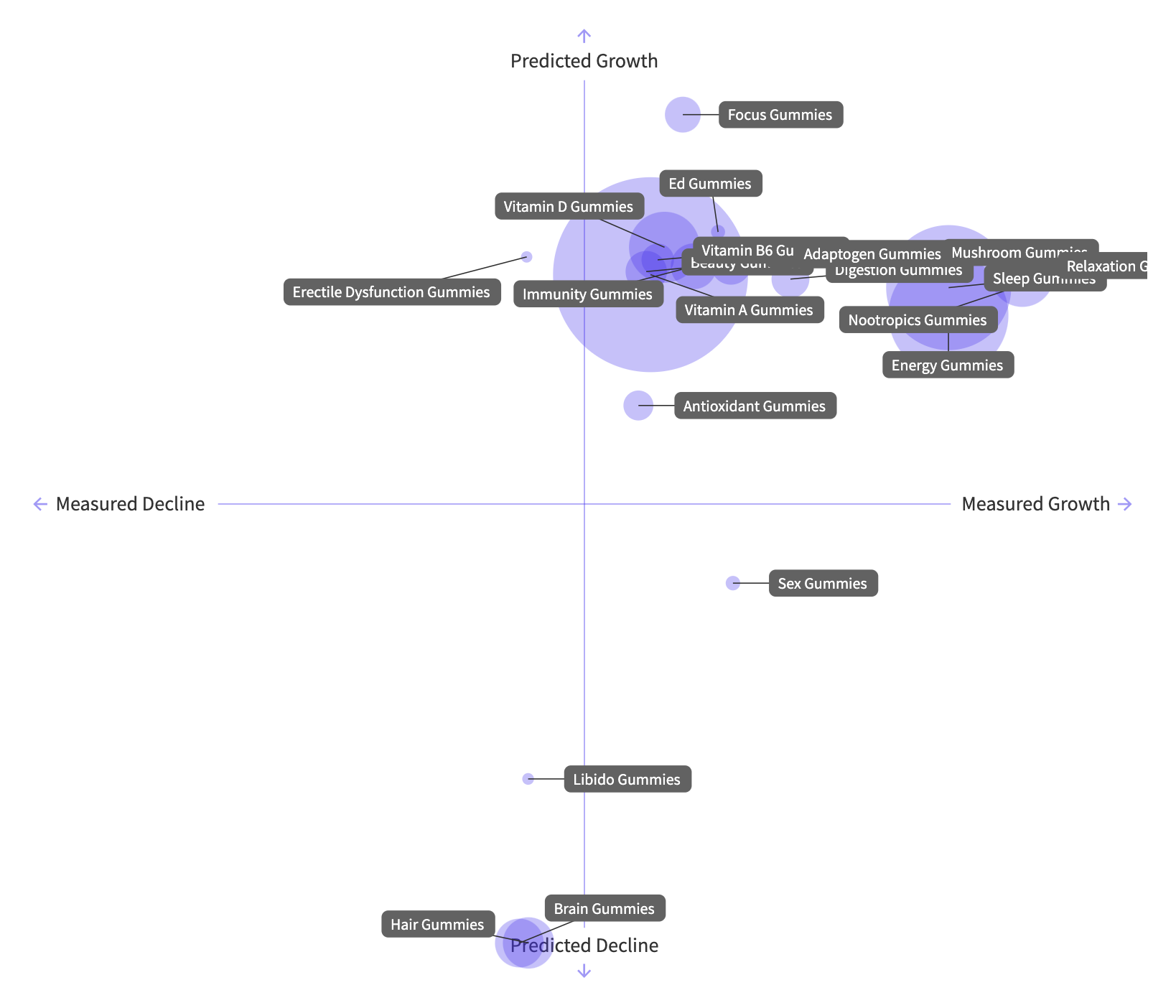
From there, we identified and ranked the ingredients that have dominated the gummy market over the past three years and are forecast to continue attracting consumer interest.
Nitric Oxide
Fiber
Rhodiola Rosea
Ginger Root
Lion’s Mane
Creatine
Calcium
Magnesium
Resveratrol
Amino Acids
Selenium
Bocapa Monniera
Collagen
Zinc
Ginko
When formulated correctly, gummies match the absorption effectiveness of pills and capsules—but the real concern is the stability and consistency of nutrient levels over their shelf life.
Controlled studies show equivalent or sometimes better bioavailability for fat-soluble nutrients like vitamin D and C due to gummy ingredients like oils and emulsifiers.
The primary issue isn’t nutrient absorption, per se, but limiting factors such as:
Limited loading capacity: no one wants to take 10 gummies for an effective magnesium, calcium, or protein dose.
Taste challenges: some nutrients like iron and specific B vitamins have strong tastes that manufacturers limit or eliminate.
Stability issues cause faster nutrient degradation compared to dry pills or capsules.
Shelf-life variability leads manufacturers to overcompensate for shelf life and overdose products, meaning potency can significantly vary.
The verdict? Gummies work well for delivering moderate doses of stable nutrients but fall short when high doses or difficult-to-mask ingredients are needed. Consumers relying solely on gummies may unknowingly miss crucial nutrients like iron or calcium.
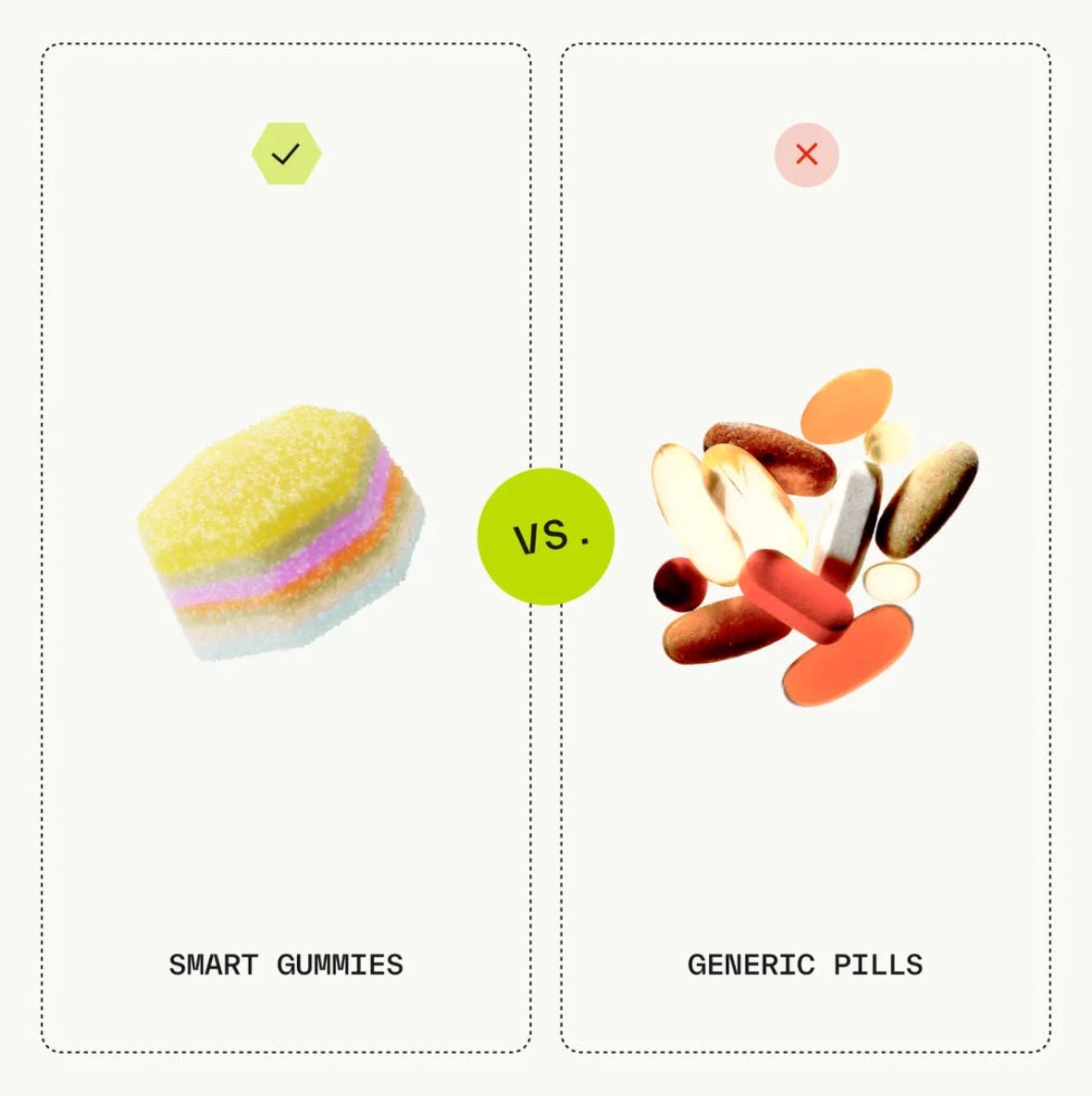
Imagine answering a short survey on health goals, sleep, and supplement ingredients and getting a personalized gummy to target your needs.
While this technology could solve several limitations of conventional gummies, particularly around nutrient loading capacity and formulation challenges, 3D-printed gummies have yet to hit mainstream markets.
Market leaders in this space include:
Nourished: raised $13.6M for their patented 3D printing technology, seven-layer nutrient gummy stacks.
Elo Health: raised $15 for their smart gummies based on AI biometrics.
In 2023, Neutrogena partnered with Nourished to develop SkinStacks. Using Neutrogen’s AI face scan app, the brand helped users identify supplement ingredients that supported their unique skin concerns.

Gummy supplements are here to stay with a 14.5% Compounding Annual Growth Rate, nearly double the 7.4% CAGR of the traditional supplement market.
Key growth drivers include:
Convenience - No water needed, portable, can be taken anywhere.
Taste appeal - Fruity flavors and pleasant texture create an enjoyable experience rather than a medical obligation.
Expanded demographics - Gummies are significantly expanding supplement usage into new demographics previously resistant to pills, including younger consumers, older adults with swallowing difficulties, and pill-averse men.
Between 20-40% of supplement users prefer gummies to pills–transforming a medical routine into a small daily pleasure.

Sugar content - Many gummies contain 2-8g of sugar per serving, adding empty calories.
Artificial ingredients - Synthetic dyes, like the recently FDA-banned Red 40, are a health concern for certain consumers, especially children.
Animal-derived ingredients - Traditional gelatin made from animal bones excludes vegetarian and vegan consumers.
Preservatives - Necessary for shelf stability but unwanted by clean-label seekers.
Nutritional gaps - Gummy multivitamins often lack iron and contain reduced levels of certain nutrients.
Consumption risks - Candy-like appeal increases the potential for overconsumption, especially by children.
Quality control concerns - The proliferation of white-label manufacturers allows brands to enter the market with minimal expertise, potentially compromising quality.
The white-label problem: Multiple contract manufacturers now offer turnkey solutions to create branded gummy supplements with minimal investment or inventory. These drop-shipping offerings have led to a flood of virtually identical products with different labels, raising questions about quality oversight, ingredient sourcing, and efficacy testing. Consumers face increasing difficulty distinguishing between science-backed formulations and opportunistic market entrants.

The gummy format presents a compelling opportunity for CPG brands but requires careful consideration.
Premium pricing potential (consumers will pay more for gummies)
Growing market share in a competitive supplement landscape
Higher consumer compliance drives repeat purchases
Brand differentiation through innovative formulations
Formulation complexity requiring significant R&D investment
Higher production costs compared to traditional formats
Increasing consumer scrutiny of sugar and additives
Stability concerns affecting shelf-life and potency
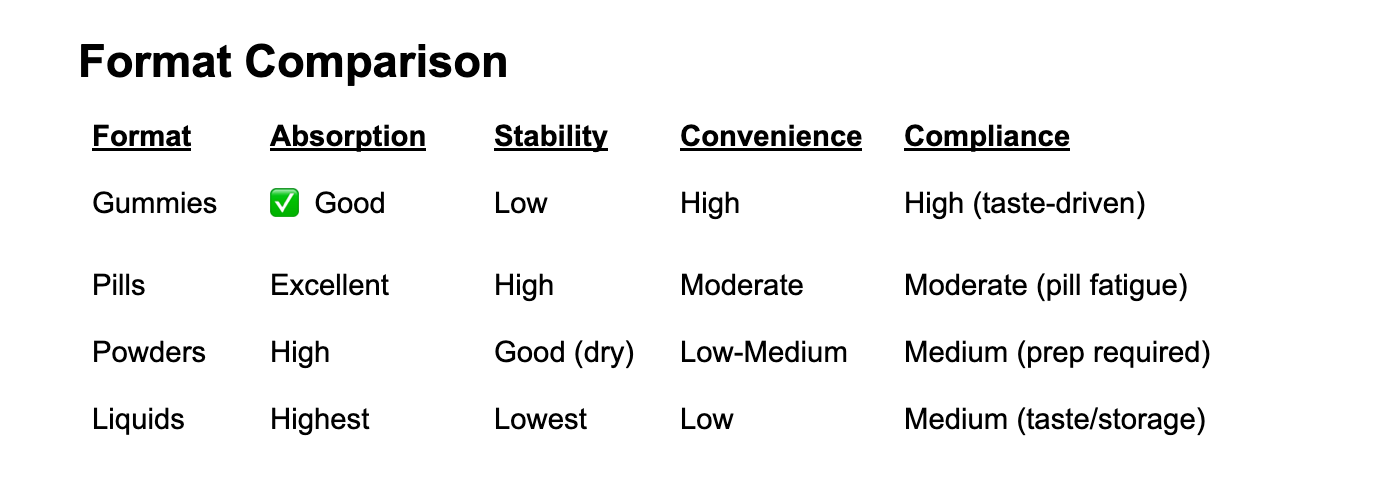
Gummies are not merely hype; they deliver genuine nutritional benefits when adequately formulated.
Limitations around dosing, stability, and ingredient inclusion mean gummies should complement traditional supplements for some nutrients, not entirely replace them.
Innovation in clean-label, natural alternatives will likely define the next generation of gummies.
3D printing technology represents a disruptive advancement that could address many current limitations.
Quality differentiation will become increasingly crucial as white-label options proliferate.
A breakdown of the growth opportunities and challenges around the gummy supplement market.
Thanks for spending time with us on this first edition of The Growth Signal.
We’ll see you next time.
👀
Is there a market opportunity you’re interested to learn more about? Leave a comment below!
No posts
Comments
Nothing yet. Say the first thing.
Sign in to join the conversation.