
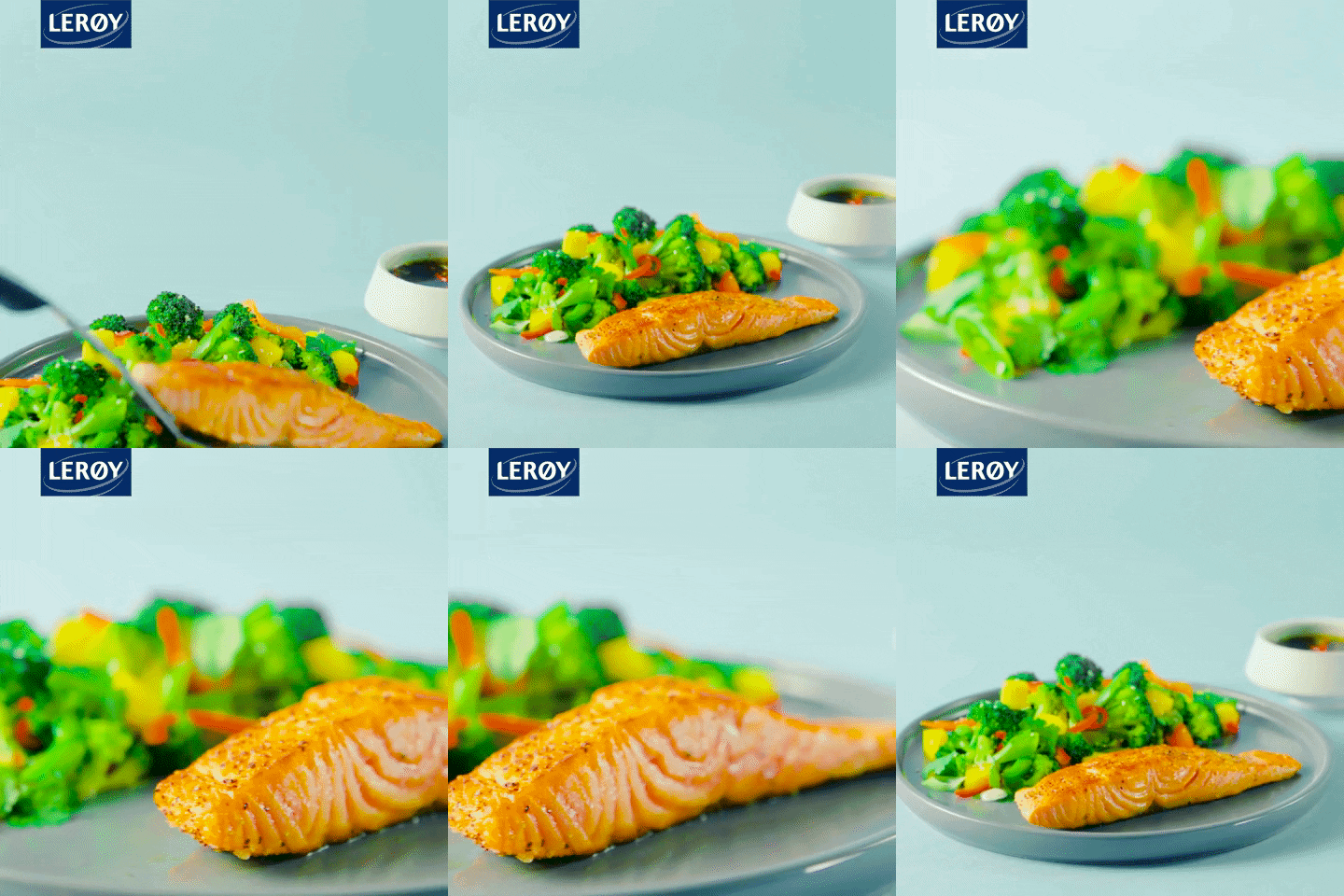
Do you ever wonder about the color of raw salmon…why some salmon may be really dark orange and some may be a lighter color? That's due to a pigment called astaxanthin which is a carotenoid (the vitamin A family).
Salmon need this pigment - it is like an essential vitamin for them - and it is necessary for the health of the fish in various ways. (see the link in the article below)
Wild caught salmon can get this pigment when they eat microalgae and some smaller fish (krill). Farmed salmon would need to be fed this to make sure they get it in their diet. It may still come from microalgae or krill that is fed to them, or it may be given in a form of the pigment that is manufactured and added to their feed.
This is why you don't see gray salmon - whether it is wild caught or farmed - this would indicate an unhealthy fish! For more on this:
The colour of farmed salmon comes from adding an antioxidant to their feed, with benefits for everyone - Dal News - Dalhousie University
(from a post on LinkedIn by Tara Vander Dussen)
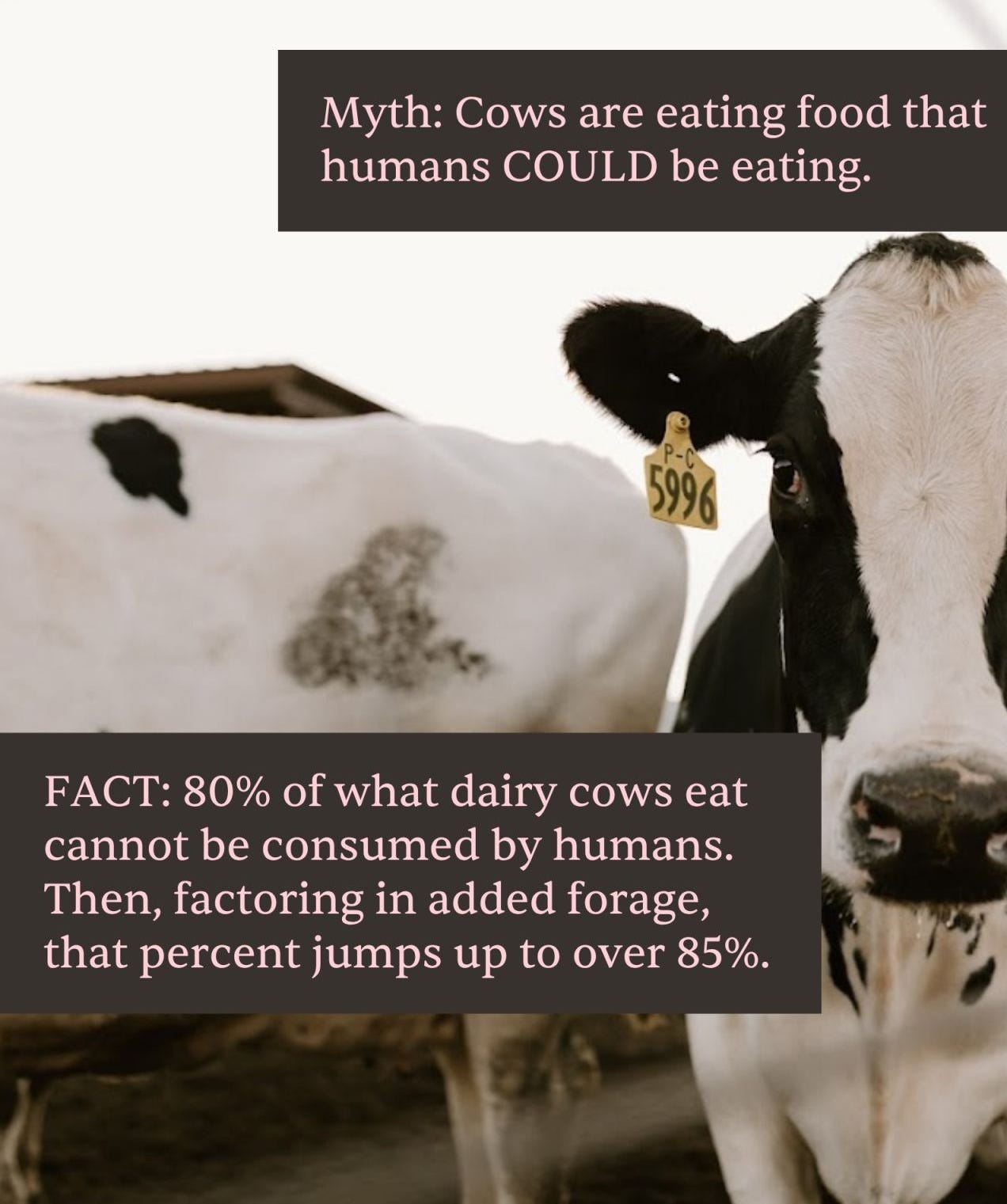
Dairy Cows — The Original Upcyclers | CLEAR Center
If you’ve ever been to a dairy farm, you may have seen them grazing on grass, but they also need to eat “…total mixed ration (TMR)… made up of corn silage, grass silage, and byproducts from the human food supply chain such as almond hulls, cottonseeds, and soybean meal.” You may have even seen cows eating tomatoes or pieces of fruit! Their feed rations, designed by bovine nutritionists, provide them the nutrients they need to support milk production as well as birthing calves.
“…If these byproducts were not consumed by cows, they would likely head to the landfill, as there is no other industry that has a use for them. Trucking these byproducts to the landfill carries its own environmental impact as well. At the garbage dump, these byproducts decompose under anaerobic conditions leading to the production of methane. Multiply this across the entire food system and the millions of pounds of byproducts that could be decomposing have huge climate implications. The carbon emissions of sending byproducts to a landfill for incineration are on average 60% greater than feeding them to cows. Not to mention, cows provide a nutrient-rich edible food in the form of milk and meat. This process by which we turn low quality feed ingredients in the form of byproducts and forage into a higher quality, nutritious product is known as upcycling…”
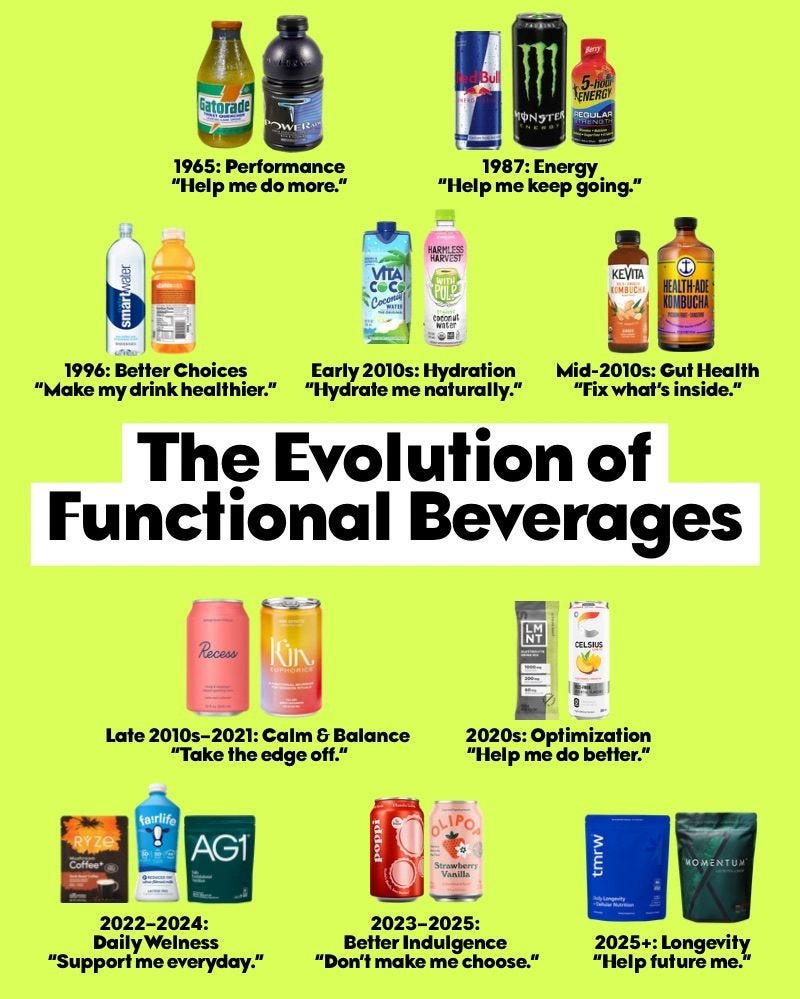
“…On average, prebiotic sodas contained about 35 calories, 5 grams of sugar and 5 grams of fiber per 12-ounce can. In terms of calories and sugar, they ranked lower than regular sodas and fruit drinks but higher than diet sodas and flavored sparkling waters. In addition, nearly two-thirds of prebiotic sodas contained non-nutritive sweeteners such as stevia….Prebiotic sodas consistently contained more fiber than other beverages, ranging from about 2 to 9 grams of fiber per can. In the U.S. market, the term “prebiotic” is not tied to a specific amount of fiber, so researchers cautioned that consumers should not assume a product contains a meaningful amount simply because it is labeled as prebiotic, and sodas should not be relied upon as a primary source of dietary fiber…”
“…dark and dramatic fruits, modern tropicals, acid-forward citrus, layered botanicals, earth-toned indulgence, “newstalgia,” and “swicy and swavory.”
-swicy (sweet and spicy)
-yuzu
-boba beverages
-vanilla flavor
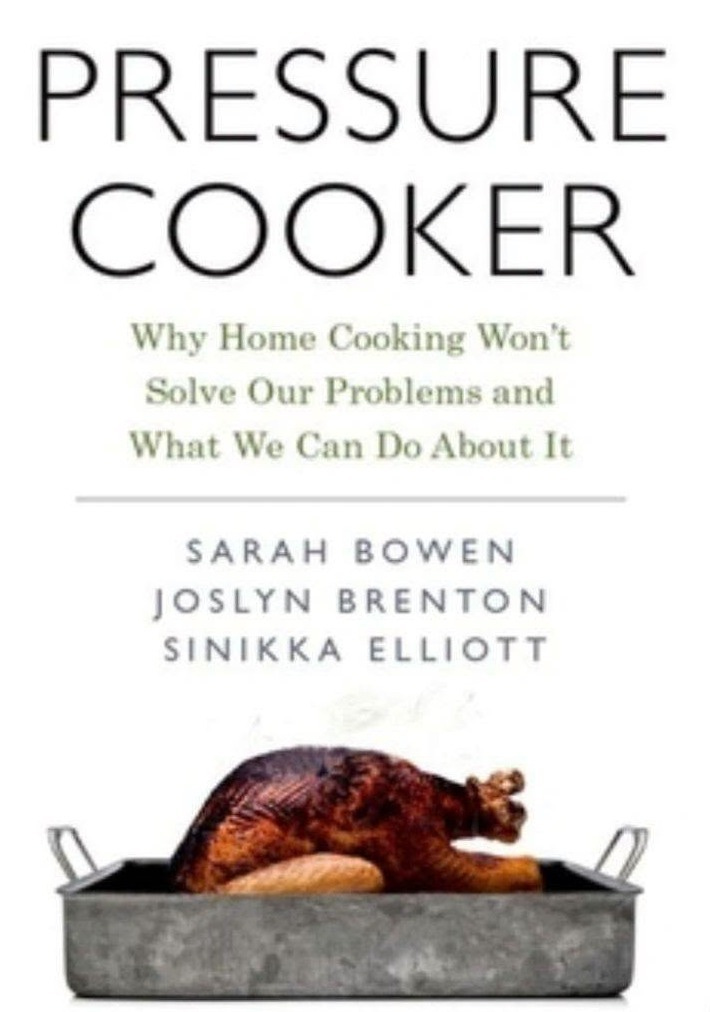
☑️📖Book Recommendation, “Pressure Cooker: Why Home Cooking Won’t Solve Our Problems and What We Can Do About It”
"Based on extensive interviews and field research in the homes and kitchens of a diverse group of American families, Pressure Cooker challenges the logic of the most popular foodie mantras of our time, showing how they miss the mark and up the ante for parents and children. Romantic images of family meals are inviting, but they create a fiction that does little to fix the problems with the food system. The unforgettable stories in this book evocatively illustrate how class inequality, racism, sexism, and xenophobia converge at the dinner table. If we want a food system that is fair, equitable, and nourishing, we must look outside the kitchen for answers."
☑️🔍Substack: Is Citric Acid Really Made from “Black Mold”? - by Brittany Raftis
Canadian RD Brittany does a really good job looking at the science vs the pseudoscience.
“…Citric acid is a great example of why context matters when evaluating food ingredients. The fact that a fungus is involved in the production of a common food additive can sound alarming, but when we understand the science behind the manufacturing process, the picture looks a lot different.
The available evidence does not support the idea that this is an ingredient most people need to avoid. Commercial citric acid is not the same thing as consuming mold, and has no contact with the“black mold” people are actually referring to…”.
No posts
Comments
Nothing yet. Say the first thing.
Sign in to join the conversation.