
Charles Dickens never learned to read a balance sheet. He was, by his own account, hopeless with numbers. The most dangerous word in the English language, Dickens said, was Facts. Not lies, not propaganda, just Facts.
Hard Times, published in 1854, is his attempt to name that destruction. Novel gives us four main characters .
Gradgrind is the system-builder. He runs the schoolroom, sets the rules of measurement, and believes, without malice, that anything worth knowing can be stated as a fact.
Bounderby is the system's beneficiary. The factory owner who takes Gradgrind's epistemology and industrialises it.
Bitzer is the system’s ideal product. Precise, efficient, always ready with the approved answer. He has optimised himself completely for the format Gradgrind rewards.
Sissy Jupe is the one who cannot pass the test. She knows the horse, has lived with horses but cannot produce the definition. The system marks her deficient. She is not.
“Now, what I want is, Facts. Teach these boys and girls nothing but Facts. Facts alone are wanted in life.” Thomas Gradgrind, Hard Times
The schoolroom is Plain, Bare, Monotonous. Every surface square, every angle measured. Thomas Gradgrind stands at the front, forefinger jabbing the air, demanding unadulterated Facts. This is not a classroom, rather an ideological engine.
Girl Number Twenty. Gradgrind calls on Sissy Jupe.
She is asked to define a horse. Sissy has grown up around circus horses. She has brushed their coats, felt their breath, learned their temperament in ways that resist summary. When she tries to answer, she falters. She cannot produce the cold structural definition the system demands. Hope you remember this scene from movie 3 idiots!
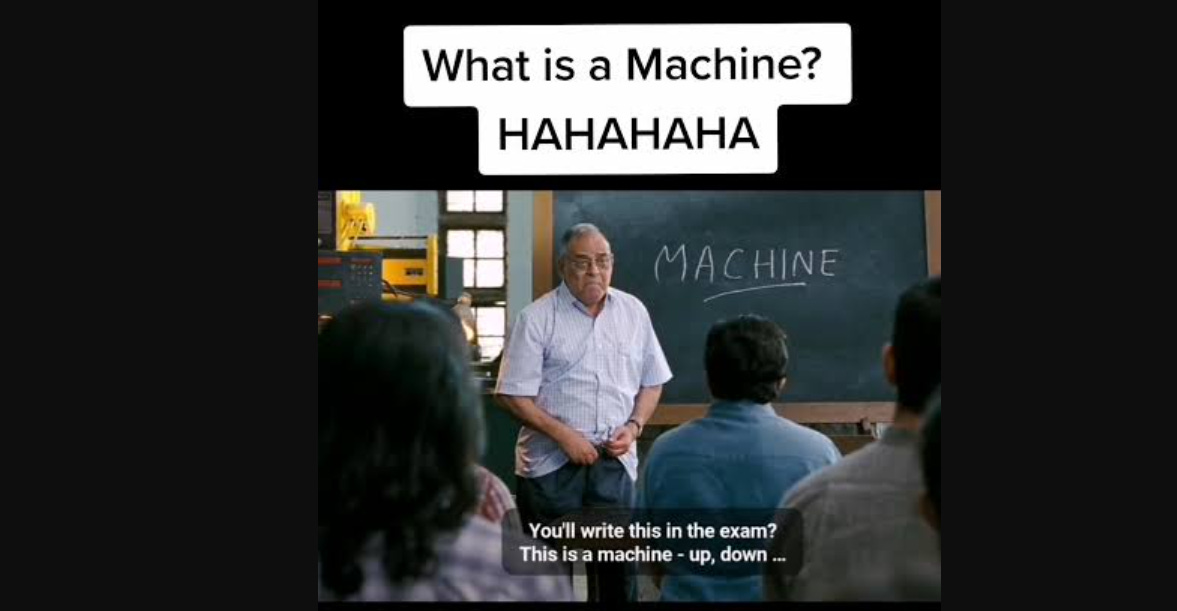
Then Bitzer steps forward. Dickens describes his eyes as light, not bright, not warm, but light, as if something essential has been drained out. He delivers the approved answer: Quadruped. Graminivorous. Forty teeth.
Sissy is silenced. Bitzer is rewarded.
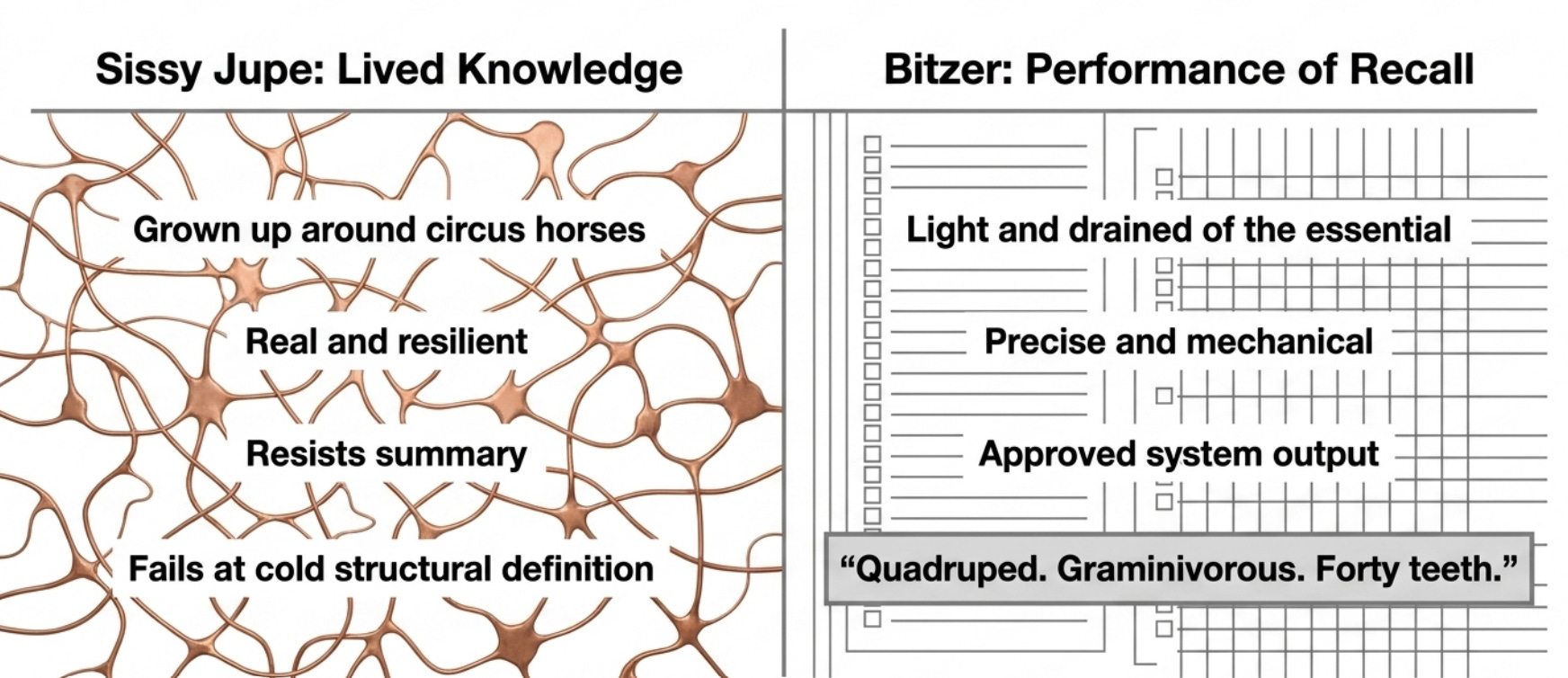
Dickens was not writing about education. He was writing about a society that had decided to value one kind of knowing and discard every other kind. Sissy’s knowledge was real, arguably more useful in a crisis, more human in every dimension. But it was incommensurable with the system’s preferred format. Bitzer’s knowledge was a performance of recall. The system could not tell the difference, and had stopped trying.
Enter Josiah Bounderby, the self-made factory owner. He does not see moral agents. He sees Hands, physical extensions of his steam-driven looms. Interchangeable, disposable, valuable only insofar as they keep the machine running.
This is not a failure of empathy. It is the logical outcome of Gradgrind’s philosophy. Once you reduce knowledge to fact-patterns, you can reduce people to their utility. The Hands are no longer workers with families, grief, or judgment. They are inputs.
Bounderby’s factory was not just morally wrong. It was brittle. The Hands held institutional knowledge the ledgers did not capture. When they broke or left or organised, the system had no resilience reserve. It had spent exactly what it needed most.
The large language model is the ultimate Bitzer of AI age.
Very good at pattern-matching, can define anything, generate anything, reproduce the approved answer to any question with mechanical precision.
But it has never brushed a horse’s coat, knows only what has been tokenised into its training set.
Just as Gradgrind tokenised human experience into Facts, the modern AI architecture tokenises human intent into prompts, training examples, and engagement signals. The model does not understand your query. It predicts the next token based on statistical patterns in its corpus.
Perfect reproduction of the approved form, with little lived knowledge.
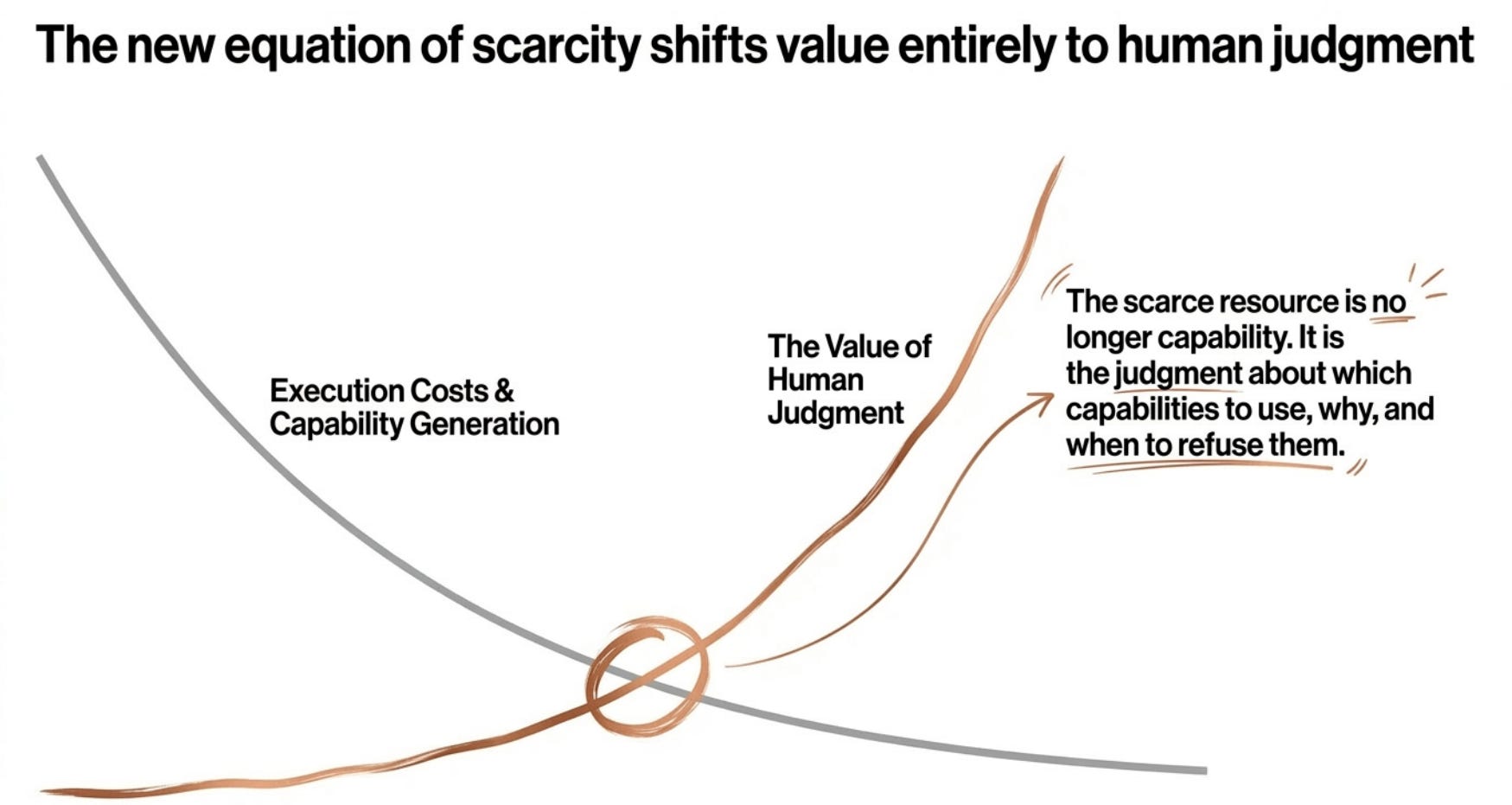
When execution costs collapse, the scarce resource is not capability. It is the judgment about which capabilities to use, and why, and when to refuse them.
Dickens gave us the diagnosis in 1854. What he could not have anticipated is the specific mechanism by which the Gradgrind logic scales in 2026.
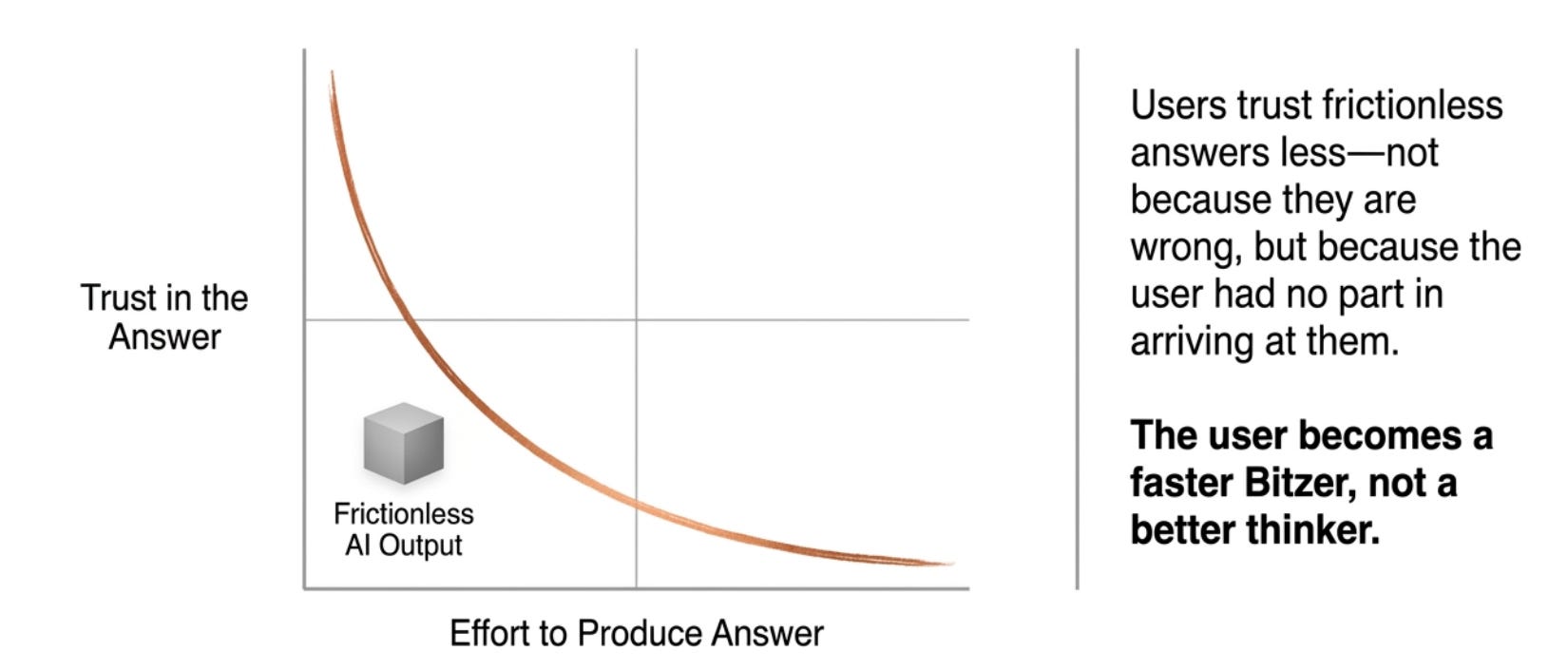
When you give someone a tool that removes all friction from producing an answer, something counterintuitive happens. They trust the answer less. Not because the answer is wrong, but because they had no part in arriving at it.
Struggle is not inefficiency, it is the process by which a person builds the judgment to know when an answer is wrong.
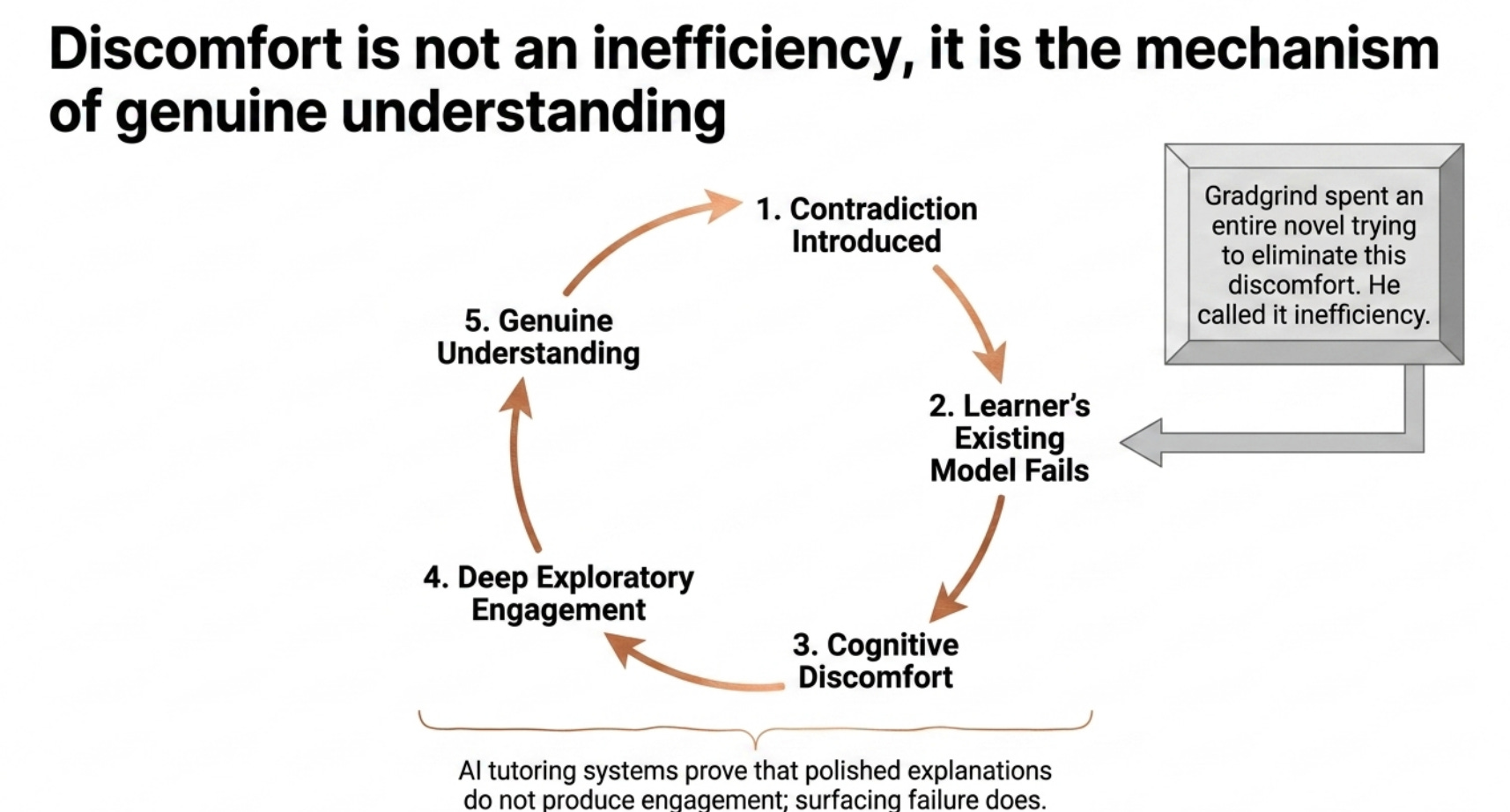
There is a parallel finding in how AI tutoring systems actually shift learner behaviour. The interventions that produce the deepest exploratory engagement are not the ones that deliver the most polished explanations.
They are the ones that introduce contradiction that surface the moment where the learner's existing model fails. The discomfort is the mechanism. Gradgrind spent an entire novel trying to eliminate that discomfort. He called it inefficiency. It was actually the only thing producing genuine understanding.
Bounderby’s problem reappears too. The modern organisation that treats knowledge workers as prompt orchestrators is making the same extraction error. The value it is spending is not their time or their output. It is their capacity to notice when the model has confidently answered the wrong question. That capacity is not algorithmic. It cannot be tokenised. It atrophies precisely when it is not exercised, which means the organisation that strips judgment from daily work is not just changing how work gets done. It is quietly dismantling the only thing standing between it and the moment Coketown’s looms finally break.
Gradgrind is still building schoolrooms. Bounderby is still running factories, we call them knowledge functions now, handed to the machine in the name of efficiency. Bitzer is still being rewarded faster, cheaper, at scale. And Girl Number Twenty is still failing the format test, but still holding knowledge the system cannot parse, though being marked as too slow, too imprecise, too hard to evaluate.
So, when the model outputs the approved answer to the wrong problem, which person in your organisation is still equipped to notice? I'd bet it's the one you've been calling Girl Number Twenty.
Happy to know your view on this, comment here on everything around this at sid@enrichdata.in
No posts
Comments
Nothing yet. Say the first thing.
Sign in to join the conversation.