
I wrote this article about three years ago, and with the current heat wave affecting many of us, I felt it was a good time to revisit and share it again with both new and long-time readers.
Re-reading it myself was also a refreshing reminder of how relevant these issues remain today, perhaps even more so than when I first wrote it. I hope you find it insightful.
The heat stress could lead to the loss of 80 million full-time jobs by 2030 globally, that is equivalent to USD 2.4 trillion. For businesses, the time has come to understand the impact of heat waves and be fully prepared to execute their prevention strategies.
It was not long ago that summer was all about looking forward to warmer weather and exciting holiday plans. Things have been different in the last few years. It may not be obvious at first glance, but businesses are considered some of the most vulnerable to heat waves.
If disregarded, the potential risks could lead to costly consequences, including decreased morale, reduced productivity, and the possibility of significant harm to employees.
Read: Sustainability jobs: 42 million renewable energy jobs by 2050
Many countries have had first-hand experience with heatwave impacts, such as the disruption of transport systems and the distressed agricultural sector due to severe drought.
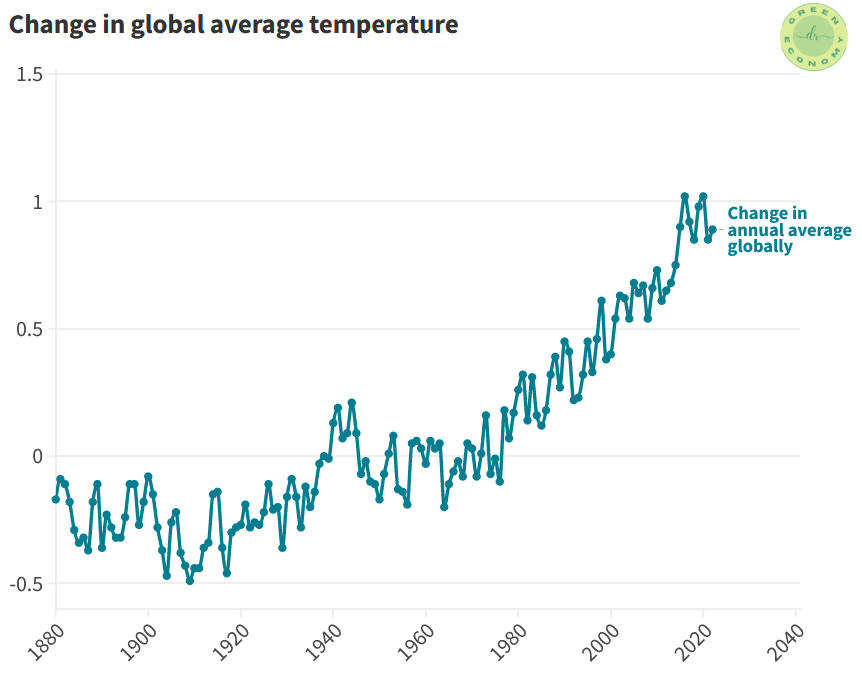
The change in global average temperature since the 1880s is shown in Figure 1. The year 2016 was recorded as the hottest so far, with the year 2022 closely following behind.
In Europe, if temperatures soar beyond 35°C, both outdoor and indoor office workers collectively struggle with heat exhaustion. In sub-Saharan Africa and southern Asia, the situation is far more serious. Here, higher temperatures mean that people experience intense heat stress for long stretches of the year.
Another distressing example is the tragic death toll of over 6,500 migrant workers from South Asia since Qatar secured the World Cup hosting rights. Regrettably, a significant portion of these deaths can be attributed to heat-related causes.
While the world enjoyed the glory of the World Cup in 2022, the loss of lives, who were forced to work in temperatures exceeding 45°C was almost forgotten.
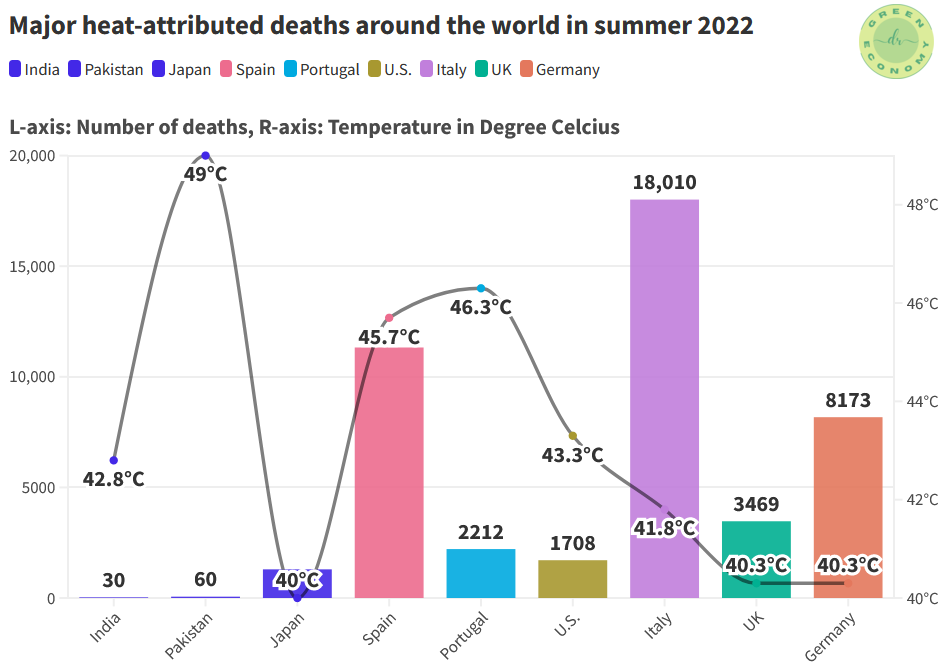
Figure 2 shows heat-related deaths in 2022 in some of the countries with the highest temperatures.
The International Labour Organisation (ILO)’s study projected that approximately 2.2% of the overall global working hours could be affected due to severe heat conditions by the end of this decade.
Catherine Saget, the primary author of the ILO report explained that even at temperatures around 24-25°C, there’s a noticeable decline in both productivity and work pace. In scenarios where the temperature rises to 35°C, workers in a physically demanding task, such as agriculture or construction experience a reduction of 30 minutes in productivity per hour.
However, indoor staff should get equal attention because the intensity of the heat impact depends upon the individual. A study published in June 2023 on the effects of temperature on productivity observed the adverse impacts of increased temperatures on economic growth, affecting both low and high-income countries as well as individual performance.
Dr. Gaurab Basu, director of education and policy, at Harvard Chan C-change, commented on BBC that when exposed to extreme heat, our body enters a state of emergency where blood flow and oxygenation are redirected from vital organs.
As a result, these organs may not receive enough oxygen and nutrients, which can impair their normal function. Prolonged exposure to extreme heat can therefore lead to dehydration, heat exhaustion, heatstroke, organ damage, and, in severe cases, death.
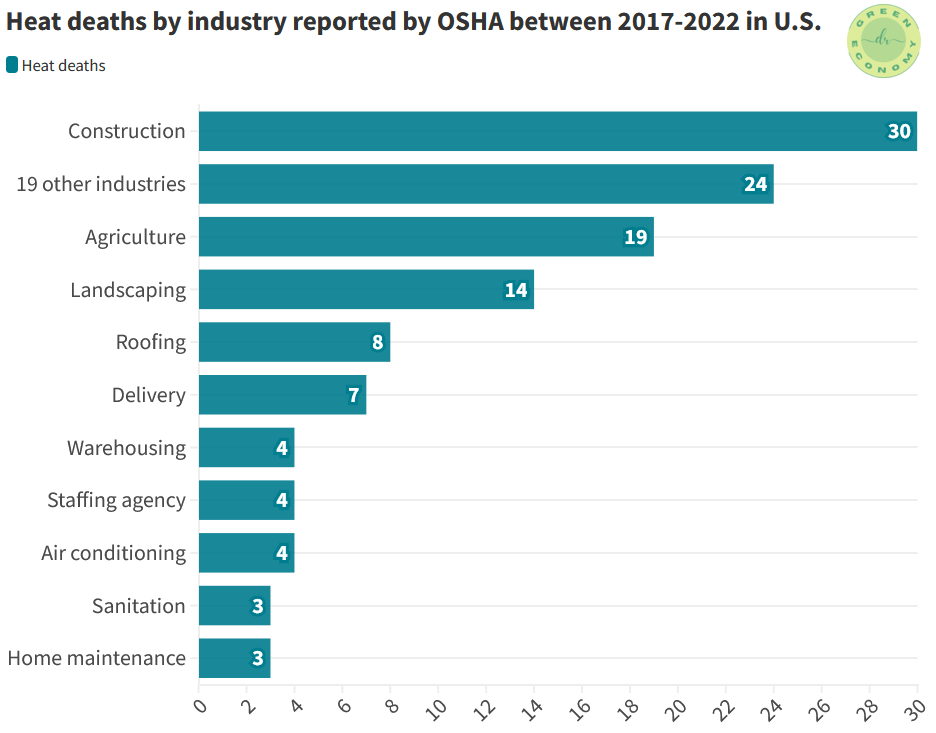
OSHA reported the direct heat deaths in the U.S. from 2017-2022 in Figure 3. However, more than 70,000 workers were seriously injured from heat stress from 1992 to 2017. The country suffers a yearly expense of USD 100 billion due to diminished productivity resulting from increased temperatures. This figure is anticipated to double by the year 2030 and reach USD 500 billion annually by the year 2050.
In the UK and EU, businesses lose almost USD 614 million in annual sales for every additional degree of excessive temperature above 25°C.
In India, there is also a noticeable decline in productivity, with a reduction of up to 4% for each degree increase in temperature beyond 27°C.
Ease up on the dress code: in cases where employees are obligated to wear substantial uniforms, it might be wise to temporarily modify this policy by allowing switching to more comfortable clothes.
Explore the flexible working options: consider adjusting employees’ schedules to when it’s not too hot. If possible, allow work from home as it has become normal since COVID-19.
Conduct a thorough risk assessment and implement measures: perform a comprehensive evaluation of potential hazards covering several key factors, such as ambient temperature, humidity levels, and the extent to which employees are exposed to direct heat. The assessment requires special attention to elderly staff members or those with underlying medical conditions, as they might encounter greater challenges working in high temperatures.
Regular communication with the staffs: engage your staff during risk assessment processes, and inquire if anyone has expressed discomfort due to excessively high or dry air regularly. Set up a proper office, where staff can control the opening and closing of workplace windows for the circulation of hot air.
Outdoor employees are the most vulnerable: arrange workstations in areas not directly exposed to sun and heat sources. Provide regular training about heat-induced stress and the necessary actions to take if someone experiences its effects.
Other general stuff, such as providing drinking water throughout the day, and encouraging the use of sunblock should be advised to all staff regardless of where they are working.
One of the quick fixes in the office is to install air conditioning but many small and medium businesses have trouble affording it because it is expected to cost about USD 183 per hour.
The necessary changes are likely to come with a substantial price tag. However, if we are committed to preventing harm to the workers and ultimately the businesses, we must be prepared to bear that expense.
The global climate crisis could result in the loss of around 80 million full-time jobs by 2030 due to heat stress.
Heatwaves have led to disruptions in various sectors such as transportation, agriculture, and infrastructure, impacting business performance.
While outdoor sectors like agriculture and construction face significant susceptibility to heat stress, even indoor workers can experience reduced productivity due to extreme heat.
The ILO study projects a potential global reduction of 2.2% in working hours due to severe heat by the end of the decade.
Despite financial implications, ensuring worker safety remains a priority in combating heat-related challenges.
Note: I’d love to know what you do for work and what energy topics you’d be interested in reading next. Just reply to this email.
No posts
Comments
Nothing yet. Say the first thing.
Sign in to join the conversation.