
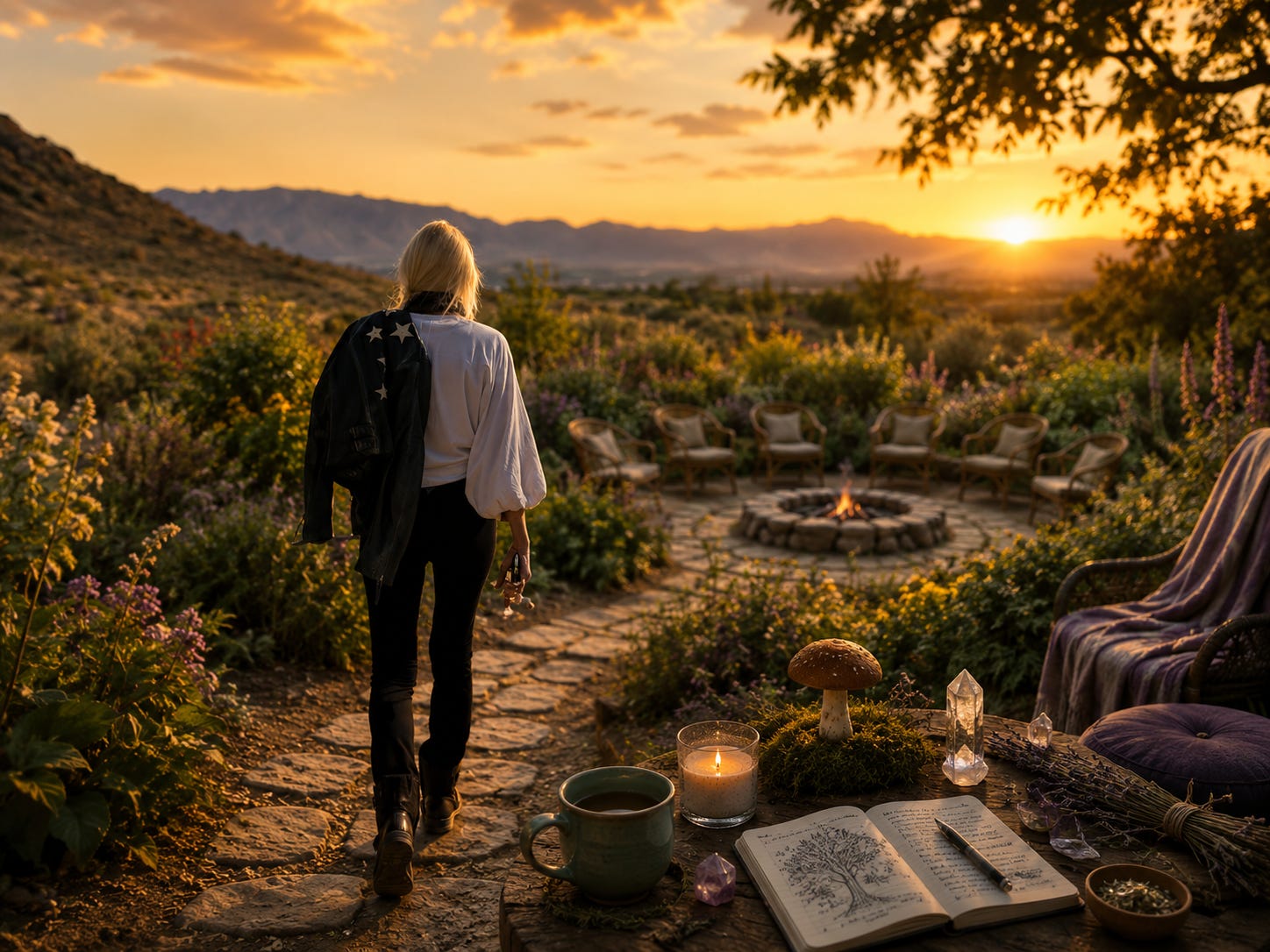
Every path teaches us something. Every guide leaves an imprint. Choose those who walk beside you with wisdom, compassion, and presence, for the journey may last a day, but the integration can transform a lifetime. With you on the journey - Nurse Sherri
In the rapidly expanding world of psychedelic healing, the medicine matters, but the relationship matters more.
We are living through what many have called the psychedelic renaissance. More people than ever are exploring psychedelic medicines as tools for healing, self-discovery, personal growth, and transformation. While some individuals use psychedelics recreationally, this article is intended for those who are approaching these medicines with intention and purpose. These are the individuals seeking relief from depression, anxiety, PTSD, chronic pain, addiction, grief, or existential distress. They are also the people exploring consciousness, spiritual growth, self-awareness, and a deeper understanding of themselves and their place in the world.
Every week, I speak with individuals who are considering ketamine, psilocybin, MDMA-assisted therapy, ayahuasca, San Pedro, LSD, ibogaine, microdosing, and other psychedelic approaches. Many are looking for more than symptom relief. They are seeking to better understand themselves, heal old wounds, unravel long-held patterns, expand their awareness, and cultivate a deeper connection to their mind, body, spirit, and the world around them.
One of the most common questions I hear is, “How do I find the right provider?” It is an important question because the person supporting your journey can be just as important as the medicine itself.
As a nurse, I have spent nearly four decades caring for people during some of the most vulnerable moments of their lives. Over the past decade, my work has expanded into cannabinoid therapeutics, plant medicines, and psychedelic-assisted healing. I have also walked my own path with psychedelic medicines and ketamine therapy. Through these experiences, I have learned that healing is rarely about the medicine alone. Psychedelic medicines can create opportunities for insight and transformation, but it is often the preparation, support, relationship, and integration that determine whether those insights become meaningful and lasting change.
Our healthcare system tends to focus on treatments. We ask what medication is best, what dose should be used, and what outcomes we can expect. Psychedelic healing invites us to ask deeper questions. Who is supporting you? Who is helping you prepare? Who will be there if difficult emotions arise? Who will help you make meaning from the experience afterward? These questions often matter more than the specific medicine being used.
One of the challenges of the current psychedelic landscape is that many people enter this space without understanding the different types of providers available. Some professionals are physicians who prescribe medications such as ketamine. Others are psychotherapists trained in psychedelic-assisted therapy. Some are nurses, guides, facilitators, coaches, or integration specialists. Each may play an important role in the healing process, but not all providers approach this work from the same perspective.
Professional credentials, clinical training, and safety are all important considerations when choosing a psychedelic provider. However, psychedelic healing often extends beyond symptom management and pharmacology. These experiences can involve trauma processing, spiritual emergence, existential questions, nervous system regulation, and profound shifts in perspective. The ability to create a safe and supportive container for these experiences is a skill that goes far beyond prescribing a medication, following a protocol, or understanding the science alone.
One of the first things I encourage people to do before pursuing any psychedelic therapy is to undergo a comprehensive medical and mental health assessment. Psychedelic medicines are not appropriate for everyone. A thorough evaluation should include a review of mental health history, current medications, medical conditions, family psychiatric history, trauma history, and available support systems. This process is not about labeling people. It is about creating a foundation of safety and ensuring that an individual is prepared for the journey ahead.
Research consistently highlights the importance of preparation in psychedelic-assisted therapies. While media attention often focuses on the medicine itself, the preparation phase is where trust is built, intentions are clarified, and expectations are explored. Entering a psychedelic experience without adequate preparation can leave individuals feeling overwhelmed, confused, or unsupported when difficult material emerges (Cavarra et al., 2022). Healing begins long before the medicine enters the body.
Another important consideration is understanding who will be holding space during your experience. The concepts of set and setting have been central to psychedelic work for decades. Set refers to your mindset, beliefs, expectations, and emotional state. Setting refers to the physical, emotional, interpersonal, and environmental conditions surrounding the experience. Research continues to demonstrate that these factors significantly influence outcomes and may shape both the safety and effectiveness of psychedelic experiences (Patch et al., 2025).
When evaluating a provider, ask questions about the environment they create. Will someone be physically present during the experience? How do they support clients when difficult emotions arise? What happens if fear, grief, trauma, or anxiety surface? How do they help people feel safe enough to surrender to the process? These conversations can reveal a great deal about a provider’s philosophy of care.
One question that often comes up in psychedelic circles is whether providers should have personal experience with the medicines themselves. My perspective on this has evolved over time. While I believe there is value in working with someone who has personally walked the path, I do not believe psychedelic experience alone makes someone qualified to guide others. What matters most is whether they have done their own healing work.
A provider who has explored their own inner landscape often brings a different level of humility, empathy, and understanding to the therapeutic relationship. Yet healing work can take many forms. Whether through psychotherapy, meditation, spiritual practice, trauma recovery, somatic work, personal growth, or psychedelic experiences, what matters is the willingness to continually learn, grow, and understand oneself. I am often less interested in whether someone has taken a specific medicine and more interested in whether they have done the deeper work of understanding who they are.
How I Chose My Own Psychedelic Practitioners
Over the years, I have participated in a variety of healing experiences that included ketamine, psilocybin, ayahuasca, LSD, DMT, San Pedro, microdosing, and other combined psychedelic medicines. Each journey had a different purpose, and each required a different level of support. Looking back, I realize that I was never simply choosing a medicine. I was choosing the people who would walk beside me during some of the most vulnerable and transformative experiences of my life.
My own healing journey ultimately became one of my greatest teachers. Like many people entering this work, I initially focused on the medicine itself. I wanted to understand the science, the dosing, the protocols, and the potential outcomes. Over time, I discovered that the medicine was only one part of the experience. What often mattered just as much were the people surrounding the experience and the support available afterward.
During some of my deeper healing journeys, difficult emotions, old wounds, and long-held patterns surfaced that I had spent years carrying. What made those experiences transformative was not simply the medicine. It was having trusted guides, clinicians, and facilitators who could witness what was unfolding without trying to fix it, judge it, or rush it. They helped me trust the process and reminded me that healing often occurs in layers.
As I reflect on those experiences, I realize I was looking for something deeper than credentials alone. Professional training and experience were important, but I was ultimately searching for people who had done their own healing work. I wanted to be supported by individuals who understood healing not just from a textbook, but from lived experience. I wanted to know that if I encountered fear, grief, trauma, or profound spiritual insights, the person sitting across from me could meet me with presence, compassion, and understanding.
When I chose to participate in deeper psychedelic healing experiences, I was not looking for someone who simply knew how to administer a medicine. I was looking for someone who could hold a safe container before, during, and after the experience. I wanted practitioners who understood that healing unfolds over time, who could witness my journey without judgment, and who would still be available when the real work of integration began. Those relationships became an essential part of my healing process and continue to influence how I support others today.
Not every healing journey requires the same type of provider. Over the years, I have worked with therapists, physicians, ceremonial facilitators, coaches, spiritual teachers, and integration specialists. I chose each practitioner based on the purpose of the journey, the level of support I needed, and the trust I felt in the relationship. Some experiences called for clinical expertise and medical oversight. Others required spiritual guidance, emotional support, or a trusted witness who could help me make meaning from what emerged. What remained consistent was my desire to work with people who could support not only the experience itself, but the growth that followed.
Some of my most profound healing did not occur during the journey itself. It unfolded over weeks, months, and sometimes years through conversations, reflection, journaling, meditation, community support, and integration. Having trusted individuals who could help me process what emerged often proved more valuable than the experience itself.
These experiences have profoundly influenced the work I do today. While I do not serve as a psychedelic facilitator or medicine provider, I recognize the tremendous need for education, preparation, support, and integration. My role has evolved into helping people navigate their healing journeys before, during, and after the medicine experience.
Paying It Forward
Today, my work focuses on education, curriculum development, microdosing coaching, integration support, and community building. Through Holistic Caring & The Green Nurse, educational programs, consultations, support groups, podcasts, blog writing, and teaching, I help individuals better understand psychedelic medicines, prepare for their experiences, develop realistic expectations, and integrate the lessons that emerge afterward.
My work in this field has also extended into education and scholarship. I am currently co-authoring a textbook chapter for IGI Global titled, “Microdosing Psilocybin as a Public Health Harm Reduction Practice: Registered Nurses in Trauma-Informed Psychedelic Care,” which is currently undergoing peer review. This work reflects my ongoing commitment to advancing evidence-informed, trauma-informed approaches to psychedelic care and highlighting the important role nurses can play in supporting individuals throughout their healing journeys.
At Holistic Caring & The Green Nurse, my role is not to administer psychedelic medicines, but rather to guide and support individuals through their healing journey. This work is my calling, born from witnessing both the profound power of these medicines and the confusion and fear that can arise without proper preparation and support.
I have learned that education, preparation, and integration are the foundations of safe and effective psychedelic care. Education helps people make informed decisions, preparation helps create safety, and integration helps transform insight into meaningful action. These are the areas where I believe nurses can make a meaningful contribution to the psychedelic ecosystem.
Whether someone is considering a microdosing protocol, preparing for a ketamine session, exploring psilocybin therapy, or making sense of a profound experience months later, I believe education and integration are essential components of the healing process. This is where nurses, coaches, educators, and support communities can play a valuable role in helping people navigate their journeys with greater confidence and support.
As both a nurse and a patient, I have experienced the difference between providers who approach healing from a place of embodied wisdom and those who approach it purely from theory. Knowledge matters. Experience matters. But presence matters too. The most impactful providers I have encountered are those who continue to do their own work, remain curious, and recognize that healing is a lifelong journey rather than a destination.
One of the greatest misconceptions about psychedelic healing is that the transformation occurs during the medicine session itself. While profound insights may emerge during an experience, healing often happens afterward through integration. Integration is the process of making sense of what occurred, applying insights to everyday life, and creating meaningful changes in behavior, relationships, habits, and beliefs (Bathje et al., 2022).
I have learned that integration is where the real work begins. A psychedelic experience may provide insight, clarity, or a new perspective, but those moments alone do not create lasting change. Growth occurs when we take what we have learned and begin applying it to our daily lives, relationships, habits, and patterns. Without integration, even profound experiences can fade with time. With integration, they can become catalysts for meaningful and lasting transformation.
When evaluating a provider, I encourage people to ask about integration support. Do they offer follow-up sessions? Do they recommend journaling, meditation, somatic practices, support groups, therapy, or community connection? How do they help clients navigate the weeks and months after an experience? The answers to these questions often reveal far more about the quality of care than discussions about dosing protocols.
I also encourage people to pay attention to red flags. Be cautious of providers who promise quick fixes, guarantee outcomes, minimize risks, dismiss preparation, or ignore integration. Be wary of anyone who pressures you into committing to multiple sessions before understanding your goals, history, and readiness. Healing is not a one-size-fits-all process, and ethical providers recognize that each person’s journey unfolds differently.
Perhaps the most important piece of advice I can offer is to trust your intuition. Visit the clinic if possible. Schedule a consultation. Ask questions. Notice how you feel in their presence over time. Do you feel heard? Do you feel respected? Do you feel safe asking questions? Do they listen more than they talk? Do they honor your autonomy?
Research increasingly demonstrates that the therapeutic alliance between a client and provider significantly influences outcomes in psychedelic-assisted therapies. The quality of trust, rapport, and connection established before and during treatment may be as important as the medicine itself (Levin et al., 2024; Murphy et al., 2022; Zeifman et al., 2024).
Throughout my own healing journey, I have learned that psychedelic medicines are not magic bullets. They are powerful tools that can open doors to insight, healing, and transformation. The real work happens through preparation, intention, support, integration, and a willingness to engage in the ongoing process of healing. It also requires a commitment to doing your own inner work and supporting your mind, body, and spirit as transformational changes unfold throughout the journey.
Whether someone chooses ketamine, psilocybin, ayahuasca, microdosing, or another approach, my hope is that they find not only the right medicine, but the right people to walk beside them along the way.
As I reflect on my own experiences and the countless individuals I have supported over the years, I continue to come back to a simple truth. Psychedelic healing is ultimately about relationships. It is about the relationship between the patient and provider, the individual and the medicine, and perhaps most importantly, the relationship we develop with ourselves as we learn to meet our wounds, our fears, and our potential with greater compassion.
Choose the person, not just the medicine.
Your healing journey deserves nothing less.
With you on the journey,
Nurse Sherri Mack, BSN, RN
PS - In my previous blog, I shared my personal healing journey with many of these psychedelic medicines. You can explore that story here.…..
My Psychedelic Healing Journey
·
Jun 5

My personal story of trauma, healing, integration, and finding my way back to wholeness, one journey and one experience at a time.
Resources
Over the years, I have learned that education is one of the most powerful tools we have when exploring psychedelic medicines. If you are interested in learning more about microdosing, psychedelic therapies, preparation, integration, safety, and the role of nurses and healthcare professionals in this emerging field, I invite you to explore the Psychedelics Resource Center at Holistic Caring & The Green Nurse. My goal has always been to help people make informed decisions, approach these medicines with intention, and find the support they need before, during, and after the experience.
Explore the resource center: https://holisticcaring.com/psychedelics/
References
Bathje, G. J., Majeski, E., & Kudowor, M. (2022). Psychedelic integration: An analysis of the concept and its practice. Frontiers in Psychology, 13, 824077. https://doi.org/10.3389/fpsyg.2022.824077
Cavarra, M., Faliva, A., De Crescenzo, F., et al. (2022). Psychedelic-assisted psychotherapy: A systematic review of associated psychological interventions. Frontiers in Psychology, 13, 887255. https://doi.org/10.3389/fpsyg.2022.887255
Levin, A. W., Dopp, K., Sloshower, J., et al. (2024). The therapeutic alliance between study participants and facilitators in psilocybin-assisted therapy. PLOS ONE, 19(3), e0300501. https://doi.org/10.1371/journal.pone.0300501
Murphy, R., Kettner, H., Zeifman, R., Giribaldi, B., Kartner, L., Martell, J., Read, T., Sheppard, H., Watts, R., Murphy-Beiner, A., Baker-Jones, M., & Erritzoe, D. (2022). Therapeutic alliance and rapport modulate responses to psilocybin-assisted therapy for depression. Frontiers in Pharmacology, 12, 788155. https://doi.org/10.3389/fphar.2021.788155
Patch, K., Perkins, D., Danforth, A., et al. (2025). What are set and setting? Reducing vagueness to improve psychedelic research and practice. Journal of Psychopharmacology. https://doi.org/10.1177/02698811251337372
Zeifman, R. J., Kettner, H., Ross, S., Weiss, B., Mithoefer, M. C., Mithoefer, A. T., & Wagner, A. C. (2024). Preliminary evidence for the importance of therapeutic alliance in MDMA-assisted psychotherapy for posttraumatic stress disorder. European Journal of Psychotraumatology, 15(1), 2297536. https://doi.org/10.1080/20008066.2023.2297536
No posts
Comments
Nothing yet. Say the first thing.
Sign in to join the conversation.