
This is Briton Rivière’s “Requiescat” (Latin for “May he rest in peace”), painted in 1888. every time it appears online, it stops people in their tracks. Not just because it’s dramatic and beautiful, but because it’s true. We have been telling this same story for thousands of years.
Long before knights and armor, long before cathedrals or castles, our ancestors carved dogs onto cave walls beside human hunters. Fifteen thousand years ago (some evidence suggests even earlier), the wolf that chose us transformed into the dog that stayed. We gave them scraps and shelter, they gave us assistance in a harsh world and loyalty that transcended fear, hunger, and danger.
That ancient pact never ended, and found its way into art.
In medieval tombs across Europe, stone effigies of lords and ladies so often have a small dog curled at their feet, a representation of fidelity that even death cannot break. Victorian painters like Rivière returned to this theme again and again because they knew their audience would feel it in their bones. We still do.
Why does this particular image of a grieving dog beside a fallen knight touch us so deeply? Because it mirrors a universal experience every dog owner knows:
Dogs love us better than we love them. They love us with their entire being, every single second they’re alive. They wait by the door for as long as it takes. They rest their head on our knee when we cry. They stand guard over our sick beds, our empty pillows. And in our final resting places in paintings like this one.
Their love isn’t complicated by ego or condition. It just is. Pure, steady, and eternal.
Artists keep returning to the loyal dog at the deathbed because it reassures us of something so beautiful. Yes, the painting is sad, but it also captures a promise.
It’s the same promise you feel when your old dog still tries to follow you upstairs even though his hips hurt. It’s the same promise when your rescue dog, who once feared everything, finally falls asleep with his back against your leg. It’s the same promise dogs live every day: “I’m here. I love you. I won’t forget you.”
We may have started the partnership back in the caves, but dogs perfected it. We should never take for granted the four-legged souls who have chosen to love us even better than we know how to love them back.
Thank you for letting me share these stories with you. Your comments, your photos of your own faithful companions, and your open hearts make this little corner of the internet feel like a warm place.
Share The Goodest Place: A Dog’s Home in Norway!
ABOUT THE PAINTER:
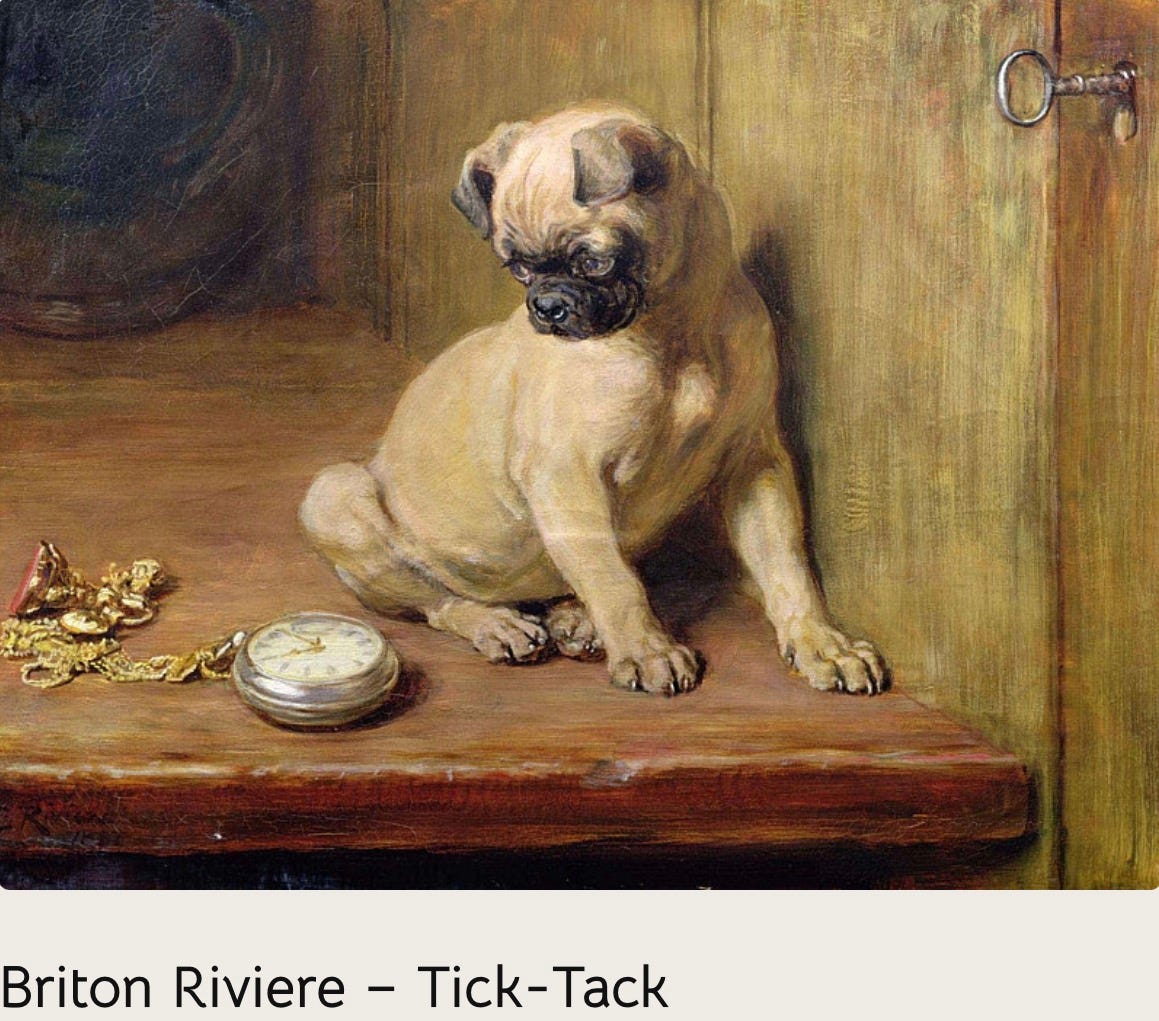
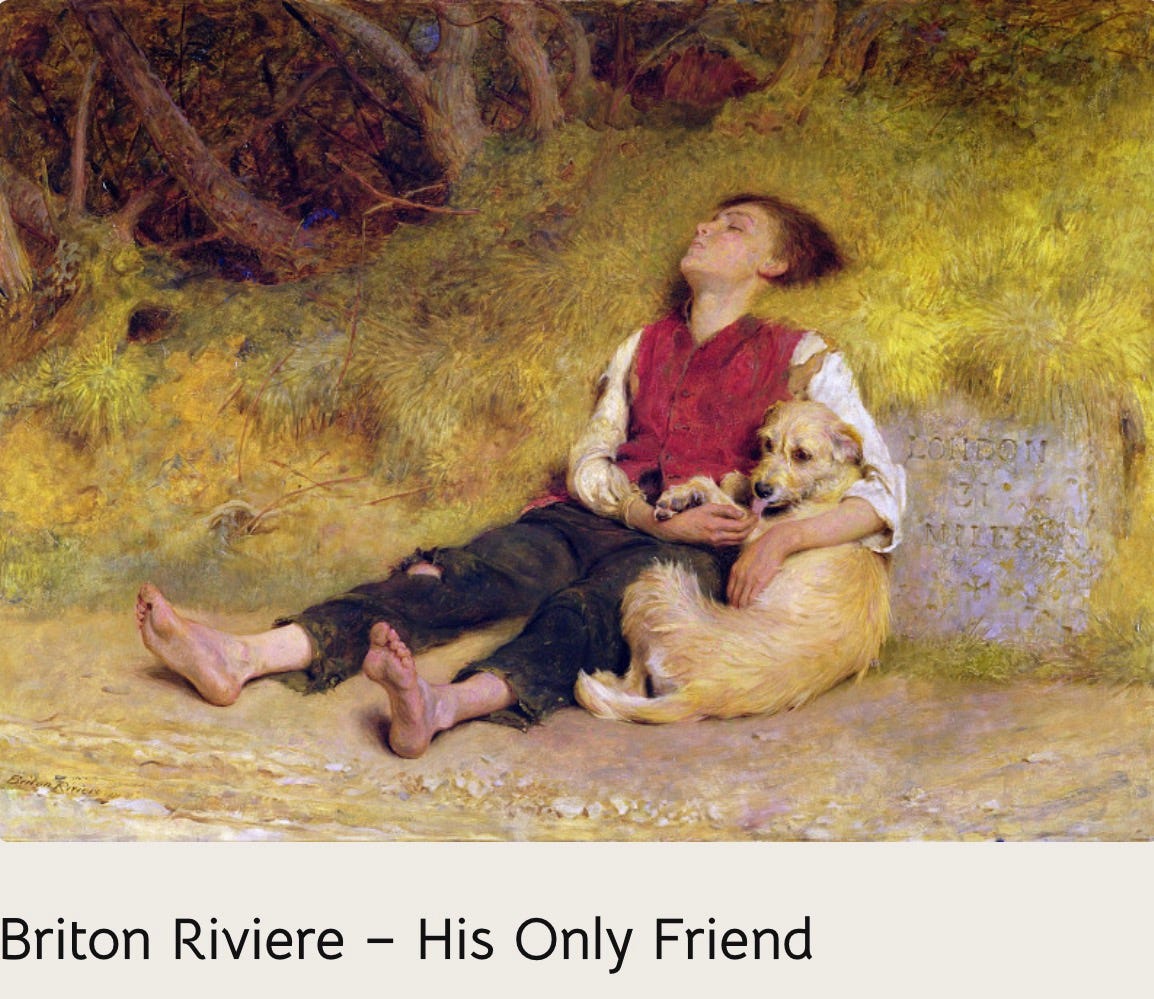
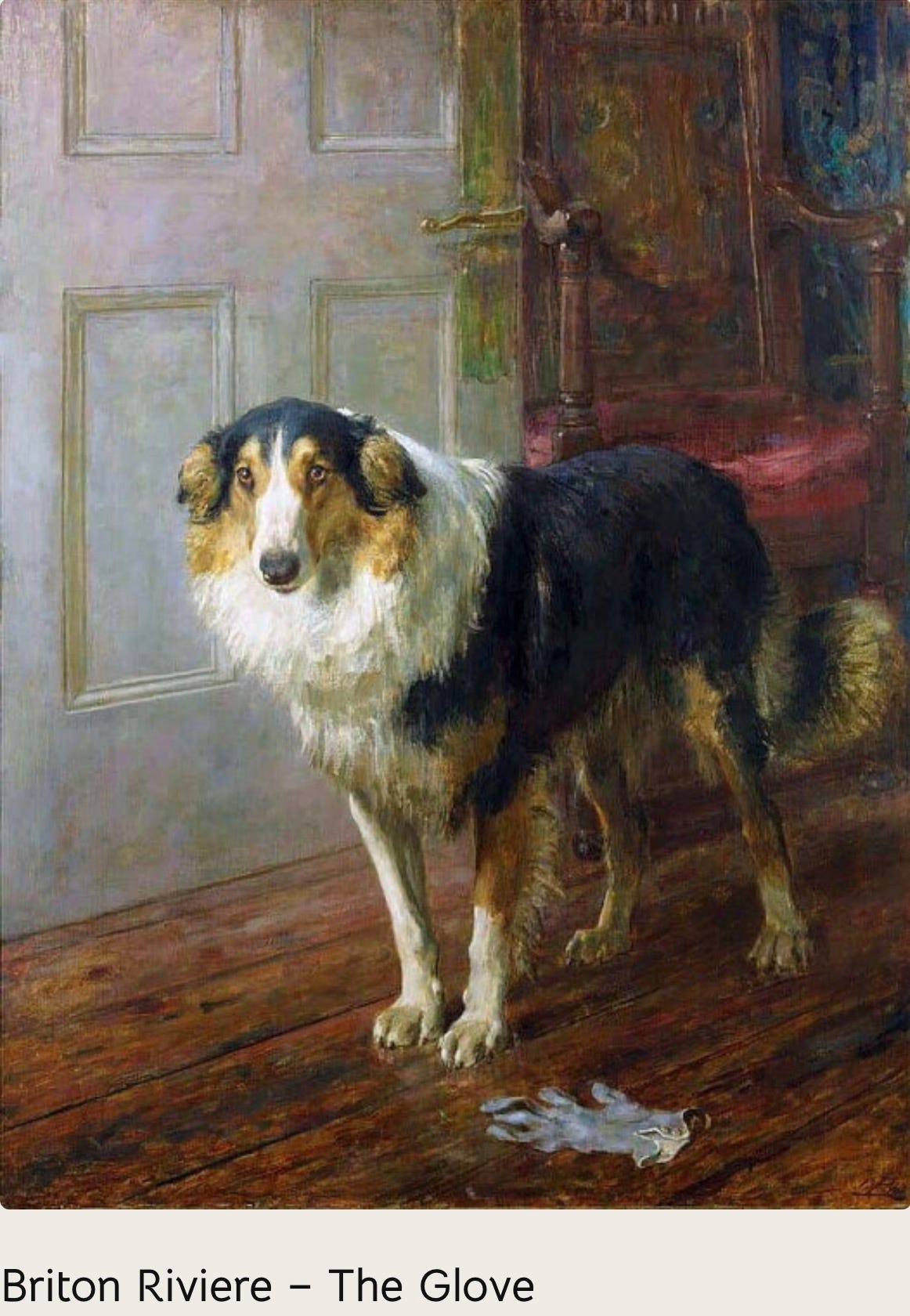
Briton Rivière (often spelled Briton Riviere) was a prominent British painter (14 August 1840 – 20 April 1920) of Huguenot descent, born in London into a family of artists. His father, William Rivière, was also a painter and art educator.
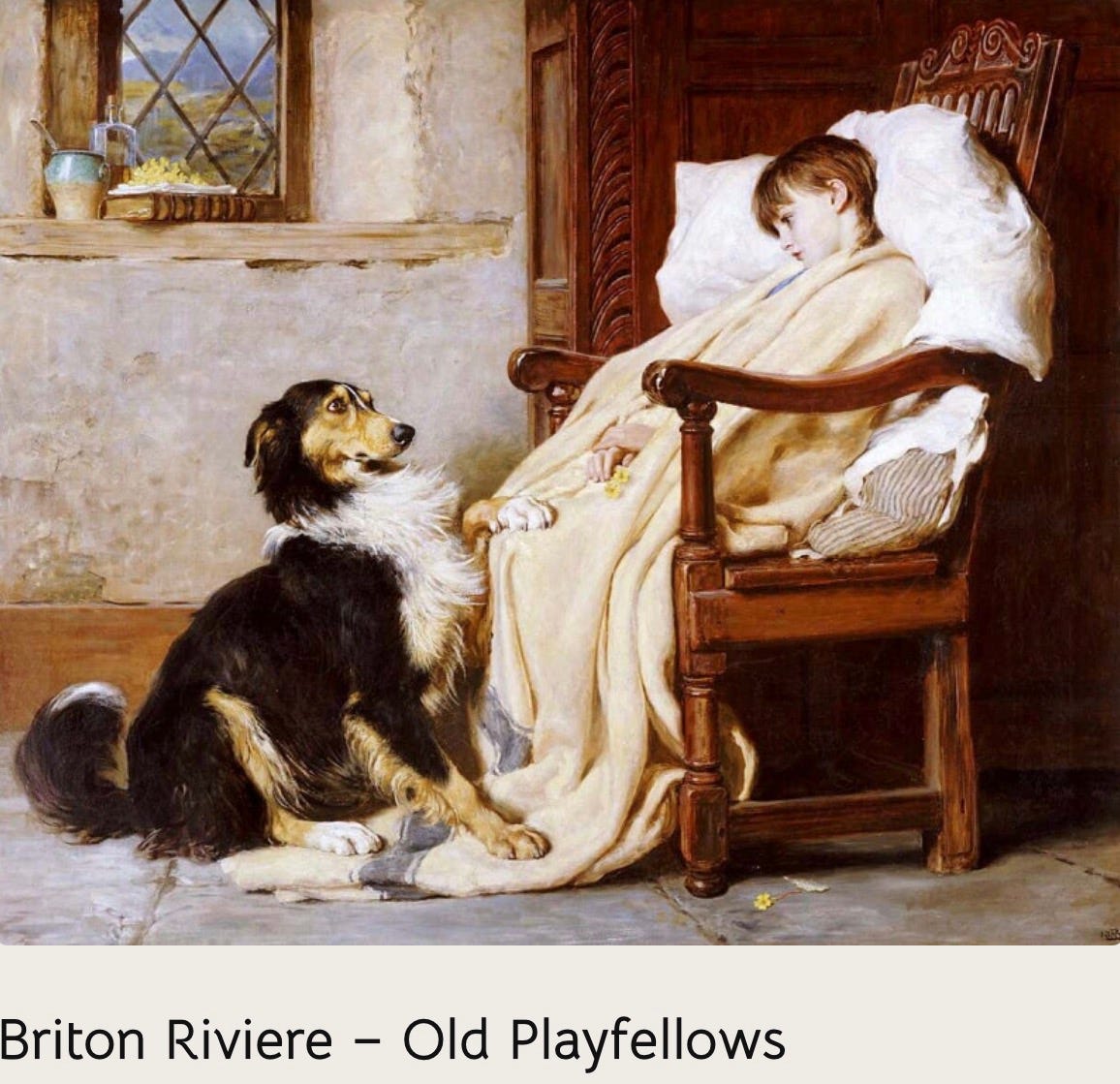
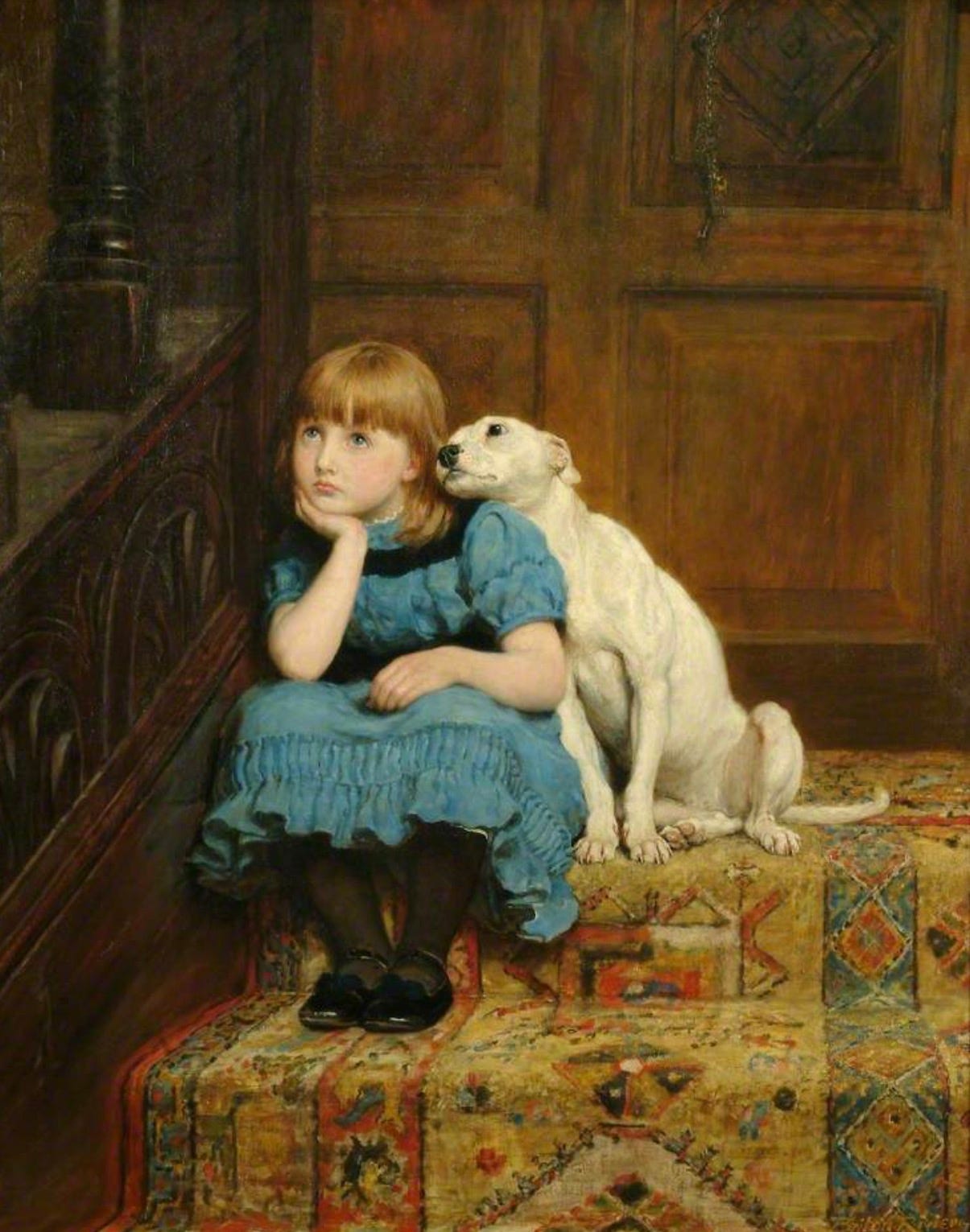
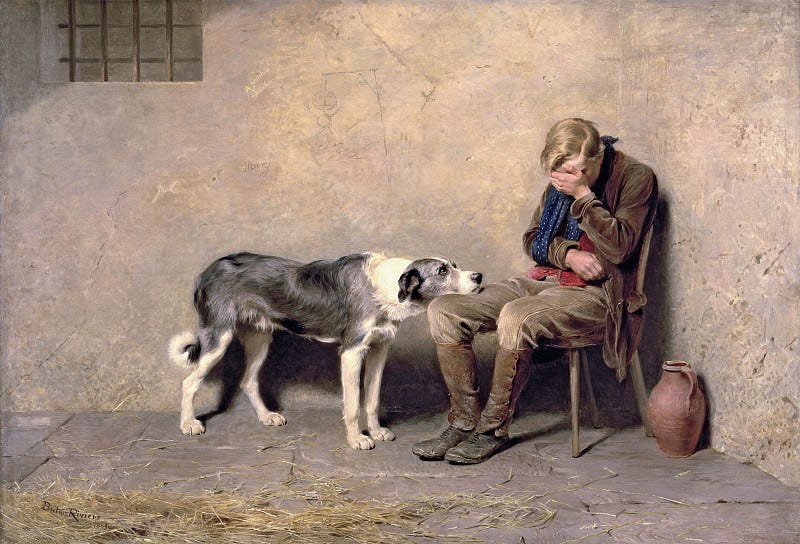
He studied at Oxford University (graduating in 1866) and began exhibiting at the Royal Academy as early as 1858. While he produced works across genres—including classical, mythological, biblical, and genre scenes—he became especially renowned for his animal paintings, often depicting dogs, lions, deer, and other creatures with remarkable detail, emotion, and anthropomorphic qualities.
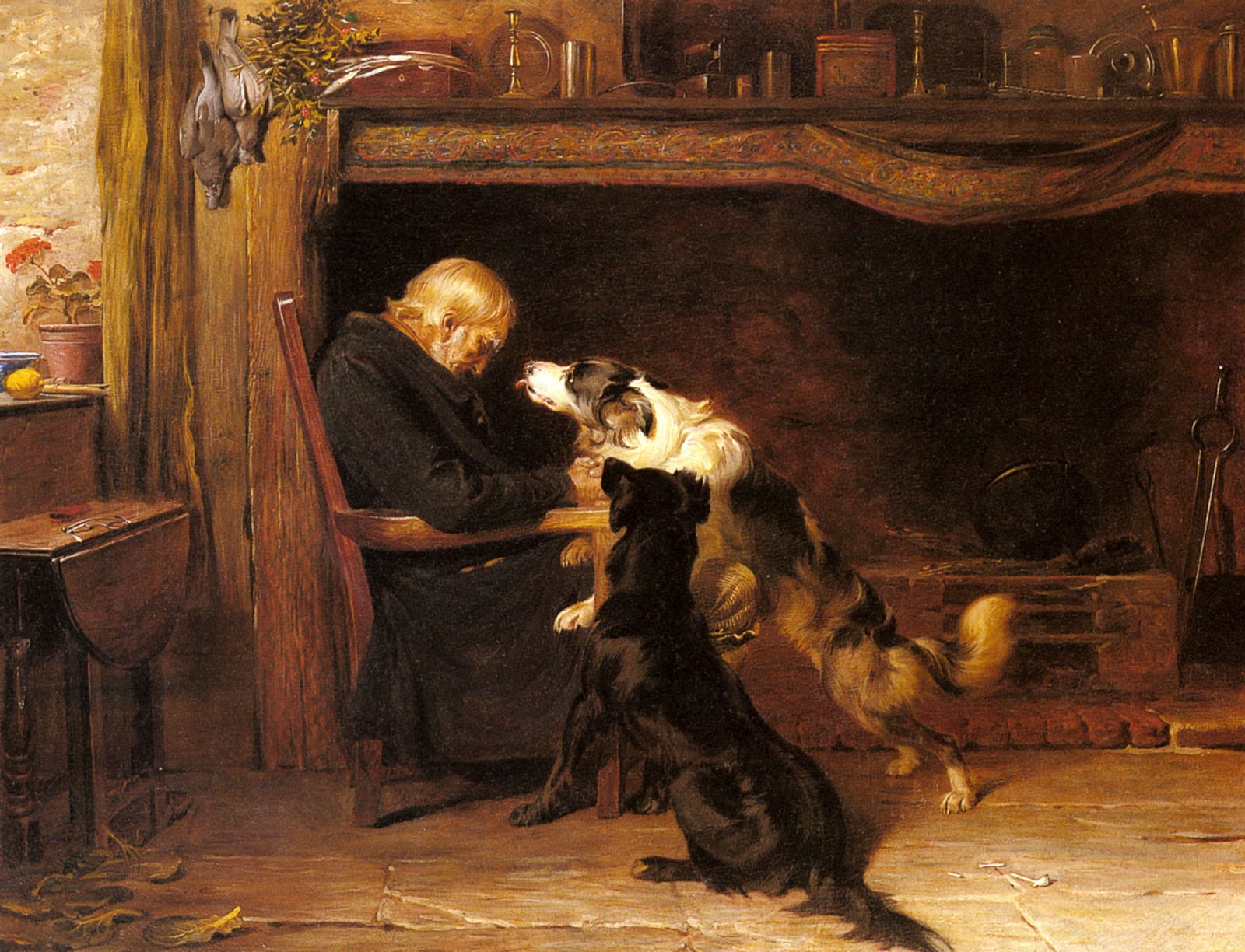
His breakthrough came around the late 1860s with sentimental and dramatic works like The Long Sleep (1869), showing a deceased man watched over by loyal dogs, and he continued exhibiting successfully at the Royal Academy throughout his career. Influenced by the Pre-Raphaelites in his early years, his style emphasized precise observation, rich colors, and narrative elements.
Comments
Nothing yet. Say the first thing.
Sign in to join the conversation.