
Several essays ago, I asked if you could picture an apple, whether you could roll it off a table, hear it, or see the table it sat on. That question opened onto aphantasia, hyperphantasia, synesthesia, ADHD and dopamine, and the autistic sensory profile.
A third question sits underneath the first two topics. When you remember your high school graduation, or picture next year’s holiday, what is your brain doing and does it need a mind’s eye to do it? Three decades of memory research and a study published this spring on people who have never seen anything at all point toward the same answer, and it helps organize a fair amount of what the first two essays touched on.
In 2007, three research teams independently noticed the same thing in brain scans. Remembering a past event and imagining a future one activated largely the same network: hippocampus, posterior cingulate, ventromedial prefrontal cortex, the core of the default mode network. Hassabis, Kumaran, Vann, and Maguire tested this in patients with hippocampal amnesia, commonly known as anterograde amnesia: damage to the hippocampus that leaves someone unable to form new conscious memories while older memories and general knowledge stay largely intact. The so-called deficit they found ran in both directions. These patients couldn't only recall their past. Asked to imagine standing on a beach, they produced isolated fragments, sand, water, but no coherent scene holding together in space and time.
Schacter, Addis, and Buckner identified and named the mechanism behind this the constructive episodic simulation hypothesis. Memory is an assembly process. Retrieving a memory rebuilds it from fragments, schemas, emotional tone, sensory traces, and whatever the brain’s predictive machinery currently expects the scene to contain, rather than replaying a stored recording. Imagining the future runs the same assembly process forward, recombining pieces of past experience into a scene that hasn’t happened yet. Conway and Pleydell-Pearce described something parallel from the memory side with their self-memory system, identifying autobiographical memory as a continuously rebuilt construction, kept consistent with whichever self is doing the remembering, rather than a fixed archive.
This is why the aphantasia research keeps circling back to autobiographical memory. Imagery generation and memory retrieval run on the same constructive machinery, so a nervous system organized differently around one leaves fingerprints on the other. Dawes, Keogh, Robuck, and Pearson tested this directly and found aphantasic participants generated significantly fewer episodic details than controls, for both past events and imagined future ones, with the largest reduction in visual detail and in the phenomenological richness of the simulated scene. Monzel and colleagues traced the mechanism into the brain itself. In aphantasia, they found that the functional connectivity between hippocampus and visual cortex, the coupling that in most people binds memory to mental picture, is altered. The lack of imagery as we understand it, and the supposed lack of memory are two readouts of the same wiring, tracking the interoceptive-imagery pathway the insula-centered model from the first essay in this series already located (Silvanto & Nagai, 2025).
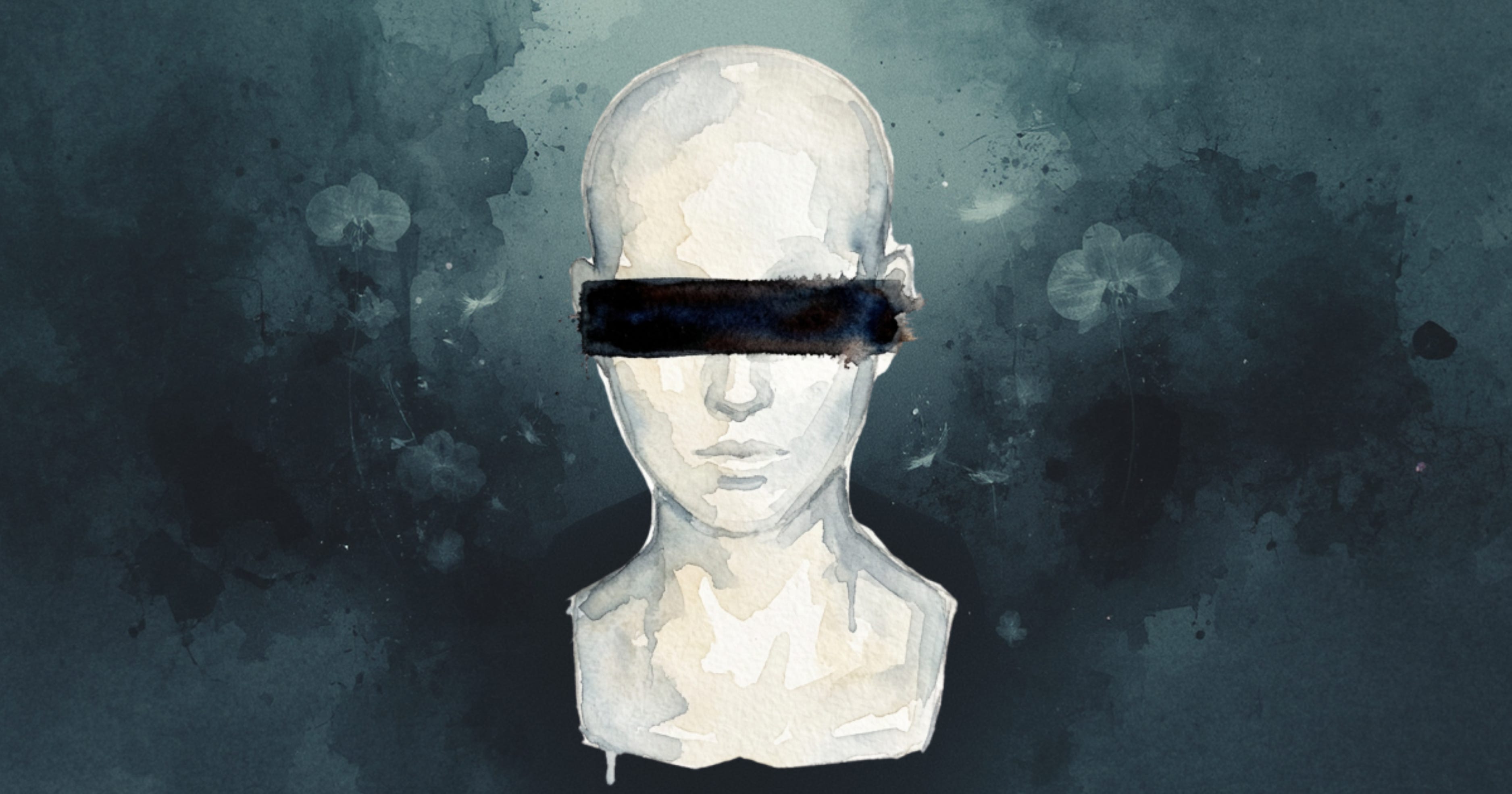
A study out of Bonn, published this March 2026, tests what happens when the visual channel was never available at all. That is, if visual imagery is load-bearing for mental time travel, congenital blindness should devastate it the same way aphantasia appears to. McCormick and colleagues compared congenitally blind adults, late-blind adults, and sighted controls across autobiographical memory, scene construction, and episodic future thinking, with full neuroimaging alongside the behavioral interviews. What they found was a rerouting, not a deficit. Congenitally blind participants recalled and imagined events with comparable overall richness to sighted controls, and vividness ratings didn’t differ between groups. What changed was the material each event was built from. Sighted participants leaned on perceptual detail and activated scene-selective visual regions, the parahippocampal place area, fusiform cortex. Blind participants leaned on thoughts and emotions instead, and their occipital cortex, tissue that would ordinarily process vision, had been recruited into the episodic network itself, showing increased functional coupling with the hippocampal-adjacent regions that anchor memory. One participant described the ornate shape of a chandelier at his own wedding in vivid detail, information he could only have learned secondhand. His memory had woven a fact he was told into something that functioned, for him, exactly like a seen thing.
The researchers frame the result directly as the brain’s capacity to construct internal experience resting on conceptual scaffolding, not perceptual re-creation. Vision is one available material for building a mental scene, not the material the scene is made of. Removed from birth, the same constructive engine builds with what remains, language, emotion, semantic knowledge, and produces something phenomenologically whole. McCormick’s earlier review with Lange makes the same case by laying the aphantasia and blindness literatures side by side: both populations show altered hippocampal-visual cortex connectivity relative to sighted, imagery-typical controls, and both retain functioning autobiographical memory built on different scaffolding.
This closes a gap the aphantasia literature alone couldn’t mediate. Aphantasia and blindness aren’t the same condition, and the Bonn researchers make this distinction, since aphantasic people are not blind and typically score above the clinical threshold for it. But unlike with aphantasia, the blindness data shows the constructive engine succeeding completely on non-visual materials, in people who never had visual materials to lose. That rules out the possibility that reduced episodic detail in aphantasic recall reflects a damaged or impoverished system. A fully intact, richly connected simulation engine can run on conceptual scaffolding alone. Whatever differs about the aphantasic profile, the machinery isn’t broken. It’s routing through different channels.
A second line of research on congenital blindness complicates this series in a way I find helpful. Silverstein, Wang, and Keane (2013) reviewed a striking clinical observation. Across six decades of case literature, there is no reported instance of a person born blind, or blinded in early infancy, who went on to develop schizophrenia. The one case that looked like an exception, a six-year-old described in 1965, would almost certainly be diagnosed as autistic by modern criteria rather than schizophrenic. The authors propose two mechanisms for this apparent protection. First, congenital blindness strengthens a cluster of perceptual and cognitive functions, auditory acuity and discrimination, working and long-term memory, selective and divided attention, that are specifically impaired in schizophrenia. Second, it constrains a smaller set of processes that show excessive and maladaptive flexibility in the disorder including overgeneralization of language categories, and an unusually dynamic, easily reassigned sense of body ownership. Blind participants, for instance, don’t experience the rubber hand illusion, the trick where synchronized touch convinces a sighted or schizophrenic brain that a fake hand is its own. Their sense of which body is theirs is more fixed, not more flexible.
The crossmodal reorganization behind this is targeted rather than diffuse. The blind auditory cortex expands its representation of pitch, and the occipital cortex gets recruited for Braille reading, language processing, and verbal memory. Each is a specific, bounded repurposing, not a general increase in how plastic the brain is. Silverstein and colleagues are also explicit about the limits of the pattern. Congenital blindness doesn’t protect against depression, anxiety, or autism-like symptoms, and adding deafness to blindness removes the schizophrenia-protective effect entirely, since children with congenital deafblindness show elevated psychosis risk. Whatever blindness is doing, it is doing something narrow and specific to this one neurotendency, not conferring general psychiatric resilience.
This reality touches ground “Hidden in the Activation” already staked out. Schizophrenia sits outside the coupling signature that grounds the hyperneuroplasticity claim about autism and other HNP neurotendencies where we see an elevated responsivity moving in a coordinated way across immune, connective-tissue, autonomic, and neural domains at once, rather than inside it. That essay reached this position by looking at Liang et al.’s 2026 single-cell genomics paper, which found a schizophrenia-specific result, elevated activity-dependent cholesterol synthesis tied to the gene CPT1C, and treated it as real without folding it into a claim about global hyperplasticity. The same discipline applies here. Silverstein and colleagues describe schizophrenia as involving excessive flexibility in specific, narrow processes such as overgeneralized language categories and an overly labile sense of body ownership. That is a claim about particular symptom-linked processes, not the coordinated, cross-domain responsivity HNP describes in autism, and treating it as evidence for a general plasticity profile would be the same pattern-completion that essay already flagged as a temptation to resist.
What the blindness-schizophrenia literature adds instead is a second, independent illustration of the distinction that essay drew. The crossmodal reorganization in congenital blindness is constrained, efficient, and protective. As such, bounded redistribution of function into specific cortical territory produces enhanced performance in the domains it touches. Schizophrenia destabilizes a different set of processes. With this, training-induced plasticity drops, the cortex thins, and body representation grows excessively dynamic. Together they look close to the opposite signature. Targeted, high-fidelity reorganization is not the same phenomenon as dysregulated flexibility in a narrow set of processes, and the two produce opposite outcomes here, with one protecting and the other characterizing the illness. Autism’s relationship to HNP rests on the coupling signature, elevated responsivity moving in a coordinated way across immune, connective-tissue, autonomic, and neural domains. The blindness-schizophrenia literature doesn’t show that signature on either side of the comparison. It shows a different axis entirely, with bounded adaptive reorganization against narrow dysregulation, and that axis stays separate from the coupling question even though both get described with the word “plasticity.”
The mental time travel findings and the schizophrenia findings both trace back to the same constructive engine, centered on hippocampus and the broader default mode network, that builds memory and imagination from whatever materials are available. This engine runs in everyone. What differs is which channel carries the most precision, and how tightly that channel gets bound to the felt sense of the self doing the remembering.
The insula-interoception model from the first essay in this series explains the binding. Mental imagery, when it happens, gets bound to the felt sense that “this is my own experience” through interoceptive anchoring, the same anchoring that makes a memory feel re-experienced rather than merely known. The Bonn data shows what happens when the visual channel was never available for that anchoring to draw on. The system reorganizes around conceptual and emotional content instead, and the felt sense of the memory survives intact. The dopaminergic thread from “The Inward Current” adds the sustain mechanism. Holding an internally generated representation open against the pull of the external world, whether that representation is a memory, an imagined future, or a held image, takes internally directed attention, and that system runs on dopamine.
HNP-profile systems, by hypothesis, run this engine at elevated interoceptive precision. Where that precision lands determines the phenomenology. Weighted toward visual-perceptual channels, the result is hyperphantasia, where memory plays like footage and imagined futures arrive as vivid, anticipatory scenes. Weighted toward semantic, relational, and somatic channels instead, the result is aphantasia and SDAM, where memory holds as coherent, emotionally real knowledge without the sensory re-living, and imagined futures build from concept and plan rather than picture. Both are the same engine running at high fidelity, pointed at different available materials, the way the Bonn researchers found congenitally blind and sighted brains pointing the same episodic network at different representational resources and getting equally coherent output from both.
Therapeutic culture leans heavily on visualization, work built from guided imagery, picture-yourself-in-a-safe-place exercises, and future-self visioning. All of it assumes the perceptual channel is the only legitimate route into memory work and into hope. For a hyperphantasic HNP system, that channel is often the source of the problem, since it’s also the channel flashbacks travel on. For an aphantasic or SDAM-organized HNP system, that channel may simply not be where the meaningful construction happens, and handing someone a tool built for a channel they don’t use produces the shame and sense of failure this series keeps returning to.
The blindness findings show what fully functioning alternative scaffolding looks like in an intact, richly connected neural system. A different design accomplishes the same job, with its own complete route to a coherent inner world. That reframes the aphantasic and SDAM-organized HNP profile as a completed reorganization rather than an unfinished one.
The Bonn study is a preprint, not yet through peer review, and its blind sample is small, as these samples usually are. Whether interoceptive precision-weighting is what actually determines a person’s position on the imagery spectrum remains this framework’s proposal, not a confirmed finding. And whether HNP-profile systems run the simulation engine at elevated gain relative to non-HNP systems hasn’t been tested directly by anyone, including me.
Three independent lines of evidence, the neuroscience of constructive memory, the interoceptive model of imagery, and the blindness data on conceptual scaffolding, converge on the same claim. There is no single correct material for building an inner world. There’s a flexible constructive system that uses whatever it has, vision, sound, emotion, or concept, and builds something whole from it. The blindness-schizophrenia literature draws a needed line around that claim rather than extending it, showing that bounded, targeted reorganization and dysregulated flexibility are different things even when both get described with the word plasticity.
My hyperneuroplasticity research and journal publications are reader-supported! To receive new posts and support my work, please share what you like or consider becoming a free or paid subscriber! All of my writing will remain free; however, even small donations help promote more work and research in this area!
No posts
Comments
Nothing yet. Say the first thing.
Sign in to join the conversation.