
I don’t mean to brag, but I have great soil. It’s because I feed my kitchen garden beds before they even begin to feed my family. It’s a full circle thing.
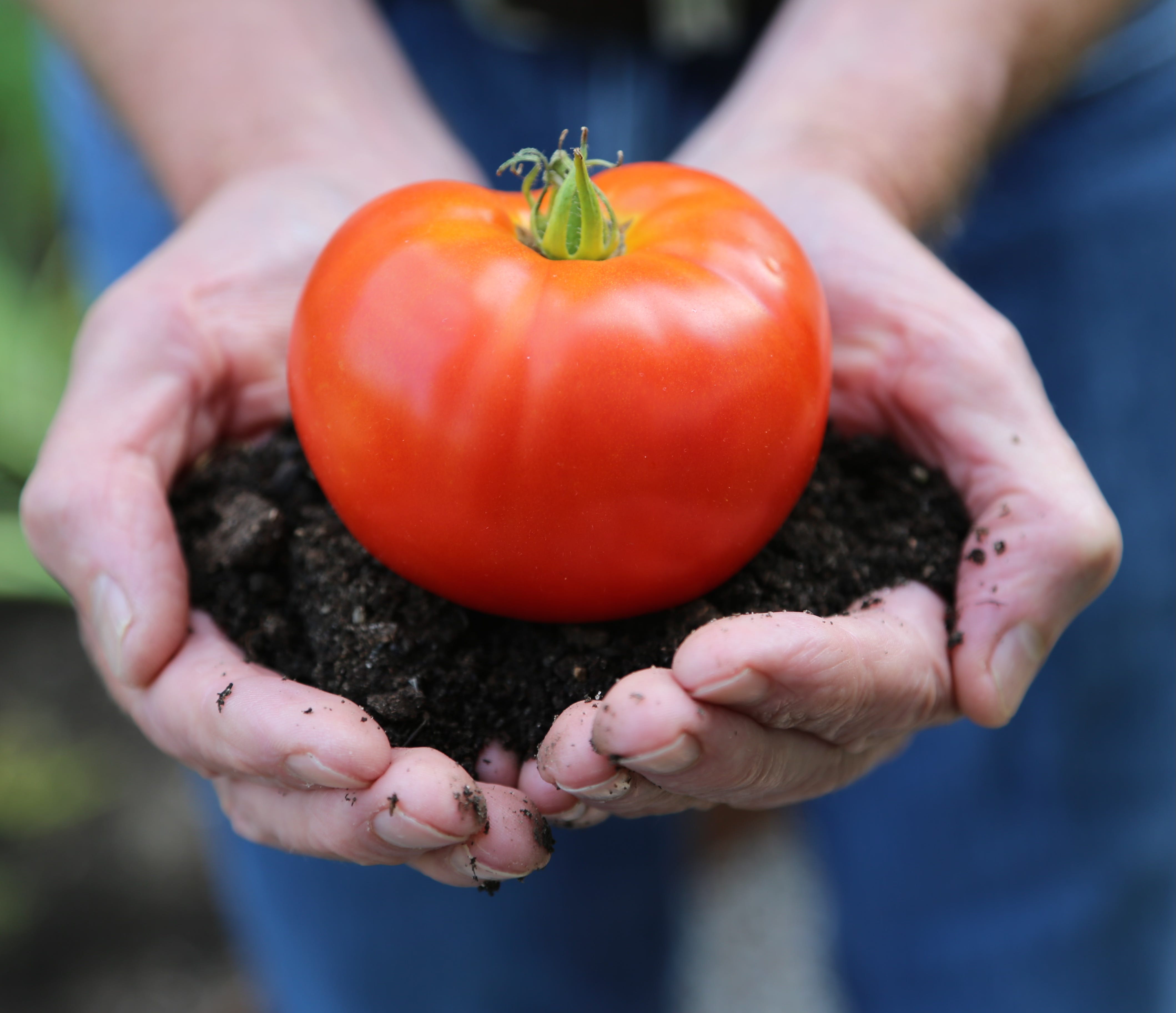
My husband should be a hand model!
I remember the first soil test I ever had done for my Kansas kitchen garden. I was a newbie Master Gardener and I submitted my soil the K-State Extension Service. When the results came back, the agent included a note that said, “Good organic matter content.” It felt like getting a gold star.
My Minnesota kitchen garden soil crumbles like chocolate cake. That’s no accident. I amend the soil with manure, compost and organic granular fertilizer every year. Every garden is different so use an online assist like Almanac Soil Calculator to determine the correct amount of amendments for yours.
The manure provides nitrogen for the heavy feeders in my garden; broccoli, cabbage, tomatoes, peppers, cucumbers, and melons.
Compost (I usePurple Cow) improves the texture, increases water retention, and makes for a loose environment for good root growth for carrots and other below ground veg.
The organic granular fertilizer (I like Jobe’s when I can find it, but this year I’m using True Organic) is a slow release fertilizer that will continue to feed my garden when I might get too busy.
*Disclaimer: These are personal recommendations and I receive no compensation from the mentions)
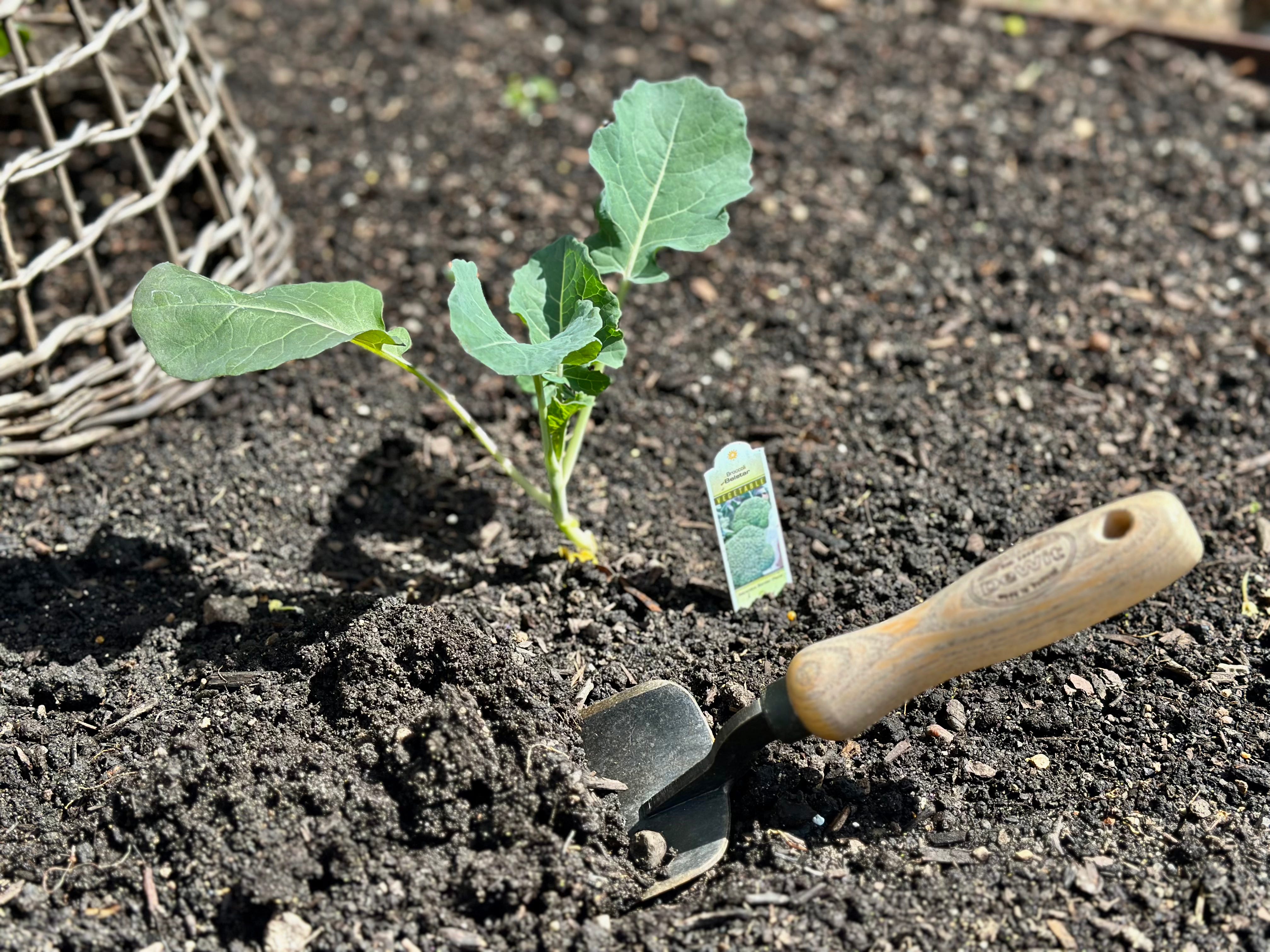
Soil like this is a pleasure to work with; digging, transplanting, and weeding is easy. Early days for this broccoli.
Should you get a soil test? Yes!!!
The nominal cost will make up for itself with the savings in time and energy, and plants.
You will know exactly what your soil needs, so you can add just the right amount of amendments and nutrients. You’ll know the character of your soil as well, which can help you find “the right plant for the right place.”
Three most common soil types. (You may have a combination, and soil types can vary within one garden, it makes things interesting)
Loam: Lucky you! Dark, crumbly, (like that chocolate cake) and high in organic matter. It provides excellent drainage and aeration.
Sandy Soil: You can work this with this! Gritty and light-colored. It warms up fast in spring. Ideal for root vegetables like carrots, parsnips, and herbs, but can dry out quickly. So, stay on top of your watering.
Clay Soil: What can I say, bless your heart, this is a tough road! Sticky and heavy; particles are tightly packed. It holds nutrients well but can become waterlogged and compacted. Suitable for vegetables like cabbage and brassicas, and trees/shrubs that prefer moist conditions. Keep adding compost to improve drainage.
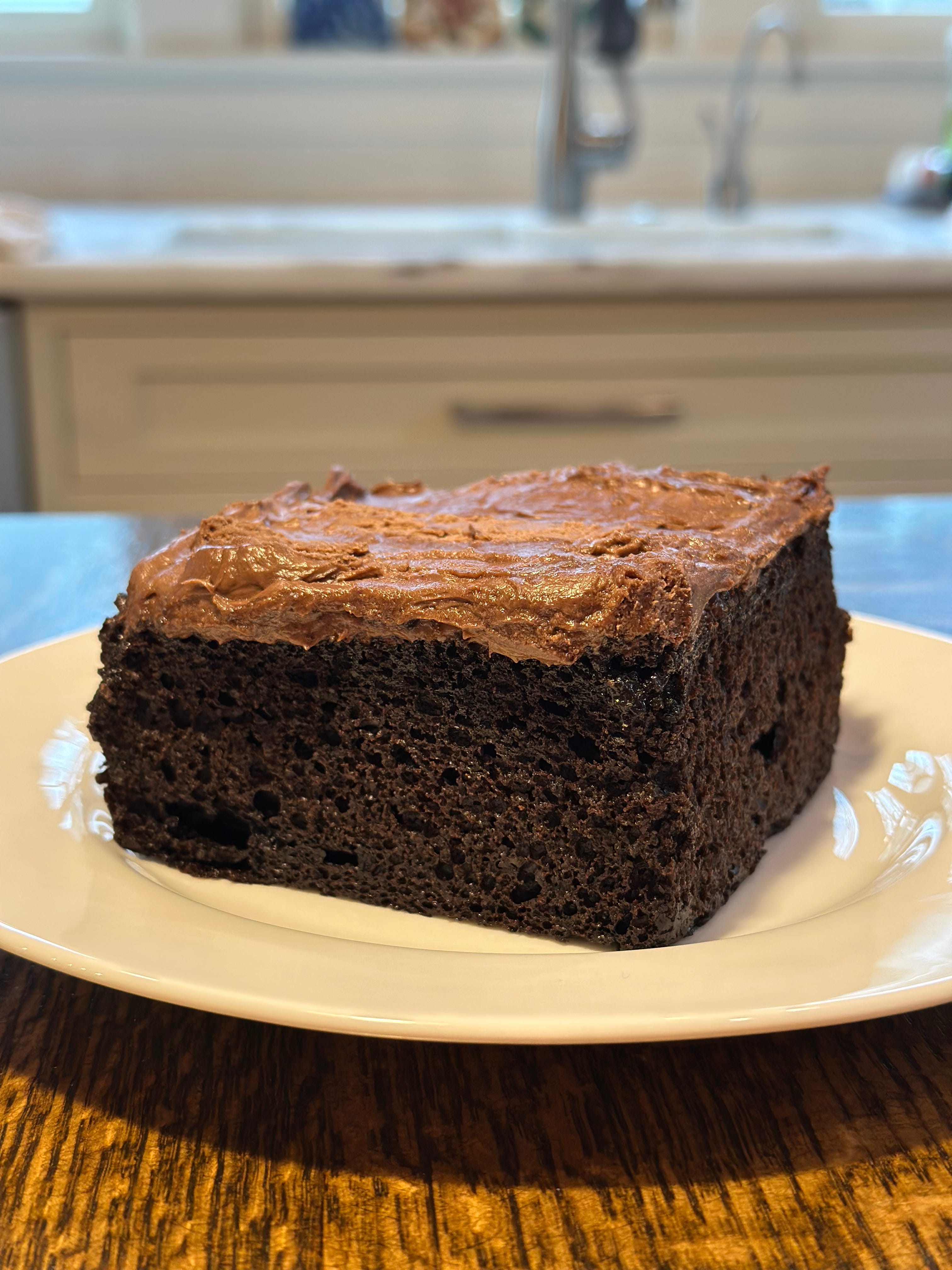
Great soil is like the icing on the cake when it comes to the joys of gardening.
No posts
Comments
Nothing yet. Say the first thing.
Sign in to join the conversation.