
Happy Thursday! Open any “stock market at all-time highs” headline this year and check what’s actually driving it. A handful of names. Everyone else is along for a much quieter ride.
That’s basically July in venture too, just with funds and financings instead of tickers. Across seven issues this month, covering LP expectations, Q2 data from CB Insights and PitchBook-NVCA, the Rule of 40, and the traits of top-decile funds, the same handful of threads kept resurfacing. Here’s what actually moved this month. More below!
AngelList - As VC firms scale their institutional LP base, finance is no longer just back-office hygiene—it’s a strategic advantage. AngelList’s fund admin operates like an outsourced COO, streamlining operations, meeting institutional diligence standards, and delivering timely, accurate reporting. See why 25k funds and syndicates trust AngelList.
Pliancy - Experience the freedom of IT that just works. Partnering with Pliancy means regaining the time & energy to focus on your mission—without having to worry about the day-to-day tech that makes it possible. Discover why VC firms from coast to coast choose Pliancy (or ask about us in VCBC).
Airstream Alpha CFO - Modern CFO support for venture funds and investment firms. With 50+ CFO mandates, Airstream Alpha brings structured, tech-forward oversight and guidance to fund finance, from reporting and compliance to service-provider coordination, so partners stay focused on investing and LP relationships. Learn how funds work with Airstream Alpha from first close through scale.
The recovery is real. It’s just not reaching most of the market.
What we covered:
In #355: Q2 Venture: Record Funding, Narrow Recovery, 263 mega-rounds ($100M+) accounted for 81% of all Q2 funding, and Anthropic’s financing alone represented roughly 31% of the quarter’s total.
#356: Q2’26 PitchBook-NVCA Highlights found 87.5% of deployed H1 capital went into $100M+ financings, and just three firms, Andreessen Horowitz, Thrive Capital, and Founders Fund, accounted for 48.1% of all venture capital raised.
#354: Emerging Manager Expectations showed funds larger than $1B captured 71.9% of capital raised year-to-date, and established firms took 90.9% of Q1 fundraising.
#358: 5 Traits Top-Decile VC Funds Share added that median LP counts per fund have declined, meaning even winning managers are raising from fewer, larger checks.
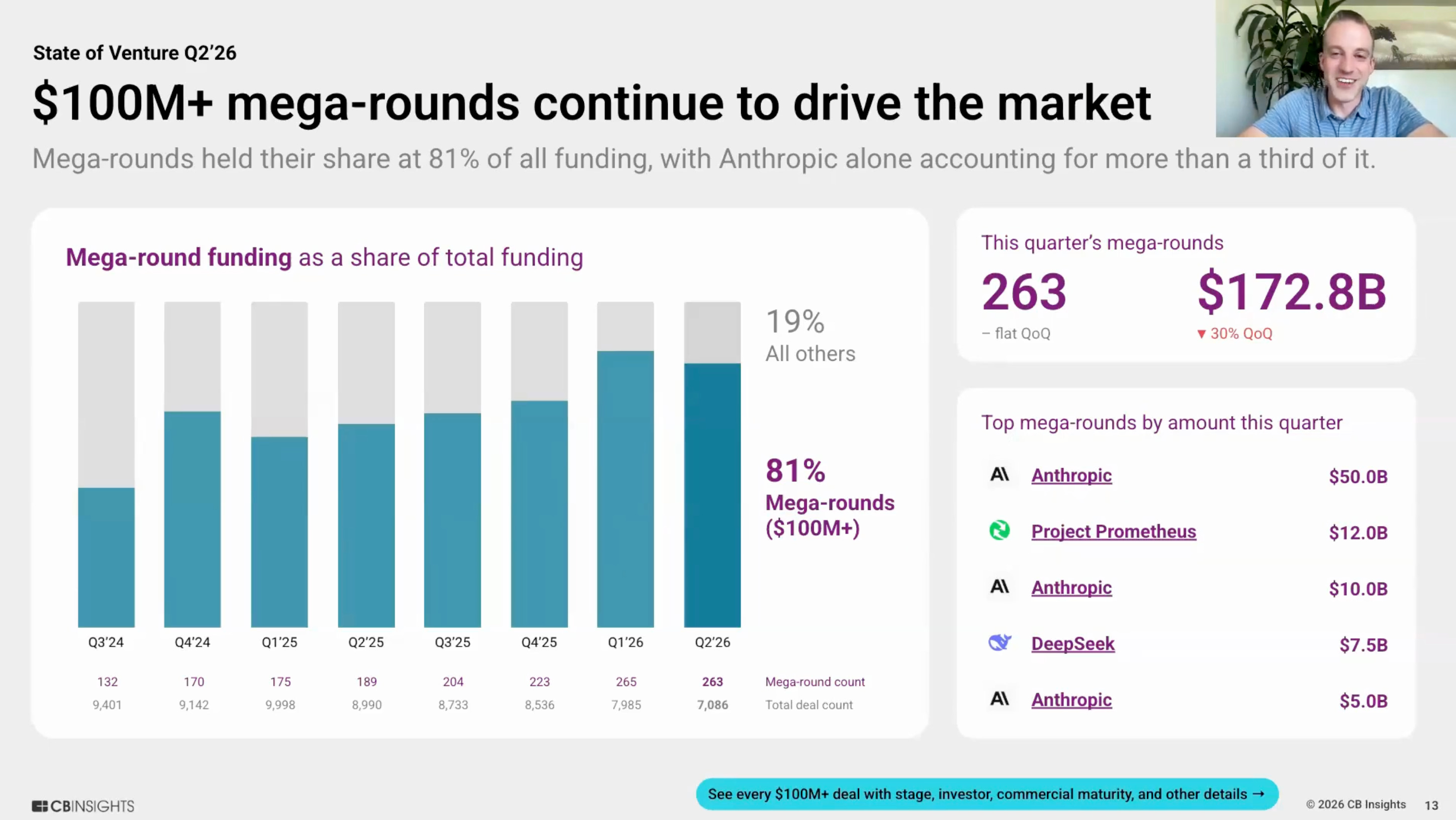
What this means for you: if you’re not one of the firms landing the mega-rounds or the anchor checks, this is exactly why the headlines feel disconnected from what you’re actually experiencing. Concentration wasn’t a single data point this quarter, it showed up in deals, fundraising, and manager selection all at once.
If three firms can take home half the capital raised in six months, what’s actually left for everyone else to compete over?
TVPI keeps climbing. DPI is the number that actually answers “when do I get paid.”
What we covered:
#353: The New LP Playbook opened the month by noting LPs increasingly ask “how and when will this fund generate distributions” before they ask about performance.
#354 found LP contributions have exceeded distributions for four consecutive years.
#356 noted unrealized private-market value continues building faster than capital is returning to LPs, even with SpaceX’s IPO providing a rare bright spot.
#358 found fewer than 20% of 2017 and 2018 vintage funds have generated a DPI above 1x.
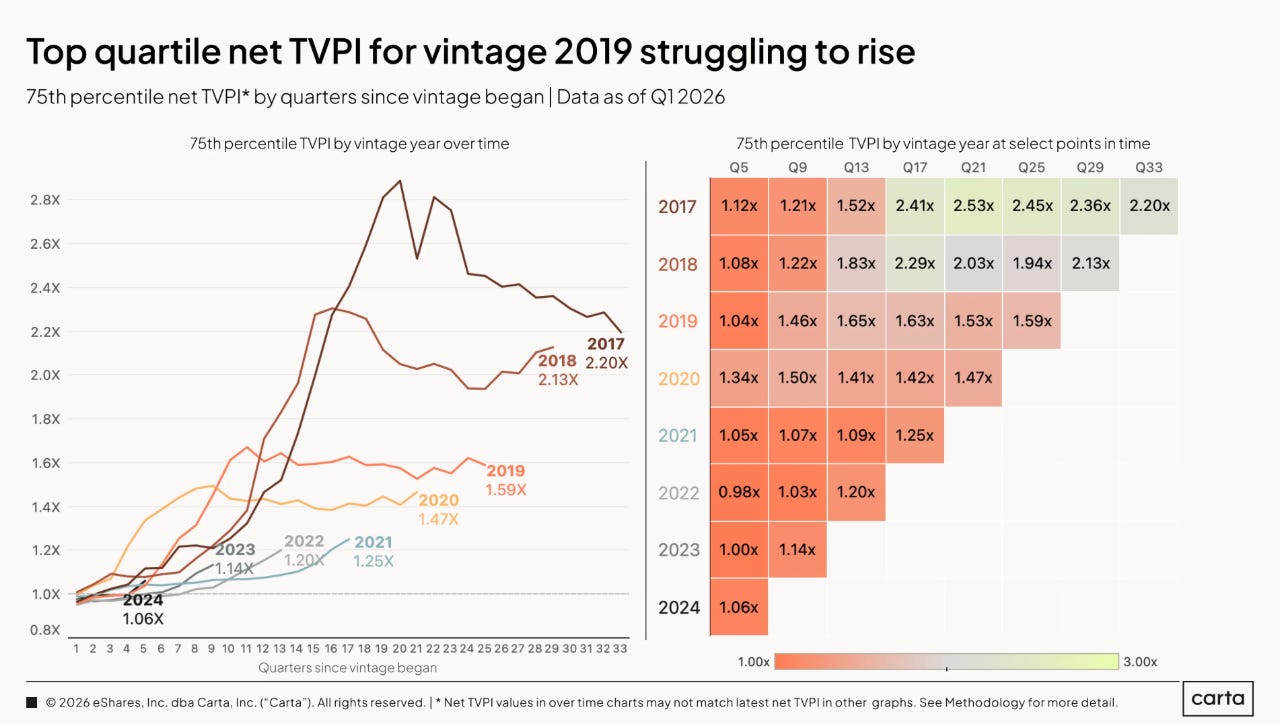
What this means for you: if you’re fundraising right now, this is the question you’ll get before anyone asks about your paper markups. We went deep on exactly this gap in Tuesday’s issue, #359: DPI in 2026 vs. $1 Trillion in NAV. If you haven’t read it yet, that’s the one worth your five minutes this week.
Good returns used to be enough. This month, they weren’t.
What we covered:
#353 identified institutional quality as a fifth, newer category of LP evaluation, alongside liquidity, portfolio fit, and repeatable process, covering reporting, governance, and operational infrastructure.
#354 cited Ocorian’s 2026 survey showing institutional investors placing greater emphasis on governance, operational risk, and transparency, on top of the usual performance questions.
The same report found Gen2’s Emerging Managers Report identifies institutional reporting and operational readiness as what separates successful first-time managers from the rest.
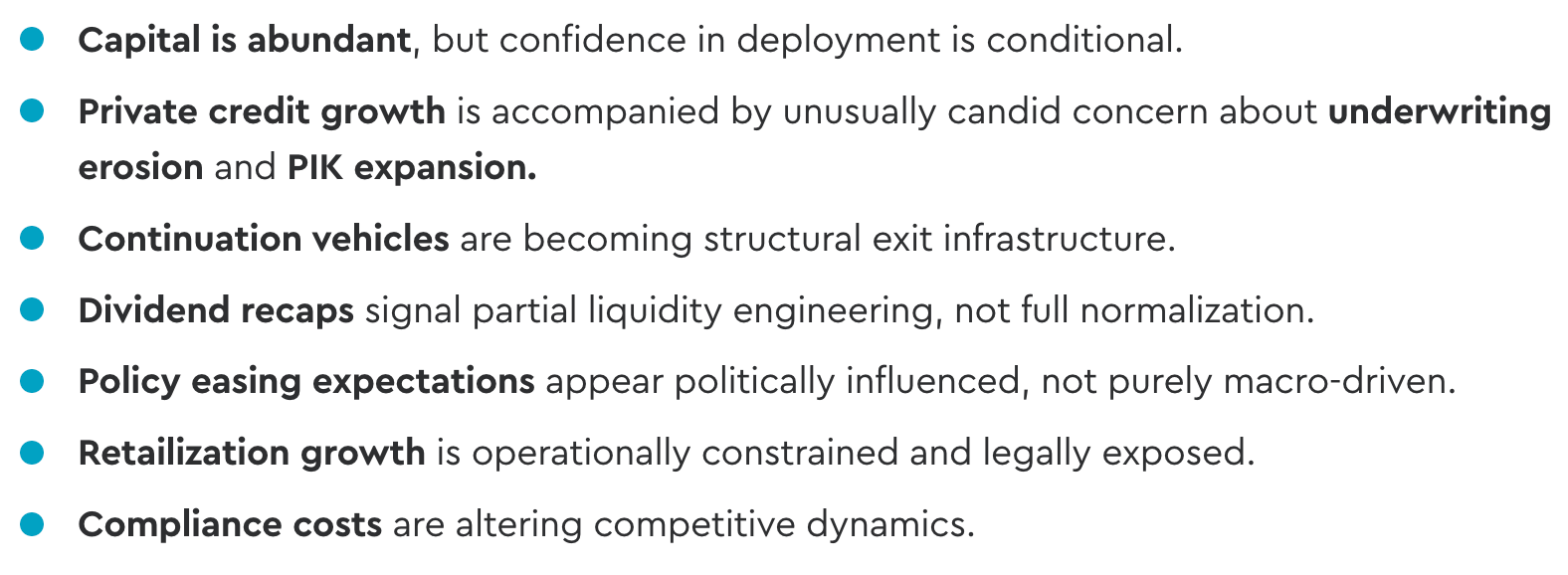
What this means for you: if your reporting, governance, and operations aren’t institutional-grade, that gap is now something LPs are actively diligencing, not something they’ll overlook because your IRR looks good.
Would your fund pass an operational diligence process today, separate from your returns?
AI companies aren’t winning by the same rules as everyone else.
What we covered:
#357: Rule of 40, Revisited found AI companies made up 29% of the companies Standard Metrics analyzed, but 42% of the “pre-margin growers” zone, meaning faster growth paired with deeper margin burn than the broader private market.
#355 showed AI represented roughly 70% of Q2 funding, with physical AI and robotics emerging as a fast-growing sub-theme, humanoid robotics funding alone growing from about $800M in 2022 to $5.3B in H1 2026.
#356 confirmed AI accounted for the majority of the $100M+ mega-round activity driving H1’s numbers.
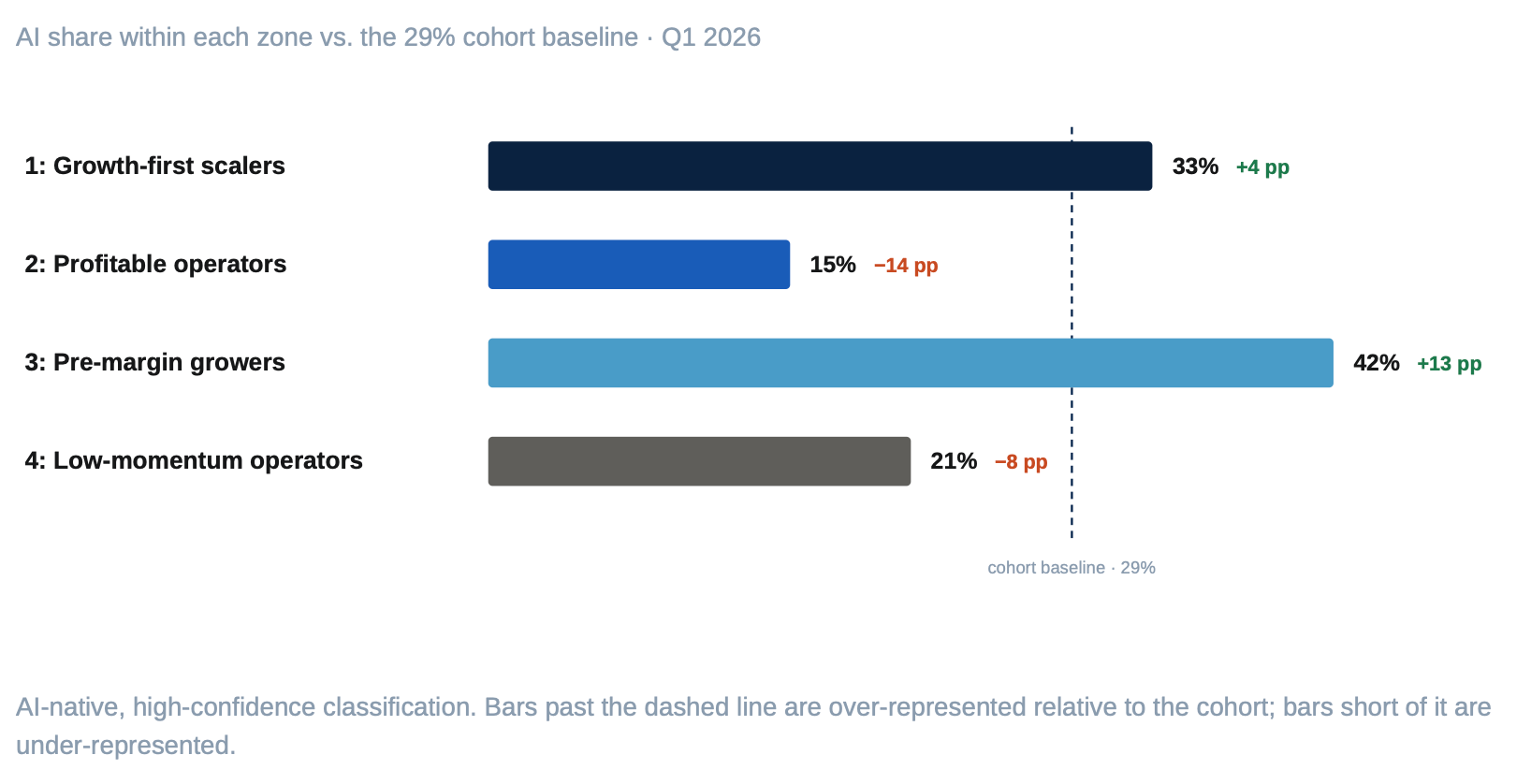
What this means for you: if you’re underwriting an AI company the same way you’d underwrite a non-AI peer at the same stage, the data says you’re using the wrong yardstick. Faster growth is coming paired with materially deeper margin burn, not instead of it.
Are you giving your AI portfolio companies room to burn the way their growth profile actually requires?
Two funds can post the same IRR and be built completely differently underneath.
What we covered:
#358 found top-decile performance remains rare, 90th percentile net IRRs exceed 20% across nearly every vintage since 2017, while the 75th percentile stays below roughly 15%, and the gap comes down to ownership discipline, reserve strategy, and concentrated follow-on investment rather than deal volume.
#357 made a related point from a different angle: two companies can post the identical Rule of 40 score while looking completely different operationally, meaning the composition behind a metric matters as much as the metric itself.
#353 reinforced that LPs are now weighing portfolio fit within their broader private markets allocation, not just whether a fund looks good in isolation.
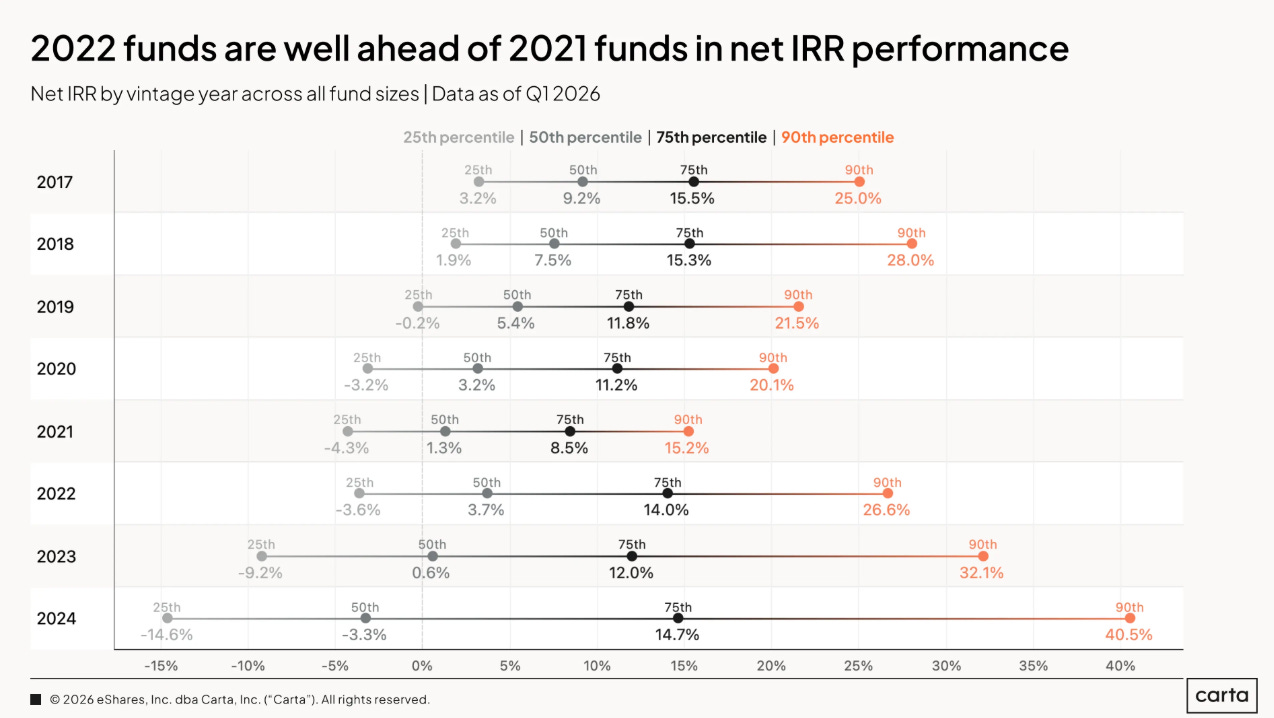
What this means for you: if you want to be in next year’s top decile, the data says it won’t come from doing more deals. It’ll come from ownership discipline, reserve strategy, and concentrating your follow-ons behind conviction.
Is your capital concentrated behind your best ideas, or spread thin trying to keep every position alive?
Capital concentration showed up at every level this month, deals, fundraising, and manager selection alike.
DPI, not TVPI, was the metric July’s coverage kept circling back to, culminating in this week’s dedicated deep dive.
LPs are evaluating the entire operating platform, not just investment performance.
AI companies are operating on a different growth-versus-margin profile than the rest of the private market.
The funds and companies that stand out are the ones whose underlying construction holds up, not just their headline numbers.
Bottom Line: July’s seven issues told the same story from five different angles: the venture market keeps setting records at the top while the actual experience of raising, deploying, and returning capital keeps narrowing for everyone else. So here’s the one worth sitting with: when you look at your own fund’s numbers this month, are you looking at the headline, or the construction underneath it?
VC Fund Model — model the ownership discipline, reserve strategy, and follow-on concentration that separated top-decile funds this year (Theme 5).
DPI Forecast & Premium Carry Template — forecast your own distribution timeline instead of guessing when the “$1T stuck in NAV” problem hits your fund (Theme 2).
Year-End Finance & Compliance Checklist — the operational and governance readiness LPs are now diligencing before they even ask about returns (Theme 3).
Comments
Nothing yet. Say the first thing.
Sign in to join the conversation.