
There is a muscle group most of us don’t think about until something goes wrong.
It supports your bladder and bowel. It helps stabilise your pelvis. It responds when you cough, sneeze, lift something heavy or exercise. And it plays a role in sexual function and sensation.
I’m talking about your pelvic floor.
For something that quietly does so much work every day, the pelvic floor has a surprisingly narrow public reputation. We hear about it mostly in the context of pregnancy, urinary leakage, or one very specific instruction: Do your Kegels.
But the pelvic floor is much more interesting than that.
And when it comes to sexual wellbeing, the question isn’t simply whether your pelvic floor is “strong enough.”
It is whether it can contract when you need it to, relax when you need it to, and coordinate with the rest of your body.
That distinction matters.
Think of the pelvic floor as a layer of muscles and connective tissue forming the base of your pelvis. It stretches from the pubic bone at the front toward the coccyx at the back and supports structures including the bladder, bowel and, in women, the uterus and vagina.¹
These muscles aren’t sitting there switched on or off.
They are constantly adjusting.
They tighten when you need to maintain continence or respond to increased pressure in your abdomen. They relax when you urinate or have a bowel movement. They also work with your abdominal and postural muscles to support movement and stability.¹
And yes, they are involved in sexual function.
Research increasingly supports a relationship between pelvic floor muscle function and sexual response, particularly in women. A 2024 systematic review and meta-analysis found that pelvic floor muscles appear to be involved in aspects of sexual response including arousal and orgasm, while pelvic floor strength was moderately associated with sexual function.²
That doesn’t mean a stronger pelvic floor automatically means better sex.
It means these muscles are part of a much more complicated system.
This is where the conversation around pelvic floor health gets interesting.
Most advice assumes the problem is weakness.
And sometimes it is.
Pregnancy, childbirth, ageing, menopause, surgery, chronic coughing, constipation and repeated straining can all contribute to changes in pelvic floor function. Weakness can show up as urinary leakage, reduced support or pelvic organ prolapse.¹ ³
But some people have almost the opposite problem.
Their pelvic floor muscles are overactive or difficult to relax.
An overactive pelvic floor can be associated with pelvic pain, difficulty emptying the bladder or bowel, and painful sex. In women, pelvic floor overactivity has also been associated with lower sexual desire, arousal and satisfaction and greater difficulty with orgasm. In men, it has been associated with problems including erectile dysfunction, premature ejaculation and ejaculatory pain.⁴
This is why “just do more Kegels” isn’t universally good advice.
If your pelvic floor is already tense, repeatedly squeezing it may be the wrong intervention.
The goal isn’t maximum contraction.
The goal is control.
Quite a lot.
Sexual response involves the brain, nervous system, hormones, blood vessels, genital tissues and pelvic floor muscles. The pelvic floor doesn’t operate independently; it is one component of a larger physiological response.
During sexual arousal and orgasm, pelvic floor muscles participate in rhythmic contractions and changes in muscle activity.²
That helps explain why researchers have become increasingly interested in pelvic floor health as part of sexual wellbeing rather than treating it purely as a continence issue.
A 2024 systematic review and meta-analysis of 33 studies found evidence supporting the involvement of pelvic floor muscles in sexual function and sexual response in women. The researchers also found that interventions targeting the pelvic floor improved sexual function in many of the studies reviewed, although they noted limitations including small samples, heterogeneity and the need for better-designed research.²
Another 2024 systematic review and meta-analysis looking specifically at pelvic floor muscle training for female sexual dysfunction included 21 randomised controlled trials. The analysis found improvements in overall sexual function as well as domains including arousal, orgasm, satisfaction and pain. But the authors rated the certainty of the evidence as low because of substantial variation between studies.⁵
That’s a useful distinction.
The evidence isn’t saying, “Do pelvic floor exercises and your sex life will transform.”
It’s saying there is enough evidence to take the connection seriously.
The pelvic floor conversation is often framed almost entirely around women’s health, but men have pelvic floor muscles too—and they matter for sexual function.
The muscles contribute to erectile and ejaculatory function, and researchers have studied pelvic floor muscle training as a potential component of treatment for erectile dysfunction and premature ejaculation.
A systematic review examining pelvic floor muscle training for erectile dysfunction and premature ejaculation found evidence suggesting potential benefits, although the evidence base was still limited and varied in quality.⁶
There are also randomised trials showing improvements in erectile function among some men following structured pelvic floor rehabilitation.⁷
Again, context matters.
Erectile dysfunction can have many causes, including cardiovascular disease, diabetes, medications, hormonal factors, psychological factors and neurological conditions. Pelvic floor exercises aren’t a universal treatment.
But the pelvic floor can be one piece of the puzzle.
And sometimes that is exactly how we should think about sexual health: not as one malfunctioning body part, but as a system.
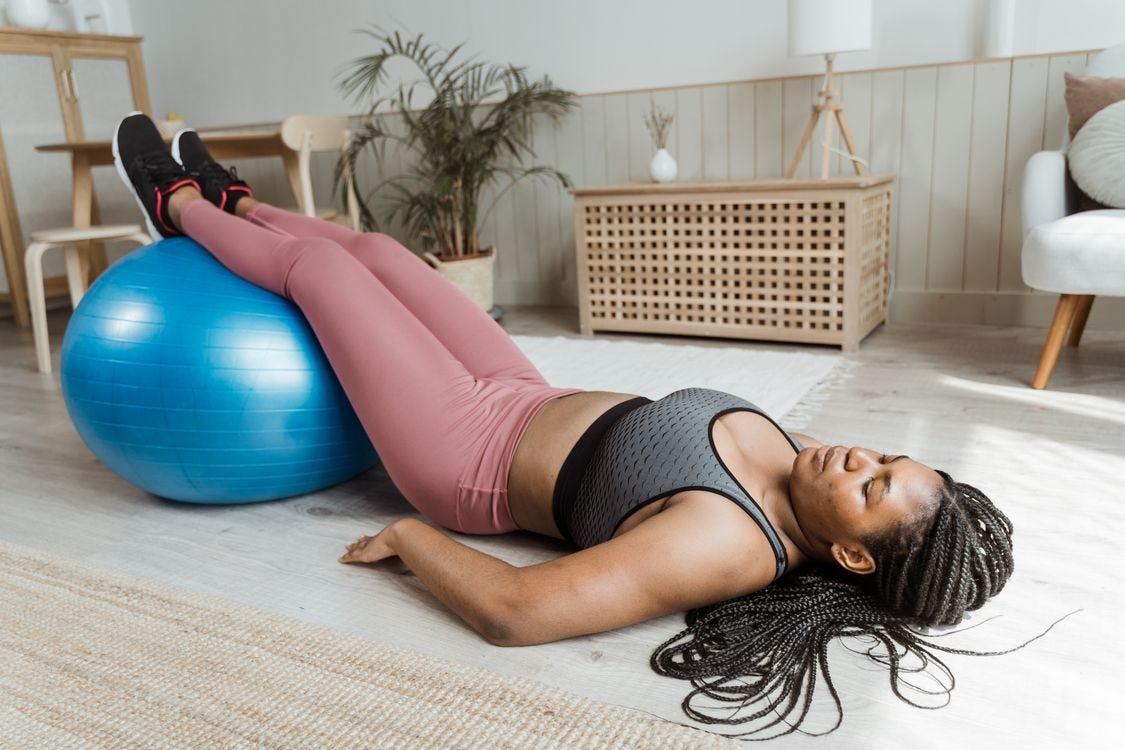
Kegels aren’t bad.
In fact, pelvic floor muscle training is an established intervention for certain problems, particularly urinary incontinence.⁸
The problem is that the word “Kegel” has become almost synonymous with pelvic floor health.
As if the only goal were to make the muscles stronger.
But a healthy pelvic floor needs to do something more sophisticated.
It needs to contract, relax and coordinate.
Imagine your biceps.
You wouldn’t spend all day flexing your biceps because you wanted stronger arms. You’d train them, but you’d also expect them to relax so you could move normally.
Your pelvic floor isn’t exactly the same, of course, but the principle is useful.
Strength without the ability to relax isn’t necessarily healthy function.
This is particularly important for people experiencing pelvic pain, painful penetration, difficulty inserting a tampon, constipation associated with pelvic floor tension, urinary symptoms, or a persistent sensation of pelvic tightness.
In those situations, the answer may not be more strengthening.
It may be learning how to release and coordinate the muscles properly.
That’s where pelvic floor physiotherapy can be particularly valuable. A pelvic health physiotherapist can assess whether the muscles are weak, overactive, poorly coordinated or a combination of these—and tailor treatment accordingly.³
You don’t need to diagnose yourself.
But you can become more aware of what’s happening in your body.
Consider these questions:
Do you leak urine when you cough, sneeze, laugh, run or exercise?
Do you regularly feel an urgent need to urinate or struggle to control your bladder?
Do you experience constipation or regularly strain to have a bowel movement?
Do you experience pelvic, genital or lower abdominal pain without an obvious explanation?
Is penetration painful or uncomfortable?
Do you find it difficult to relax your pelvic muscles?
Do you experience persistent pelvic tension or a feeling of clenching?
Have you noticed changes in sexual sensation, arousal, orgasm or erectile function alongside other pelvic symptoms?
One symptom doesn’t automatically mean you have pelvic floor dysfunction.
But several persistent symptoms are worth discussing with a healthcare professional rather than simply trying more exercises from the internet.³
The answer depends on what’s going on.
If your pelvic floor is weak, structured pelvic floor muscle training can be useful. If the muscles are overactive, treatment may instead focus on relaxation, breathing, mobility, manual therapy, coordination and reducing unnecessary muscle tension.
And sometimes you need both.
This is why getting assessed can be more useful than blindly following a generic Kegel routine.
For someone without symptoms, however, there are some simple habits worth cultivating.
A pelvic floor isn’t supposed to be permanently clenched.
Practising awareness can be as useful as practising strength: notice when you are unconsciously tightening your abdomen, buttocks or pelvic floor, particularly during stressful moments.
Pelvic floor function is closely connected with pressure management in the abdomen. Learning to breathe normally during exercise and movement can help you coordinate your core and pelvic floor rather than constantly bracing.¹
Repeated straining can place additional stress on the pelvic floor. Supporting regular bowel movements through adequate fibre, fluids, movement and appropriate medical care can therefore be part of pelvic health too.¹ ³
If you’re experiencing urinary leakage or have been advised to train your pelvic floor, structured pelvic floor muscle training can be effective. But technique matters, and a pelvic health physiotherapist can help you identify the muscles and perform the exercises correctly.⁸
Pain during sex isn’t something you simply have to tolerate.
It can have many causes, and pelvic floor overactivity is one possibility. Getting the underlying cause assessed is much more useful than trying to push through it.
What I find most interesting about the pelvic floor conversation is how neatly it challenges the way we’ve traditionally separated “health” from “sex.”
We talk about urinary continence as health. We talk about pelvic organ support as health. We talk about pregnancy recovery, pelvic pain and bladder function as health. Then we often put sexual comfort, arousal and orgasm into an entirely different category.
Physiologically, the boundaries aren’t nearly that neat.
The pelvic floor is involved in the sexual response itself. During arousal and orgasm, these muscles become active and participate in rhythmic contractions, while their ability to contract and relax also appears to be connected with aspects of sexual function. Research has found associations between pelvic floor muscle function and sexual arousal, orgasm, satisfaction and pain in women.¹ ²
That doesn’t mean your pelvic floor determines your sex life. It doesn’t.
Sexual desire and pleasure are influenced by a much bigger system: your brain, nervous system, hormones, blood flow, genital sensation, emotional state, relationships, stress levels and the context in which intimacy happens.
But the pelvic floor is one part of that system, and it’s a part that often gets overlooked.
There’s also an interesting relationship between tension and pleasure.
For some people, pelvic floor muscles may be weak and need strengthening. For others, they may be overactive and have difficulty relaxing. Persistent pelvic floor tension can be associated with pelvic pain and painful penetration, and can affect aspects of sexual function.³
That matters because we tend to think of sexual wellness in terms of adding more: more stimulation, more arousal, more intensity.
Sometimes the body needs something different.
It may need to feel safe enough to relax.
It may need better awareness of where you’re holding tension.
It may need stronger muscles—or, equally importantly, better control over when those muscles switch on and off.
This is one reason I think pelvic floor awareness deserves a place in the broader conversation about sexual wellness. It isn’t about turning pelvic floor exercises into another performance goal or assuming that everyone needs to do Kegels.
It’s about understanding the physical side of sexual function with the same curiosity we bring to other aspects of our health.
And that applies to men too.
In men, the pelvic floor muscles contribute to erectile and ejaculatory function, and research has explored pelvic floor muscle training as one component of treatment for conditions such as erectile dysfunction and premature ejaculation.⁴ ⁵
So perhaps the more useful question isn’t, “Are my pelvic floor muscles strong?”
It’s:
“Can my pelvic floor do what I need it to do—and relax when I don’t need it to?”
Because when we start thinking about the pelvic floor as part of the sexual response rather than simply a group of muscles responsible for preventing leaks, the conversation becomes much more interesting.
It becomes less about fixing something that’s wrong and more about understanding how your body works.
And I think that’s where sexual wellness belongs in the first place.
If there’s one thing I wish more people knew about pelvic floor health, it’s this:
Healthy doesn’t mean constantly tight. And healthy doesn’t mean maximally strong.
It means responsive.
A healthy pelvic floor should be capable of contracting when needed, relaxing when needed, and coordinating with the rest of the body.
For some people, that means strengthening.
For others, it means learning to let go.
For many, it means a combination of both.
And if you’re experiencing urinary leakage, pelvic pain, painful sex, bowel symptoms or changes in sexual function, you don’t have to figure it out alone. A pelvic health physiotherapist or appropriate healthcare professional can help determine what’s actually happening.
Because your pelvic floor isn’t just a group of muscles you should remember to exercise.
It’s part of the infrastructure that helps you move, function, feel—and, yes, experience pleasure.
And perhaps that’s the most useful way to think about pelvic wellness:
not as another thing to fix, but as another part of your body worth understanding.
¹ Cambridge University Hospitals NHS Foundation Trust. Female pelvic floor muscle exercises. Read the NHS clinical guide
² Faucher S, Déry-Rouleau G, Bardin M, Morin M. Investigating the role of the pelvic floor muscles in sexual function and sexual response: a systematic review and meta-analysis. Journal of Sexual Medicine. 2024. Read the PubMed study
³ Cleveland Clinic. Pelvic Floor Dysfunction: What It Is, Symptoms & Treatment. Read the clinical overview
⁴ Padoa A, McLean L, Morin M, et al. The Overactive Pelvic Floor and Sexual Dysfunction: Part 1—Pathophysiology of OPF and Its Impact on the Sexual Response. Sexual Medicine Reviews. Read the PubMed study
⁵ Jorge CH, Bø K, Chiazuto Catai C, et al. Pelvic floor muscle training as treatment for female sexual dysfunction: a systematic review and meta-analysis. American Journal of Obstetrics & Gynecology. 2024. Read the PubMed study
⁶ Myers C, Smith M. Pelvic floor muscle training improves erectile dysfunction and premature ejaculation: a systematic review. Physiotherapy. 2019. Read the PubMed study
⁷ Dorey G, Speakman M, Feneley R, et al. Randomised controlled trial of pelvic floor muscle exercises and manometric biofeedback for erectile dysfunction. British Journal of General Practice. 2004. Read the PubMed study
⁸ NHS. Urinary incontinence – Non-surgical treatment. Read the NHS guidance
Comments
Nothing yet. Say the first thing.
Sign in to join the conversation.