
If you’ve spent even five minutes on social media recently, you’ve probably seen someone talking about Ozempic®, Wegovy®, Mounjaro®, or another GLP-1 medication.
For some, they’re miracle drugs.
For others, they’re controversial.
Depending on who you ask, they’re either the future of medicine or the reason everyone’s suddenly talking about weight loss.
One thing, however, is difficult to dispute.
These medications have changed obesity treatment more than almost any therapy in recent history.
Large clinical trials have shown that people can lose 15–20% of their body weight—sometimes more—while also improving blood sugar control and reducing the risk of cardiovascular disease. For millions of people living with obesity or type 2 diabetes, that’s genuinely life-changing. (STEP 1 Trial; SURMOUNT-1 Trial; American Diabetes Association).
But as impressive as the medications are, I think we’ve accidentally created a new problem.
We’ve reduced the entire conversation to one number.
Weight.
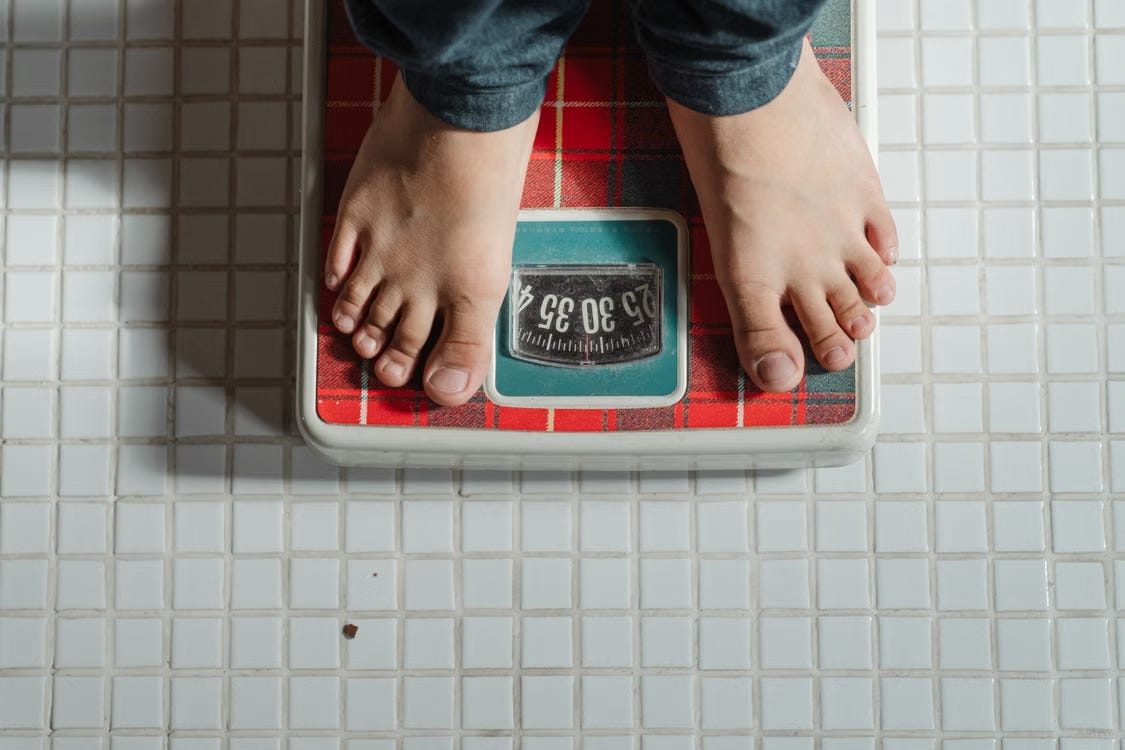
Every morning, people step onto the scale hoping to see it move in the right direction.
If it drops, it’s a good day.
If it doesn’t, something must be wrong.
Without realizing it, we’ve started treating the scale like a report card for our health.
The problem is that your scale was never designed to measure health.
It measures weight.
Those are not the same thing.
And that distinction may be the biggest thing we’re getting wrong in the GLP-1 conversation.
Imagine two people each lose 15 kilograms over the next six months.
From the outside, they look equally successful.
Friends congratulate them.
Their clothes fit better.
Their doctor is pleased with the number on the chart.
But beneath the surface, their bodies could be telling two completely different stories.
The first person loses mostly body fat. They continue eating enough protein, start strength training, sleep better, build healthier routines, and become fitter than they’ve been in years. Their weight goes down, but their overall health improves alongside it.
The second person also loses 15 kilograms. But they unintentionally eat too little, lose a significant amount of muscle, stop exercising because they’re tired, develop constipation, and begin struggling with energy levels. When they eventually stop the medication, they regain much of the weight because the habits needed to maintain it were never built.
The scale celebrates both journeys equally.
Your body doesn’t.
That’s because the scale only answers one question:
How much weight did you lose?
It can’t answer the more important one:
What actually changed?
For decades, weight has been treated as the ultimate marker of health.
Lose weight.
Lower your BMI.
Reach your target number.
Everything else will follow.
But modern medicine paints a much more nuanced picture.
Health isn’t determined by one measurement.
It’s the result of dozens of systems working together.
Your muscles.
Your metabolism.
Your cardiovascular system.
Your hormones.
Your sleep.
Your nutrition.
Your mental wellbeing.
Your ability to move through daily life without pain or exhaustion.
Weight is part of that picture.
It’s just not the whole picture.
Imagine visiting your doctor for an annual health check-up and having them ignore your blood pressure, cholesterol, blood sugar, liver function, medications, sleep, symptoms, and family history.
Instead, they ask you to step on a scale.
Then they say,
“You’re healthier.”
You’d probably look for another doctor.
Yet that’s exactly how many of us judge ourselves every single week.
To understand why this matters, it helps to understand what GLP-1 medications actually do.
GLP-1 receptor agonists mimic a naturally occurring hormone released by the gut after eating. That hormone communicates with multiple organs throughout the body. It helps regulate blood sugar, slows stomach emptying, increases feelings of fullness, and influences appetite centres in the brain. Together, these effects help people eat less while improving glucose control and promoting weight loss.
That’s the science.
But the lived experience is much broader.
When your appetite changes, your eating patterns change.
When your eating patterns change, your nutrition changes.
Nutrition influences muscle.
Muscle influences metabolism.
Metabolism affects energy.
Energy shapes movement.
Movement affects sleep.
Sleep influences hunger, mood, recovery, and insulin sensitivity.
In other words, starting a GLP-1 doesn’t simply change your weight.
It changes an entire ecosystem.
The irony is that while your body is adapting in dozens of different ways, most of us continue looking at just one number.
This is where the conversation becomes more interesting.
Most people assume that losing weight automatically means becoming healthier.
Often, that’s true.
But it’s not guaranteed.
Researchers have long known that rapid weight loss—whether through medication, surgery, or dieting—can reduce both fat mass and lean muscle mass. Analyses from GLP-1 clinical trials suggest that a meaningful proportion of the weight people lose may come from lean tissue, particularly if protein intake is inadequate and resistance training isn’t part of the plan. (Journal of Cachexia, Sarcopenia and Muscle; STEP body-composition analyses).
That matters because muscle isn’t simply something that changes the way you look.
It’s one of the most important organs for healthy aging.
Muscle helps regulate blood sugar, protects bone health, supports balance, improves mobility, and maintains metabolic health. It also becomes increasingly important as we grow older, when preserving strength often matters more than reaching an arbitrary number on the scale.
This is why obesity specialists no longer talk only about weight loss.
They talk about healthy weight loss.
Those two things are not always identical.
Perhaps the biggest shift happening in medicine today isn’t a new drug.
It’s a new way of measuring success.
Cardiologists don’t judge your heart health using a single blood pressure reading.
Endocrinologists don’t diagnose diabetes based on one afternoon’s blood sugar.
Sleep physicians don’t decide whether you have insomnia after one bad night’s sleep.
They look for patterns.
Weight management should be no different.
Instead of asking only,
“How much weight have I lost?”
we should also be asking:
Am I preserving muscle?
Am I eating enough protein?
Do I have more energy?
Am I sleeping better?
Has my relationship with food changed?
Am I stronger than I was three months ago?
Do I actually feel healthier?
Because those questions tell us something the scale never can.
They tell us whether our body is becoming healthier—not simply lighter.
And I suspect that’s the conversation we’ll all be having five years from now.
Your scale is measuring weight. It isn’t measuring health.
The problem is that many of us don’t know what else to look at.
We weigh ourselves because it’s easy. It gives us a number we can compare with yesterday’s number. It feels objective. It feels like progress.
But imagine driving a car using only the speedometer.
You would know how fast you’re travelling, but you would have no idea whether you’re running out of fuel, overheating the engine, or driving with dangerously low tyre pressure. The speedometer gives you useful information, but it doesn’t tell you whether the car is actually healthy.
Your body works in much the same way.
Weight is one gauge. Health is the entire dashboard.
The question, then, isn’t whether you should stop weighing yourself. It’s whether you’re paying attention to everything else that matters.
Here are the gauges I’d be watching if I were taking a GLP-1.
If there is one thing I wish every person starting a GLP-1 understood, it’s this: weight loss is not the same as fat loss.
Whenever we lose weight—whether through medication, surgery, or dieting—we usually lose a combination of fat, water, and lean tissue. That’s why obesity specialists now emphasize preserving muscle just as much as reducing body fat.
Muscle isn’t just about strength or appearance. It’s one of the body’s largest metabolic organs. It helps regulate blood sugar, supports bone health, improves mobility, protects against falls as we age, and plays an important role in maintaining independence later in life.
The good news is that muscle loss isn’t inevitable. Research consistently shows that adequate protein intake combined with resistance training significantly improves muscle preservation during weight loss.
So rather than celebrating every kilogram equally, ask yourself another question:
Am I becoming stronger as I become lighter?
If the answer is yes, you’re probably moving in the right direction.
One of the defining effects of GLP-1 medications is reduced appetite.
For many people, that’s exactly what makes them effective.
But appetite and nutrition aren’t the same thing.
I’ve spoken to people who proudly tell me they “barely eat anymore.” They mean it as evidence that the medication is working. Sometimes it is. But it can also be a sign that they’re unintentionally missing the protein, fibre, vitamins, and minerals their body still needs.
Your body still has to repair muscle, support your immune system, produce hormones, and maintain healthy bones—even if you’re eating fewer calories.
A useful shift in mindset is to stop asking, “Did I eat less today?” and start asking, “Did I nourish my body today?”
Those are very different questions.
One of the fascinating things about health is that the body often tells us when something is changing long before blood tests do.
Energy is one of those signals.
Some people feel dramatically better after starting a GLP-1. They move more comfortably, experience fewer blood sugar swings, and find everyday tasks easier.
Others notice persistent fatigue, particularly if they’re under-eating, becoming dehydrated, or losing muscle.
Neither experience should be ignored.
Instead of dismissing fatigue as “part of the process,” treat it as information. Has your energy improved since you started? Is it worse on days when you skip meals? Better after strength training? Poor after inadequate sleep?
These patterns often tell you more than the scale ever will.
We rarely think of sleep as part of weight management, yet it influences almost everything.
Sleep affects hunger hormones, insulin sensitivity, recovery, mood, decision-making, and even the kinds of foods we’re likely to crave the next day. Poor sleep can make healthy habits feel much harder to sustain.
That’s why I think sleep deserves a place on every health dashboard.
Not because one restless night matters, but because trends do.
If you’re sleeping more soundly than you were three months ago, that’s progress.
If your sleep has deteriorated since starting a medication, that’s worth discussing with your healthcare provider.
Either way, it’s information your scale can never provide.
Perhaps the most unexpected effect of GLP-1 medications isn’t physical.
It’s psychological.
Many people describe experiencing something researchers and clinicians often refer to as a reduction in “food noise”—the constant mental chatter about what to eat, when to eat, and how much to eat.
For some, it’s the first time in years they’ve felt free from obsessive thoughts about food.
For others, it can feel surprisingly disorienting. Eating becomes less intuitive. Meals are skipped because hunger cues are quieter. Long-standing emotional eating patterns don’t disappear overnight just because appetite has changed.
This is why obesity experts increasingly emphasize that medication is only one part of treatment. Sustainable health still depends on learning how to nourish your body, enjoy food without fear, and build habits that will continue long after the prescription ends.
As I researched this article, I kept coming back to one idea.
Most people don’t ignore their bodies.
They’re simply looking at the wrong data.
Think about the last few months of your own life.
Perhaps your sleep changed before your energy did.
Maybe your energy changed before your workouts became harder.
Perhaps your workouts declined before your mood shifted.
Then your cravings changed.
Then your digestion.
Then your motivation.
We tend to experience these as isolated events because that’s how they happen in real time.
In reality, they’re often connected.
Healthcare is beginning to recognize this. Whether it’s diabetes, menopause, cardiovascular disease, or obesity, clinicians are increasingly looking for patterns over time rather than isolated symptoms on a single day.
Your body rarely whispers just once.
It tells a story.
The challenge is learning how to read it.
This is one of the reasons I’m increasingly interested in providers that help people see the bigger picture rather than obsess over a single metric.
One example is Allvi, which is built around the idea that meaningful health changes rarely happen in isolation. Instead of asking users to track only their weight, it encourages them to monitor changes in energy, sleep, nutrition, movement, mood, symptoms, and other aspects of daily health. Over time, those seemingly unrelated observations begin to form patterns.
I like this approach because it reflects how medicine itself is evolving. Doctors don’t make decisions based on one blood pressure reading or one blood sugar measurement. They look for trends. They look for context. They ask how different pieces fit together.
Our personal health habits should work the same way.
The goal isn’t to collect more data.
It’s to understand the story your body has been telling you all along.
Instead of asking yourself one question every Sunday—“How much weight did I lose?”—try asking these instead.
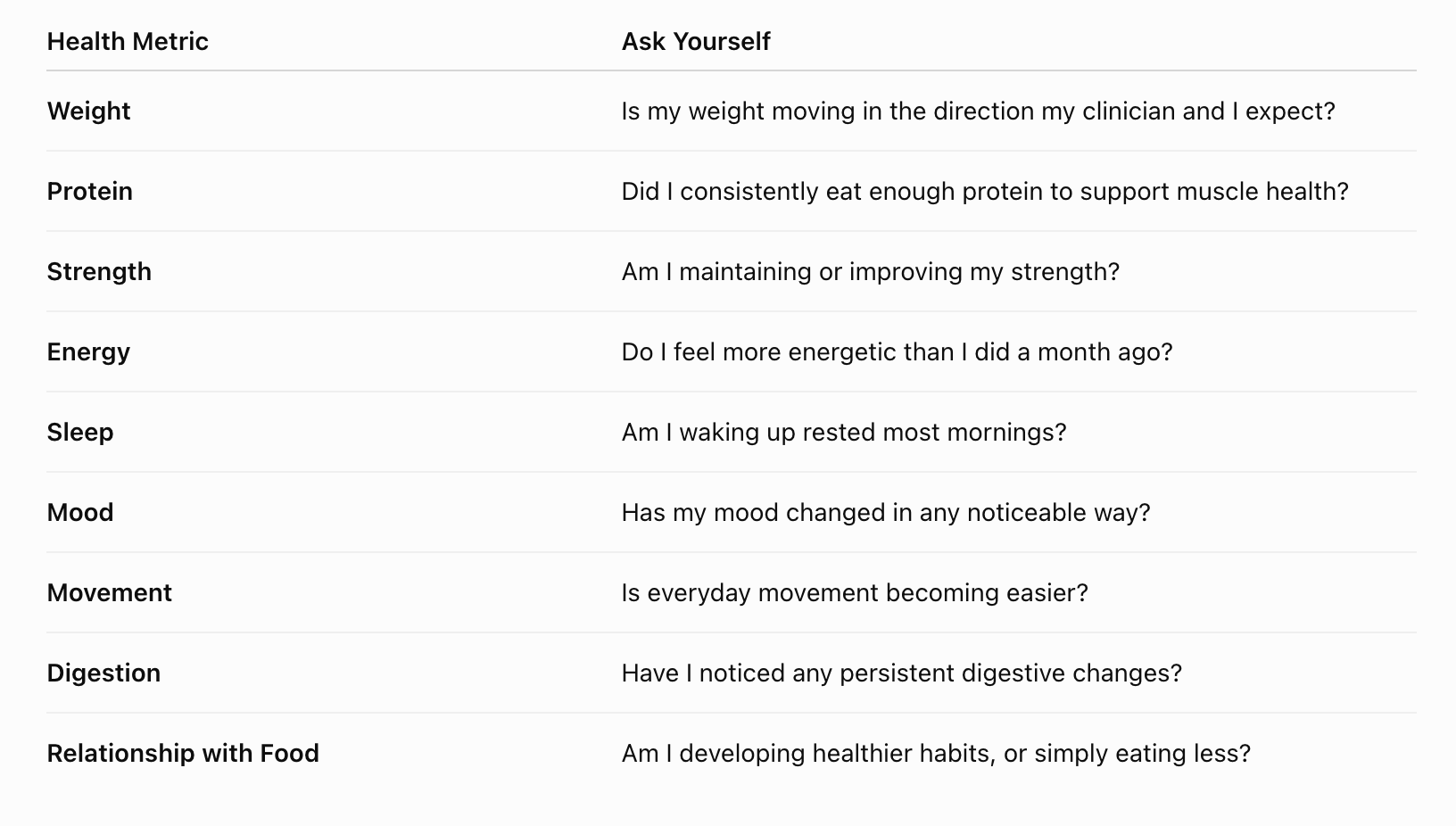
Notice something interesting.
Weight is only one row in the table.
That’s exactly where it belongs.
GLP-1 medications are changing what’s possible in obesity care. For many people, they’re opening a door that had remained stubbornly closed despite years of effort. That deserves recognition.
But perhaps the bigger opportunity is this: they invite us to rethink what success actually looks like.
If, a year from now, you’ve lost weight but also become stronger, you’re sleeping better, your blood sugar has improved, your relationship with food feels healthier, and you have more energy to live the life you want—that’s a success story worth celebrating.
Because the goal was never simply to become lighter.
The goal was to become healthier.
And your body has been measuring that all along—even when your scale couldn’t.
American Diabetes Association. Standards of Care in Diabetes.
Wilding JPH et al. Once-Weekly Semaglutide in Adults with Overweight or Obesity (STEP 1). New England Journal of Medicine (2021).
Jastreboff AM et al. Tirzepatide Once Weekly for the Treatment of Obesity (SURMOUNT-1). New England Journal of Medicine (2022).
Journal of Cachexia, Sarcopenia and Muscle: Reviews on lean mass changes during GLP-1-associated weight loss.
American College of Sports Medicine. Position stands on resistance training and healthy weight loss.
European Association for the Study of Obesity (EASO). Clinical guidance on comprehensive obesity management.
Comments
Nothing yet. Say the first thing.
Sign in to join the conversation.