
Hi Readers,
I didn’t mean for August to be a wardrobe edit focus but that seems to be the unplanned theme for the month!
It actually makes sense given that we are starting to transition slowly from Summer into Fall and you may be doing a bit of a closet cleanse as you rotate out seasonal pieces.
In case you want to catch up:
After spending a lot of time in clients’ closets, I start to see themes on what I call “wardrobe blindspots” — the recurring patterns that are like a hidden gap that can be hard to see when you are in the driver’s seat.
It’s like having tunnel vision. You are opening up the same wardrobe everyday, seeing the same clothes, wearing the same outfits on autopilot, shopping for the same things etc.
And it’s one of my favorite things to help uncover for clients because it helps them come to an “A-ha!” moment.
And once you see it, you can’t unsee it, and that is the type of tangible clarity that actually helps move the needle for you in terms of what you buy and how you get dressed.
I write about my top 10 wardrobe blindspots here.

There’s so many ways these blindspots come to life when it comes to an idea I call “Depth vs Breadth”.
Read more about this framework here but in a nutshell:
Depth = provides variety within a single type of product
Breadth = provides variety across a range of products
In my past life designing and building apparel collections, if we wanted consumers to continue to buy from our brands, we needed to iterate on our best sellers and what was working. The risk was that if we leaned too far into this “expand on our best sellers” strategy (depth), our clients could get bored with our limited offering as things would start to look and feel the same. However, if we tried to offer too much newness (breadth) and differentiate from our brand DNA (ie: trends vs our authentic style), we risked the potential to confuse our clients and lose sales.
The same concept applies to our closets. We want to expand on our “best sellers”, or continue to buy things that we love but not to the point that it leads to more of the same and boredom. And we want to inject breadth in a way that feels strategic and still feels true to who we are so we aren’t buying impulsively or confusing ourselves when we try to get dressed.
The easiest way to identify where you have too much of depth (ie: too much of one thing) is to spot where you have multiples of the same item:
a favorite sweater in three different stripes
a go-to pant in a handful of colors
the same tank style in a range of solids
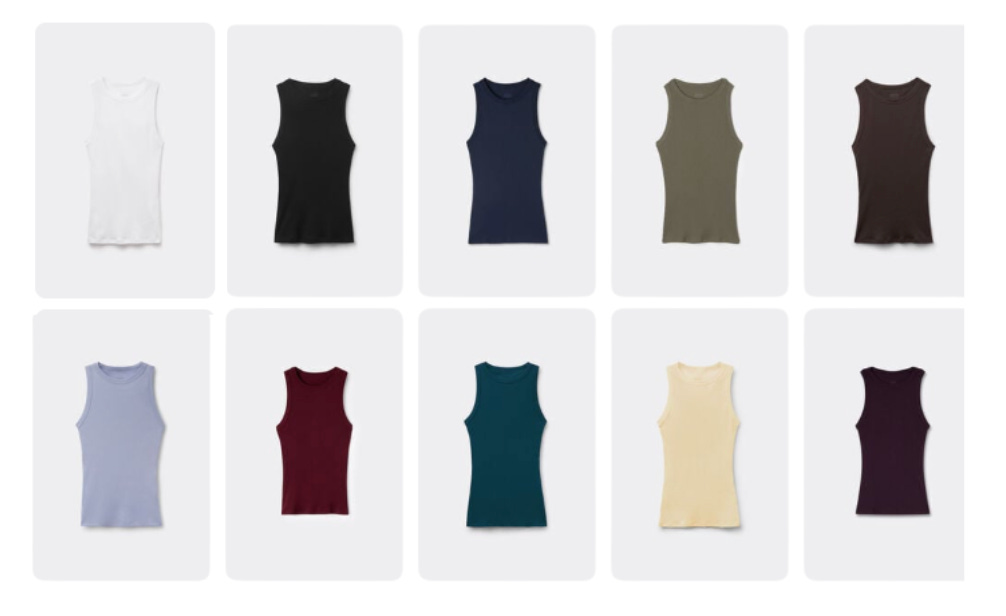
Taking the high neck tank example —
There’s nothing wrong with a high neck tank. It has great coverage, you can wear a normal bra with it, it’s a great everyday basic.
If you are someone who prefers a high neck like this and find that it’s the only silhouette that works really well for you, then all good!! I’m not saying to not wear them!
BUT if you are like my clients who owned one and have now just somehow acquired these by the handful and it’s the only tank you have in your closet, keep reading :)
The problem isn’t that you own too many of these (I mean, if I were doing a session with you, I’d say to edit to the colors you reach for the most!). It’s that if it’s the only type of tank you own, it has to pull all the levers for your lifestyle.
Taking my casual-to-dressy format and using very basic styling so you can just focus on the tank:
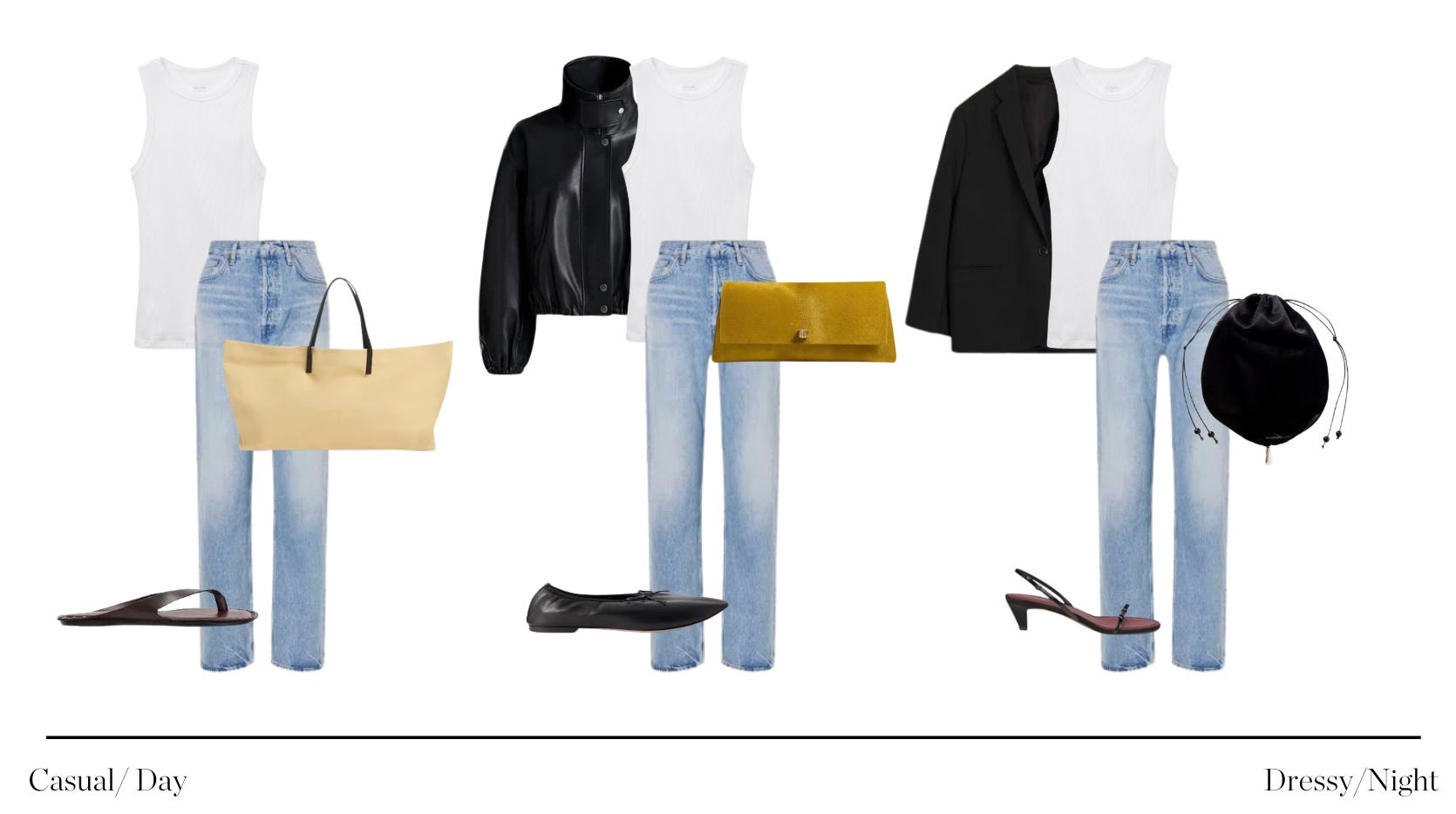
We’re going to keep the high neck tank for your everyday but also introduce a different neckline and a different fabrication.
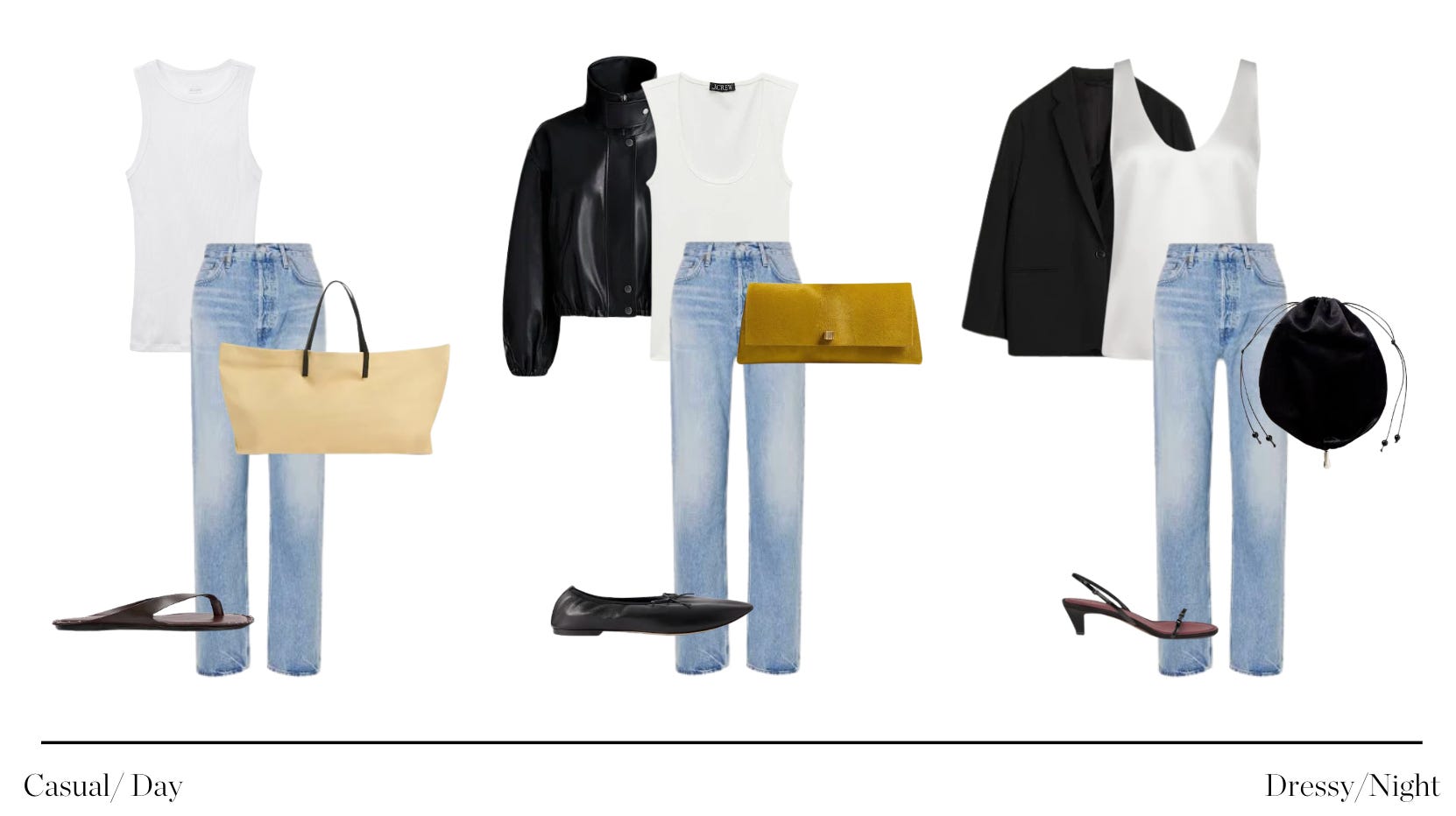
So if you have too much of the same thing, think about expanding your breadth before buying another iteration of the same so you have different levers available to reflect how you actually want to get dressed for different activities going on in your life.
Here are some other client examples focused on specific types of clothing I commonly see.
I love these examples as they’ve brought a lot of clarity for my clients so I hope they can help you as well if you are trying to troubleshoot within your own wardrobes.
This can also be a really helpful insight before you start buying for Fall because clarity is the best shopping companion you can have!
You all know how much I love a white tee so let’s use it for this example.
I own many white tees but the key difference is that I know what each tee does for me in my wardrobe. Each one creates a different point-of-view.
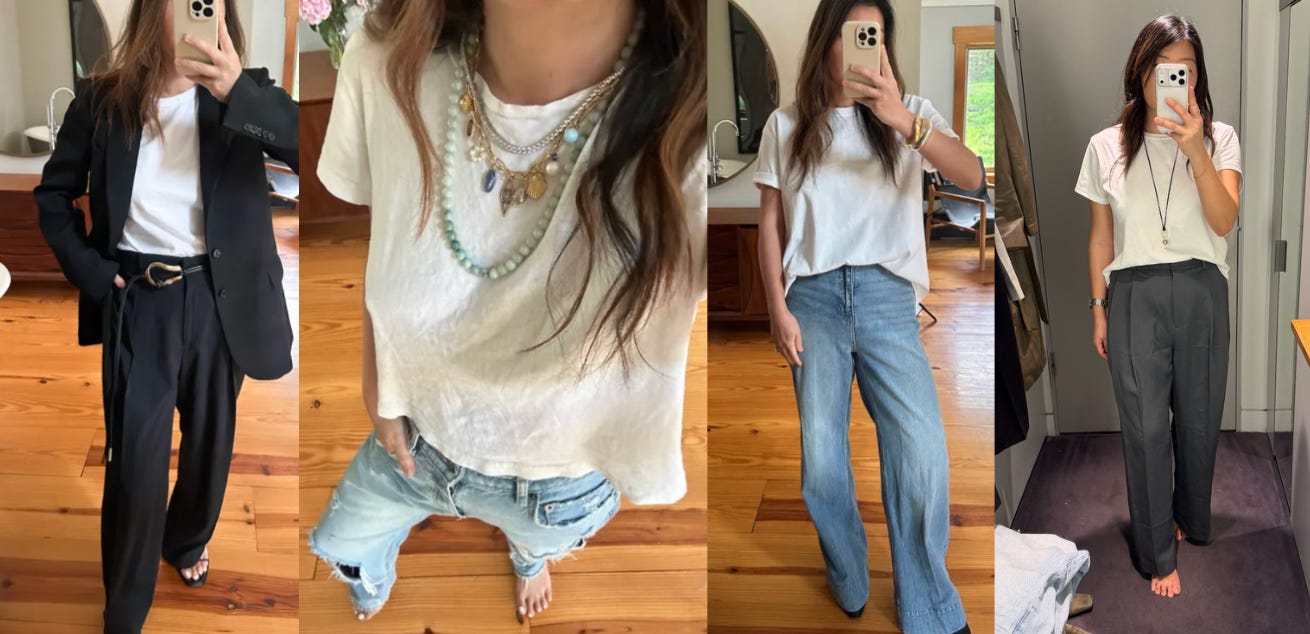
When I work with my clients, we usually edit things out that either lack a point-of-view within the design (I’m looking at you, shapeless neckline) or that don’t have a strong reason for being. Or, they have one version that they love but the rest are “just ok”.
It usually comes down to the fact that they are almost right…
I like the sleeves but it’s not the right length.
I like the fit but the fabric doesn’t feel good.
I like everything but how the neck fits.
I don’t really care how much you own as long as you have a point-of-view around those pieces and a reason for being. Meaning, you know how you want to wear them and in what situations they come in handy.
And that point-of-view only has to make sense to you, no one else.
Own with conviction!!
I have a fun repeat client who is based in London and we just get together for Office Hours sessions where we audit her wardrobe for the season, review new purchases, and style pieces she already owns.
When I asked what she wore recently that she felt really good in, it was: a tuxedo shirt, black denim, a slingback, and a Sophie Buhai pouch she got after our last session.
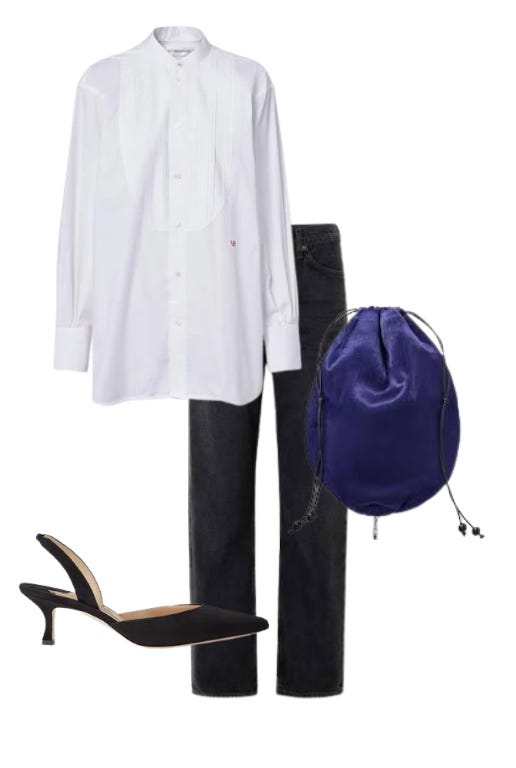
That’s enough of a visual to tell me how she wants to feel and be seen in her clothes and that really helps guide me as I help edit and style her wardrobe.
In that same session, these were some of the pieces we edited out:
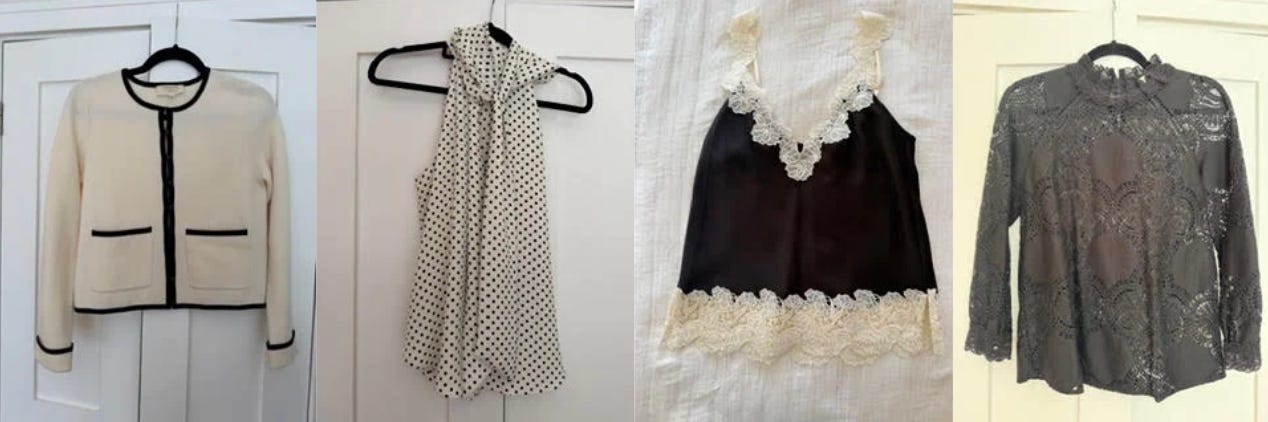
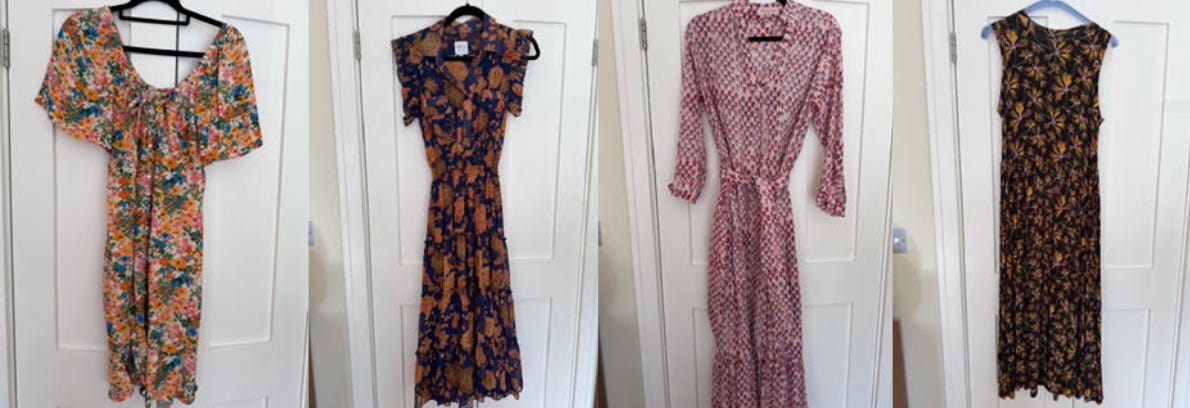
As she showed me pieces, she shared this feeling of “It’s so nice but I don’t know why I never wear it!”
Individually, there’s nothing wrong with the pieces but through the editing process, we uncovered a consistent pattern: She doesn’t like overly romantic or feminine pieces.
In the tuxedo shirt outfit, there’s hints of femininity (the silk pouch, the sexy kitten heel, the slim jean). In these pieces that we were reviewing, the femininity was very on-the-nose with the lace and crochet.
Or the pieces felt too proper in a way, such as the white and black lady cardigan or the silk halter, which in a solid would have been fine, but in a polka dot felt too ladylike.
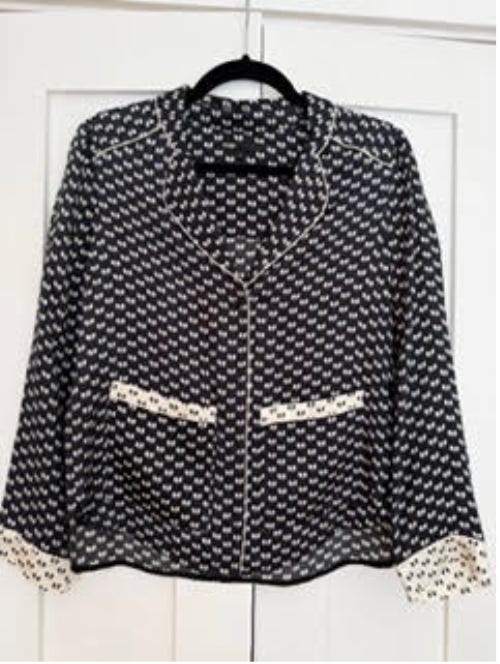
And in talking through the edit pile, these purchases were a result of having lived in London for a long time. They were more a reflection of her surroundings (what the women at her children’s school were wearing, what her husband’s work peers and wives were wearing, what the local stores were carrying) vs a reflection of what she felt like herself in.
And that’s the thing — context matters but only in relation to yourself and how you want to feel.
Some items that were swapped out and you can see, it’s a completely different vibe than what we edited out. That “letting go” process can make room for things that feel more authentically you.
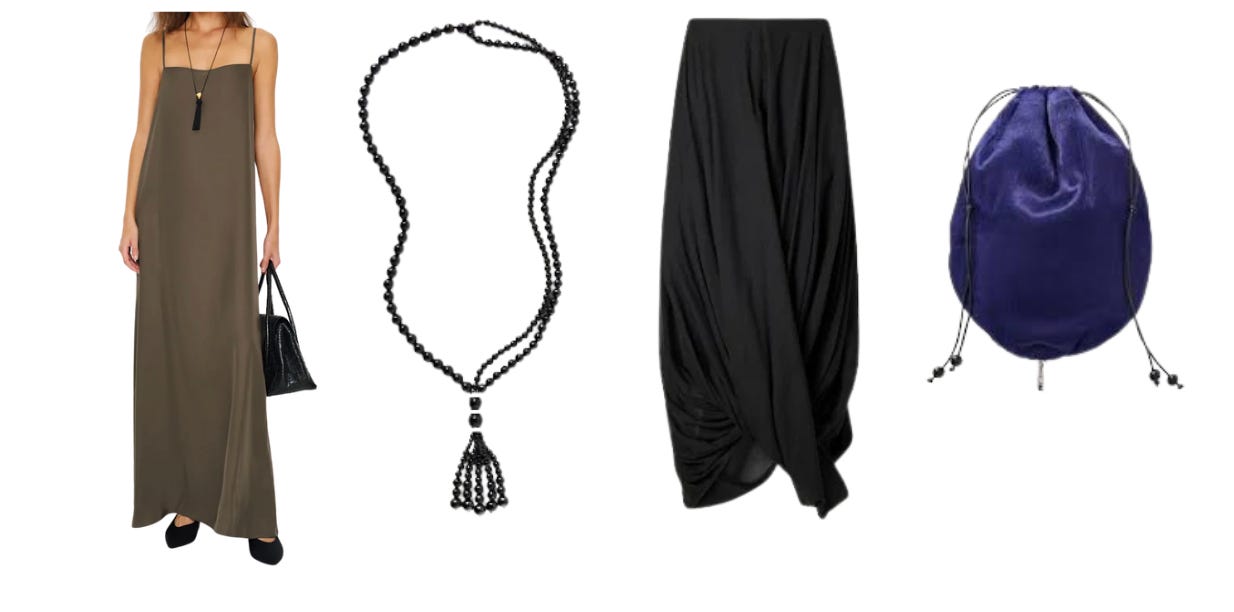

This example of dressing to fit into your environment while staying true to yourself always brings up two specific visuals in my mind:
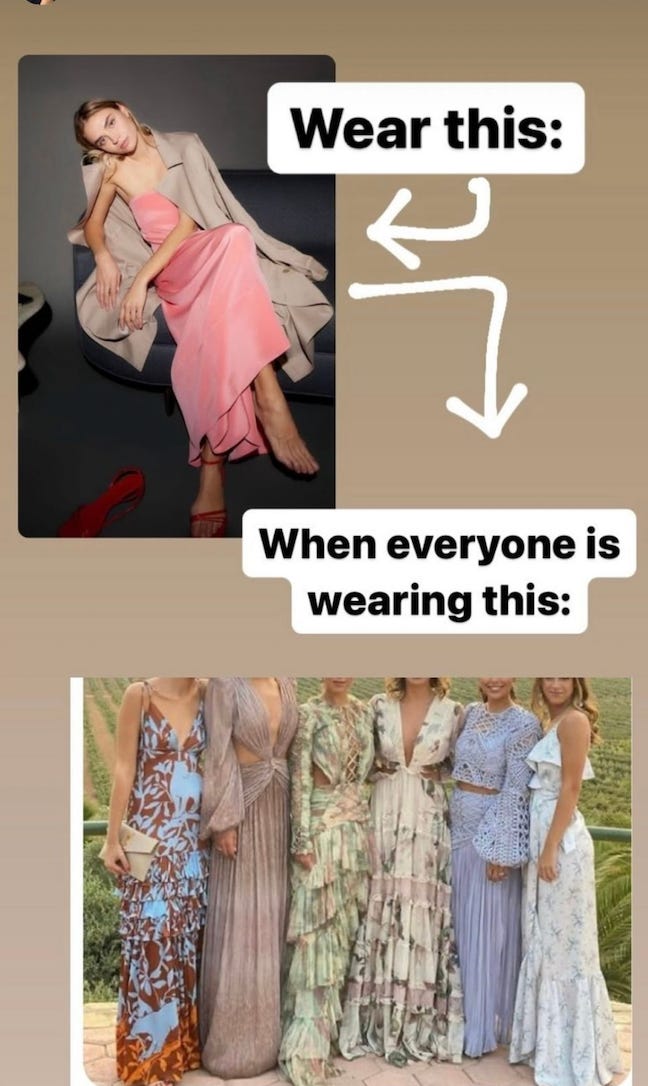
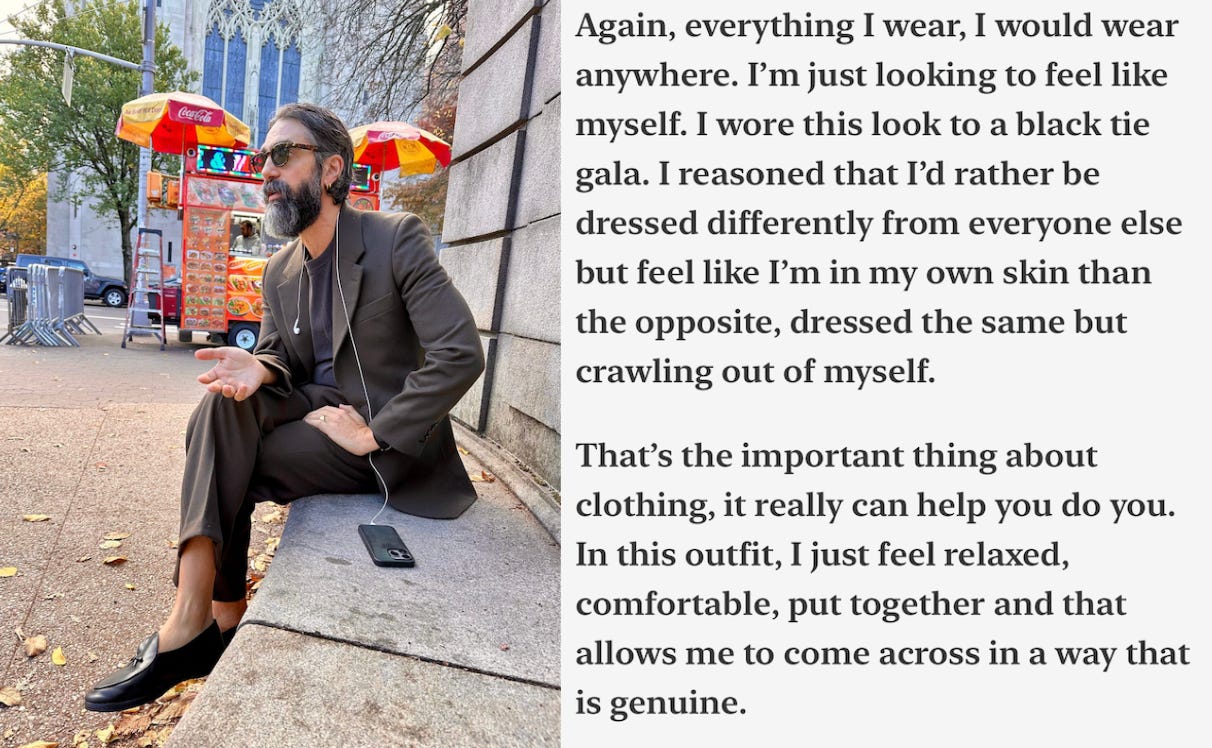
It’s totally normal to adopt certain styles or ideas based on your surroundings but it’s also ok to dress in a way that doesn’t fit the norm of everyone around you!
Below the paywall, more blindspot examples from real client wardrobes:
prioritizing the brand before the fit
the trouble that comes with owning too much of one kind of pant
having breadth but it lacks variety
bread(th) without the butter that holds it all together!
Comments
Nothing yet. Say the first thing.
Sign in to join the conversation.