

It’s summertime, and at The Foresight Lab, that means slowing down, resetting, and recharging for the year ahead. While we are always learning through experimentation with new methodologies, unpacking the implications of future drivers, and scanning for emerging signals, summer gives us the intentional space to step back from our usual routines and explore new perspectives and ways of thinking.
Here are 5 books our team recommends checking out this summer:
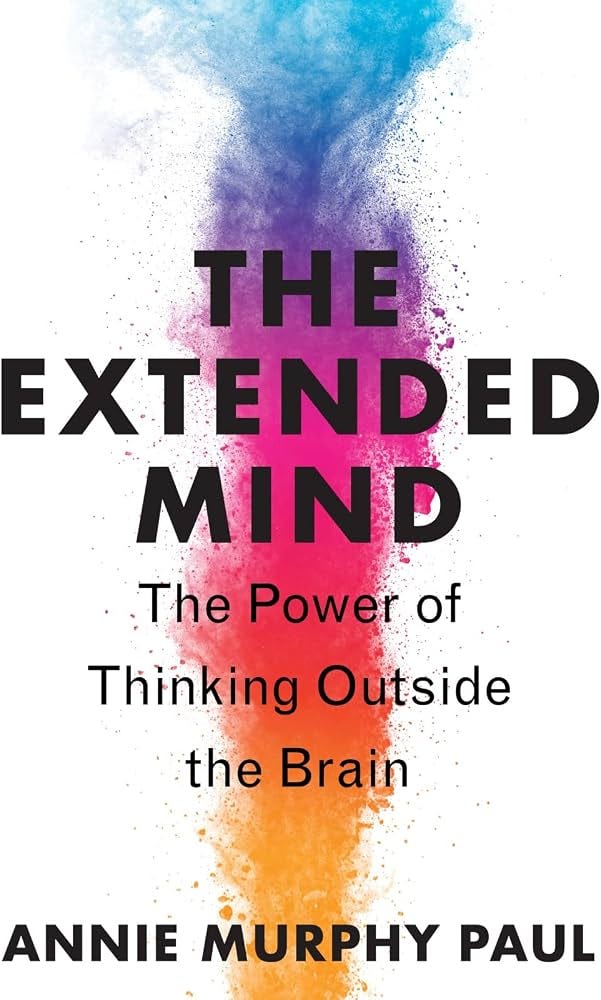
By Annie Murphy Paul
If you read enough books on innovation and business leadership, recurring themes are inevitable, and eventually you need a fresh perspective to truly “think outside the box.” The Extended Mind provides that refresh by presenting practical, attainable, and science-backed ways to better leverage the creative potential of the human brain. It argues that many modern approaches to education and professional development actually overtax and limit our thinking. Blending neuroscience, business strategy, and practical examples, the book brings familiar ideas, like moving while thinking or reducing environmental stimulation, to life by explaining the science behind them. I often found myself taking breaks between chapters to process and unpack the ideas, something I do not normally experience with business books. Its ideas are organized into three useful sections: thinking with our bodies through movement, with our surroundings through environment, and with others through collaboration. These principles are broadly applicable, whether you are leading a team or simply expanding your own innovation toolkit. - Aaron Bradley, Director of The Foresight Lab
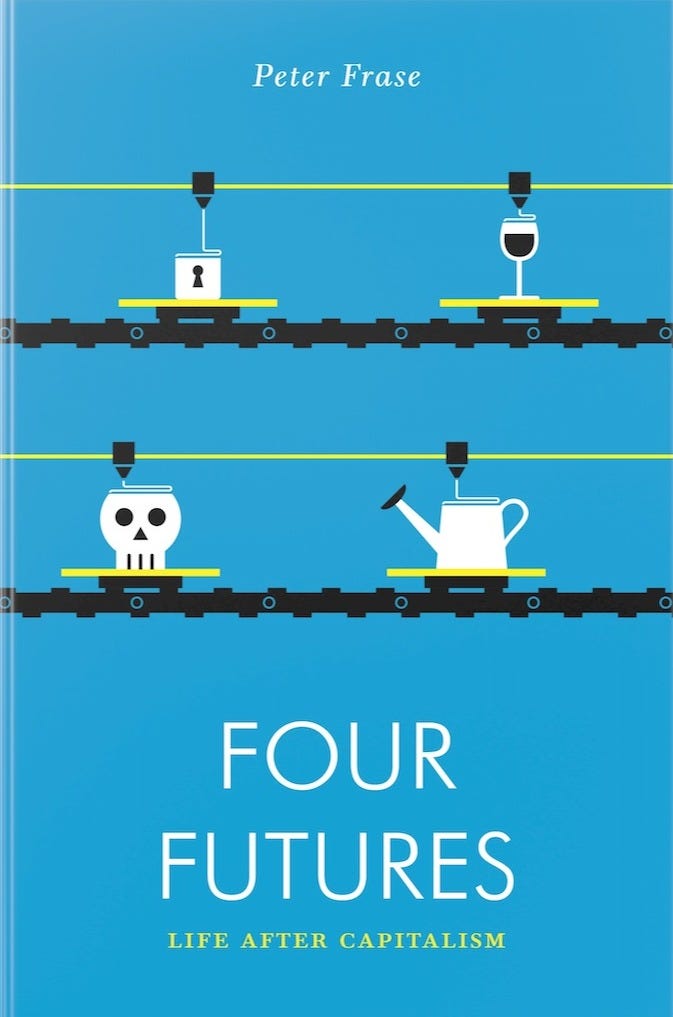
Four Futures: Life After Capitalism
By: Peter Frase
Published in 2016, this book seems to have only become more pointed with time. Its premise focuses on two pressures that could collapse capitalism: the rise of automation and the growing scarcity of natural resources. Frase develops four future-based scenarios for what could come after capitalism: communism, socialism, rentism, and exterminism (yes, quite dystopian - I know). In each scenario, he uses historical and science fiction examples to make the future feel concrete, exploring what daily life might look like, how the economy would be structured, and what trade-offs each system could create. While throughout the book Frase claims to not be a Futurist, he’s extremely effective at envisioning thought-provoking, speculative, and evidence-based futures. I would recommend this to anyone interested in political futures, socioeconomic change, or scenario thinking. - Max Kemats, Research Fellow
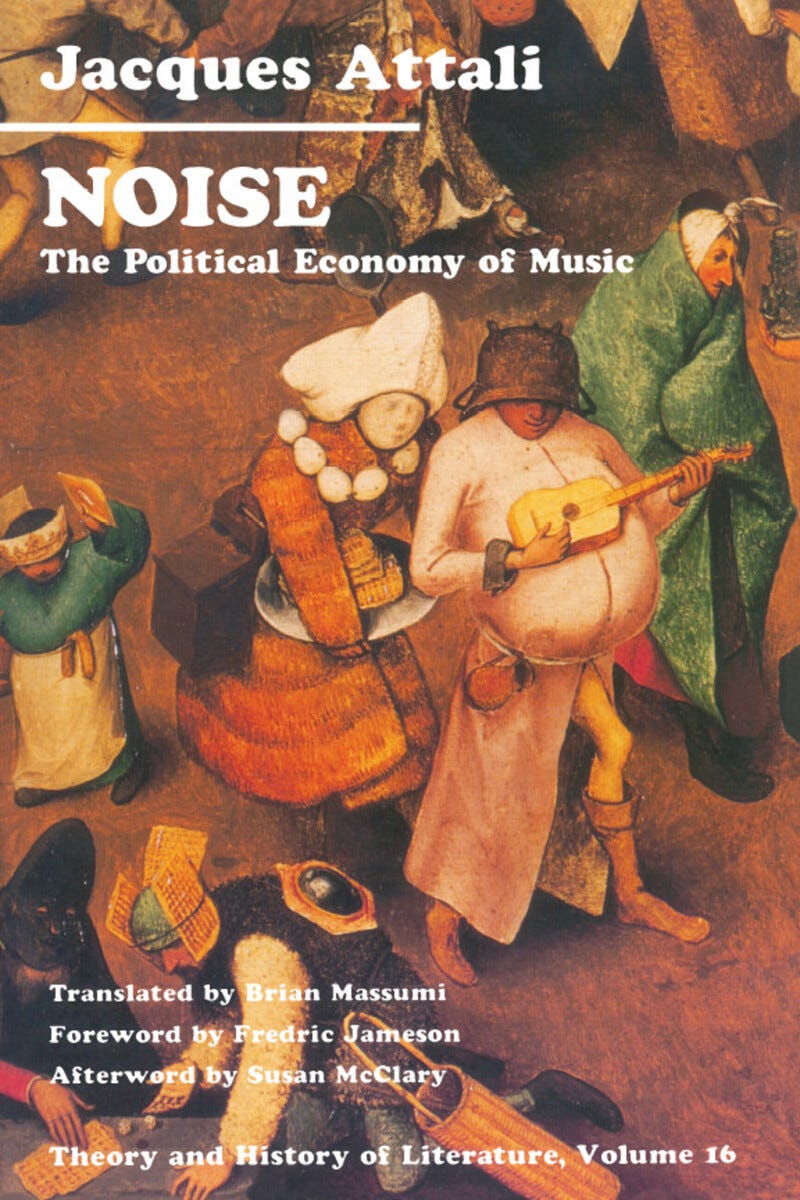
Noise: The Political Economy of Music
By: Jacques Attali
Attali is a French economist who argues that music acts as a predictive force for social, political, and economic changes. "Noise" breaks this argument down into 4 parts: Sacrificing, Representing, Repeating, and Composition, and ties each to major eras in human history. The argument ends with an analysis of the state of music in the modern era (well, the 70's, which is relatively modern when we think about music's lifespan), and Attali's predictions as to the future of music, and by extension, the future of society. It's a fascinating "look" at the world through an auditory lens, rather than a visual one, and you'll probably never hear music the same way again. I'll let Attali himself sum it up, with a predication that's ringing very true in 2026: “People will continue to pay a very high price for concerts, but they will not pay anything, anymore, for records. The real thing that people will pay for is time. [I] warned against what I termed “ethnomodernity”—a resurgence of nationalism, both in music and in politics, that would impede the progress of globalization—and likewise cautioned against a “retromodernity” born out of nostalgia for times past."- Sophia Lammi, Senior Leader

Hyperpolitics
By: Anton Jäger
Hyperpolitics denotes what Jager describes as a polity which has harsh feelings, sharp opinions, and a strong tendency to take action on political matters, but which has no civil society to make any of its actions stick. Jager develops an account of the past 40-some years of Western political history in an attempt to explain, in his words, “a restless, unsteady public sphere where private passions overflow into politics but rarely build enduring power.” Hyperpolitics is an excellent read for two reasons: it brings into sharper relief a reality that we all feel around us, and it leaves plenty unsaid. While Jager’s descriptions undoubtedly provide some backing to a common anxiety and atomization that it seems everyone feels in common, it is also at odds with some of our past futures research. Namely, it seems that we’ve lived in a ultra-individualized, super-ultra-polarized society for so long that we are all acutely aware of it, and there are the beginnings of what may be efforts to directly counteract this (e.g. phoneless nightlife, tons of online political self-education by young people, community lectures, etc.). Jager’s book brings a prescient question into new vocabulary: Is hyperpolitics here to stay, or can we fight our way out of it? - Reid Bradley, Researcher
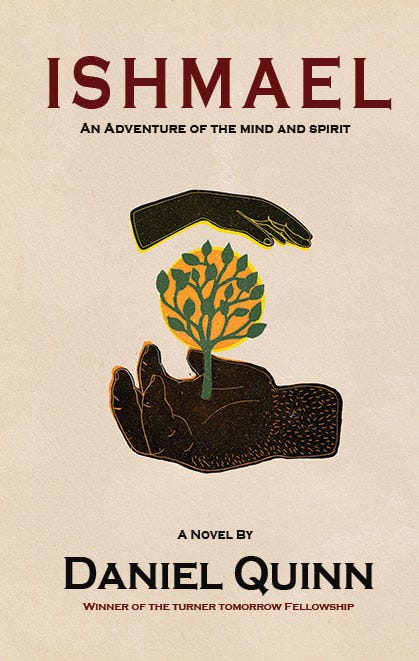
Ishmael
By: Daniel Quinn
Published in 1992, this book questions the very origins of our culture and has become increasingly relevant. Through the conversations between a human student and a gorilla teacher, this book takes you on a journey through how our culture formed. Throughout that story, you will find the apparent growing pains of our current system as humanity only continues to increase its scale. It questions the root of human civilization, and by the end you will be left thinking that surely there is a better way. For those looking for a philosophical critque of society as a whole that will stick with you, this book is for you. As we look to the future, a “post mortem” on our system of civilization to date is perfect fuel for discussion of what’s next. - Joshua Bryant, Leader
We want to hear from you! What’s a book you’d recommend reading this summer? Drop it in the comments below.
Comments
Nothing yet. Say the first thing.
Sign in to join the conversation.