
One quiet spring night in 1983, Maria da Penha Maia Fernandes woke up to the sound of a gunshot. She soon realized, horrified, that she couldn’t move. Her husband, Marco, had shot her in the back while she slept.
As Maria’s blood soaked the mattress, neighbors rushed to the home. Marco said that four intruders had entered the house, tied him up and shot Maria.1 But Maria knew the truth. She and her children had suffered years of verbal, emotional and physical abuse, with nowhere to go or any law to protect them. She said, “At that time, we weren’t even aware of this expression - domestic violence. You just had a bad husband.”2 When Maria’s husband tried to kill her, there were no specialized police units to deal with domestic abuse, women did not have equal legal protection in the Brazilian constitution, and things like restraining orders didn’t even exist.
I sent this story as a pitch to a handful of publications last month and was ghosted/rejected by every one of them (I’m really perfecting the rejection part of being a writer!!!). So here it is, just for you! A garbage story that apparently nobody wants, but everyone needs to hear about anyway <3
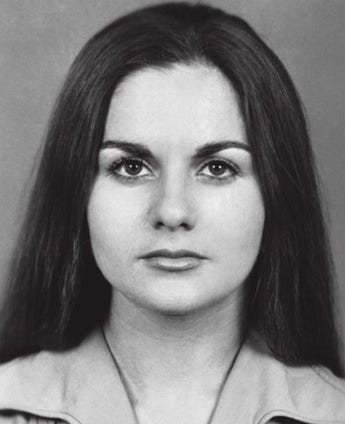
Maria, a pharmacist, married Colombian teacher Marco in 1976. When his Brazilian green card was issued, he dropped his act and began to show his true abusive colors. For seven years, he physically and emotionally abused Maria and their three young children.
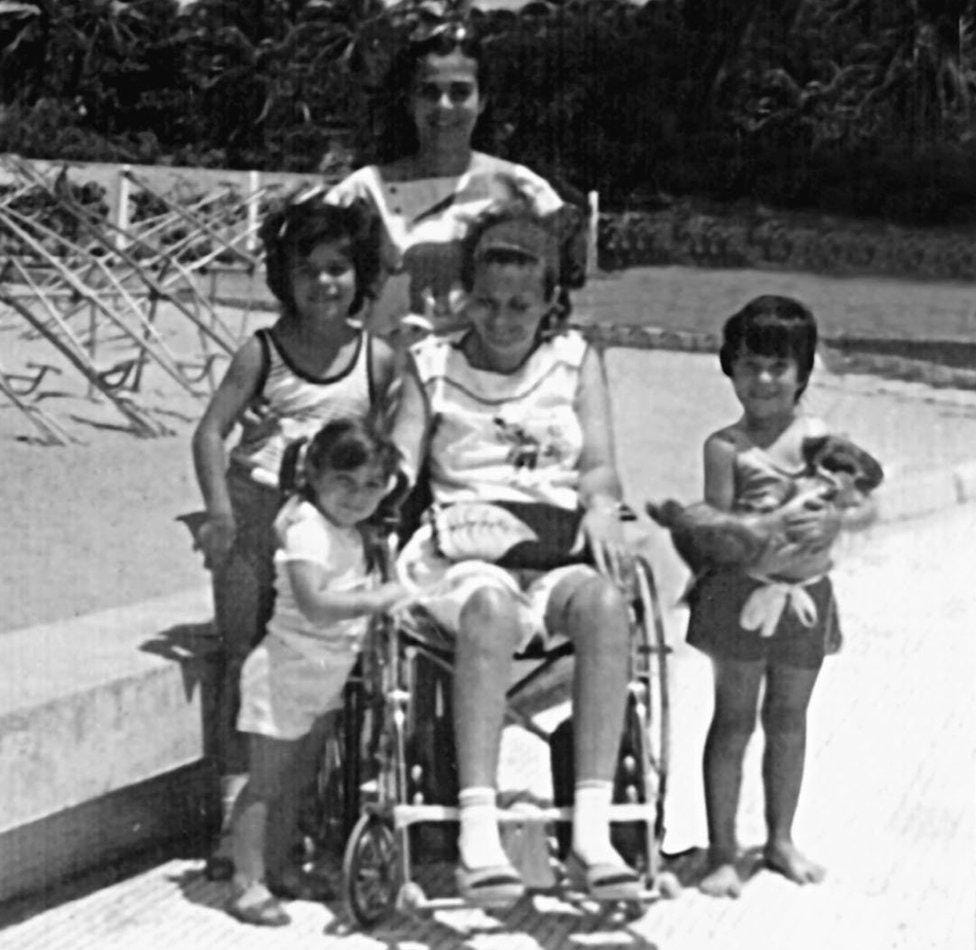
Maria survived the 1983 murder attempt, but the bullet lodged in her spine paralyzed her from the waist down. She had no one to turn to and no chance of legal repercussions, so she returned home with her husband. Marco cut her off from friends and family and forced her into house arrest. Two weeks later, he attempted to electrocute her while she showered. Luckily, he was just as bad a murderer as he was a husband. Maria survived and left for good.
Maria spent almost two decades fighting for her husband to be jailed and for custody of her children. He was found guilty twice but walked free both times. Finally, in 2002, he was sentenced to eight years in jail. He was released after one year. During this time, Maria campaigned for drastic changes in Brazilian law. She “submitted a petition before the Inter-American Commission on Human Rights claiming that the State had “condoned [her] situation” for more than 15 years by failing to prosecute her husband.”3 Her case, in conjunction with the work of numerous NGOs, feminist advocates and legislators, contributed to the creation of Brazil’s first domestic violence legislation: the Maria da Penha Law.
The Maria da Penha Law is considered one of “the most comprehensive legislative packages to confront domestic violence against women in the world.”4 It recognizes and defines different forms of violence, such as psychological, moral, sexual and physical violence. It defines punishments while creating support for victims, such as specific police precincts created to provide access to justice for women in hostile situations. Processes such as restraining orders were put in place, as well as certain measures that allowed women to flee with custody of their children. The Law created special courts, special public defenders, reference centers for women, battered women’s shelters, and health services specifically for victims of violence.
Brazil needs this. “According to a 2025 survey by the FBSP, 40.7% of Brazilian women aged 16 and over say they have suffered physical, sexual, and/or psychological violence in their lifetime from a partner or ex-partner. Approximately 60% of these cases reported in the last 12 months occurred at the victim’s home.”5 Brazil also has some of the highest global rates for femicide (the murder of a woman because of her gender), with 1,410 victims in 2022 – one woman murdered every 6 hours.6
It’s been 20 years since the law went into effect. Has it worked? Sort of.
(If someone wants to pay me, I’d love to go into this more.) But overall, studies have shown that though the Law has helped some women, domestic violence and gender-based violence have only increased, especially in rural areas. The law has increased awareness, brought legal justice, and provided resources for struggling women. But as is the classic path of well-meaning legislation, a lack of funds, manpower, organization, and deep-rooted cultural practices limits what the law can really do. And women are still getting shot in their backs.
 poses with women's rights activist Maria da Penha during the launch of the "Woman: Living without Violence" program at the Planalto Palace in Brasilia March 13, 2013. The program seeks to prevent violence against women through educational campaigns. Maria da Penha, who fought for 20 years to see her assailant arrested, has a law named in her honor for victims of domestic violence against women.")
While doing field research for my master’s thesis in São Paulo in 2022, I asked Brazilian women about Maria da Penha. I was surprised how much these women knew about it, and how little they trusted it.
Every single one of my interview participants talked about the abuse women face in Brazil. One woman talked about her anxiety about riding on public transport because of the high chance she would be molested and touched by men there. Two of the women, Gisele and TomBrady (names have been changed), understood Maria da Pena as simply a restraining order: when a man beats a woman- any woman (his mother, girlfriend, wife, child, random woman) the woman could sue and the man has to stay a certain distance away. “But in fact,” TomBrady said, “it only works on paper because we see many more women dying.”
Many of the women I spoke with acknowledge the law’s existence but believe that some of its components (such as the restraining order) are ineffective in practice. For example, the abuser can still come back and kill the woman, with or without a restraining order. Gisele explained: “So, the woman already has a restraining order. [The abuser] can no longer approach her, for example. But he breaks the rule and kills her anyway. So, it is a very weak structure that does not protect women. It protects nothing because when a woman reports abuse, she has to turn her life upside down. She has to disappear from the map as if she were a criminal. And it doesn’t have to be that way….the person has to be arrested and pay for what he is doing.”
Madonna is an ambulance worker in a very urban part of São Paulo, where she often sees the effects of violence on women and their families. She adds to this idea that women are made to believe that they are deserving or culpable for the violence they face. “I see that women suffer a lot from men thinking they own them, and sometimes the men [abuse them] in a way that the women feel like they are doing something wrong, and it makes the woman feel guilty about it…sometimes they are there, badly bruised, their children are watching, mentally hurt, emotionally hurt, and everyone is crying. We pick her up and take this woman to the hospital. She goes, and the police go to the hospital and take the complaint. I’ve seen enough cases. I saw cases of women being assaulted, and they would go on until the end of the process. They say I don’t want more of this man. And she gets all the resources she needs. But I’ve seen many also leave the hospital hand in hand with their aggressor.”
Madonna emphasized the importance of breaking the cycle of violence. She said that mothers need to show their children that, even if they live in a certain situation, their children should still have expectations for better things. Gisele expressed a similar sentiment, using her mother as an example. She said she witnessed her father beat her mother, and even though she loved him, he did not “become a saint” after passing away. She described in detail stepping between her parents after her dad stabbed her mother with a screwdriver. “I saw things happen with my mother, so much so that I always talked to myself. I don’t want these things to happen to me. I won’t let it; I won’t allow it to happen to me.” Gisele explained that once she found a new church to go to, she realized she could marry someone who wouldn’t beat or threaten her. It gave her hope that she could have a better, safer life than her mother did.
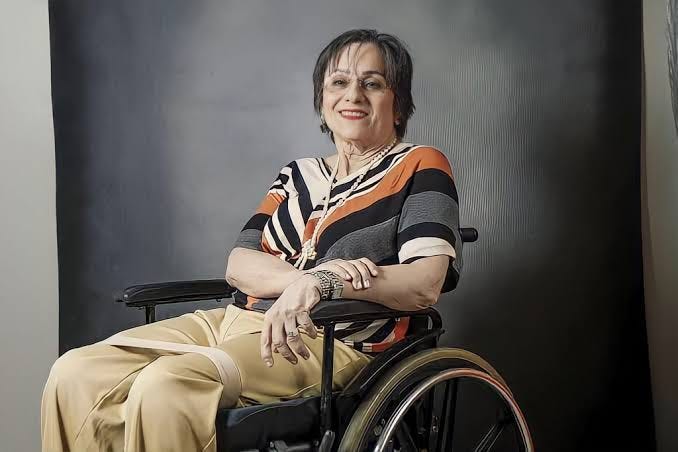
Maria da Penha is now 81 years old, still advocating for women’s rights in Brazil from her wheelchair. She never wanted to be an activist. She also probably never wanted to be shot in her sleep. But she took her pain and personal injustice and turned it into something good. She said: “Nowadays, women are coming forward, but the violence continues…Many women tell me that they would be dead without the law. But there is still a long way to go. No woman deserves to be suffering like that.”7
https://www.bbc.com/news/magazine-37429051
https://www.bbc.com/news/magazine-37429051
Sardenberg, C. M. B. (2016). Ten years of Maria da Penha Law: Advancements and shortcomings in confronting gender based violence against women in Brazil. Http://Www.Feminismos.Neim.Ufba.Br/Index.Php/Revista/Article/ViewFile/394/201. https://repositorio.ufba.br/handle/ri/28466
https://www.bbc.com/news/magazine-37429051
No posts
Comments
Nothing yet. Say the first thing.
Sign in to join the conversation.