
If you read my Substack, I bet you love Jon Haidt. I do too. I’m so grateful for the work he’s done to bring attention to the ways that screens and social media are hurting kids. But despite my sincere gratitude for all that Haidt has done, I think he’s missing an easy opportunity to have an even bigger impact.
Maybe this sounds like I’m expecting too much. Haidt has done more than anyone to change how we think about kids and phones. His book The Anxious Generation has been on the New York Times bestseller list for more than 85 weeks. Since its publication, 40 states have enacted or advanced phone-free school legislation. And in a move directly inspired by the book, Australia set an age minimum that prevents anyone under the age of 16 from entering into contracts with tech platforms.
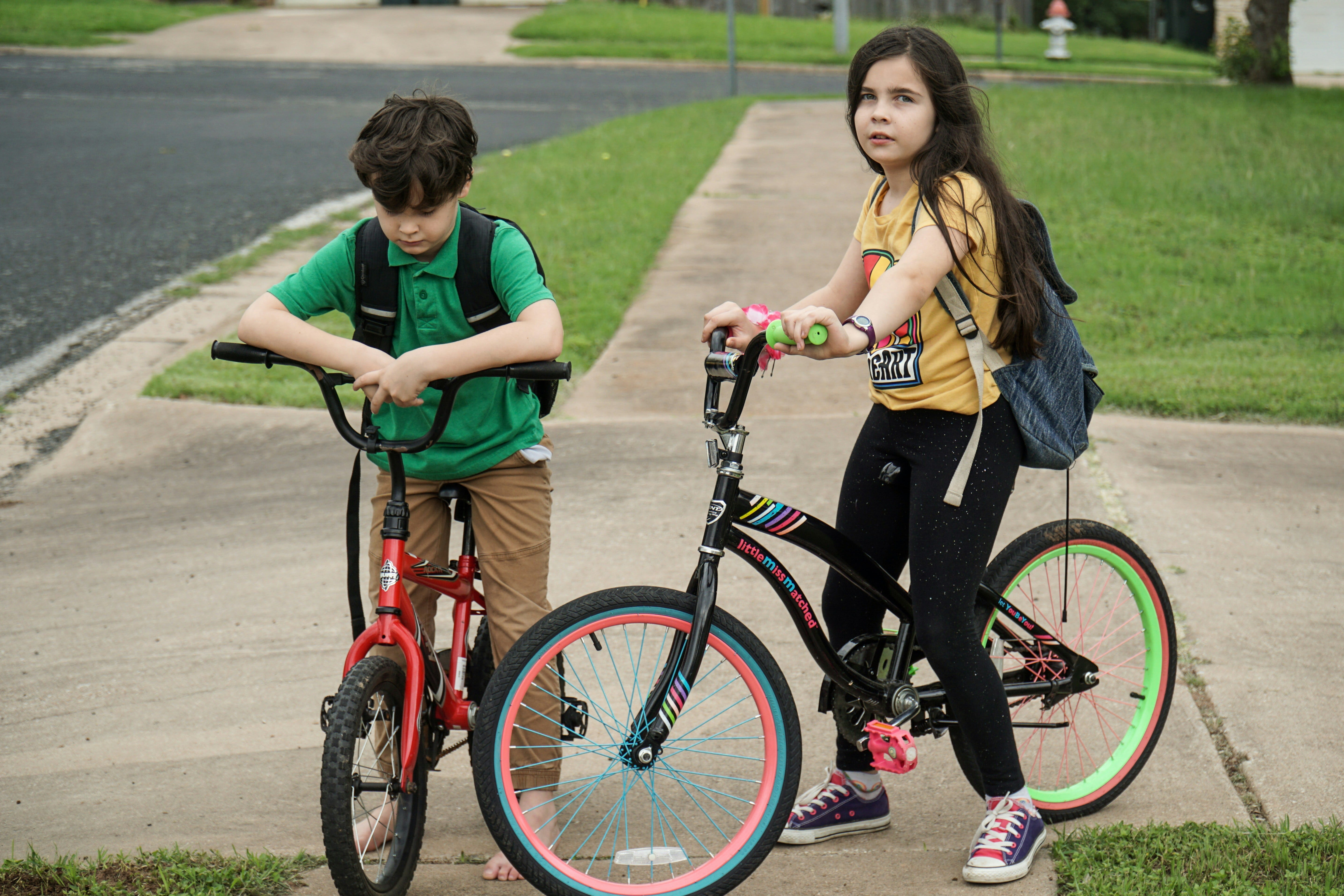
But as impressive as these wins are, they only reflect the first half of Haidt’s vision: getting kids off phones and social media. The second half is to restore a “real world childhood”, one that revolves around free play, independence, and responsibility. Even though this second half is arguably more important, we’ve made little progress on it. Parents want to let their kids sleep over their friend’s houses, but they’ve never seen the inside of those friends’ houses. They want to let their kids bike around the neighborhood with friends, but all the other parents enroll their kids in afterschool programs, and they don’t have a forum to engage with other families about how to change that. They want to give their kids a real world childhood, but they have few real world connections with other parents.
I think there’s a specific, concrete demand Haidt could be making that would go a long way towards changing this. It’s just as clear and actionable as banning phones, but easier to implement, and with a potentially bigger impact: Require schools to provide parent directories.
Why parent directories? They’re basic community infrastructure—the on-ramp to carpools, dinners, and the trust that allows for real-world childhood independence. Schools, as one of our last universal social structures, are in the best position to provide them (and the lack of a directory makes grassroots organizing to get one almost impossible). Directories used to be standard, but today the vast majority of schools no longer provide them. The reasons for this are complicated, but mostly boil down to schools being afraid of blowback from the small contingent of parents who prioritize privacy over everyone else’s need for community.
A similar dynamic prevented schools from implementing common sense restrictions on phones for far too long: they were afraid of the reactions of the minority of parents who wanted to be able to reach their kids at all times. But The Anxious Generation finally changed that. And one of the things that made the book so successful was Haidt’s willingness to draw a clear line in the sand around what we expected from both individual parents and institutions. His “Four New Norms” didn’t say “families should figure out limits that work for them” or “schools should use reasonable judgment in their phone policies.” They said:
No smartphones before high school
No social media before 16
Phone-free schools
But the fourth norm—“More independence, free play, and responsibility in the real world”—lacks the clarity and specificity of the first three. Where’s the line in the sand, the specific change we should be calling for about how to actually achieve this?
Haidt would point to his partnership with Lenore Skenazy, whose work focuses on pushing back against excessive risk aversion among parents. Her organization, Let Grow, provides resources for parents and schools that want to foster more childhood independence by encouraging kids to take public transit, cook a meal, or ride bikes through the neighborhood on their own. These are all wonderful suggestions, and I’ve implemented many of them with my three girls. But they don’t address the deeper reason why childhood independence has decreased so much in the first place: the decline of parent community. A real-world childhood isn’t something you can just unilaterally decide to give your children. Like many parenting decisions—including screens!—it’s contingent on the larger cultural norms of your parenting environment. Parents don’t feel comfortable sending kids out for unsupervised play unless they live in a community with trust and strong collective norms around cooperation.
Haidt agrees with this diagnosis; he’s published on his Substack that the primary upstream cause of the youth mental health crisis isn’t phones or helicopter parenting, but the loss of community. But Let Grow doesn’t directly address this problem. The organization nods to the importance of community, but that’s not the same thing as advocating for the infrastructure parents need to actually build it. In fact, much of Let Grow’s advice only works for parents that already have a community. Look, for example, at its guide for how to start a “Play Club”, a group where children play outdoors with minimal supervision. I love this idea, but the guide assumes a level of community cohesiveness that most parents today don’t have: they need to invite up to 20 neighborhood kids, set a rotating schedule of care with other parents, and agree on guidelines. This is advanced-level community coordination. The small number of parents who already have the capacity to do these things are probably doing great already. But the parents who most need help—the ones whose kids get little independence—are the least likely to benefit from Skenazy’s advice, because they lack the local network of trusted parents required to pull it off.
Haidt does not appreciate what a tall order this is for modern parents, given how isolated they are from other families. In my efforts to help parents build community over the past six years, I’ve had conversations with hundreds and hundreds of parents. I’ve learned that the majority of them lead quite isolated lives, cut off from the families in their immediate vicinity. They don’t have an easy way to reach most parents at their child’s school, they haven’t had other parents inside their homes for a meal, and they haven’t built up the trust necessary to form a local web of care.
Demanding that schools provide parent directories would be a powerful first step towards solving this, one that could kick off a snowball effect. Every time a school takes a stand on providing a directory, it removes an astonishing amount of unnecessary friction in simple community-building efforts, from birthday parties to playground meetups. It takes an issue that many parents privately worry about, to one that is publicly acknowledged—sending a message that community is important enough that our public institutions are willing to help facilitate it. This process of information becoming common knowledge is what enabled norms around phones in schools to change so dramatically, so quickly. Phone bans at schools don’t just get phones physically out of the classroom, they also constitute a bold statement of values. Directories do the same thing for the work it takes to prioritize community.
I’ve been working on this problem for the past six years, first with my company Honeycomb, and more recently with this Substack. When I first started, it felt like I was too early. Parents were afraid to stick their neck out and demand that their schools provide directories when they weren’t sure if other parents wanted them too. And when they did, schools almost universally refused to offer them—it felt like they’d be risking too much for something that seemingly only a few parents wanted.
But I can feel that things are changing, in no small part because of the impact of Haidt’s work on phones. Parents are emboldened after seeing norms around phones change in ways that felt impossible just two years ago. We can’t miss our chance to build on this success and take the crucial next step. It’s not enough to ban phones without ensuring that parents have an easy way to get in touch with one another. Haidt has done so much to get us closer to a world where kids get the free play and independence they need to thrive. Calling for schools to provide directories would help us get out of the starting gate to building trusted parent communities.
Have you been frustrated by the lack of a directory at your school? What would change for you if you could easily get in touch with any family at your child’s school? I’d love to hear your answer in the comments!
Comments
Nothing yet. Say the first thing.
Sign in to join the conversation.