
This article I’m writing is inspired by a LinkedIn post I read last week - A boutique hotelier in the Swiss Alps decided to pull out from Booking.com for peak winter weeks on purpose, because the guests the OTA was sending her last year hadn’t really chosen her hotel, they were just booking whatever was available and many canceled right before deadline which caused more worries than happy guests.
Every operator I know has a similar relationship with OTAs. They think they can’t live without them and know exactly what they cost, until they realize it’s more than just commissions they’re giving the OTAs.
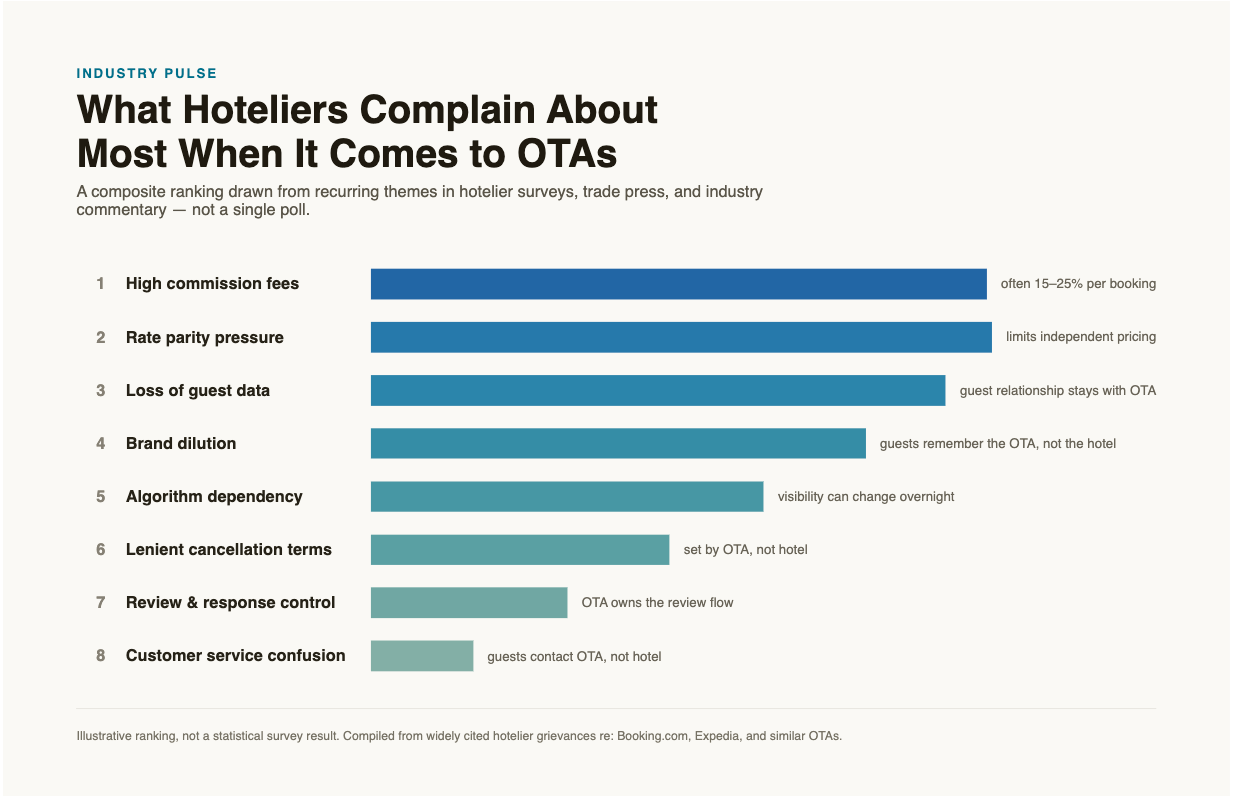
15 to 25% per booking is the obvious one, that is if you’re not paying for placement or buying into their ad products.
Then the cancellations. Free cancellation is great for the guest and brutal for a small property. Users on OTAs often hold three or four places while they decide, many then drop the rest on the last day of the window. As an operator, you now have an empty room with less than a week’s notice and the anxiety kicks in if you can’t fill.
The part that bothers me most is you actually don’t get the guest, you get a booking from the OTA. The email address belongs to the platform and the relationship belongs to the platform too. And if you want to offer a better price on your own site, rate parity says you can’t (smarter operators try to heck it by giving perks for direct bookings). A person sleeps in your building for a week, eats your breakfast, chats with your staff, and somehow you have no way to reach them next year unless you actively collect their emails.
And when something goes wrong you find out quickly whose side the OTA is on. Refund disputes tend to land with the guest. There’s rarely a human to a judgment call in most cases.
OTAs are excellent at visibility. A stranger in Berlin is never going to find a 27-room building in Chiang Mai on their own, and no amount of good hospitality changes that. Booking.com, Hotels.com and Airbnb indeed solved a real problem for small operators.
What they’re bad at is finding the right person. Especially for lodging business like mine targeting remote workers and longer stays. We do a six night minimum and plenty of people end up staying a month or more. A typical OTA doesn’t sort for intent. It sorts for price, dates and availability. So you get people who need a room, and you hope some of them turn out to want your place specifically.
The commission is the easy part to see. The mismatch costs is something worth pondering.
More than 90% of bookings at Alt_ come direct. More than a quarter of our residents have stayed with us before. In fact, first three years our marketing budget was basically zero.
We designed Alt_ to be direct booking from day one because we want to own the relationship with the residents. Handing that part to a third party that barely knows anything about us, and knows even less about the person booking, made little sense to me.
So instead of optimizing a listing and fighting for placement, we put the resources into building our own leads and branded experience.
For anyone about to say that only works if you already have a community, we didn’t have one. Our first residents came from Facebook groups and Google search. Digital nomad groups in Chiang Mai, where I’d post an announcement or ask people for feedback on some design work we were doing. The cost was nearly nothing. It worked because people like being asked.
Put the money into the experience and the relationships and you get loyalty that lasts. Rent your demand instead and you stay a hostage to it.
Fun fact: Before any of this I was a network marketing sales person.
And one concept I learned that held up better than most : A great product gets recommended even when nobody is being paid to recommend it. Word of mouth is the best marketing any brand can hope to have.
Community spend works differently than most marketing expense: You put effort and money into it and it keeps paying out, and what surprised me is how much of it happens between the residents rather than between us and them. Two residents who became friends at our breakfast table will both come back, and neither of those bookings is one I have to buy.
Commission is a fee you pay forever on a transaction. Community is an investment that compounds into a relationship.
The following are some efforts I do and it doesn’t cost a lot of money but worth considering:
A newsletter that isn’t just promotions. Alt_Newsletter is mostly what’s happening in the community and what’s happening in Chiang Mai sometimes with a promotional discount. Our open rate is around 40%, and that’s high because it isn’t a sales email. Even a list of your biggest fans, updated a few times a year, wishing them well on special occasions is better than not having one.
Give them something to take home. Branding used to mean hiring a designer. Now you can make stickers, luggage tags, small gifts with AI design tools in an afternoon for almost nothing. People who keep them because they liked their experience, and now your brand logo is on someone’s laptop in another country.
Treat them like friends, not guests. Once a month I give my staff an allowance to go have a meal or drinks with residents. That’s good enough to change the client/staff relationship. And if a resident taps me on the shoulder wanting to have a coffee with me, I’ll always try to find time. The conversations are usually meaningful because I get insights and feedback and get to know my community members better.
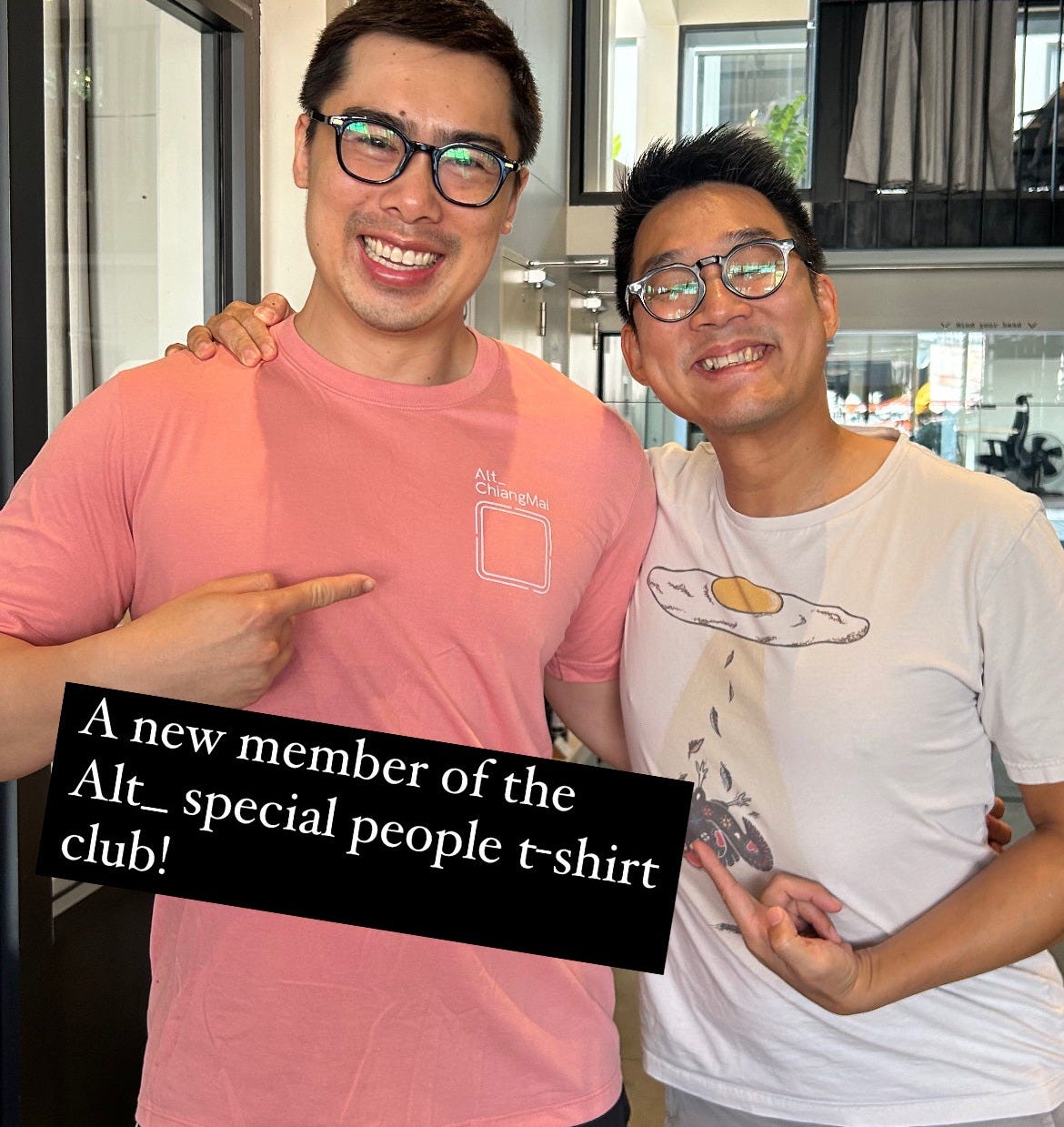
Have one thing you refuse to sell. We have an Alt_ T-shirt that’s only for residents who’ve stayed more than once, and we don’t sell it to anyone. The rarity means some people will work hard (stay again) to get it. And they wear it with pride too.
Free food. Tea breaks and pizza nights get everyone out with little effort. And an hour standing in that room tells you more about what’s broken in your building than any survey will. People complain to you over a slice of pizza is better then venting over Google reviews.
Yes, all of this is work, and some costs a bit of money. But in a long run it reduces dependency to OTAs and that’s worth considering.
Alt_ChiangMai has 27 rooms, at 15%, every one of those costs $100-150 in commission. With 90% coming direct, that’s about $48,600 a year we never paid. Over five years, $243,000.
Everything on that list above, the meals, the pizza nights, the T-shirts, comes to less one third would have been. Plus we keep the guest relationships on top of it.
The repeat residents are where it really adds up. A quarter of our bookings are people who already stayed with us, and we pay nothing to get them back.
Most independent operators already have an email list that are sitting in the PMS right now not being utilized.
The reason OTAs capture so much of the value is that they’re convenient, and convenience is hard to argue with when you have rooms to fill this month.
Put that effort into your own brand and into actually knowing your guests, and the relationship stays yours. You can still list but you’re no longer at their mercy when the commission creeps up, or the algorithm buries you, or a dispute goes against you with nobody to call.
And it makes you harder to knock over. Be it a bad season, a new hotel opening down the road with newer rooms and/or lower rates, or the platform changing its rules overnight. The operators who take the least damage from all of that are the ones with people who come back because they have a relationship, not because it was the cheapest thing available that week. A list of people who like you is the most resilient asset in this business.
John Ho runs Alt_ChiangMai & Alt_PingRiver, two coliving and coworking spaces in Chiang Mai, and leads the Nomad Friendly District initiative. The Extended Stay covers emerging trends in community-powered hospitality for operators and ecosystem builders.
No posts
Comments
Nothing yet. Say the first thing.
Sign in to join the conversation.