At Sustainability Economics, we work with small business owners and proactive individuals to embed sustainability, circularity, and climate action into their daily activities.
The macroeconomic landscape is shifting rapidly from qualitative environmental goals to structured, verifiable data. Central to this transition within the European market is the European Union’s Digital Product Passport (DPP), a core pillar of the Ecodesign for Sustainable Products Regulation (ESPR).
2025 felt like a year of tug-of-war for climate and sustainability: major global forums produced pragmatic, if imperfect, outcomes; the European Union moved to simplify and (in places) roll back the scope of corporate sustainability rules; and the United States under a new administration pushed fast in a more fossil-friendly direction — even while courts, investors and subnational actors pushed…
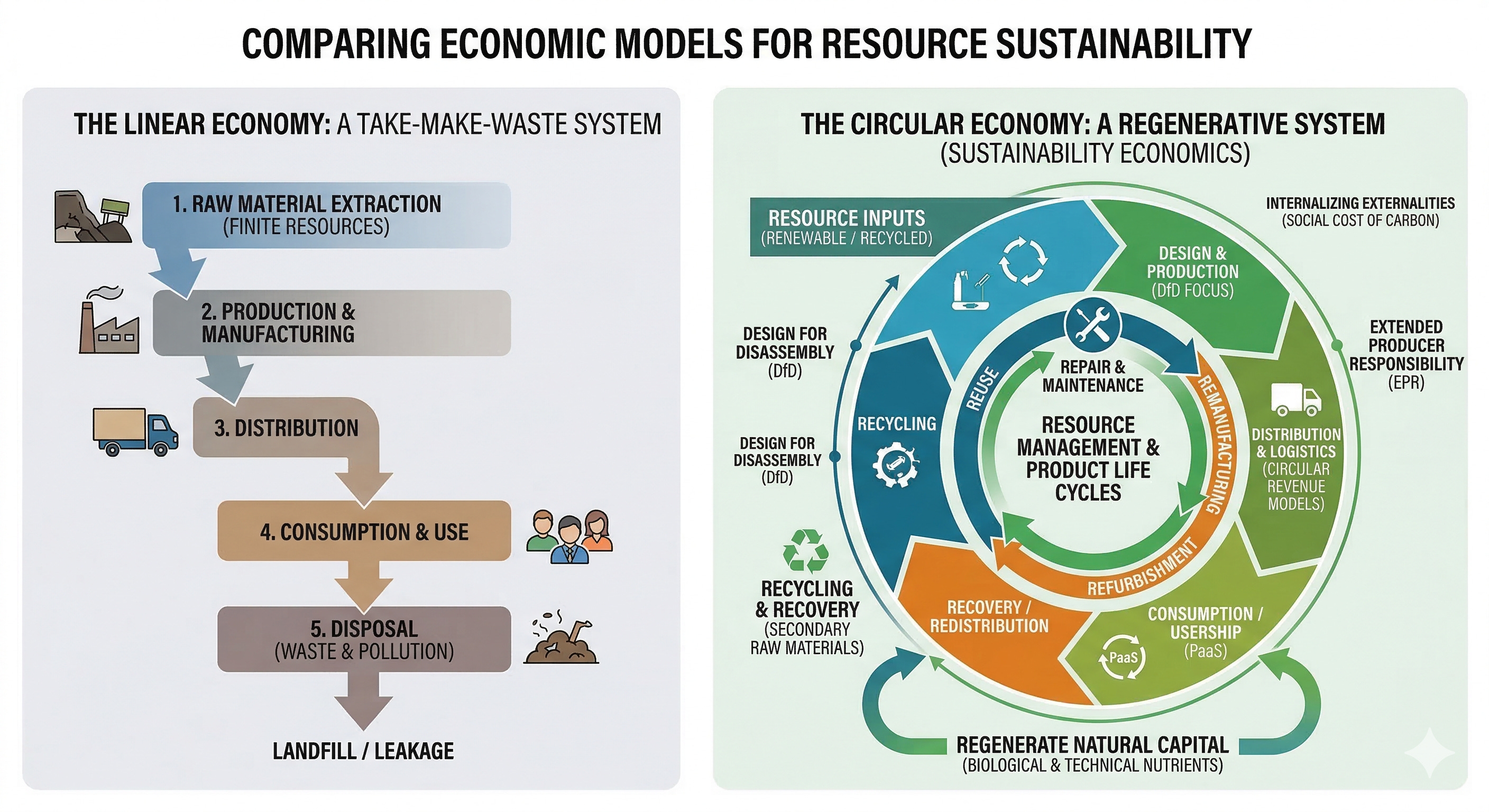
The concept of the circular economy—designing products, systems, and markets to eliminate waste and keep materials in use—has now evolved into a global business imperative.
On February 26, 2025, the European Commission unveiled the "Simplification Omnibus," a comprehensive proposal aimed at reducing administrative burdens and enhancing the global competitiveness of businesses.