
———
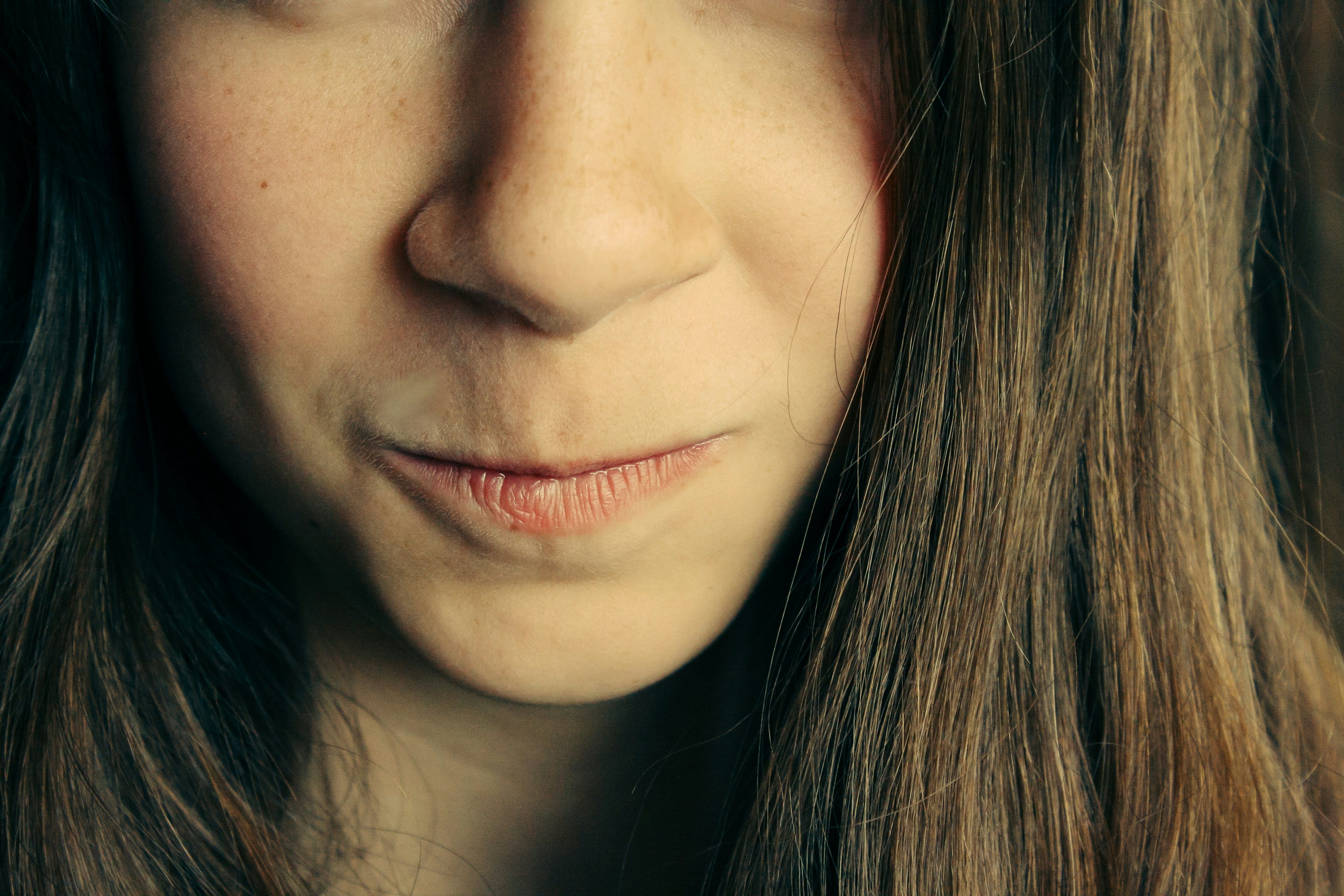
A while ago, a grown man told my eleven-year-old daughter to smile, and I did exactly what I was trained to do, which was nothing at all.
Earlier that night, we had gone to the theatre to watch the musical Les Misérables. My daughter and I like to go to musicals together. Her dad hates musicals, so it’s something she and I do, just the two of us: it’s our thing. We buy tickets months in advance, we get excited about it, buy the drinks and the sweets before the show, and maybe an ice cream at the intermission.
Victor Hugo’s masterpiece blew us away. We were still riding high on “Do you hear the people sing” and giggling over “Master of the House” when we left the building. A man, probably in his seventies, with a hat and a walking stick, was moving alongside us as we headed for the exit. He said something to the female usher when he walked past her that I couldn’t quite hear, but she looked taken aback.
As we walked out the front doors, he leaned past me, down to my daughter:
“Did you enjoy the show?”
She told him she had, in the polite voice she uses for adults she doesn't know.
“You should tell your face that!” he replied, laughing.
Did this stranger really just tell my daughter to smile?
Most women have a version of this story: it happened at school, or at work, or it was shouted from across the road. The details change but the instruction doesn’t: your face is making me feel uncomfortable, and you should do something about it.
The response he was asking for is familiar. In other primates, the facial expression we would recognise as a smile, with the lips pulled back and the teeth showing, is used to defuse social tension. In species with steep dominance hierarchies it travels in one direction only, from the subordinate animal towards the dominant one. In species with flatter hierarchies it runs both ways and means something closer to reassurance. The direction of the smile tells you what type of relationship you are looking at. Going both ways, it is a greeting between equals. Going one way, someone owes someone.
He had leaned past me to talk to her. There were two of us standing there and he chose the eleven-year-old.
For humans, a smile communicates happiness, it makes a person easier to approach, it holds groups together, and it still does the old work of signalling compliance and taking the heat out of a tense moment.
Then there is the training, and it has been written down. Sarah Stickney Ellis’s The Women of England (1839) was among the most successful prescriptive books of its period, and in it the woman of the house works out her obligations. She is “to devote [herself] to the general good of the whole, by cultivating cheerful conversation, adapting to the prevailing tone of feeling, and leading those who are least happy, to think and speak of what will make them more so.” In other words, manage the mood of the people around you, at your own expense.
While my daughter has never read Ellis’s book, she has still internalised the same messages. Studies have shown that girls show more positive emotion expression than boys and that this difference becomes increasingly evident as participants get older into adolescence. It is more evident in situations with an unfamiliar adult and in situations where there is social pressure to mask negative emotions by appearing cheery.
Her politely answering his question not only follows years of societal training to defer to adults, respect your elders and generally be amenable – it is literally the training.
To help me continue write essays like this one, and if a paid subscription isn’t right for you at the moment, please consider supporting me with a small one-off contribution.
In the late 1990s, two psychologists, Marvin Hecht and Marianne LaFrance, put people into pairs and assigned them ranks, so that in some pairs one person had authority over the other and in some neither did. The people with authority smiled when they felt like smiling. The people without it smiled regardless of how they felt, their expressions no longer betrayed their emotions. The researchers called it a licence and an obligation.
Powerful people’s faces show how they're feeling; low-status people’s faces show their compliance.
We have a term for a woman whose face is not doing enough. Resting bitch face is applied almost exclusively to women, and the research shows why: in a study cited in LaFrance’s meta-analysis, non-smiling women were read as feeling worse than non-smiling men, while smiling men were judged less effective than men who kept a straight face. The same expression gets a different verdict: a woman's neutral face reads as a fault, and a fault invites correction.
The man telling my daughter to smile was not establishing anything that evening; the order of things was in place long before he put his hat on. What he was doing was maintenance, in the manner of a man straightening a picture on a wall in someone else’s house. The direction of travel is what gives it away. He corrected the usher, then he corrected my daughter, and he walked past me without a word.
Why did this man tell my daughter to smile? I’ll never know, but there are a few possible explanations: He has never experienced someone telling him to smile. Men are generally not told to rearrange their faces to please others. The comment probably felt like small talk to him. He noticed a flaw in his environment and mentioned it, in a similar way you might notice and tell someone their shoelaces were undone. The entitlement sits in the assumption that her face was addressed to him and the environment he was in needed to be pleasing to him.
If she did smile, his demand was efficient: she smiles, he moves on, his command was successful, he will do it again next time. If she didn’t smile, it might have produced hostility.
I don’t remember if my daughter ended up smiling at him. I was too busy managing my own shock and racking my brain about how to respond. I nervously laughed before ushering her over the road, performing perfectly what I was trained to do.
The failure I agonised about for weeks since isn’t so much that I didn't confront him, but that my attention wasn’t on her.
More reading:
I put a number on my unpaid labour
·
Jul 11

Unpaid domestic and care labour is estimated at somewhere between 10 and 39 percent of GDP depending on the country – invisible in national accounts, invisible in tax policy, invisible in superannuation and retirement savings. It’s the biggest unacknowledged transfer of wealth in the world, and it flows almost entirely in one direction.
The Equitable Home
No posts
Comments
Nothing yet. Say the first thing.
Sign in to join the conversation.