
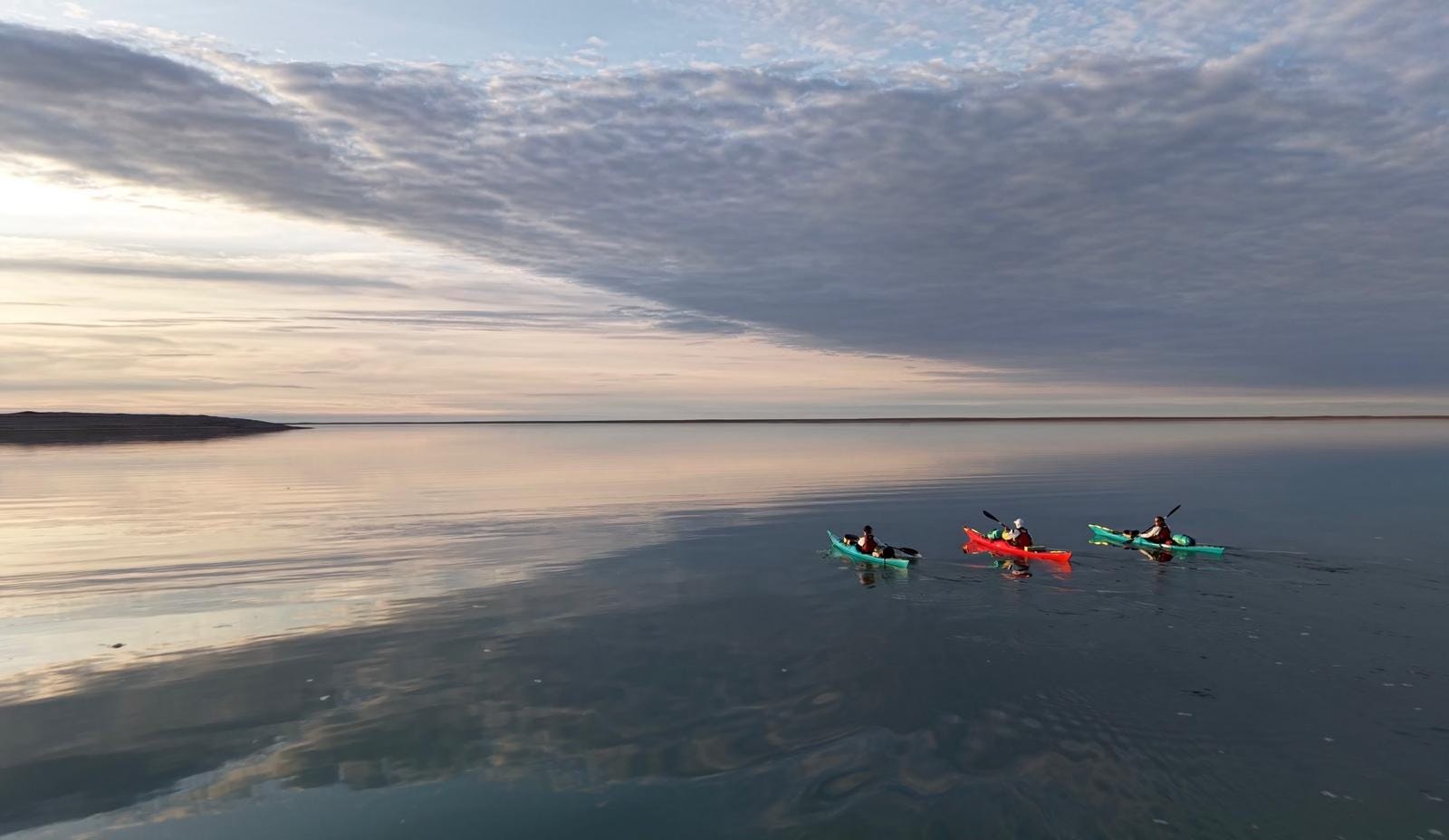
A Canadian team aiming to kayak around the coast of King William Island in the Canadian Arctic while searching for artefacts linked to the lost British Naval Northwest Passage Expedition of 1845 has ended its journey early, but not before discovering human remains.
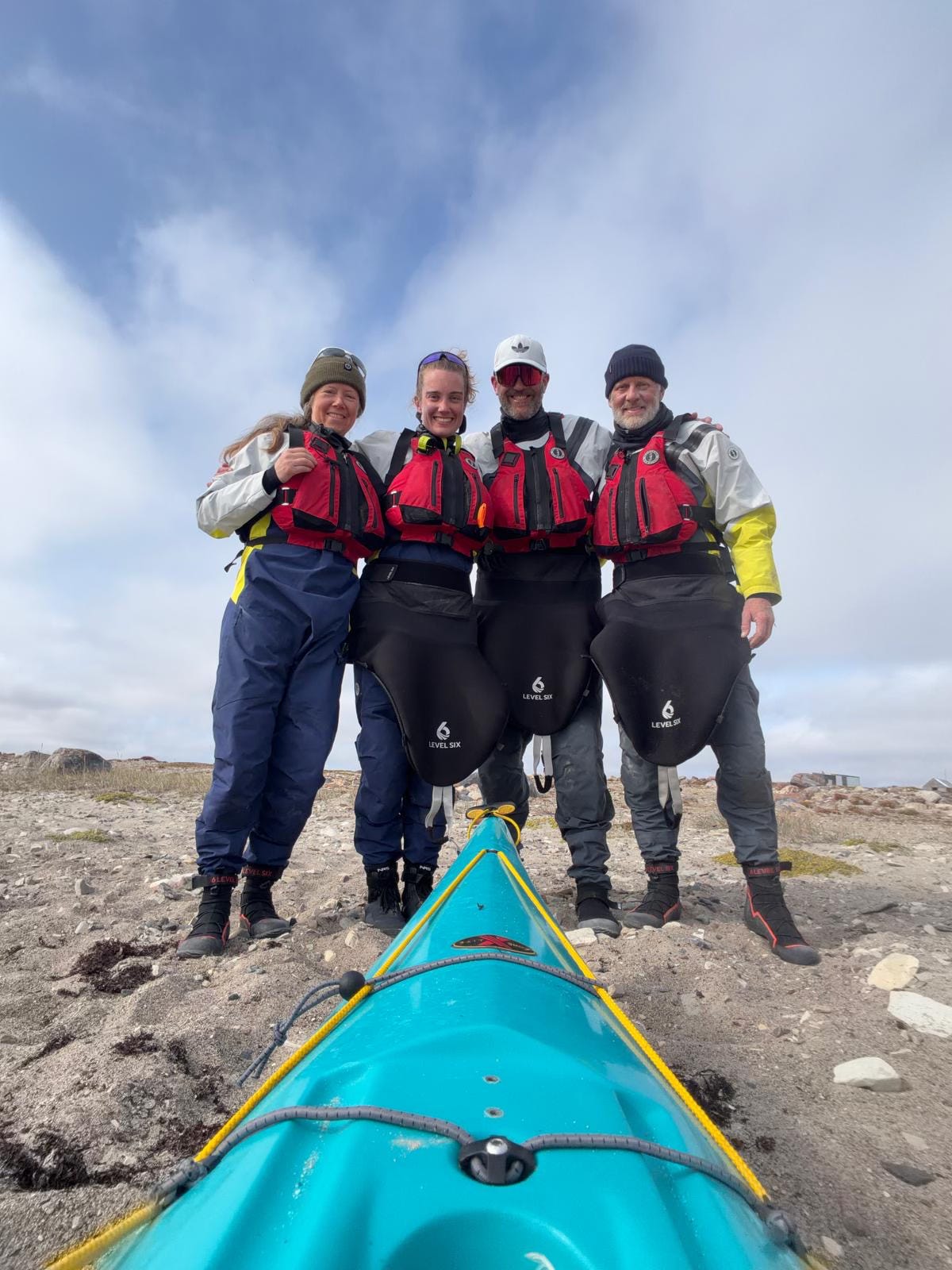
The four-person expedition was led by veteran adventurer Kevin Vallely, 61, and included ultra-endurance athlete Nicky Hastings, search-and-rescue operator Julie Van De Valk, and adventurer Ken Stanick.
The team set out from Gjoa Haven, a small Inuit hamlet on the southeastern coast of King William Island, on August 3. Their original goal was to complete a 700-800km circumnavigation of the island in 30 days.
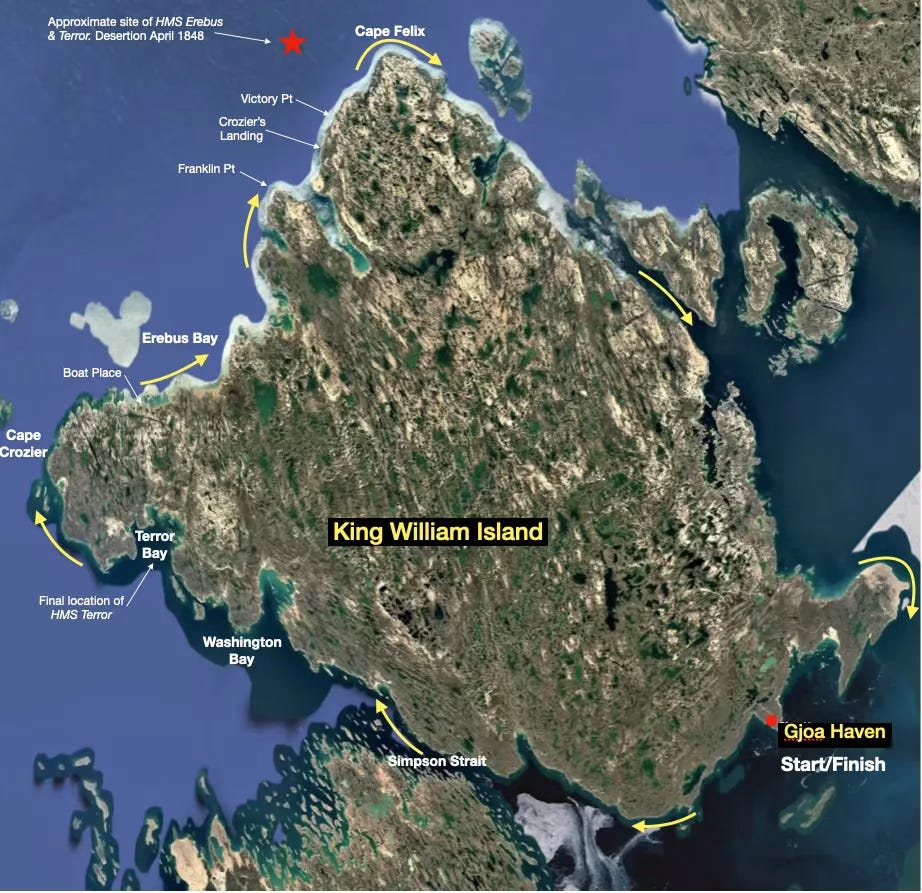
A long-range forecast showed high winds, and the likelihood of being tent-bound for multiple days while waiting for calmer conditions. The four kayakers decided they did not have enough food or fuel for a full circumnavigation, and so they turned around at Washington Bay, on the island’s south coast. Over fifteen days, Vallely and co. covered 300km.
Washington Bay lies east of the site where one of Franklin’s ships, HMS Terror, was discovered in 2016.
King William Island is extremely flat, with gravel shorelines that blend into endless Arctic tundra. Given the low profile of the coastline, there are no natural contours to break up coastal winds and provide shelter.
The four kayakers were tent-bound due to high winds for five of the fifteen days. Fresh water was also hard to come by.
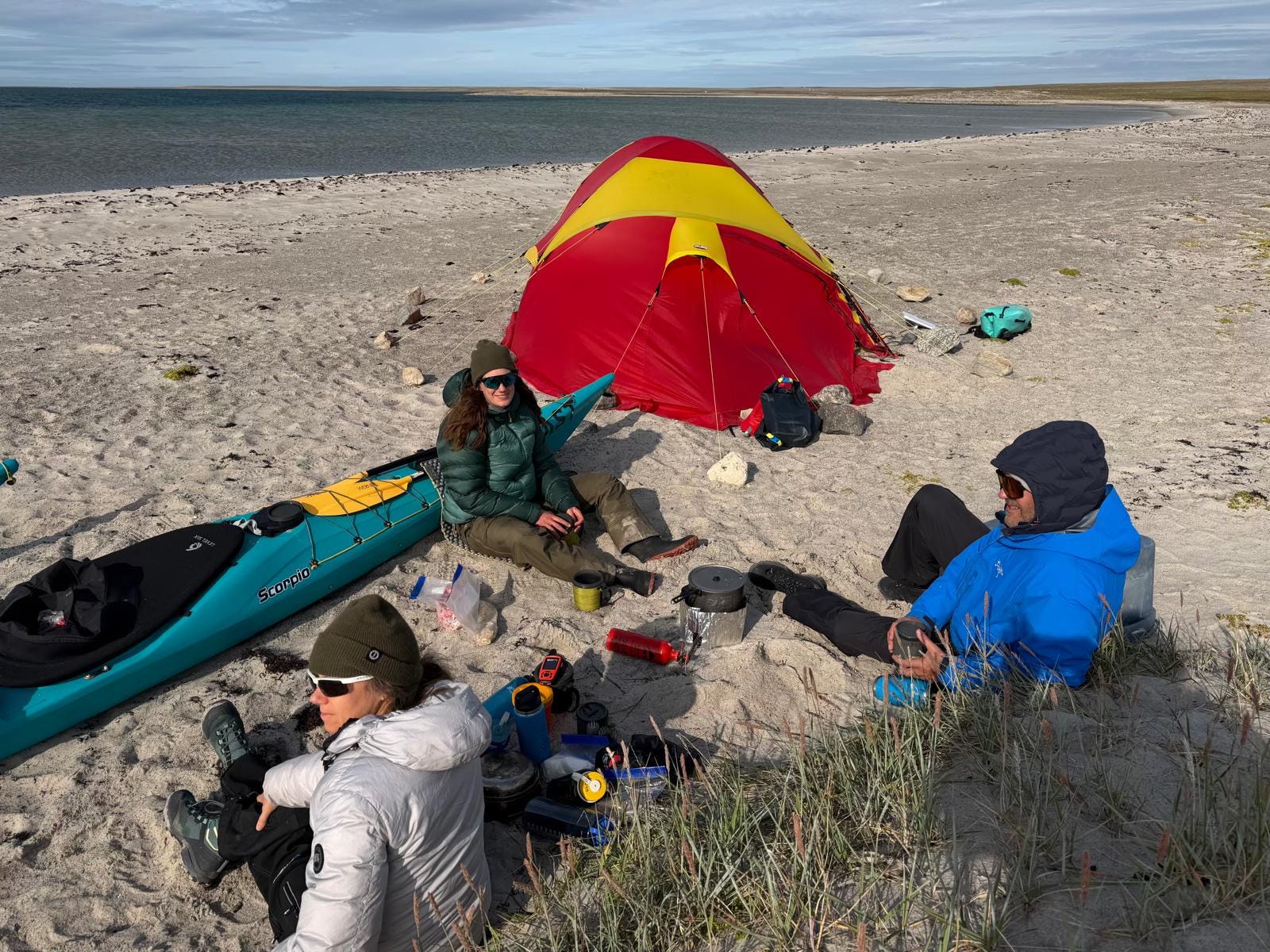
“Where we turned around at Washington Bay it’s very low lying. Fresh water was impossible to find. Even lakes 2km inland were salty,” Vallely told At the Edge of the Map.
“Speaking with locals here in Gjoa Haven yesterday, they say they need to drive by ATV for many miles from the coast to get fresh water in that region of the island.”
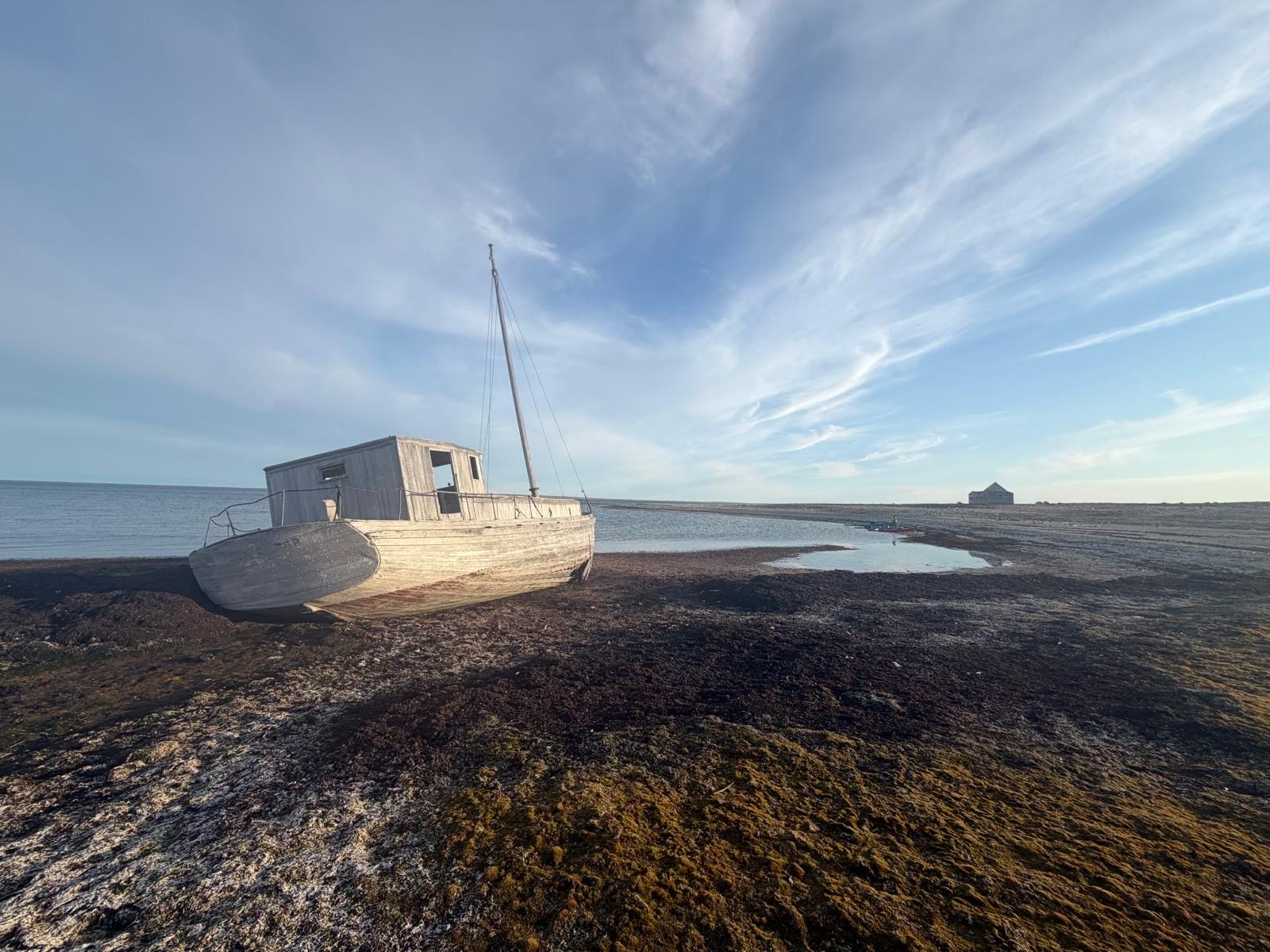

The kayak journey wasn’t the only aim of this expedition. The kayakers had teamed up with a land team to search for clues and artefacts that could shed light on the fate of the infamous British Naval Northwest Passage Expedition, led by Sir John Franklin.
Most of the 134 men on the two ships led by Franklin are believed to have died while attempting to cross King William Island, after abandoning their ice-trapped vessels in the hope of marching to the Canadian mainland.
Since the 19th century, numerous expeditions to King William Island have uncovered archaeological evidence that has helped reconstruct the expedition’s final days.
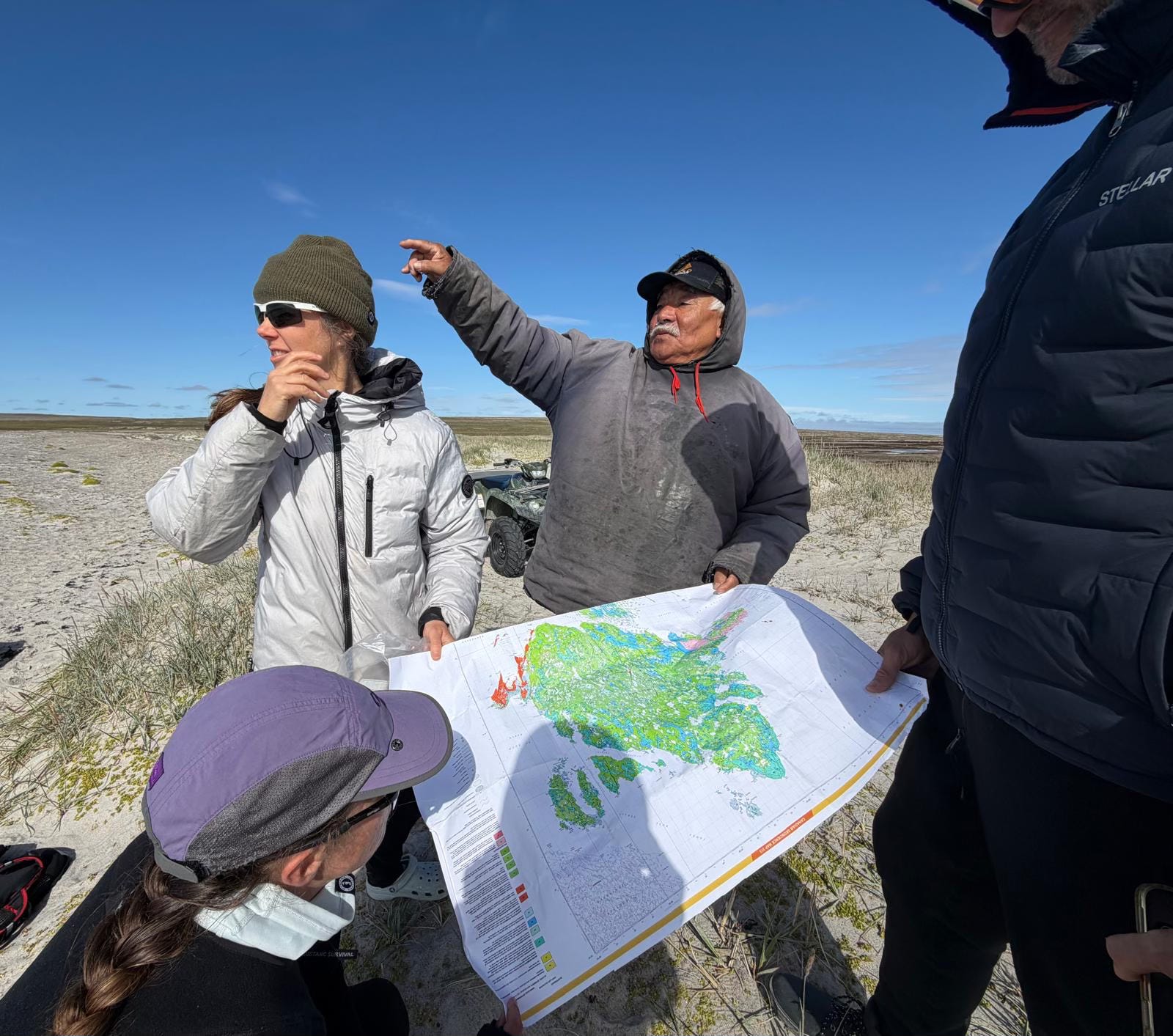
This includes human remains and artefacts, as well as accounts from local Inuit, who reported seeing several members of the expedition still alive on an island near Washington Bay in the 1850s. None survived. Nearly a century later, in 1942, researchers found a skull and additional human bones in the same area.
During the circumnavigation attempt, Vallely’s team found a human skull at a location that cannot currently be disclosed.
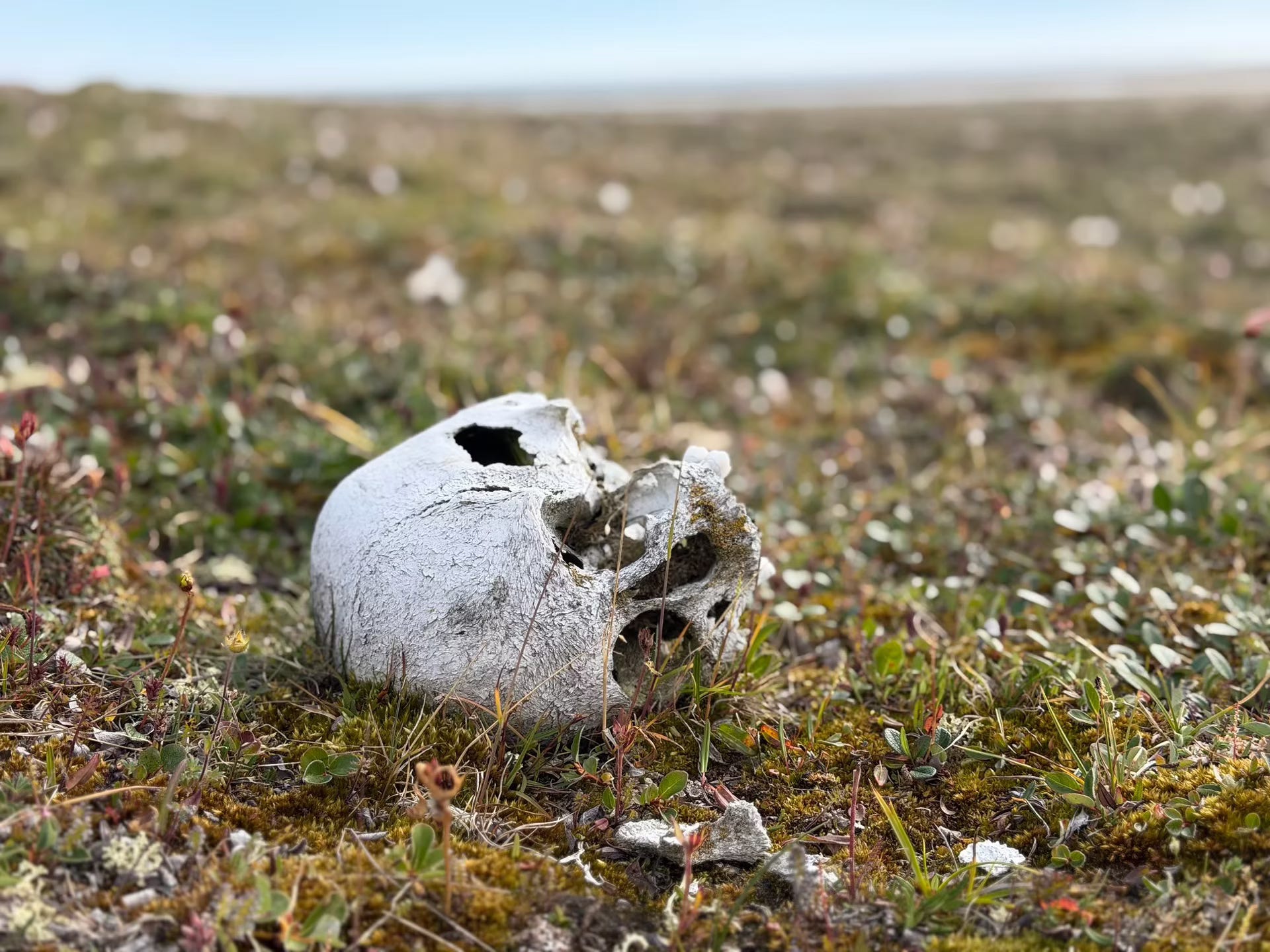
“A human skull, lying on its side, facing west. It is half sunk into the tundra just like the stones around it. It’s old,” wrote the Canadian adventurer.
“You could tell that much just by looking at it. It’s been part of this landscape for a long time.”
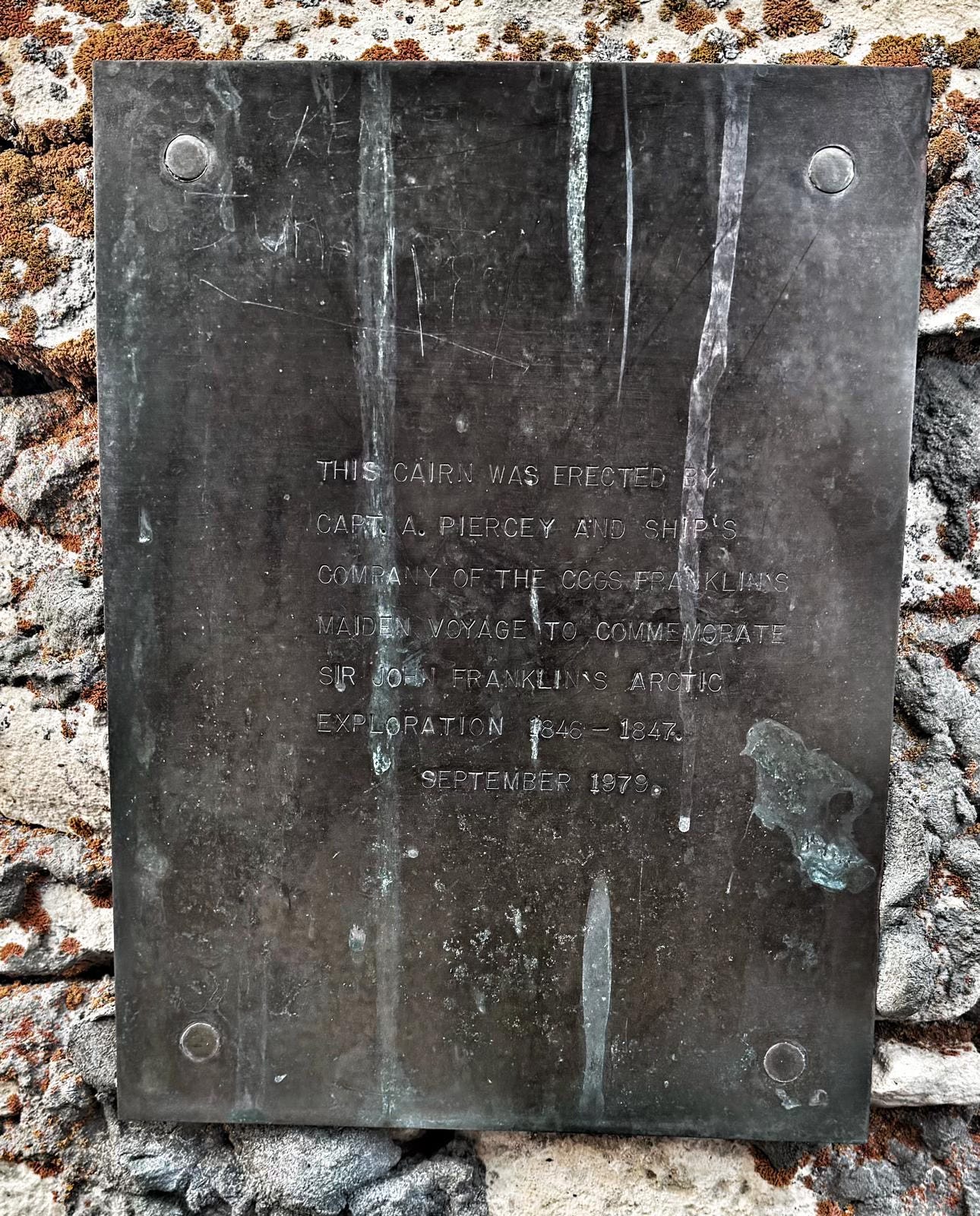
The kayakers took photographs of the skull and geolocated it before reporting the find to the Royal Canadian Mounted Police, who will lead an investigation.
“Franklin’s crew struggled and died on these shores. Remains have surfaced a short distance from here. Maybe this is one of the crew, one more name lost to time and now found,” said Vallely.
The cold climate and permafrost on King William Island restrict microbial and insect activity, allowing bones, antlers and human remains to remain exposed for decades or more with little visible deterioration. The skull could plausibly be a decade-old, or hundreds of years old.
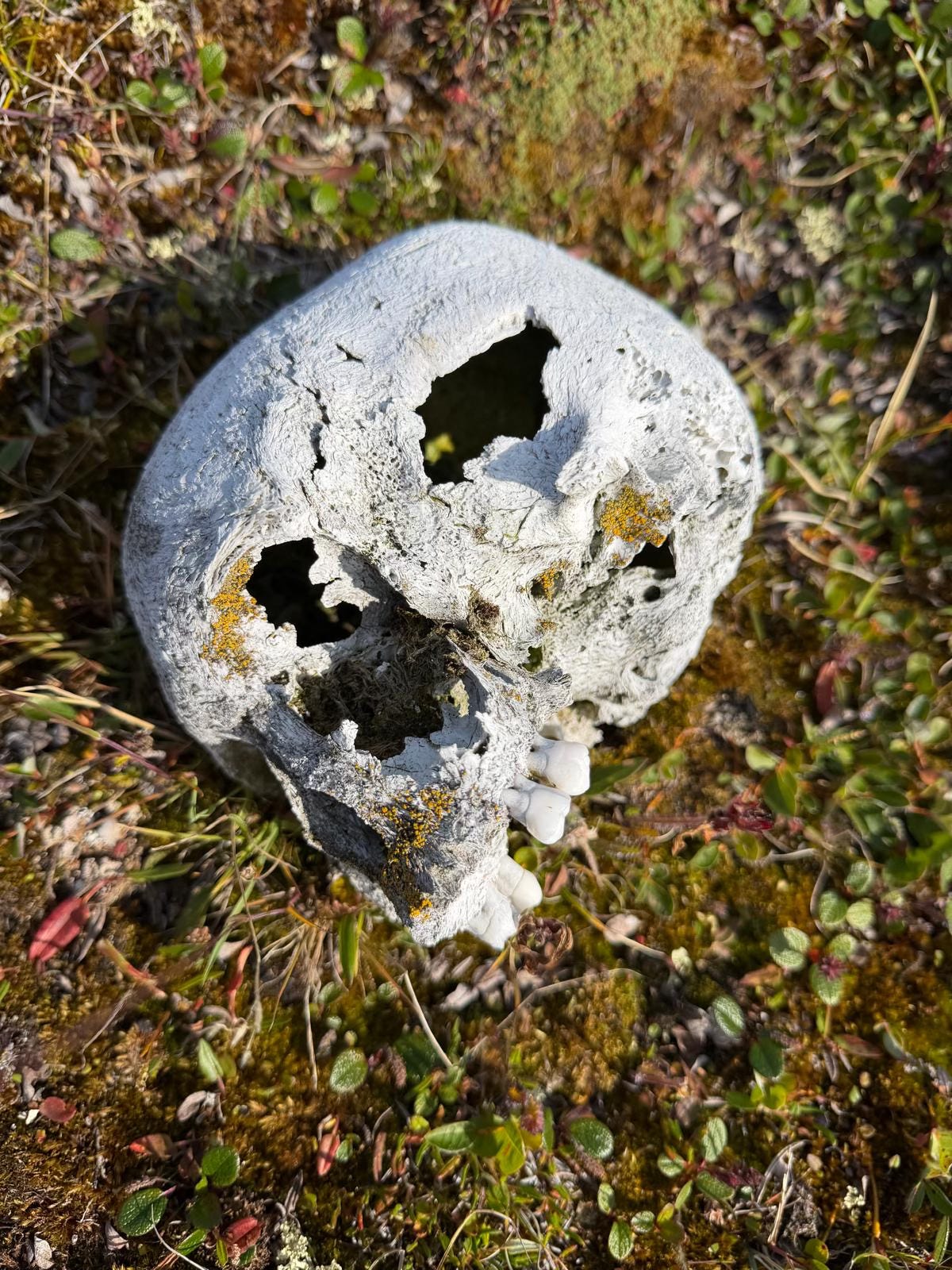
“Maybe this is someone who belongs to a much older story, one of the people who have called this place home for centuries, long before Franklin’s ships ever left England,” added Vallely. For Vallely, however, the uncertainty surrounding the skull does not diminish its significance.
“We don’t know. In the end, it doesn’t really matter which story it belongs to. What matters is that we stand here and bear witness to someone whose life ended in this place.”
At the Edge of the Map currently has 58 paid subscribers. This has allowed us to commission our first writer outside the editorial team. Our aim is to reach a minimum of 80 paid subscribers to be able to commission one guest feature each month. Until the end of September annual subscriptions are 50% off - £25 ($34) for the year.
No posts
Comments
Nothing yet. Say the first thing.
Sign in to join the conversation.