
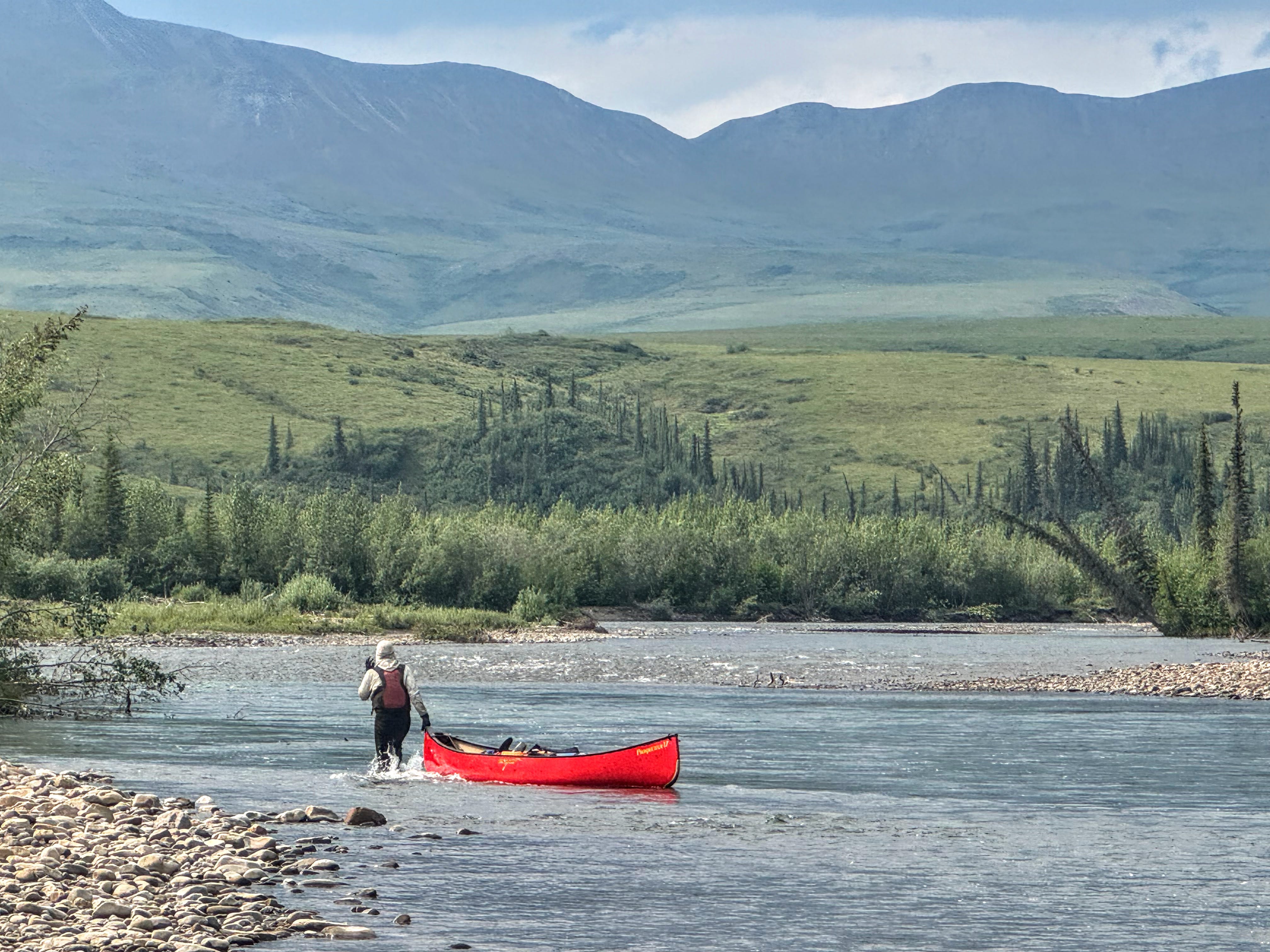
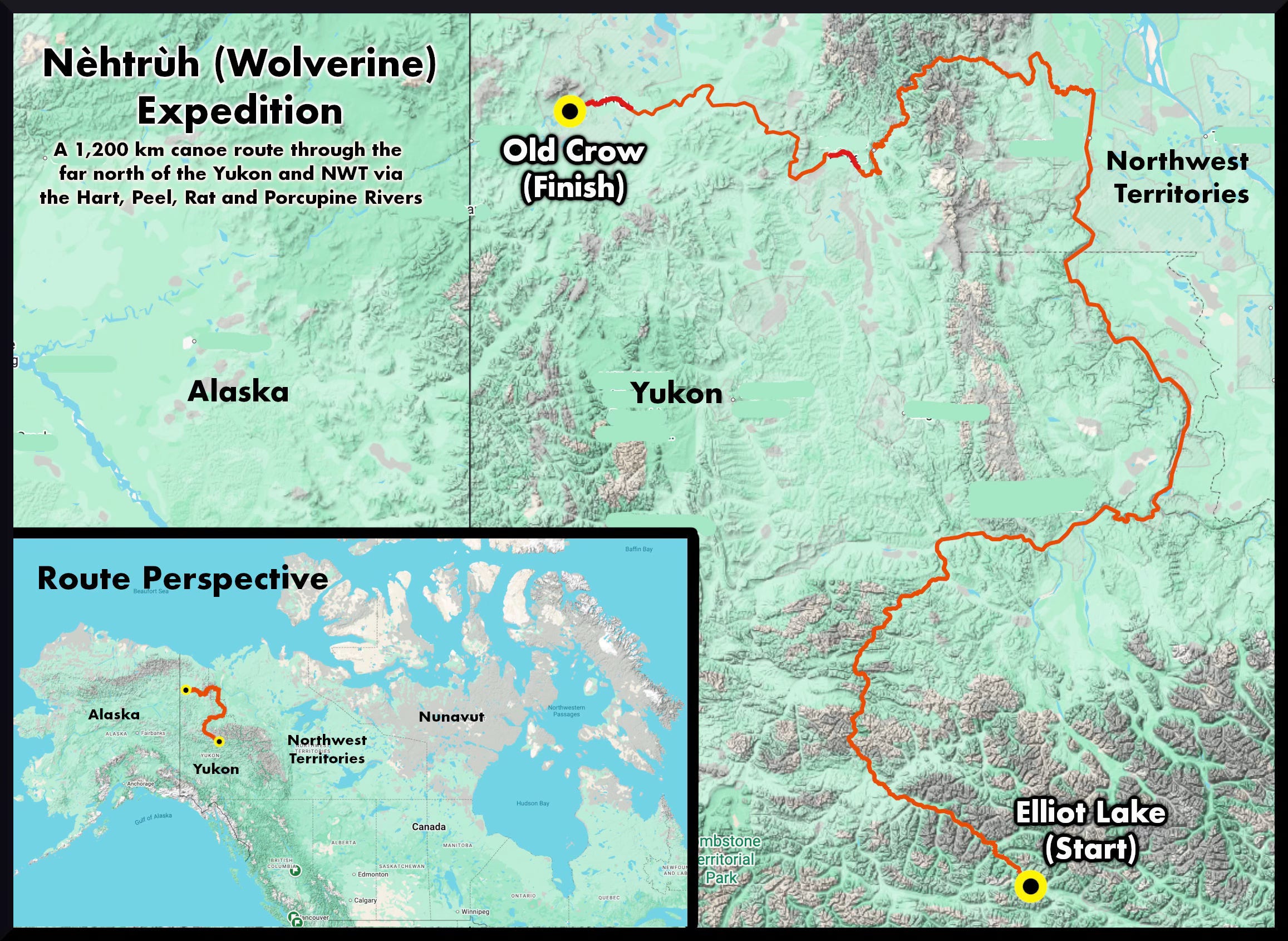
Last week, Canadian adventurers Frank Wolf and Alex Kozma completed a 1,200km canoe expedition through northern Canada. The experienced duo covered the route in just 21 days, averaging an impressive 57km per day.
The journey began in the Mackenzie Mountains, a northern extension of the Rocky Mountains that spans the Yukon and Northwest Territories. From there, they paddled north by canoe along the Hart, Peel, Rat, Little Bell, Bell and Porcupine rivers, eventually reaching Old Crow, the Yukon’s northernmost community.
Wolf, 55, called the trip the Nehtruh Expedition, taking its name from the Vuntut Gwich’in (local first nationals people) word for wolverine, the powerful, bear-like mammal that inhabits much of the sub-Arctic.
”The water was quite high this year, with a wet early summer keeping the levels up, so we made good time on the whole route,” Wolf told At the Edge of the Map.
”When I do my trips I love to move, so I put in consistent 9 or 10 hour days, everyday, with no days off.”
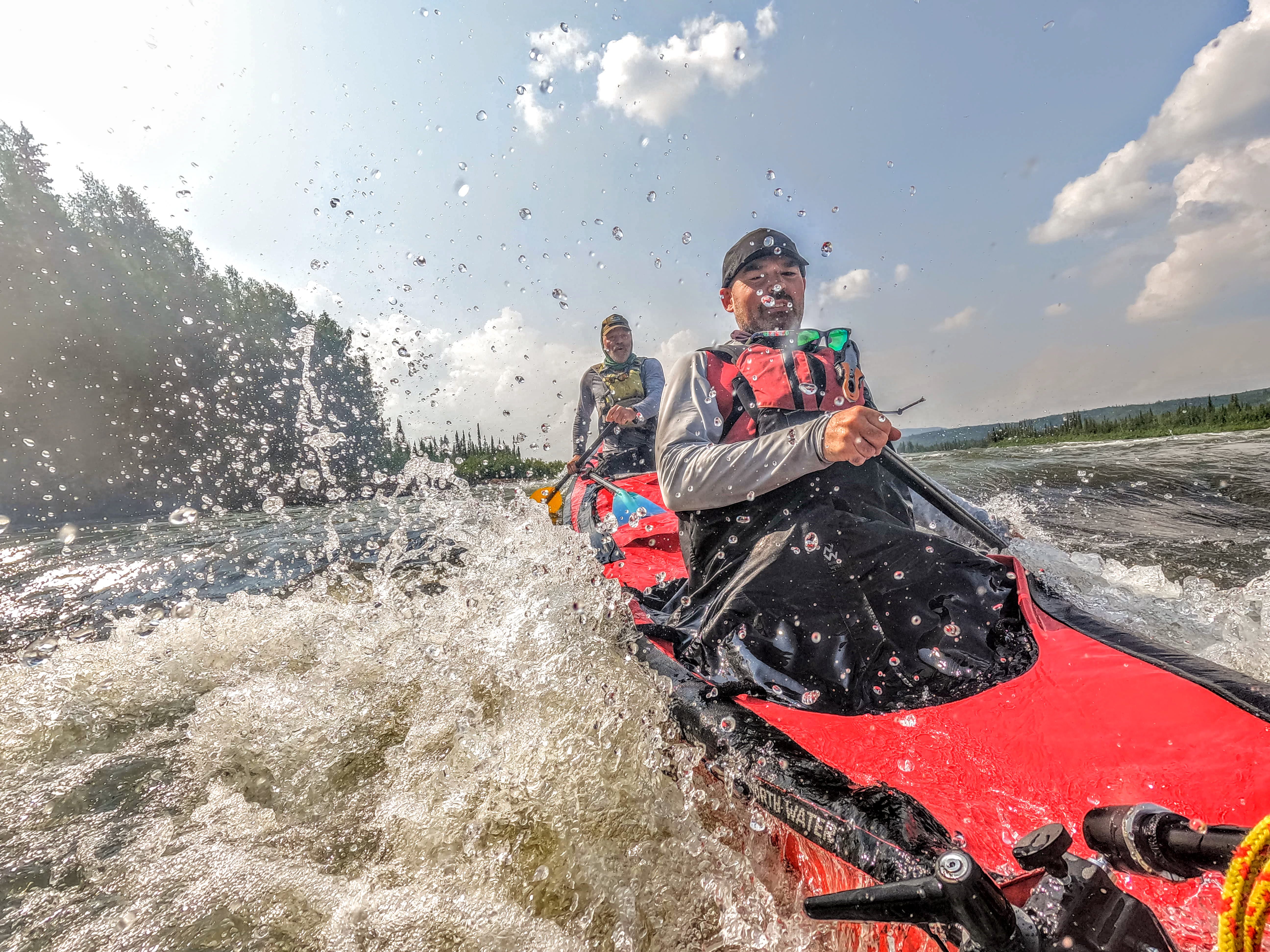
Wolf and Kozma faced whitewater, portages and upstream paddling.
“On the upper Hart River the danger is the tight corners and numerous channels that are often blocked by log jams. You have to keep an eye out for clogged channels and be ready to react,” Wolf explained.
“We met a couple who were paddling the Hart and were quite shaken, as the day before they’d been swept into a log jam and lost a hat and paddle but salvaged everything else, including their lives,” he added.
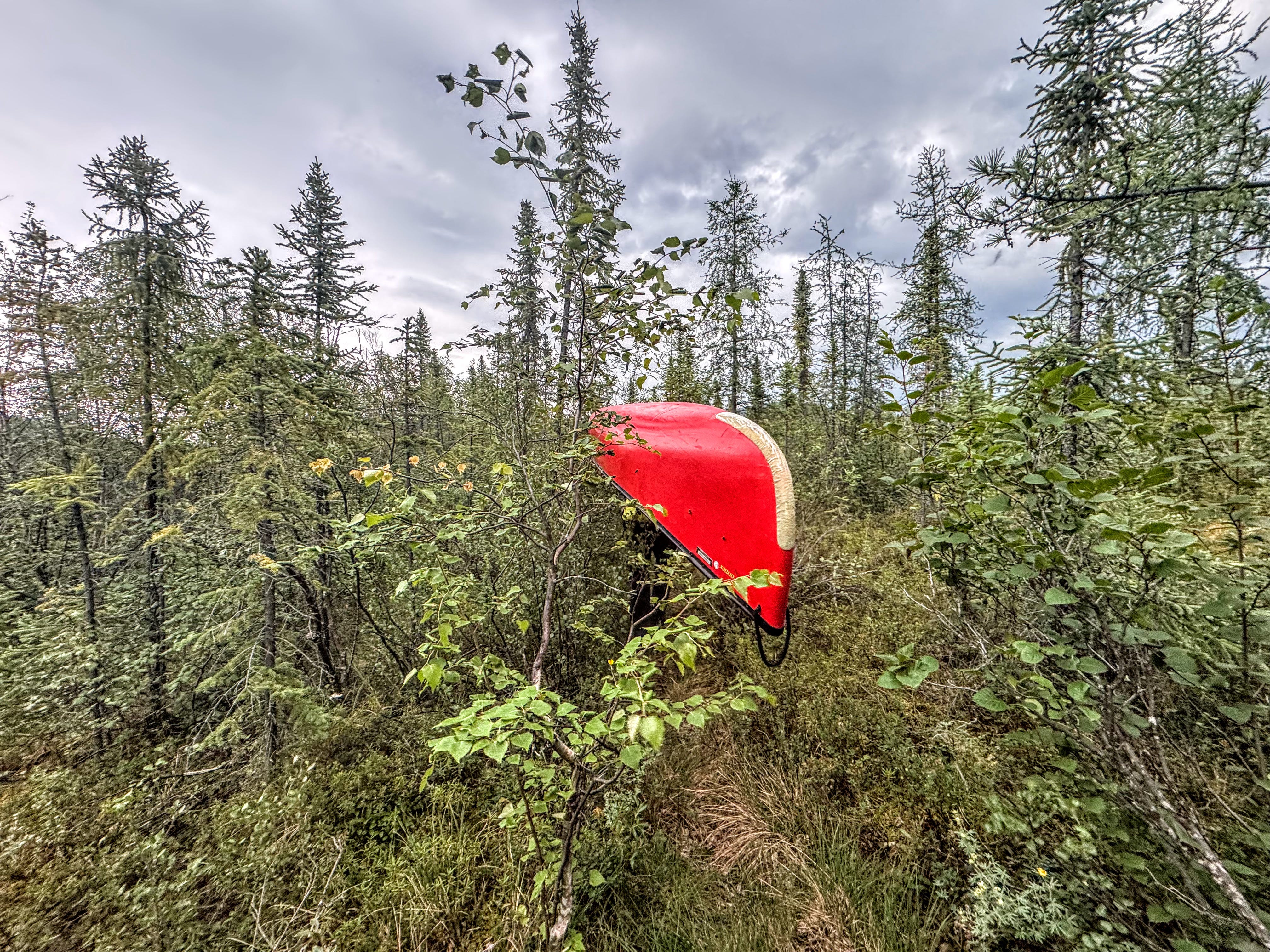
On the Peel River, the pair navigated several Class IV+ rapids and carefully scouted a major canyon rapid to ensure they could reach shore and walk safely rather than risk being swept into the gorge.
The portage, through dense brush, knee-deep marsh and uneven tussocks, took eight hours to complete, far less than the four days some previous parties had reported.
On the Rat River, the two Canadian’s paddled 130km upstream in 6 days to get to the divide (height of the land) at Summit Lake.
“Days 2 through 5 on this section we averaged only 16km per day against the current, but that was countered by big days on the Peel, including a 116km day, so all things even out.”
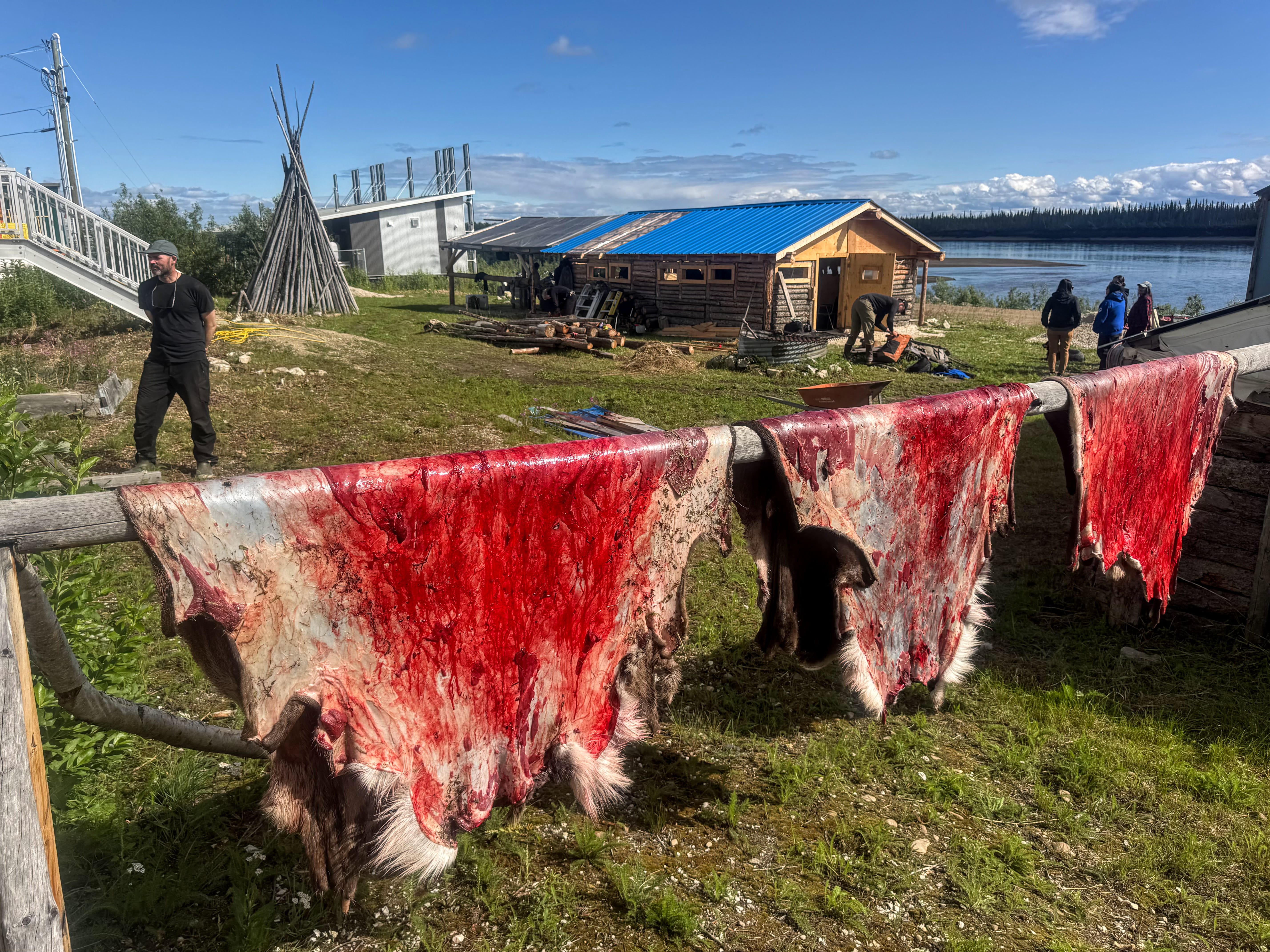
One of the highlights for Wolf was spending time in Old Crow, their endpoint and home to the Vuntut Gwich’in (People of the Lakes). During their visit, local hunters successfully harvested five caribou, the first hunted near the community in two years.
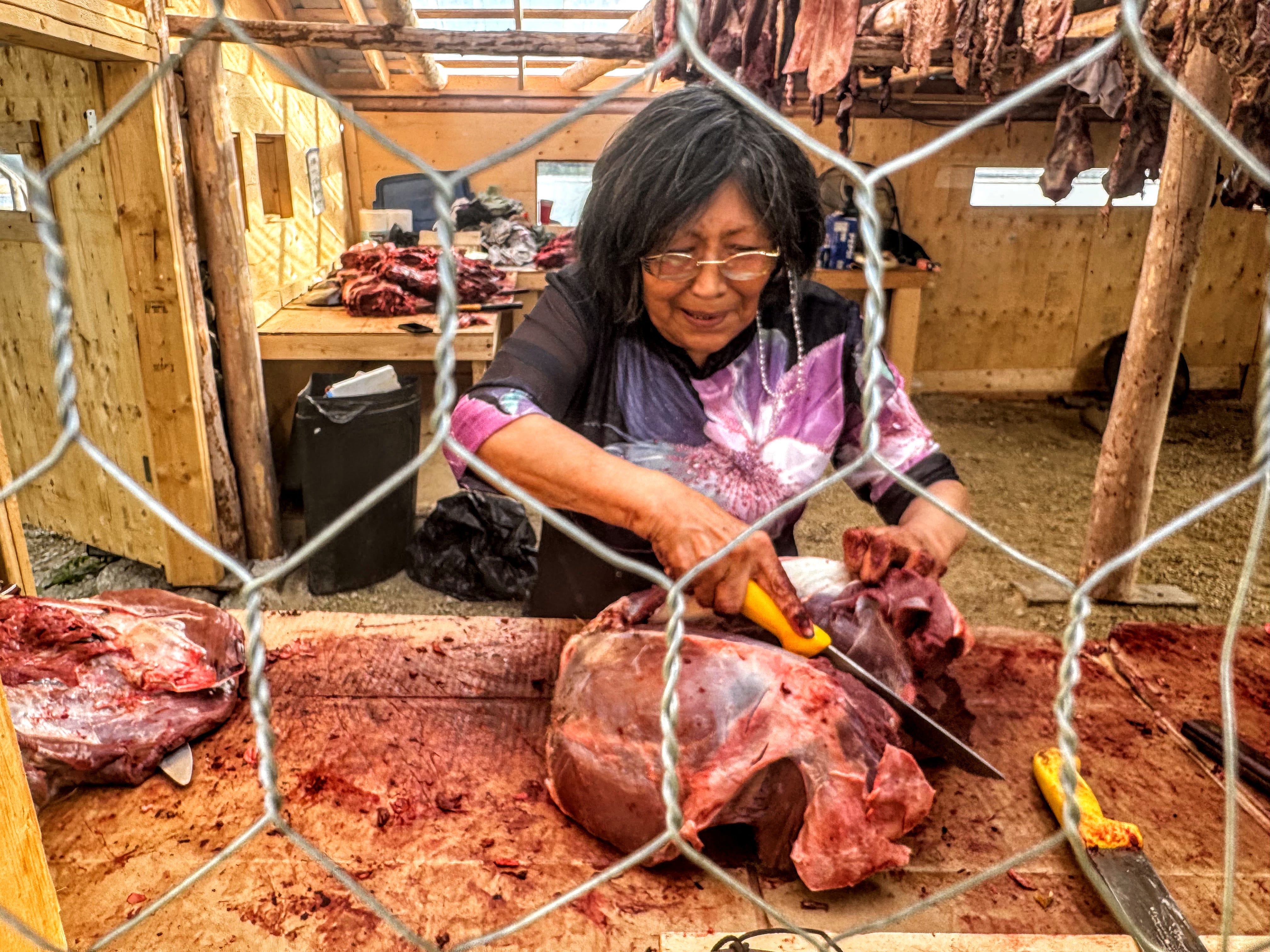
“It was great to see how they harvested the animals and shared them with the whole community, not wasting a thing and taking care to distribute the food to the elders and single mothers in the village first,” said Wolf.
“They were very welcoming to us and loved sharing their culture, inviting us to a community BBQ.”
The expedition also followed part of the route taken by the infamous Mad Trapper of Rat River, Albert Johnson, whose escape from the Royal Canadian Mounted Police in 1931-32 became one of the most famous manhunts in northern Canadian history.
Wolf and Kozma had hoped to find the site of Johnson’s cabin, but little evidence of it remains today.
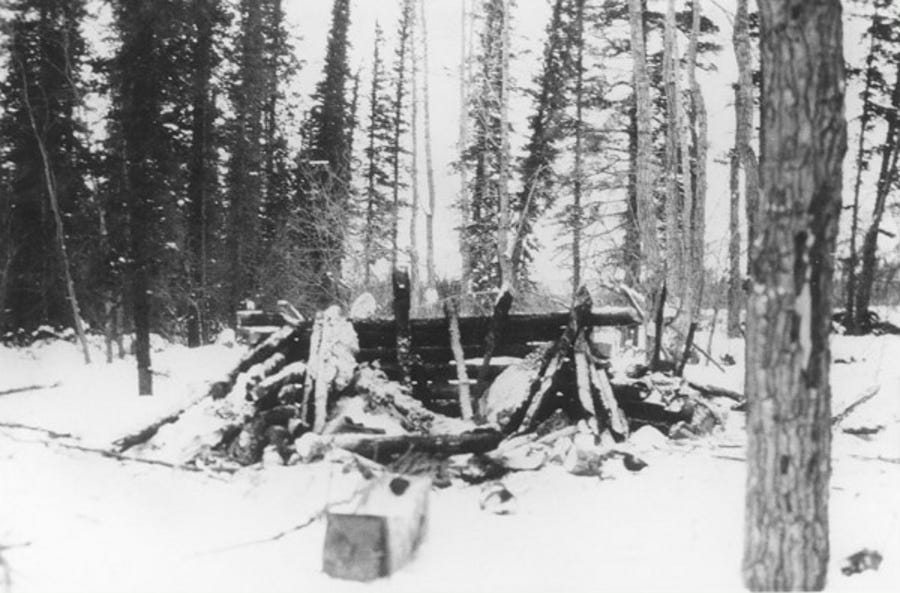
“We had info on where Albert Johnson’s cabin once stood, but either since the RCMP had blown it up in the 1930’s in their pursuit of him, or we were in the wrong location, all that remains is a thicket of willows and poplars, no structure in sight,” said Wolf.
“Regardless, it was cool to think we followed his escape route up the Rat River all the way to the Bell River where he was eventually shot and killed.”

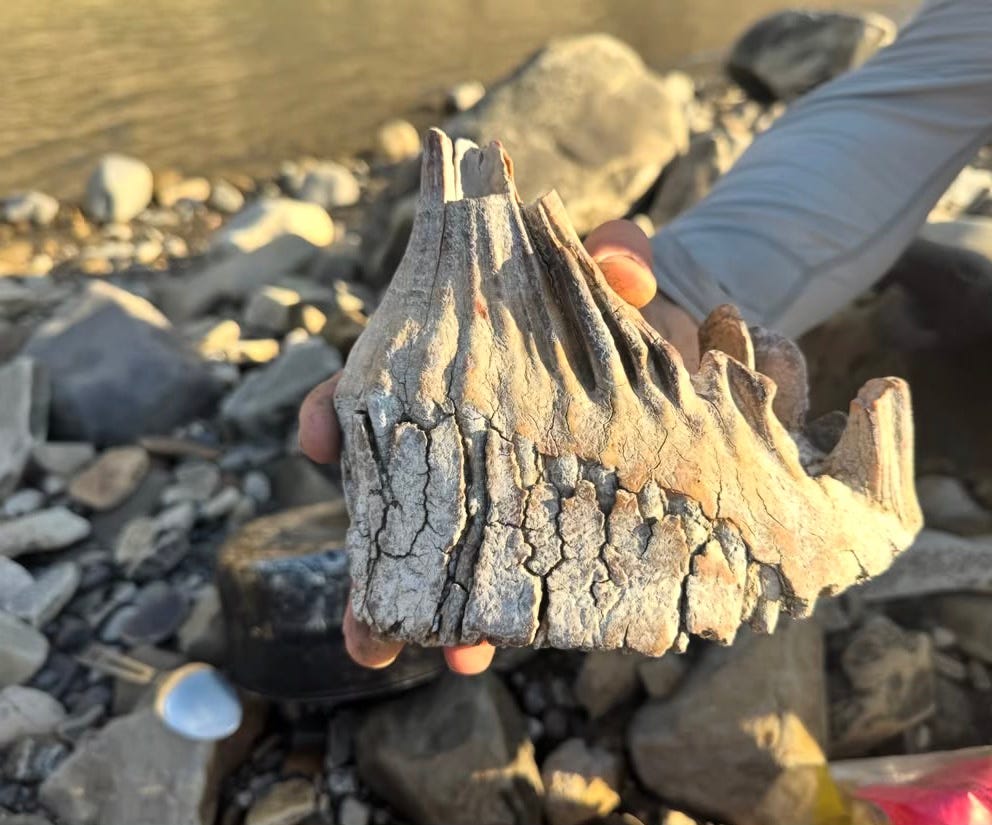
On day 13 of the journey Kozma found a a perfectly preserved woolly mammoth tooth near the Rat River Canyon in northern Yukon.
The area contains some of the richest ice age fossil deposits, and Wolf estimates the molar is at least 11,000 years old. Mammoths disappeared from the Yukon around this time, having inhabited the region from around one million years ago.
“Archaeological finds indicate that the local Vuntut Gwich’in people have been in the area for 20,000 to 30,000 years,” said Wolf.
“Mammoths were one of the mammals they used to hunt as evidenced by arrow and spear scarring found on the bones of mammoth fossils.”
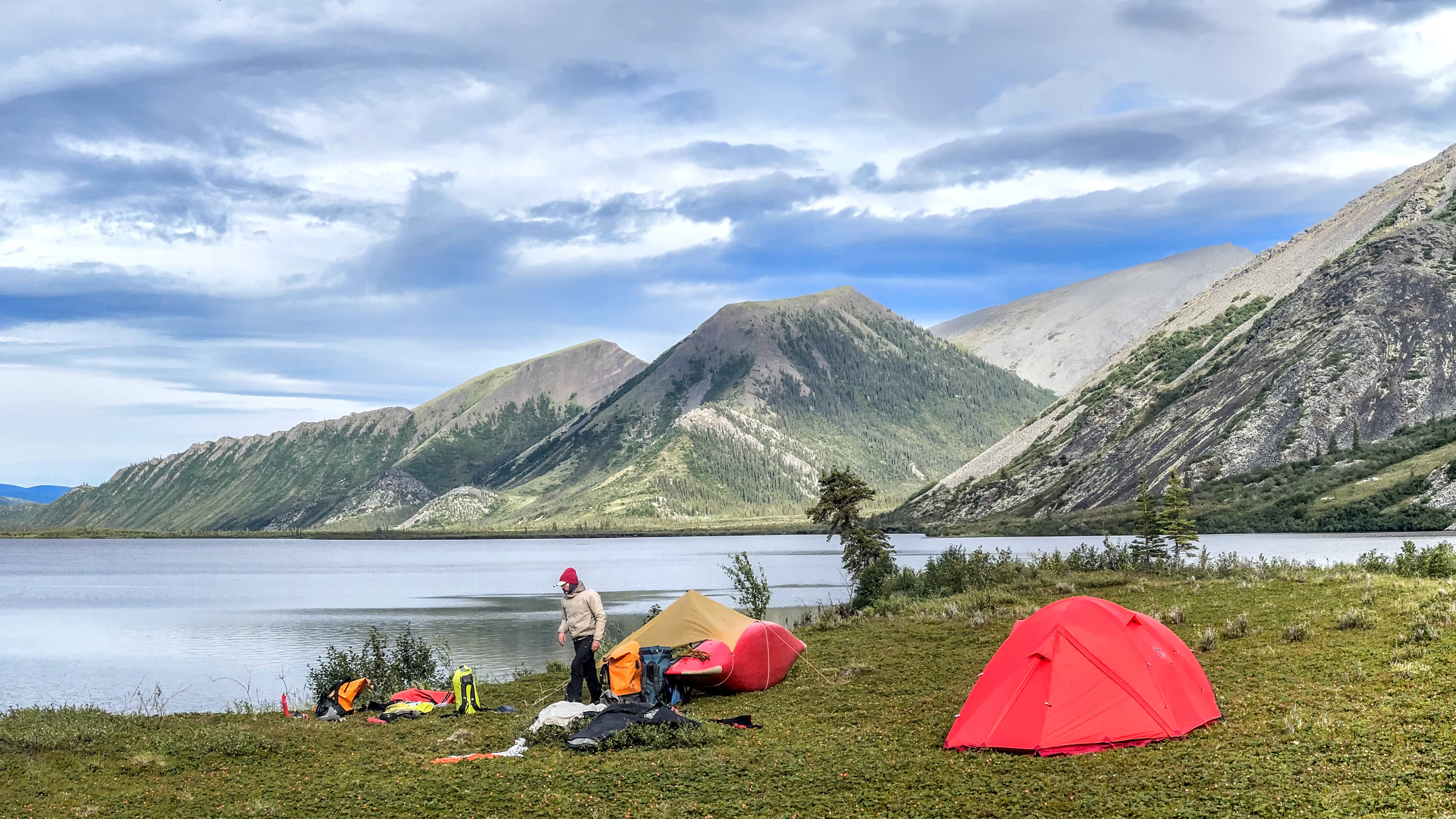
One of the joys of northern travel is the variety of wildlife. “We saw plenty of moose everywhere along the route, several Dall Sheep on the Hart River, and a trotting black wolf on shore that engaged us in a long stare as we passed by it,” said Wolf.
Not all of the wildlife was welcome, however. “The mosquitoes in the Mackenzie Delta area of the Rat River possessed the greatest bloodlust of any insects I’ve ever experienced.”
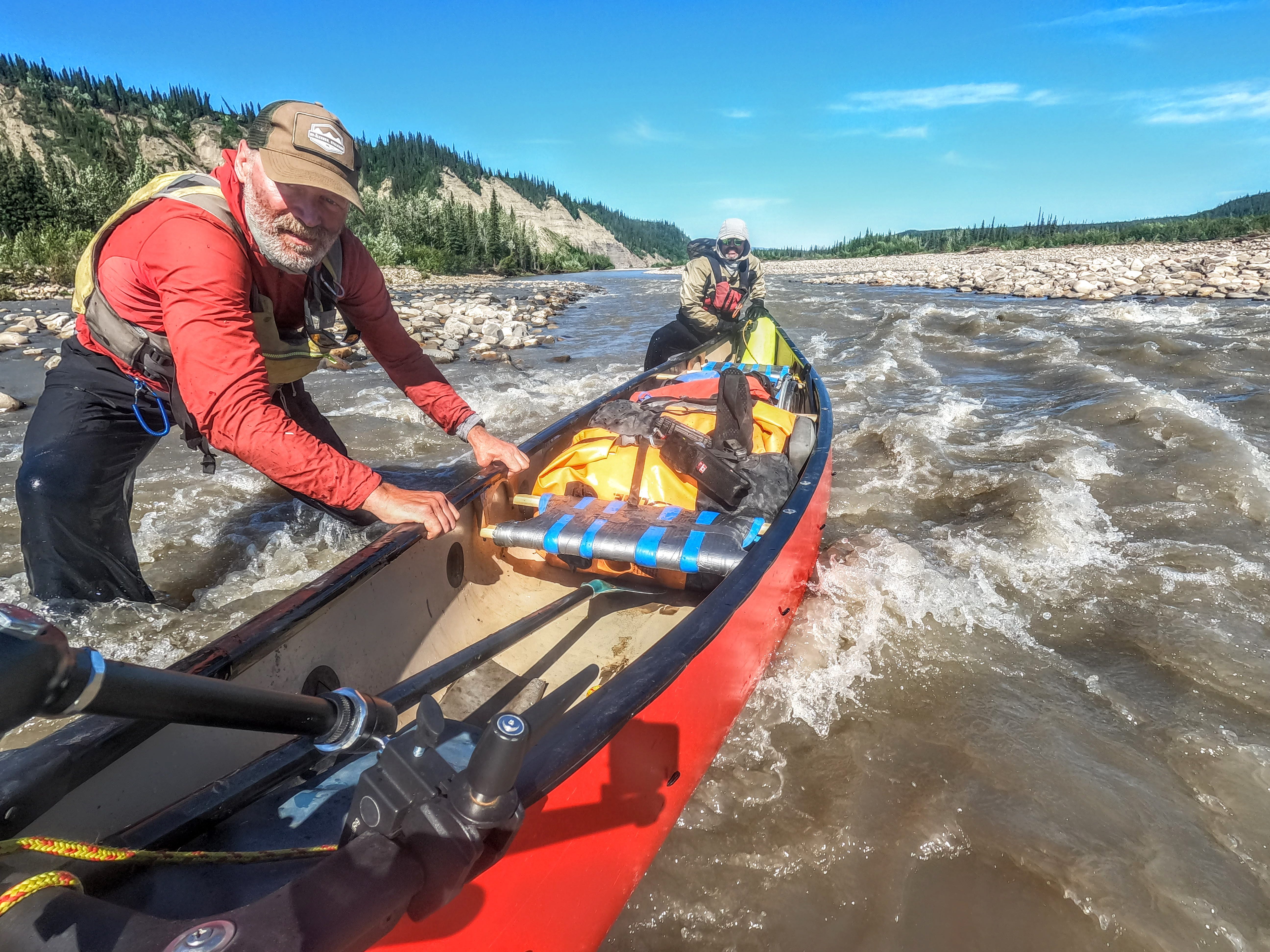
Their most intense wildlife encounter came on the Bell River, when a black bear wandered into camp and refused to be intimidated.
“No amount of shouting or clattering would drive it away, so I picked up a stone and laced the perfect shot at the critter, cracking it in the skull right between the eyes. It bolted off into the woods, not to return.”
Despite travelling like wolverines and consistently covering long distances, the two paddlers, perhaps unsurprisingly, did not encounter any of the elusive animals themselves.
With a decade of experience in adventure journalism, Ash Routen delivers insightful, evidence-based reporting on adventure, expeditions, and exploration. A paid subscription directly supports this independent reporting.
No posts
Comments
Nothing yet. Say the first thing.
Sign in to join the conversation.