
Artificial intelligence has become one of the defining conversations of our time.
Every week there seems to be another headline. Another tool.
Another prediction about jobs, productivity, or the future of work.
Some conversations are filled with excitement.
Others are driven by fear.
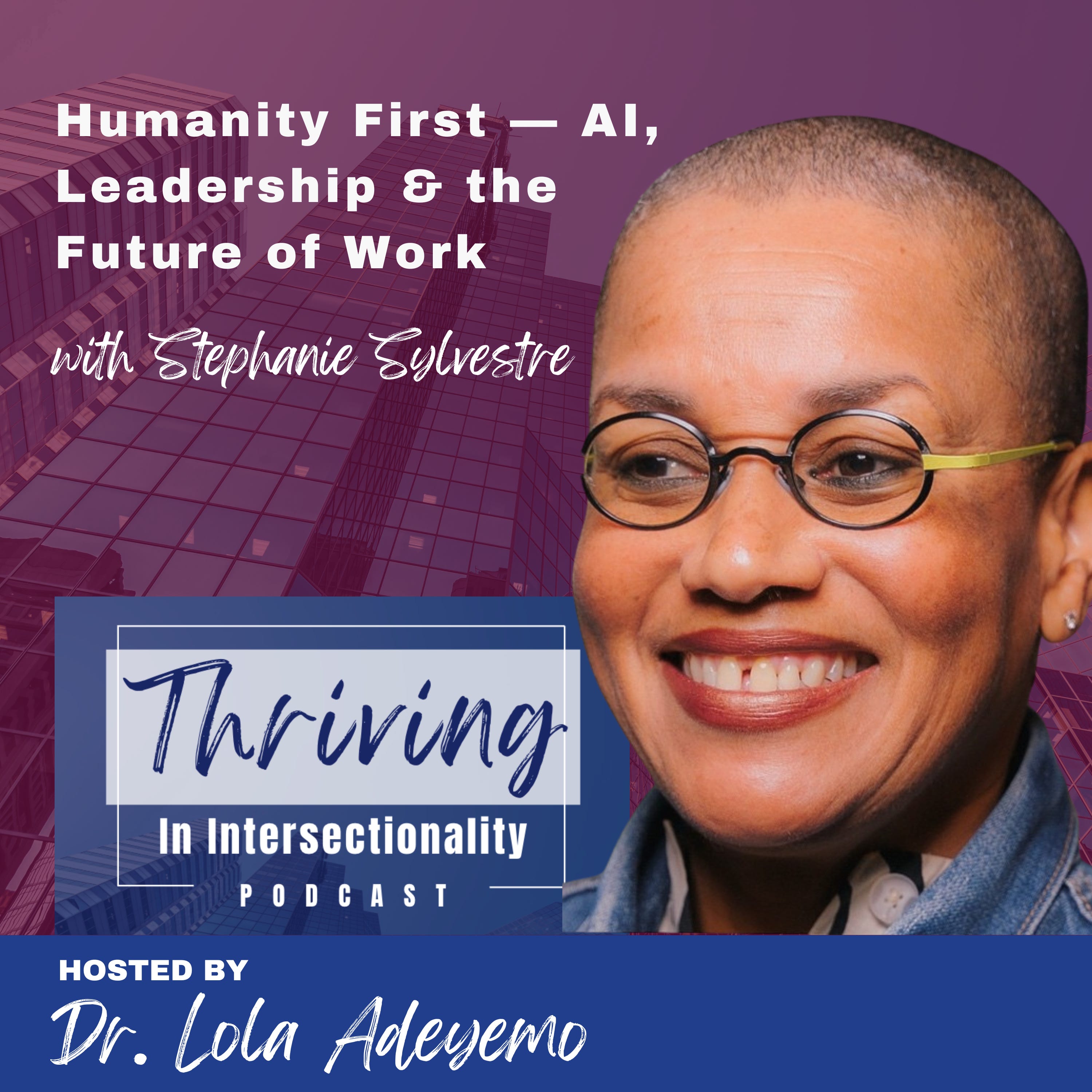
But after sitting down with Stephanie Sylvestre, I realized that perhaps we’ve been asking the wrong question.
Maybe the question isn’t:
“What will AI do?”
Maybe the better question is:
“Who will we become?”
This isn’t the first time people have wondered whether technology would fundamentally reshape work.
Every generation has experienced its own transformation.
The printing press.
Electricity.
The internet.
Smartphones.
Now AI.
The tools change.
The uncertainty feels familiar.
But every major technological shift has also revealed something important:
Technology changes what we do.
People determine why we do it.
Stephanie spoke passionately about something I don’t hear enough in conversations about AI.
Human potential.
Not efficiency.
Not automation.
Potential.
She reminded me that while AI can process enormous amounts of information, it still relies on people to ask meaningful questions, exercise judgment, build trust, and make ethical decisions.
That’s encouraging.
Because it means our future isn’t simply about learning new technology.
It’s about developing the qualities that technology cannot replicate.
Curiosity.
Compassion.
Discernment.
Creativity.
Wisdom.
Those aren’t “soft skills.”
They’re becoming strategic advantages.
One thing I appreciated about Stephanie’s story was that technology has never been her destination.
People have.
Whether she was working in corporate leadership, supporting communities, or building AI solutions, the question remained remarkably consistent:
How can technology improve people’s lives?
That distinction matters.
Because innovation without purpose can create efficiency without impact.
Technology can accelerate almost anything.
The real question is:
What are we choosing to accelerate?
The more I think about this conversation, the more convinced I become that leadership is changing.
Not because AI is replacing leaders.
Because it is redefining what leadership requires.
Leaders who succeed won’t simply be the ones who understand technology.
They’ll be the ones who understand people.
The ones who create trust.
Navigate uncertainty.
Ask thoughtful questions.
Build relationships.
Recognize potential.
Help others adapt.
Those abilities have always mattered.
Now they matter even more.
I spend a great deal of time thinking about workplaces.
About belonging.
About leadership.
About inclusion.
About the future of work.
This conversation reminded me that those conversations cannot become secondary because AI is advancing.
If anything, they become even more important.
The more sophisticated our technology becomes...
The more intentional we must become about preserving our humanity.
The future doesn’t belong to people who resist AI.
Nor does it belong to people who blindly embrace it.
It belongs to people who know how to use technology without losing sight of the people it exists to serve.
Perhaps the goal isn’t simply to become AI literate.
Perhaps the goal is to become more deeply human.
To strengthen our curiosity.
Our empathy.
Our creativity.
Our discernment.
To remember that every technological breakthrough ultimately shapes human lives.
And that means leadership in this new era isn’t just about understanding machines.
It’s about understanding people.
Because long after the next platform arrives...
Long after today’s tools become tomorrow’s history...
Our humanity will still be our greatest contribution.
🎙️ Listen to my full conversation with Stephanie Sylvestre on Thriving in Intersectionality.
I’d love to hear your thoughts:
As AI continues to reshape the workplace, what human quality do you believe will become even more valuable?
Comments
Nothing yet. Say the first thing.
Sign in to join the conversation.