
It covers artistic figures and cultural strategies of 20th-century authoritarian regimes, with an emphasis on fascism. The concluding section examines intellectually (propositionally) conservative artists and their eccentric oddities, illustrating how they reinforce temperamental rules. This essay can be read standalone; however it’s an ancillary document in service of the analysis and thesis of The Cathedral & The Ceiling.
D'Annunzio, Sarfatti, and the Futurists
António Ferro and the Politics of the Spirit
Röhm, SA homosexuality, Riefenstahl, Breker, Speer, the Night of the Long Knives
Recruit, extract, discard
Socialist Realism and the monotony of engineered art
Wolfe, Naipaul, Waugh, Dostoevsky, Borges
Authoritarian regimes proved capable of producing spectacle: pageantry, monumentalism, and legible heroic form. They could command scale, repetition, and unanimity. They could not summon disruptive artistic talent from within their own ranks.
Fascist parties had everything the social engineering thesis (detailed in The Cathedral & The Ceiling) could ask for: unlimited capital, institutional monopoly, coercive power, captive audiences, and willingness to kill dissenters. If artistic prestige were a function of effort and money, these regimes should have commanded aesthetic trends with native talent. And yet…
They still could not solve the creativity problem endogenously. Their approach was conscripting temperamental outsiders. Artists, aesthetes, and a great many homosexuals whose high-openness traits made them useful instruments. Their allegiance and services enticed or coerced via shame, incentive, or blackmail.
The pattern:
Find high-openness temperaments
Extract their aesthetic capacities. Wrap the output in state iconography.
Discard or kill them when no longer useful
The allure of deviation meant having to tolerate some deviants. The regime needed what it despised. It never resolved that contradiction.
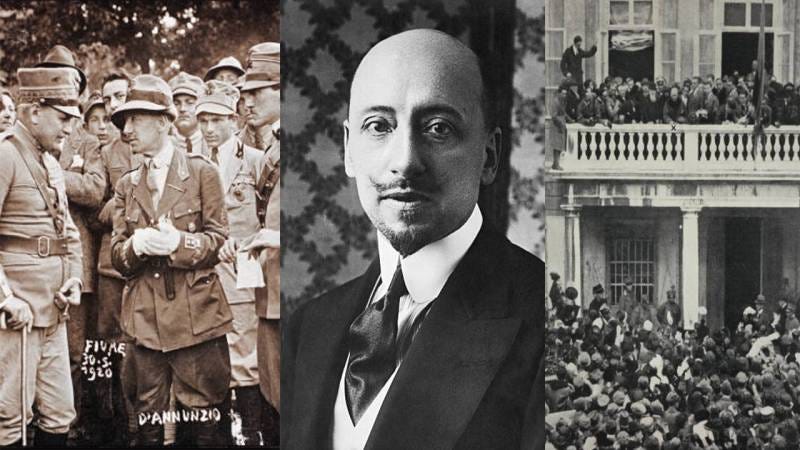
ROLE:
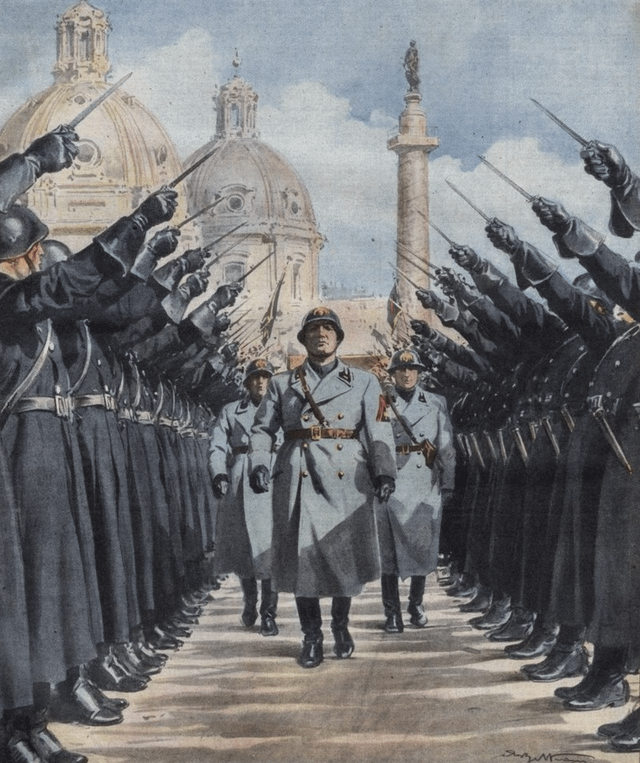
Originator of the fascist aesthetic and performance playbook Mussolini adopted: mass choreography (parades), black shirts, Roman salutes, nationalist spectacles, balcony speeches, and grandiose political displays.
BACKGROUND:
Poet, playwright, novelist, aesthete. Aligned with the Decadent literary movement, French Symbolism, and British Aestheticism, and with socialist and progressivist politics. His literary works were sensuous, mystical, and transgressive.
D’Annunzio was a notorious sexual libertine whose affairs with aristocratic women and actresses across Europe were central to his public persona.
Harold Acton described his voice as “almost bisexual, since its virility alternated with feminine sweetness. His intonation seemed the fine flower of the Italian Renaissance”. D’Annunzio was fascinated by bisexuality and had intimate relationships with lesbian painters in Paris.
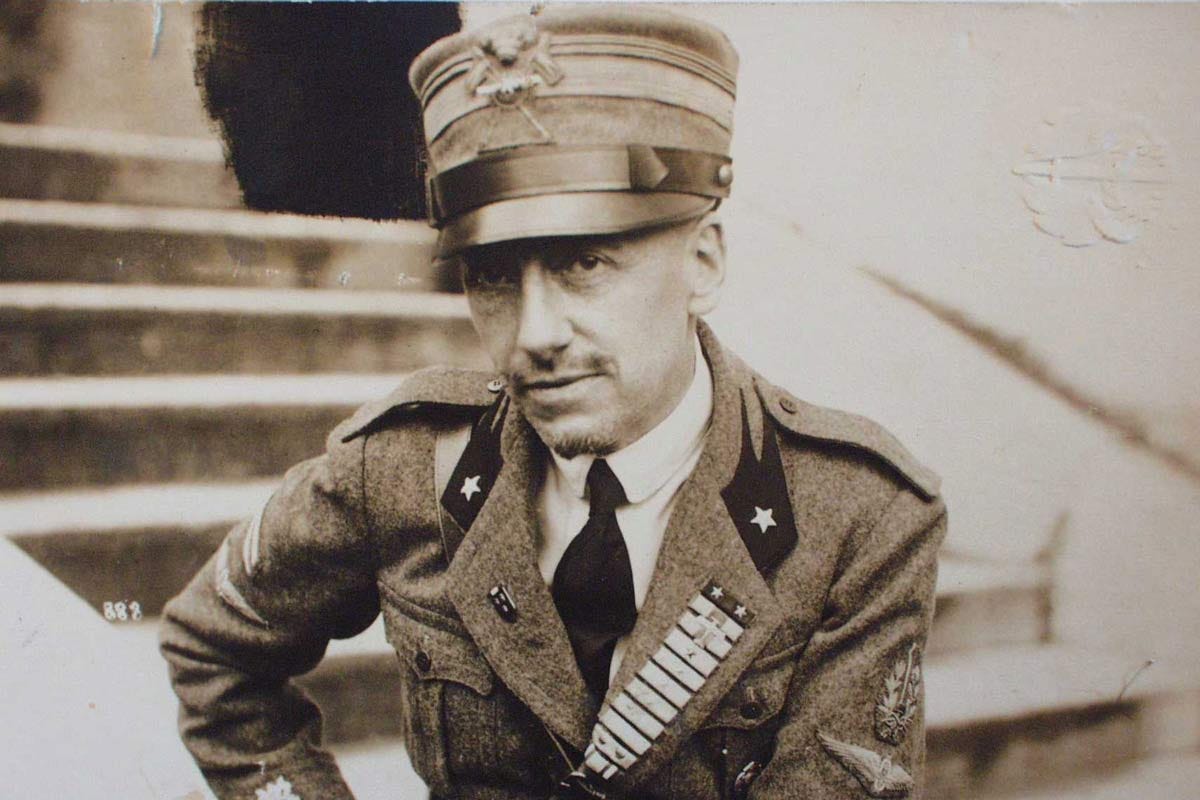
D'Annunzio annexed a city called Fiume through a quirk in a treaty that left it unaccounted for. Italy’s most famous living poet and a decorated war hero marched on the disputed Adriatic port in 1919 with a few hundred veterans, proclaiming he'd annexed it to Italy as "Regent”. The Italian government refused to recognize it and demanded he leave. He refused and started running a country.
His rule turned Fiume into a cocaine-fueled, sexually promiscuous proto-fascist micro-state where homosexuality was openly practiced. What followed was deranged and entirely on brand.
D'Annunzio instituted a constitution dividing the state into nine corporations representing key industries (run by “The Council of the Best”). Plus a symbolic 10th corporation reserved for "Supermen": largely himself and fellow poets!
His “Secretary of Action” Guido Keller instituted nationwide yoga classes, sometimes led in the nude.
Keller had a semi-tame eagle he slept with in a tree. A bisexual devotee of group sex and cocaine, he also conducted aerial raids on Italian and Austrian farms to steal livestock.
The yoga group adopted the swastika as its symbol, per its ancient esoteric usage, well before the Nazis used it.
If citizens weren’t interested in yoga, they could take up karate (!) taught by the Japanese poet Harukichi Shimoi (the government called him “Comrade Samurai”). So much about this place was ridiculous.
There was an alliance of factions called the “Union of Free Spirits Tending Toward Perfection”, because of course there was.
The Italian government finally lost patience, sending 8,000 soldiers and demanding his surrender. He refused. Blood was shed. Eventually, D'Annunzio caved.
Hilariously, there was no punishment for D’Annunzio. His troops laid down their arms, and he simply went back to Italy a few weeks later.
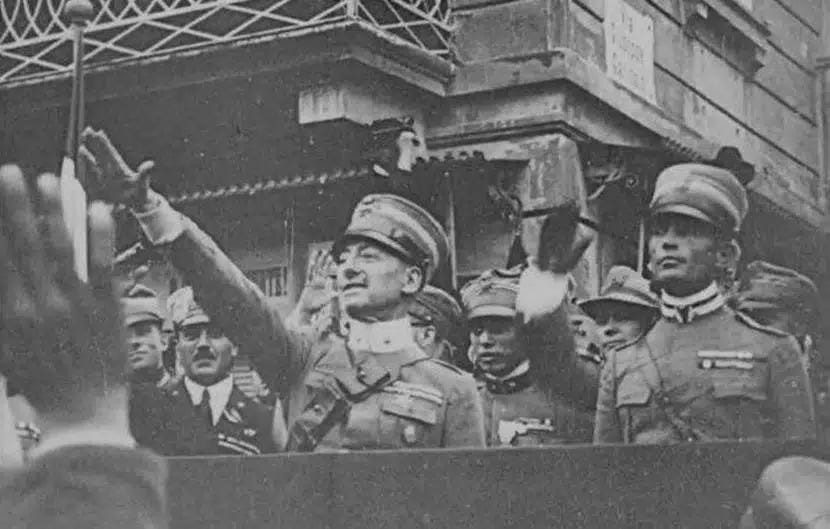
For 15 months, D’Annunzio ruled this tiny city-state and invented virtually every theatrical element that would later be “fascist”:
The Roman salute
Blackshirt uniform
The title “Duce”
Balcony address as political ritual
Rhetorical call-and-response with crowds (”A chi l’Italia?”… “A noi!”)
The battle cry “Eia, eia, eia! Alalà!” (Achilles’s cry from the Iliad)
Choreographed torchlight parades and mass rallies
Cult of the leader as poetic-prophetic figure
The use of castor oil as a punishment (later a Blackshirt trademark)
Corporatism as a state organizing principle (via the Charter of Carnaro)
Mussolini has none of this yet. In 1919 he’s running a fringe newspaper (Il Popolo d'Italia) and a political movement (the Fasci di Combattimento) that’s electorally irrelevant. In November 1919, Mussolini's Fascists get essentially zero seats. He's a nobody watching from Milan while D'Annunzio is the center of attention.
October 1922, March on Rome: Mussolini seizes power using D’Annunzio’s template. Every major aesthetic element of Italian Fascism (uniforms, rituals, title, balcony speeches) is copied from Fiume.
1922–1938, D’Annunzio is gilded and sidelined: Mussolini, knowing D’Annunzio is a rival who could claim the movement’s soul, manages him with a mix of flattery, money, and surveillance. D’Annunzio is made a prince (sinecure), given a lavish estate, placed on massive state pension, and kept under watch. Occasionally writing letters advising Mussolini on governance (he opposed the alliance with Hitler), but his political power is zero. Historians describe him as “gilded into irrelevance”.
ROLE:
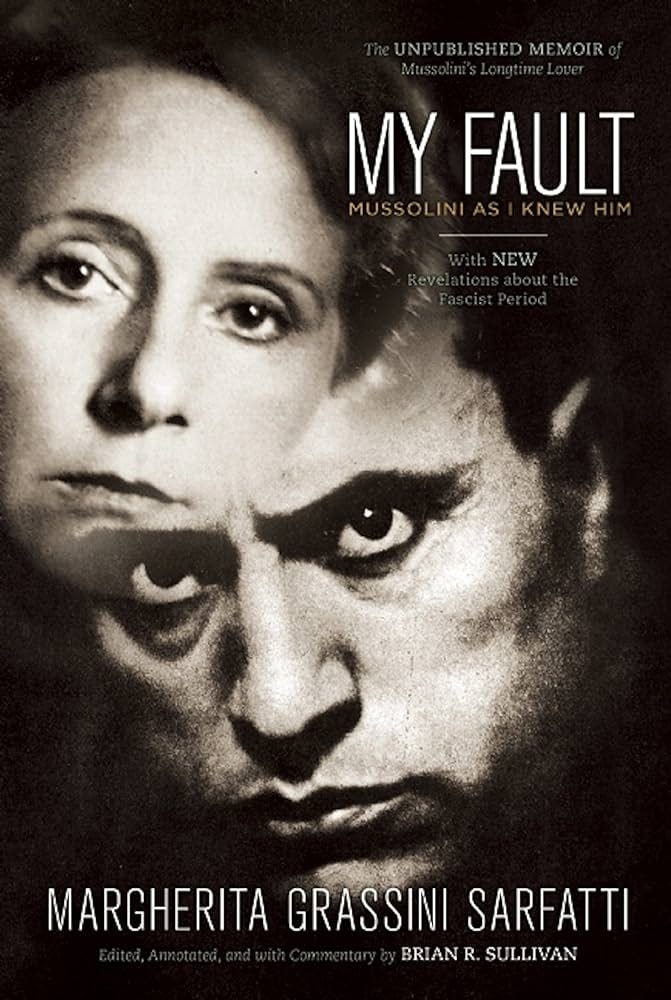
Mussolini’s lover. She served as his strategist and organizer of Fascist social policy: curating which artists and aesthetics the regime endorsed, elevating fascism from blackshirts with good lighting into a serious cultural project.
BACKGROUND:
Born into a wealthy Venetian family. Jewish. Female. Moved through socialist intellectual circles before meeting Mussolini. She was an art critic and salon hostess.
Sarfatti embodies every axis of liberal temperamentality. A cosmopolitan socialist, ethnically Jewish in a regime that would eventually pass racial laws. A woman wielding enormous cultural influence in a masculine political ecosystem. Intellectually modernist serving a traditionalist base.
Extracted for her high-openness cultural acumen, deployed until the regime’s aesthetic was solidified, then discarded under the racial laws her own work helped legitimize. Useful because she possessed the traits the base lacked. Disposable because she was what the base detested.
ROLE:
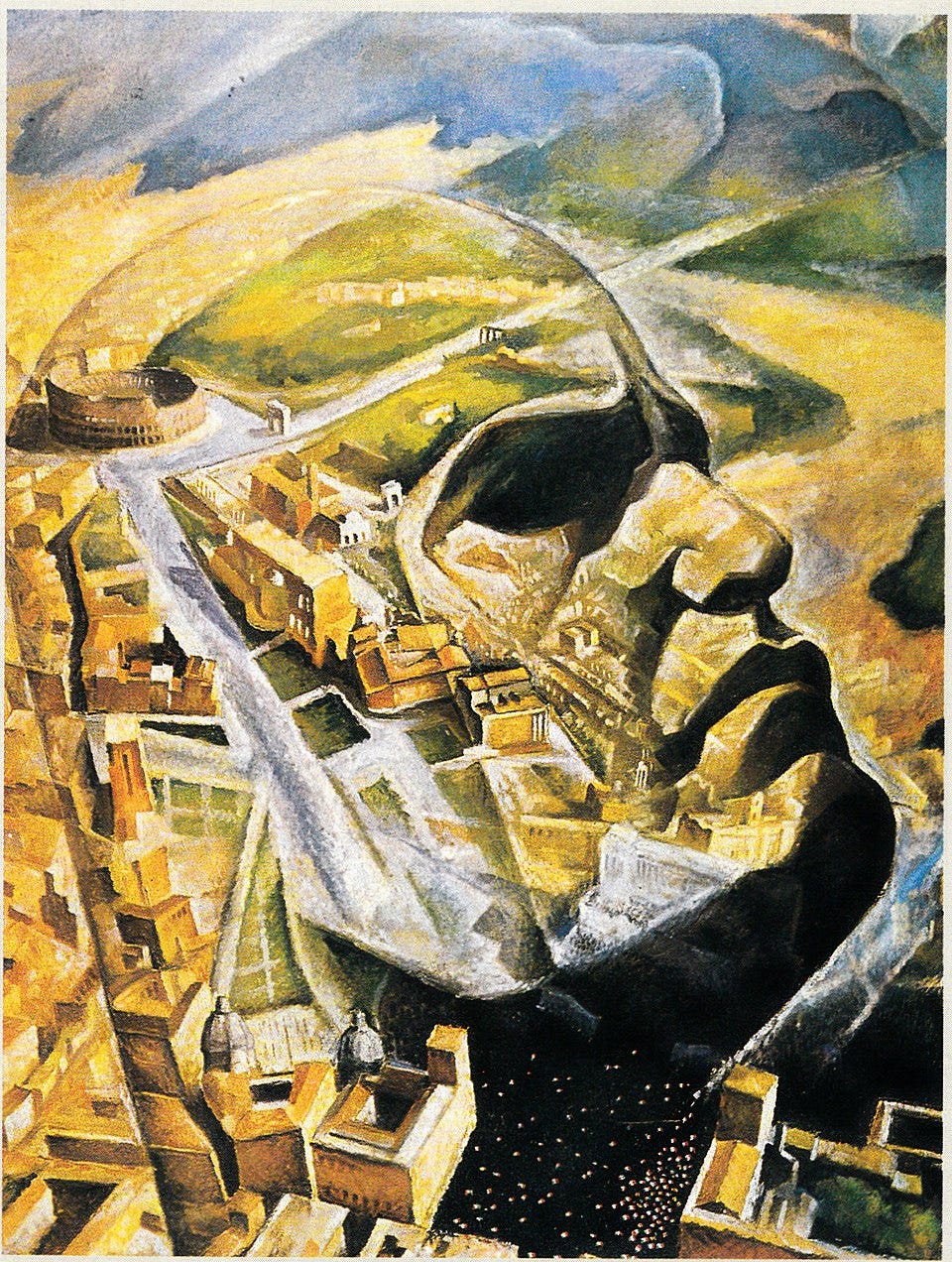
Supplied Italian Fascism with its forward-facing aesthetic vocabulary: speed, machinery, violence-as-virtue, contempt for museums and the academy. Marinetti co-authored the Fascist Manifesto in 1919 and was one of the first intellectuals to join Mussolini’s movement.
BACKGROUND:
Poet, provocateur, avant-gardist. Trained in Paris, launched the Futurist movement with a 1909 manifesto published on the front page of Le Figaro. His aesthetic was aggressively modernist. He called for the burning of libraries, the flooding of museums, the demolition of Venice. A chaotic temperament.
The Futurists were radical modernists who allied with a Fascist state willing to fund their assault on the past. Once Fascism consolidated and began courting classical iconography, Futurism was gradually displaced by the more legible Novecento style (Sarfatti’s preferred school). The Futurists’ aesthetic identity depended on insubordination. Once the regime sanded that off, the creative electricity dissipated.
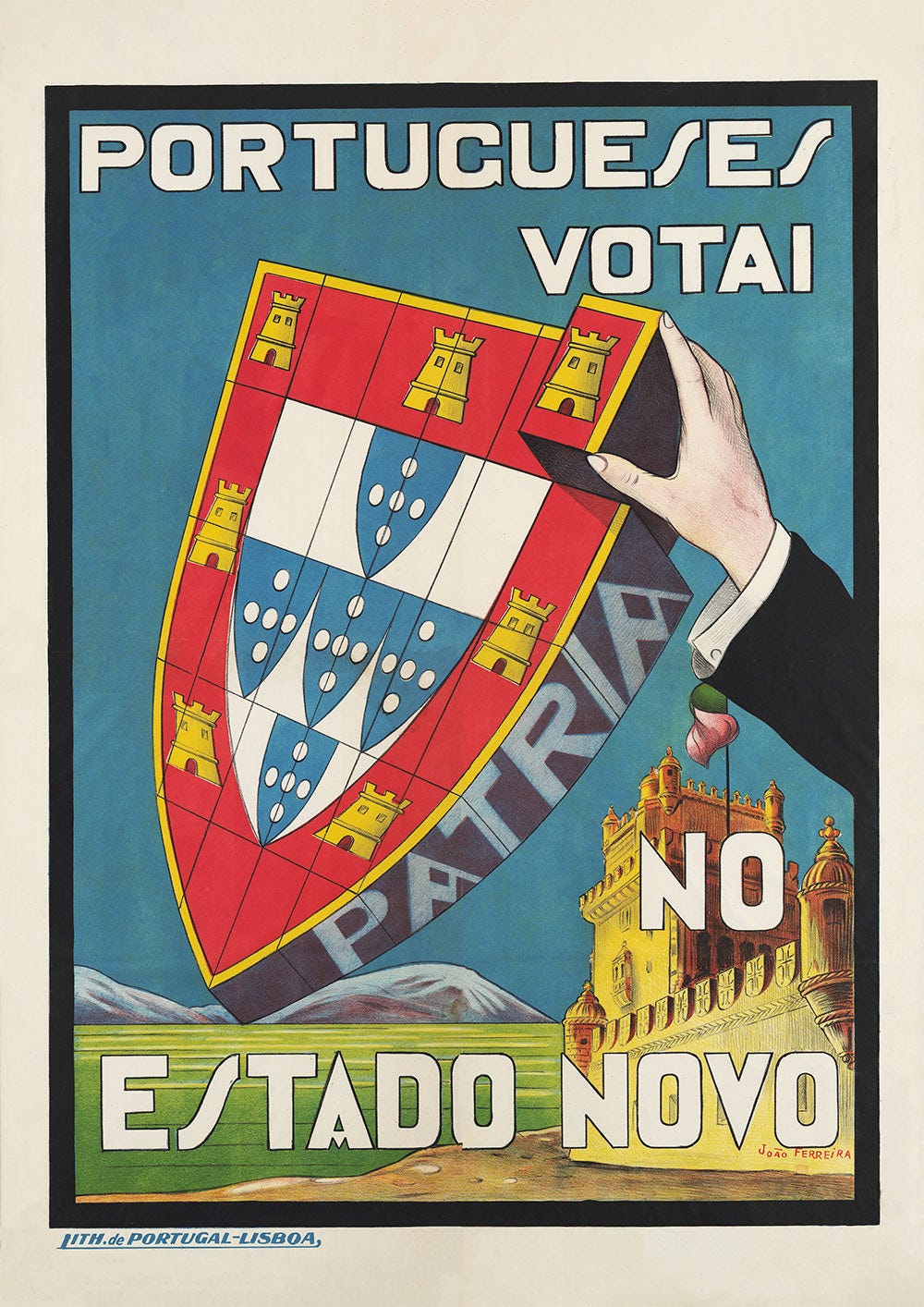
Salazar's Estado Novo was conservatism distilled to its purest extract: modest, disciplined, ascetic, allergic to spectacle. It had no aura.
ROLE:
Ferro created and directed the Secretariado de Propaganda Nacional (SPN) under Salazar, designing the cultural face of the Estado Novo. His 'Politics of the Spirit' program gave Portugal's authoritarian regime a modern image while preserving its deeply conservative social order.
Ferro packaged Portuguese folk culture into an aesthetic identity, organized exhibitions, and positioned Portugal as culturally prominent on the European stage.
BACKGROUND:
A modernist journalist, poet, self-described 'futurist', embedded in Lisbon's bohemian circles and tied to the European avant-garde before Salazar recruited him to run propaganda.
ROLE:
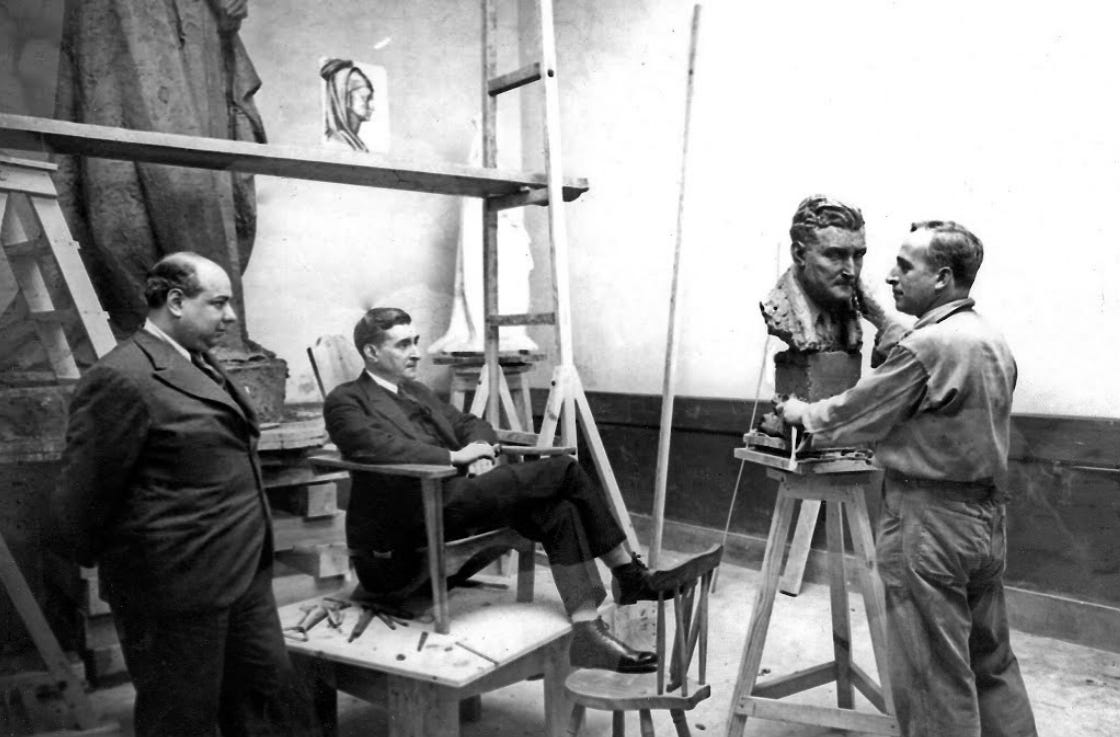
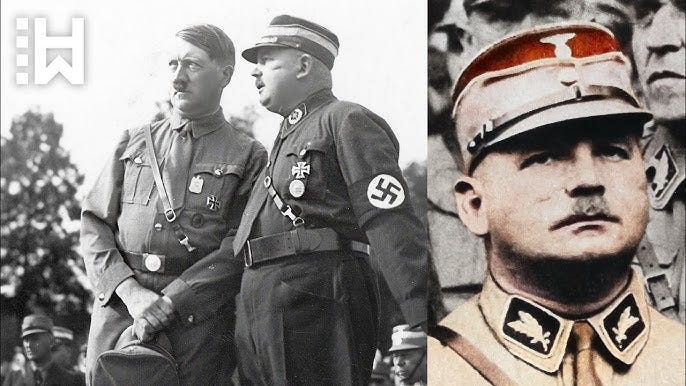
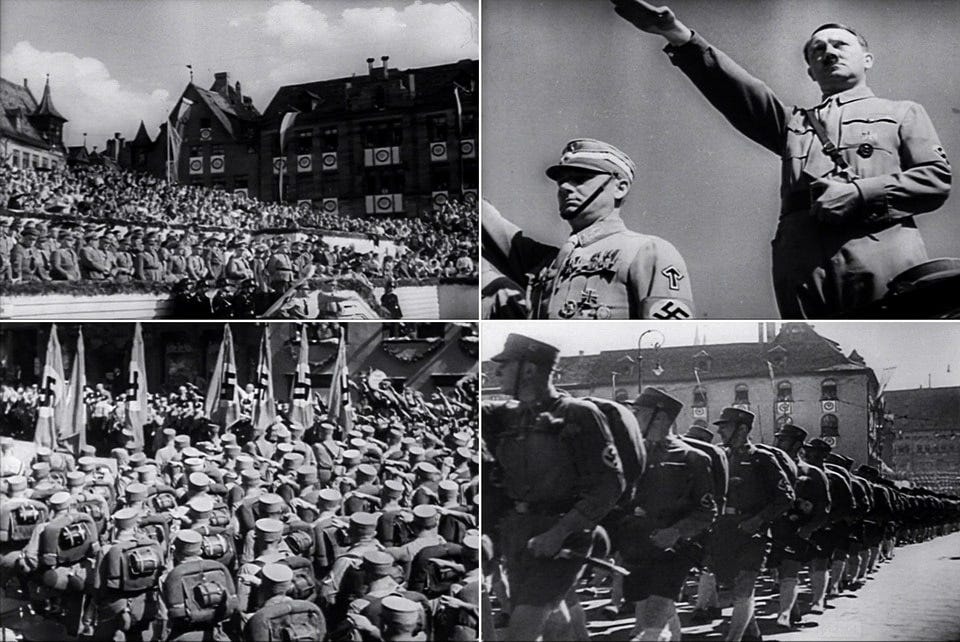
The commander of the SA (Brownshirts), whose organizational ethos, hypermasculine aesthetic, and street-fighting mentality were central to early Nazi identity. The SA’s culture of ritualized male bonding and violent spectacle preceded the more bureaucratic SS aesthetic.
BACKGROUND:
Openly homosexual. The highest-ranking gay Nazi and one of the first known gay politicians in modern Europe. He addressed Hitler by his first name (“Adi”), the only Nazi leader who did so. His homosexuality was known to Hitler, who tolerated it for years. He challenged “the privileging of heterosexual over homosexual masculinities” within the party. Social Democrats leaked his letters discussing his orientation in 1931.
Edmund Heines: SA Deputy, described as the center of a 'homosexual ring' within the SA. Found in bed with his 18-year-old male chauffeur on the Night of the Long Knives. A convicted murderer, sadist, and brutal enforcer who was central to the SA's aesthetic culture.
Described as having "a girlish face on the body of a truck driver". Had a reputation for violence and sexual perversion. Hitler expelled him from the SA in 1927 for “loose morals”, Röhm reinstated him.
Karl Ernst: SA leader in Berlin, former hotel bellhop and bouncer at a gay nightclub. Relationship with Paul von Röhrbein was known within the party and likely explains his rapid promotion. He was on his honeymoon (to a woman, possibly a cover marriage) when captured and executed during the Night of the Long Knives.
ROLE:
Founder of the Freikorps Roßbach: a direct precursor to the SA. Introduced the brown shirts to the SA (they were originally surplus colonial uniforms). Multiple SA leaders, including Edmund Heines, were his proteges.
BACKGROUND:
Rossbach was widely rumored to be gay, though he wasn’t open about it. His Freikorps unit and the Berlin Tiergarten Club were noted for gay culture. He was the organizational bridge between the Freikorps movement and the SA, and his gay milieu shaped the SA's early culture.
ROLE:
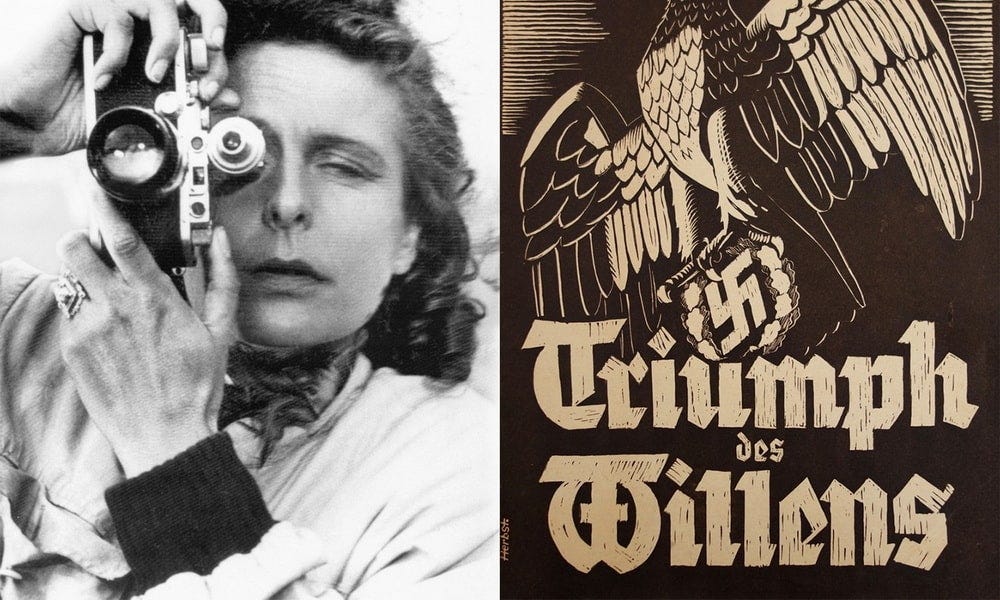
Director of Triumph of the Will (1935) and Olympia (1938), widely regarded as two of the most effective and technically innovative propaganda films ever made. She invented the visual language of fascist spectacle on film: tracking shots, cameras on rails, extreme angles, heroic low angles of Hitler, rhythmic editing of mass formations. Her films became canon.
BACKGROUND:
Started as a dancer, then actress, then became one of the few female directors in Weimar Germany. Her temperament was fiercely artistic, boundary-pushing, and independent. Her innovations influenced Steven Spielberg, George Lucas, Francis Ford Coppola, Andy Warhol, and Madonna.
Never a Nazi Party member. Claimed she was “mesmerized” by Hitler after hearing him speak in 1932, describing the experience in ecstatic terms. Maintained a complex relationship with the regime: given unlimited resources and full artistic license, but also (she claimed) resistant to further commissions.
Classic high-openness artistic temperament: dancer, actress, photographer, filmmaker, underwater cinematographer in her 70s. She wasn’t ideologically committed to Nazism, more aesthetically seduced by the spectacle.
The regime found artistic talent and aimed it. She wasn’t gay, not politically aligned, and later claimed she was coerced into working for them. She lived to 101.

ROLE:
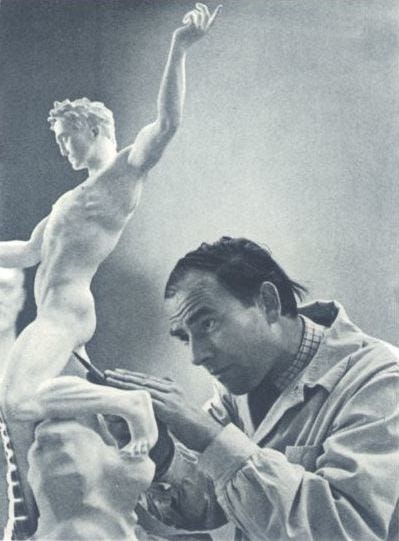
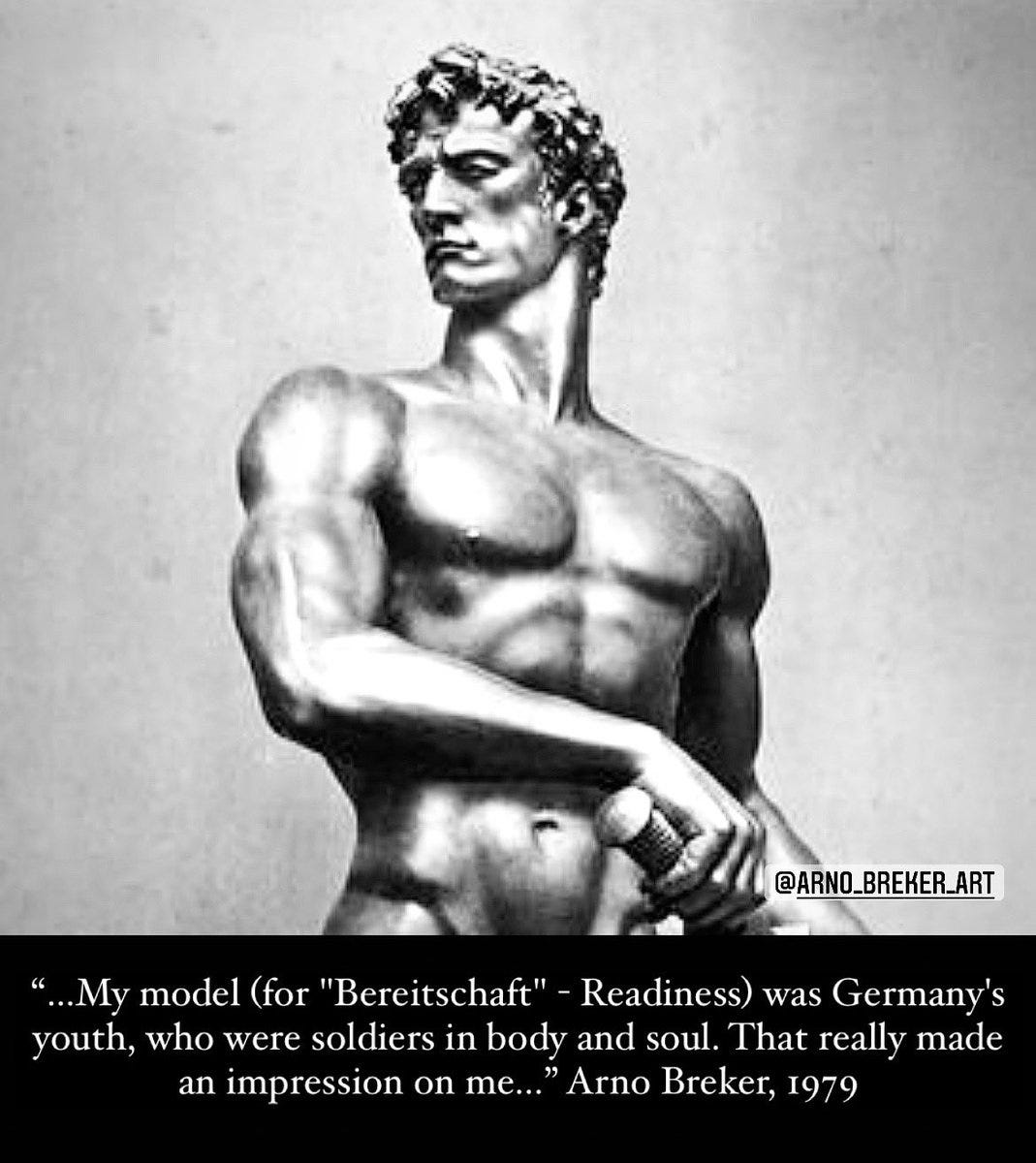
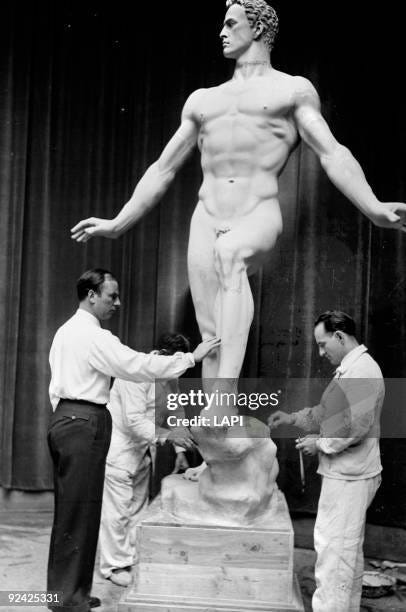
Hitler’s favorite sculptor, named “official state sculptor” in 1937. Created the neoclassical nude male sculptures that became a visual signature of Nazi ideology: The Party, The Army, Comradeship, Torchbearer, Sacrifice.
BACKGROUND:
Son of a stonemason. Studied at the Düsseldorf Academy of Arts. He lived in Paris from 1927, where he moved in avant-garde circles, befriending Cocteau, Renoir, and Pablo Picasso.
His formative artistic influences were Parisian modernism and the Bohemian art world. He only returned to Germany and aligned with the Nazis after they came to power. He joined the Nazi Party in 1937: late, and probably opportunistically.
Married twice. No documented homosexuality. However, his work is consistently described as distinctly homoerotic: naked, muscular, and handsome Aryans. Breker’s work and Nazi aesthetic identity reveal a tension between the regime’s stated disdain for gays and its affinity for suggestive undertones.
A Parisian avant-garde bohemian from Picasso's social circle, imported back to Germany for patronage, where he crafted provocative male forms. Not exactly a temperamental conservative
ROLE:
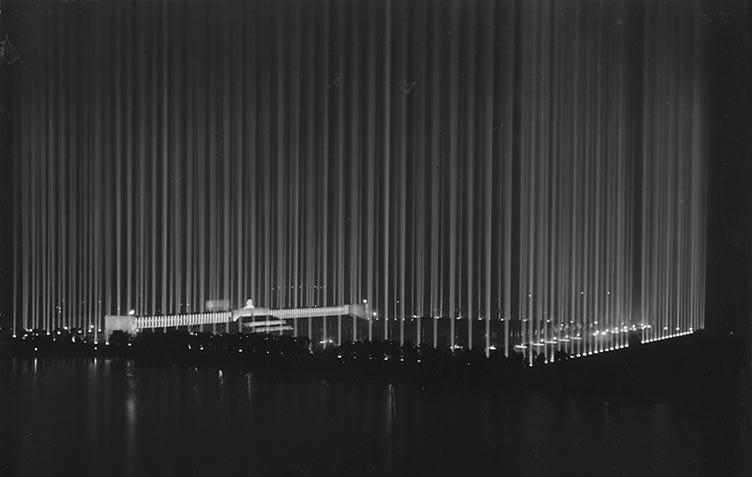
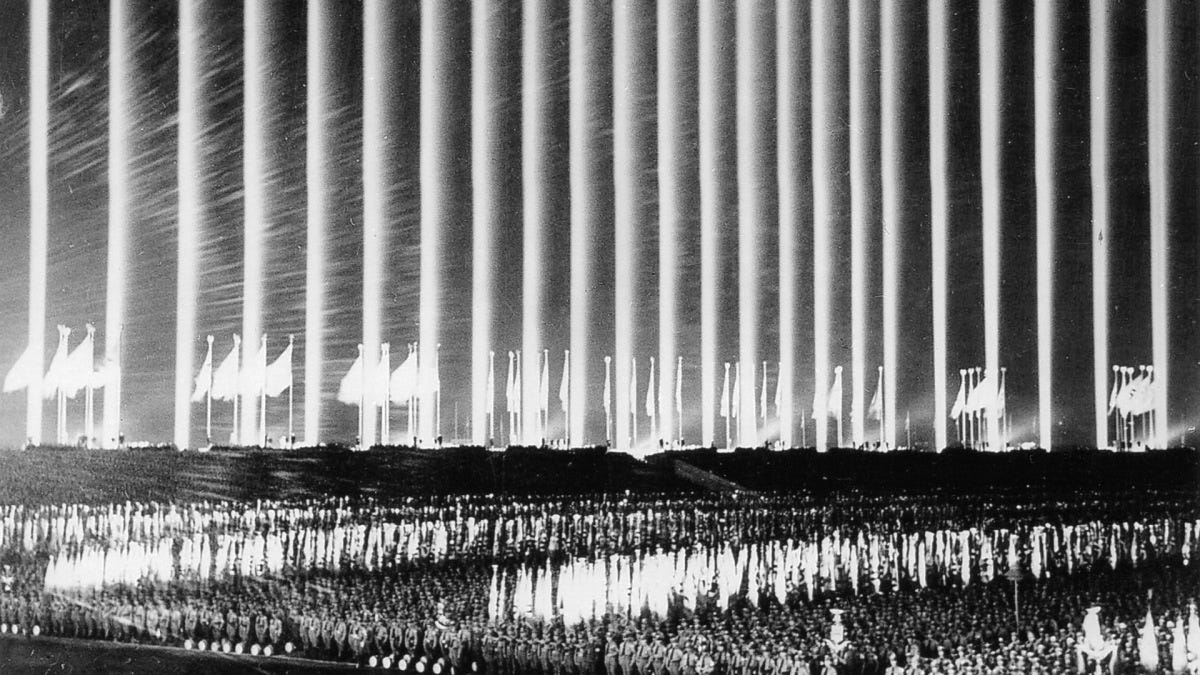
Hitler’s chief architect. Designed the Nuremberg rally grounds, the Cathedral of Light, the New Reich Chancellery, and the unrealized plans for “Germania”: the monumental rebuild of Berlin.
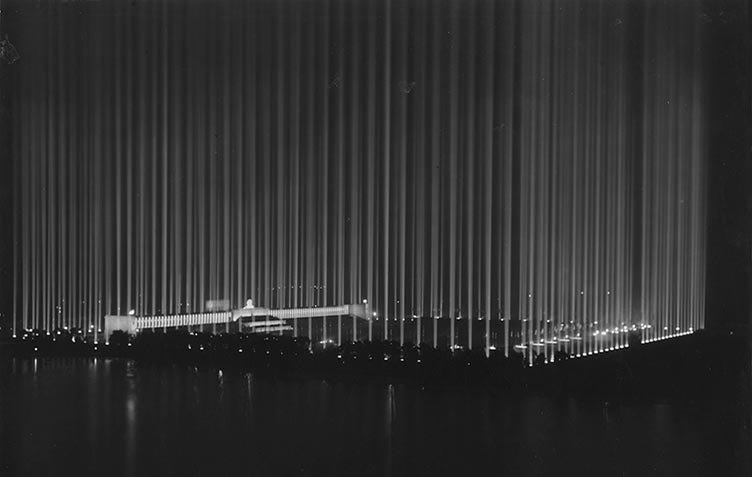
The Cathedral of Light
BACKGROUND
An architect by training and trade. Son and grandson of architects. Known for neoclassical simplicity. Joined the Nazi Party in 1931 after hearing Hitler speak.
Married. Six children. No evidence of homosexuality. Speer’s profile is the closest to an orderly conservative among the major Nazi aesthetes. And critically, he was an architect, not a painter or filmmaker.
Architecture, especially the monumental neoclassical kind, is an orderly art form.
Architects must submit to the physical world, their work is embodied, existing under the constraints of physics. Whereas the painter and filmmaker are limited by imagination; their creations live in the mind.
The exception reinforcing the rule. The one genuinely rightwing phenotype in this roster produced what you'd expect: monumentality, clear lines, symmetry, unambiguity, no sexual undertones. The subordination of individual expression to collective function.
Speer was temperamentally conservative and his work shows it: impressive engineering and intimidation, reinforcing worldviews.
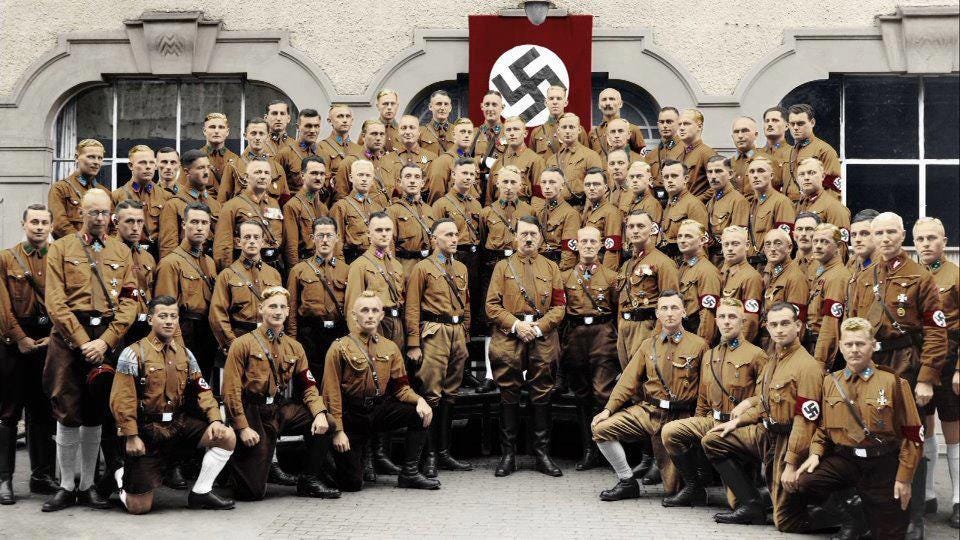
Sturmabteilung translates to "Storm Detachment" or "Assault Division", commonly known as "Brownshirts". The SA’s culture was one of male bonding and homosocial community. Its hypermasculine warrior-comradeship (the Männerbund tradition) blurred the line between homosocial and homosexual.
ROLE:
The SA was a chaos vehicle: street violence, riots, physical assaults. It was the revolutionary arm of Nazism with prominent gay leadership; however the rank-and-file members were not disproportionately gay. High-openness outliers whose style, intensity, and comfort with force made them indispensable during the insurgent phase.
The movement needed men willing to shatter norms, operate outside respectability, and project a charisma that orderly bureaucrats could not. It tolerated gays while their services were needed.
The same traits that made the SA useful made it threatening as the regime emphasized moral order. Deviance became the justification for liquidation.
When Hitler needed to consolidate power, he purged the SA and used their homosexuality as post-hoc justification for the murders on The Night of the Long Knives. Scapegoating those who were once useful, but now a liability.
The regime used chaotic temperaments as accelerants during its rise, then murdered them as contaminants as it matured. After the purge, the Nazis systemically persecuted gays.
Not all were killed or ostracized, but each were dismissed one way or another if they weren't True Believers of the regime. The chaotic outlier is suspect within the orderly coalition because the traits that make them artistically helpful are the same ones that make them socially volatile. The relationship is inherently transactional and terminally unstable. You can hire a mercenary, but you cannot make him loyal.
Röhm, Heines, Ernst → murdered, sexuality used as justification
Sarfatti → built Mussolini’s cultural image, forced to flee under racial laws
Riefenstahl → given unlimited resources, then spent 60 years in post-war limbo
D’Annunzio → invented the aesthetic playbook, then pensioned off and surveilled by Mussolini
Artistic bohemianism
Breker’s Parisian formation, Riefenstahl’s dance-and-film career.
Avant-garde revolutionary energy
The Futurists
Homosexuals
Röhm, the SA clique
Cosmopolitans who are ideologically foreign
Sarfatti: Jewish, female, socialist; Ferro: modernist journalist; D’Annunzio: decadent bisexual poet.
The common denominator is high Big Five trait openness. The same trait that strongly predicts liberal political orientations.
This issue isn’t uniquely fascist, but authoritarian. The same dynamic shows up wherever a regime tries to engineer culture from the top down. Stalinist Socialist Realism had complete totalitarian control and produced the same aesthetic tells: heroic bodies, prepackaged ethics, sanitized struggle, state reverence.
Stalin both captured the institutions and implemented a massive apparatus for art production. The Union of Soviet Writers, Union of Soviet Artists, state academies. Guaranteed salaries and audiences. Total control of distribution. Zero market competition. Unlimited funding. With the explicit doctrine: art must be “national in form, socialist in content”. Optimistic. Heroic. Parseable. Morally unambiguous.
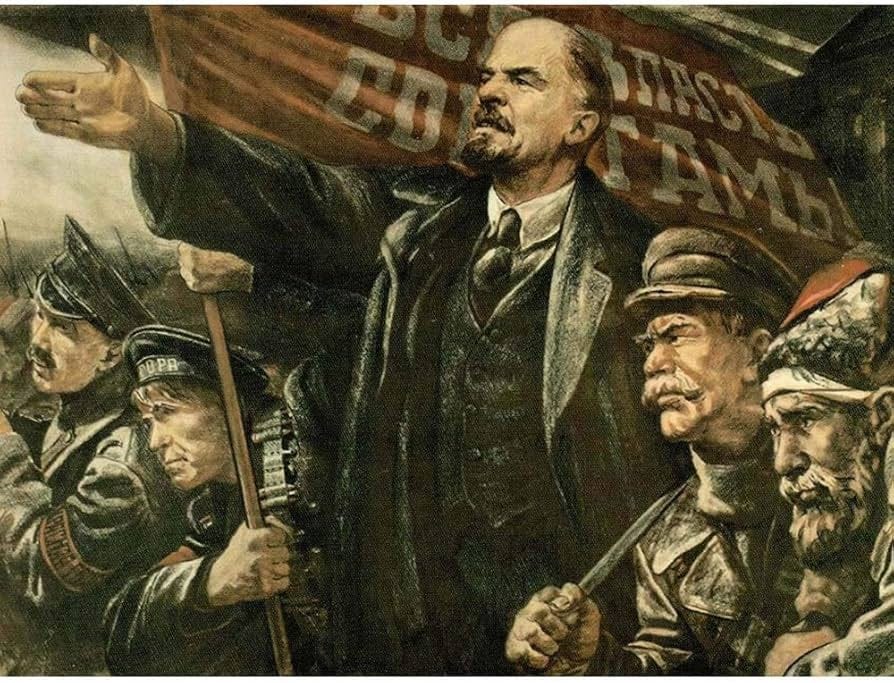
It produced some of the most monotonous, bland work of the 20th century. Paintings of ruddy-cheeked tractor drivers gazing optimistically at wheat fields. Sculptures of workers with improbable jaw lines. Novels where the protagonist overcomes bourgeois doubt to embrace collective labor!
So routine you know what it will say before you see it. This is what you get when you try to engineer art: factory-line output.
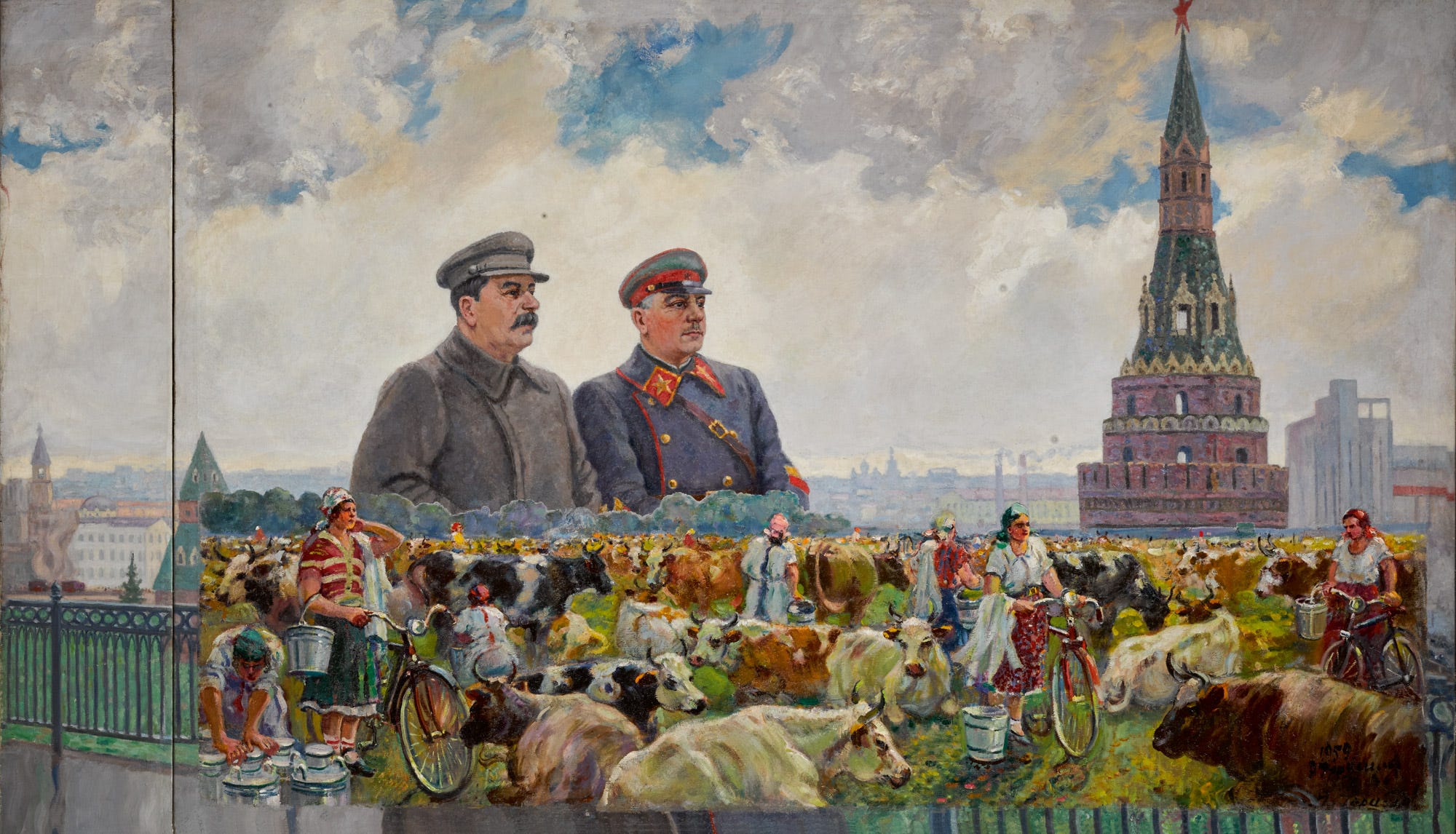
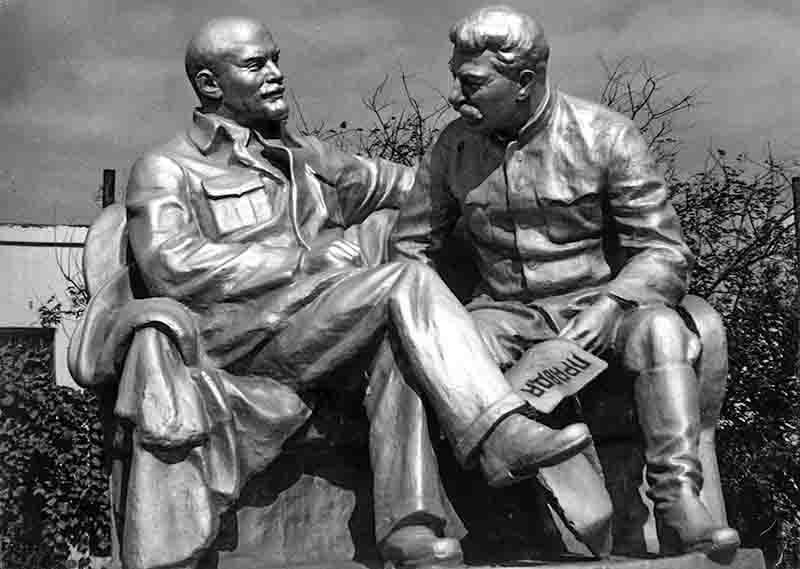
The authoritarian (and patron) who wants to harness genuine creative talent must grant the autonomy that makes talent dangerous. Restrict their latitude and you’ll get cookie-cutter output.
When you encounter a great artist who’s politically conservative, examine their background and behaviors, not voter registration, to see how their mind works. Their Big Five profile is similar to liberal artists with different policy preferences. Some examples:
Gaudi’s breakdown is provided in Section VII in The Cathedral & the Ceiling.
American journalist and novelist, founder of New Journalism. The Right Stuff, The Bonfire of the Vanities, A Man in Full. Wolfe was stylistically flamboyant, maximalist, satirical, and obsessed with social performance.
He was politically ambiguous and drifted rightward. Endorsed George W. Bush and was openly contemptuous of campus leftism and the liberal literary establishment. His conservatism was aesthetic-social as much as ideological: he hated abstraction, sentimentality, the academy, and the way literary elites confused moral posturing for prose.
Radically high-openness personality, eccentric intellectual journey, and a strident contrarian instinct that landed on the right.
Novelist, Nobel laureate 2001. A House for Mr Biswas, A Bend in the River, Among the Believers. Naipaul is a complicated case because his conservatism is partly defined by what he opposed: postcolonial grievance culture, insincere Third World romanticizing, Islam, and the intellectual left's willful blindness to dysfunction in non-Western societies.
His conservatism is less traditionalism and more empiricism about civilizational capacity. High-openness by any measure (globally curious, innovative) but his conclusions were anathema to progressives.
British satirical novelist. Decline and Fall, Vile Bodies, Brideshead Revisited, Sword of Honour. Waugh is the clearest traditionalist-conservative in the group: Catholic convert, monarchist sympathizer. He famously said he wouldn't vote because "I do not aspire to advise my sovereign on the choice of her servants". He opposed modernity and democracy.
He hated the right nearly as much as the left, "the Conservative Party have never put the clock back a single second". Obsessed with aesthetic form and wrote like someone who found the entire human project slightly beneath him. A grumpy bohemian with reactionary conservative conclusions (he’d kill it on Substack).
Russian novelist. Crime and Punishment, The Idiot, The Brothers Karamazov, Notes from the Underground. Originally a utopian socialist, he was nearly executed by the Tsar for radical activities and came out of Siberian imprisonment as an Orthodox Christian nationalist.
His conservatism was mystical, anti-socialist, anti-rationalist, and barely legible in Western political categories. He was against Enlightenment materialism and believed in Russian Orthodox spirituality.
Calling him conservative requires major caveat that his politics followed from theology and extreme circumstances. Maximum-openness personality, high-decoupling, and a profoundly unusual intellectual journey.
Argentine writer, possibly the most influential short fiction writer of the 20th century. Ficciones, Labyrinths, Tlön Uqbar Orbis Tertius, The Aleph. His stories are philosophical science fiction that treat reality as a hallucination, suggesting an extreme degree of openness.
He supported the 1976 Argentine military junta and accepted a decoration from Pinochet. This got him largely excluded from the Latin American literary world and is believed to have cost him the Nobel.
His conservatism wasn’t so much ideological as it was aristocratic disdain for mass politics and leftist conformity (this is a trend for these types). His political positions were partly genuine, partly contrarianism against the suffocating leftism of the Latin American intelligentsia. He drifted right because everyone around him drifted left, and he found the herd aesthetically intolerable.
Objection:
If high-openness is the artistic temperament by definition, then every artist is high-openness, and pointing this out about conservative artists is trivially true.
The Biofoundational claim is more specific: it isn't that conservative artists happen to share the openness that all artists do, but that their conservatism is anomalous within this temperament. It’s propositional (intellectual), not dispositional (biological). It’s a genotype with a mismatched phenotype: the result of idiosyncratic traits coupled with deviant, heterodox personal journeys. It isn’t innate. They’re an outlier’s outlier.
These artists were curious, adventurous, interpretively fertile, and aesthetically sensitive even as they arrived at conservative conclusions by way of unusual biography, civilizational fear, contrarian reasoning, or peculiar intellectual journey. As discussed in The Cathedral & The Ceiling, these traits are inversely correlated with conservatism at every measurable scale. These artists look nothing like rightwing voters; this is the distinction worth drawing.
Behaviors and traits say more than words.
Subscribes are very much appreciated. If you enjoyed this essay, please give it a like and a share.
You can show your appreciation by becoming a paid subscriber, or donating here: 0x9C828E8EeCe7a339bBe90A44bB096b20a4F1BE2B
Biofoundationalism I: Moral Foundations Utility Theory & Hypermoralization
Biofoundationalism III: Verbal Intelligence & Factual Sediment
Biofoundationalism IV: Masculine Because You Have To, Feminine Because You Get To
No posts
Comments
Nothing yet. Say the first thing.
Sign in to join the conversation.