

“There isn't any magical way to instantly uplift yourself. Sometimes life fucking sucks and thats the truth. You won't always feel or be empowered because you're human and allowed to acknowledge the weight of the world on your shoulders, the pain of being in survival mode everyday and the fight to just continue and push another day. That's not empowerment that's emptiness. Don't sit, wallow or drown yourself in it, but allow your mind body and spirit the freedom of not fighting to feel empowered but the spirit to be encouraged ” - Otissia Lynette
The Architecture of the Empowerment Mirage
Somatic Burnout, Neoliberal Feminism, and the Transition from Performative Empowerment to Material Sovereignty
To dismantle the psychological burden of modern empowerment culture and provide women with the clinical framework necessary to reclaim their energy through the practice of absolute sovereignty.
Empowerment has been weaponized as a tool for self exploitation, requiring women to perform endless psychological labor under the guise of progress; true liberation requires exiting this dopamine driven cycle of achievement and embracing the quiet, unbothered reality of material sovereignty.
Women experiencing profound burnout from high output lifestyles, corporate professionals exhausted by the mandate to lean in, and individuals ready to trade the aesthetic of success for the material reality of peace.
The Empowerment Trap
The process by which systemic power is replaced with individual psychological labor, forcing women to take responsibility for fixing environments that were never built for their flourishing.
Adrenal Overload
A state where the nervous system is permanently locked in a sympathetic fight or flight response due to the constant pursuit of external validation and achievement.
Vagal Collapse
The physiological point where the body can no longer distinguish between thriving and surviving due to chronic cortisol spikes from the demands of an empowered lifestyle.
Visual Compliance
The act of adopting specific aesthetics, such as power suits or highly curated workspaces, to subconsciously signal a willingness to participate in the achievement society.
Proclivity Response
The physical and mental state of being ahead of oneself and constantly rushing into the future, often manifesting somatically as a forward tilt of the body.
Recuperation
The process by which radical ideas are neutralized and turned into consumer commodities, such as rebranding necessary rest as fuel to increase workplace productivity.
For the better part of the twenty first century, the concept of empowerment has been the primary currency of female progress. It was the slogan of the previous decade, the theme of every corporate retreat, and the tagline for everything from skincare to software. As we move into this new era of womanhood, a collective realization is surfacing. Empowerment feels like exhaustion.
Within this framework, the empowerment trap is defined as the process by which systemic power is replaced with individual psychological labor. You were told you were being empowered when, in reality, you were being burdened with excess responsibility. You were given the power to work harder, to care more, and to fix systems that were never built for your flourishing. This report is a clinical audit of why empowerment failed and how we transition to the material reality of absolute sovereignty.
To understand why empowerment feels like burnout, we must look at the neurochemistry of the empowerment high. Empowerment culture is a dopamine driven system. It relies on the hit of external validation, the promotion, the likes on a bold post, the applause for leaning in.
However, dopamine is a hormone of pursuit rather than arrival. It keeps you in a state of perpetual doing. This creates a state of adrenal overload, where a nervous system is permanently locked in a sympathetic fight or flight response.
The Clinical Data: When we are empowered to do more, our cortisol levels spike. Over time, this leads to vagal collapse, where the body can no longer distinguish between thriving and surviving.
The Somatic Reality: Empowerment feels like a racing heart and a tight chest. Sovereignty, by contrast, feels like a slow pulse and a grounded gut.
Academic researcher Angela McRobbie discusses this in her work on the aftermath of feminism. She argues that modern empowerment is a double entanglement. It offers women the freedom to participate in the marketplace, but only if they agree to self regulate and self optimize to an impossible degree.
Empowerment has become a form of governmentality. It asks women to monitor their own behavior and psychological states so that they remain productive units within a neoliberal economy, as noted by Angela McRobbie.
In this era, empowerment is the reward dangled just out of reach. It promises that if you just work on your mindset enough, you will eventually reach a state of peace. But the empowerment mandate ensures that the more empowered you become, the more labor you are expected to perform for the collective.
We observe that empowerment was never just a philosophy; it was a look. To be empowered in the previous decade required a specific visual language involving power suits, clean aesthetics, and highly curated office environments.
This is what we call visual compliance. By adopting the aesthetic of empowerment, women subconsciously signaled their willingness to participate in the achievement society. If you looked the part, you were assumed to be winning, even if your nervous system was in a state of total collapse.
The Chromatic Scale: Empowerment was sold in neutrals and bold power colors. This aesthetic was designed to project a sense of clinical efficiency and unshakeable confidence. In reality, it functioned as a somatic mask, hiding the dark circles of adrenal fatigue behind expensive concealer and structured tailoring.
The Desktop Sanctuary: The visual of the perfectly organized desk with its aesthetic planners, expensive candles, and hustle mantras rebranded the workspace as a spiritual site. This was a trick of the digital gaze. It made the site of your exploitation look like a site of your evolution.
Neoliberalism is a master of recuperation, the process by which radical ideas are neutralized and turned into commodities. Empowerment was recuperated and sold back to women in the following forms.
Self Care as Maintenance: Instead of rest being a right, it was rebranded as fuel so you could go back to work. You were empowered to buy an expensive face cream to soothe the skin that was breaking out from the stress of your demanding job.
The Luxury of Agency: The idea that you can only be sovereign if you have the right equipment. This keeps the focus on material acquisition rather than material exit.
In the sovereign reality, your power is not something you buy; it is the energy you stop giving away to brands that profit from your perceived inadequacy.
When we lean in, as the empowerment mandate suggests, we are physically tilting our center of gravity forward. In somatic therapy, this is known as a proclivity response. It is a state of being physically ahead of oneself and mentally rushing into the future.
The Forward Tilt: Constant leaning in creates chronic tension in the neck, shoulders, and chest. It signals to the brain that we are in a state of pursuit.
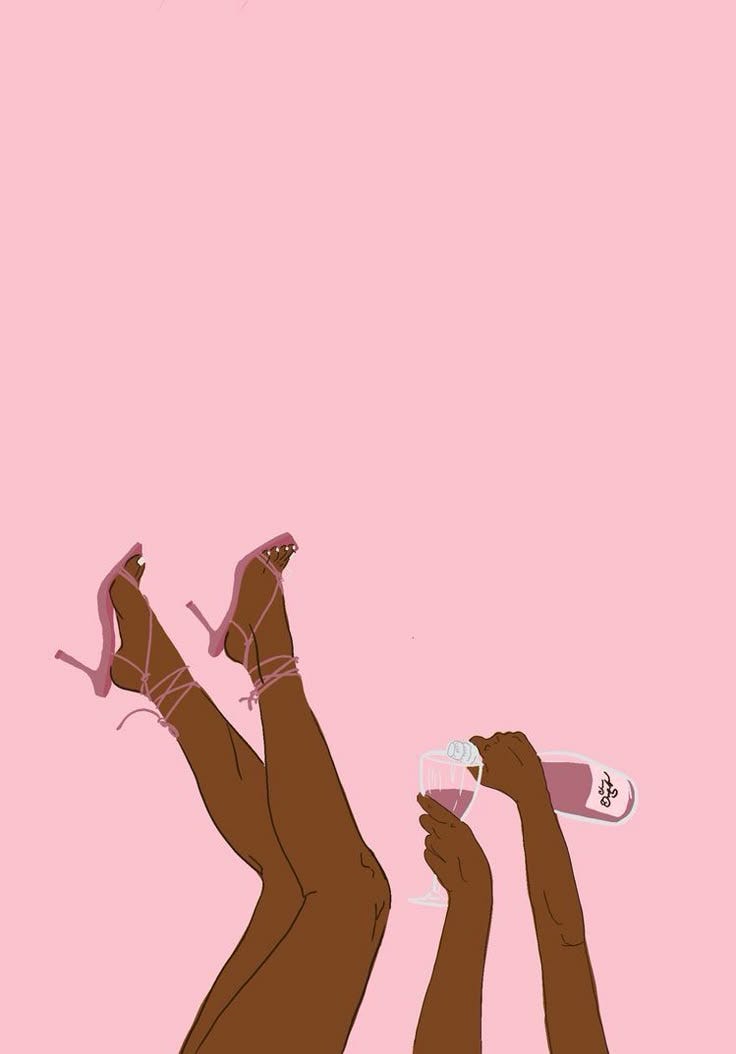
The Sovereign Recline: The counter ritual is the recline. To recline is to move your center of gravity back into your own spine. It is the physical act of leaning out. It signals to the world that you are not in pursuit of anything; you are the anchor.
The most radical thing a woman can do in this era is to become uninspiring. Empowerment culture demands that you be a success story for others to follow. It turns your life into a case study.
When you execute the female exit arc from empowerment, you stop being a story and start being a secret.
You stop mentoring those who drain you.
You stop sharing your journey to inspire the masses.
You stop advocating for systems that are designed to fail you.
You take all that empowerment energy and you put it into your own private space. You build a life that is so quiet, so stable, and so private that the word empowerment feels like a loud, gaudy relic from a past life.
The concept of empowerment implies that power is something given to you, or something you must attain through specific behaviors. Sovereignty, however, is something you simply are. When we move from the empowerment mirage to the sovereign reality, we stop looking for seats at the table and start building our own reading rooms. We stop asking how can I do more and start asking how can I be less accessible to those who do not value my peace.
This is the ultimate rebellion. A woman who is not seduced by the promise of empowerment is a woman who cannot be controlled. She does not need to be empowered by the world because she is already the director of her own hermitage.
The Labor Audit: List five things I do because I feel empowered to do them. Do these things actually give me energy, or do they drain my sovereignty reservoir?
The Fix It Trap: Where am I using my power to fix a situation, such as a relationship or a workplace, that I should actually be exiting?
The Dopamine Check: When was the last time I felt peace via low energy and high satisfaction versus empowerment via high energy and high performance?
The Aesthetic of Power: How much of my empowerment is tied to how I look or how I am perceived by others?
The Responsibility Audit: In what ways has being empowered just meant being the one who handles everything?
The Mindset Tax: How many hours a week do I spend working on my mindset to deal with an environment that is fundamentally toxic?
The Witch Wound: Does the thought of giving up my empowered status feel like a loss of safety? Why?
The Silence Check: If I stopped being the inspiring or empowered person in my circle, who would still be there?
The Body Language of Power: When I strike a power pose, does my body feel safe, or does it feel like it is preparing for a battle?
The Sovereign Shift: What would my life look like if I stopped trying to be empowered and started being unavailable?
I release the burden of being empowered to save the world.
My value is not measured by my high output lifestyle.
I choose the peace of the hermitage over the high of the hustle.
I am not a service provider for the collective inspiration.
I honor my fatigue as a sacred data point.
I reject the mandate to be resilient in a broken system.
My refusal is my most powerful tool for sovereignty.
I am a guest in the world, not its atmospheric regulator.
I prioritize my material stability over my psychological empowerment.
I am reclaiming the energy I once spent leaning in.
Monday: I am allowed to be unproductive.
Tuesday: My peace is my primary responsibility.
Wednesday: I am anchored in my own quiet reality.
Thursday: I do not perform; I simply reside.
Friday: I am unbothered and unperceived.
Saturday: The hermitage is for my rest, not my results.
Sunday: I am the architect of my own ease.
To transition from the high alert state of empowerment to the grounded state of sovereignty, we must engage in the softening ritual.
The Task: Sit in total darkness for fifteen minutes. Do not meditate. Do not work on your breath. Just allow your body to be heavy.
The Focus: Feel the edges of your body. Notice where the empowerment mask feels tight, such as the jaw or the forehead. Imagine that mask melting away.
The Sound: Make a low, vibrating hum that starts in the chest and moves down to the belly.
The Goal: To remind the nervous system that it is safe to be off.
McRobbie, Angela. The Aftermath of Feminism: Gender, Culture and Social Change. 2009. On the co-option of feminist ideals by neoliberalism.
Rottenberg, Catherine. The Rise of Neoliberal Feminism. 2018. On how empowerment became a tool for self exploitation.
Han, Byung Chul. The Burnout Society. 2015. On the achievement subject and the exhaustion of self optimization.
Federici, Silvia. Caliban and the Witch. 2004. For the historical context of how female energy is harnessed for capitalistic output.
hooks, bell. Feminism is for Everybody. 2000. For the distinction between collective liberation and individualistic empowerment.
Comments
Nothing yet. Say the first thing.
Sign in to join the conversation.