
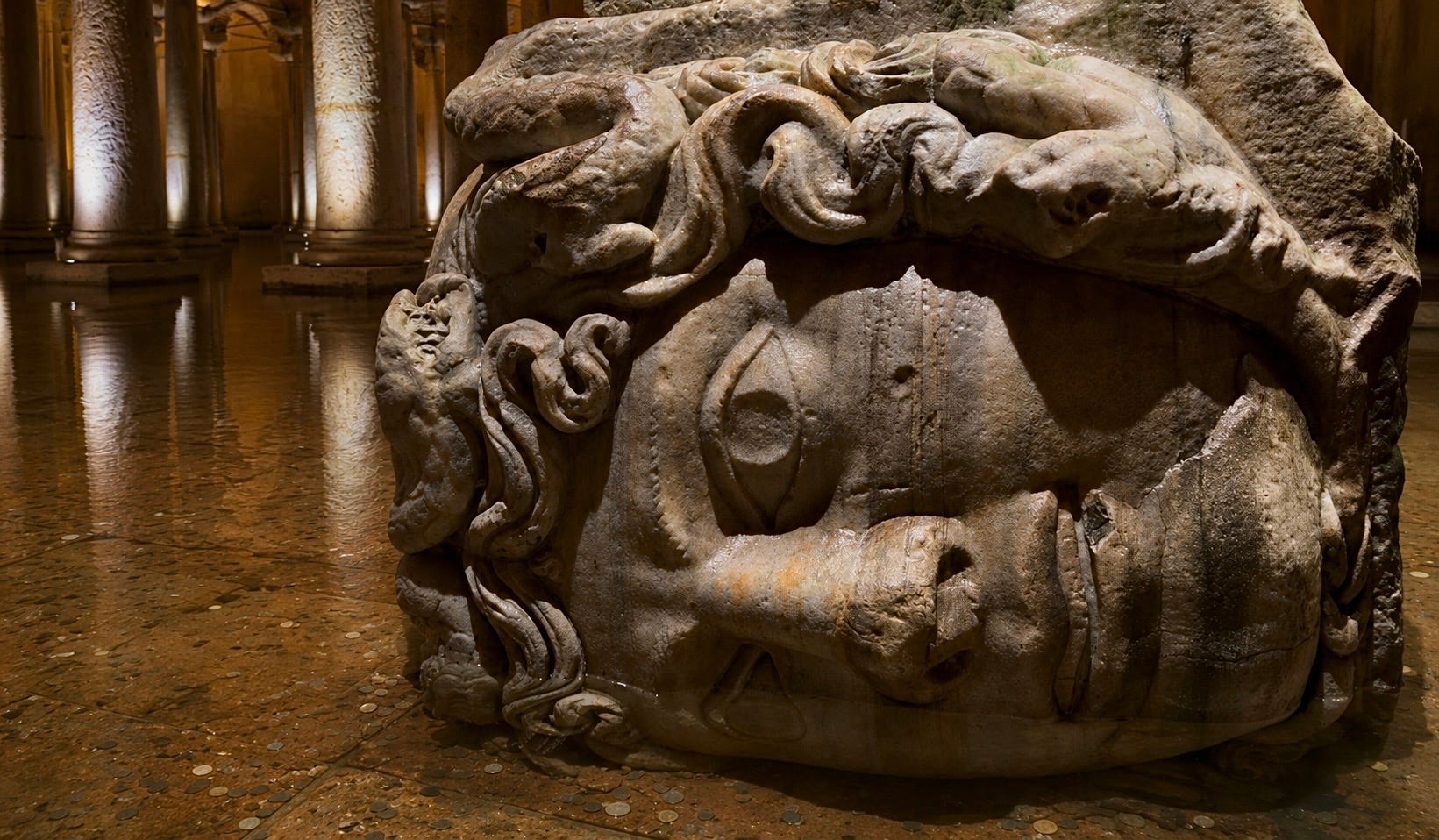
Underneath one of the most famous cities in human history sits the severed head of Medusa.
Upside down.
Holding up the ceiling.
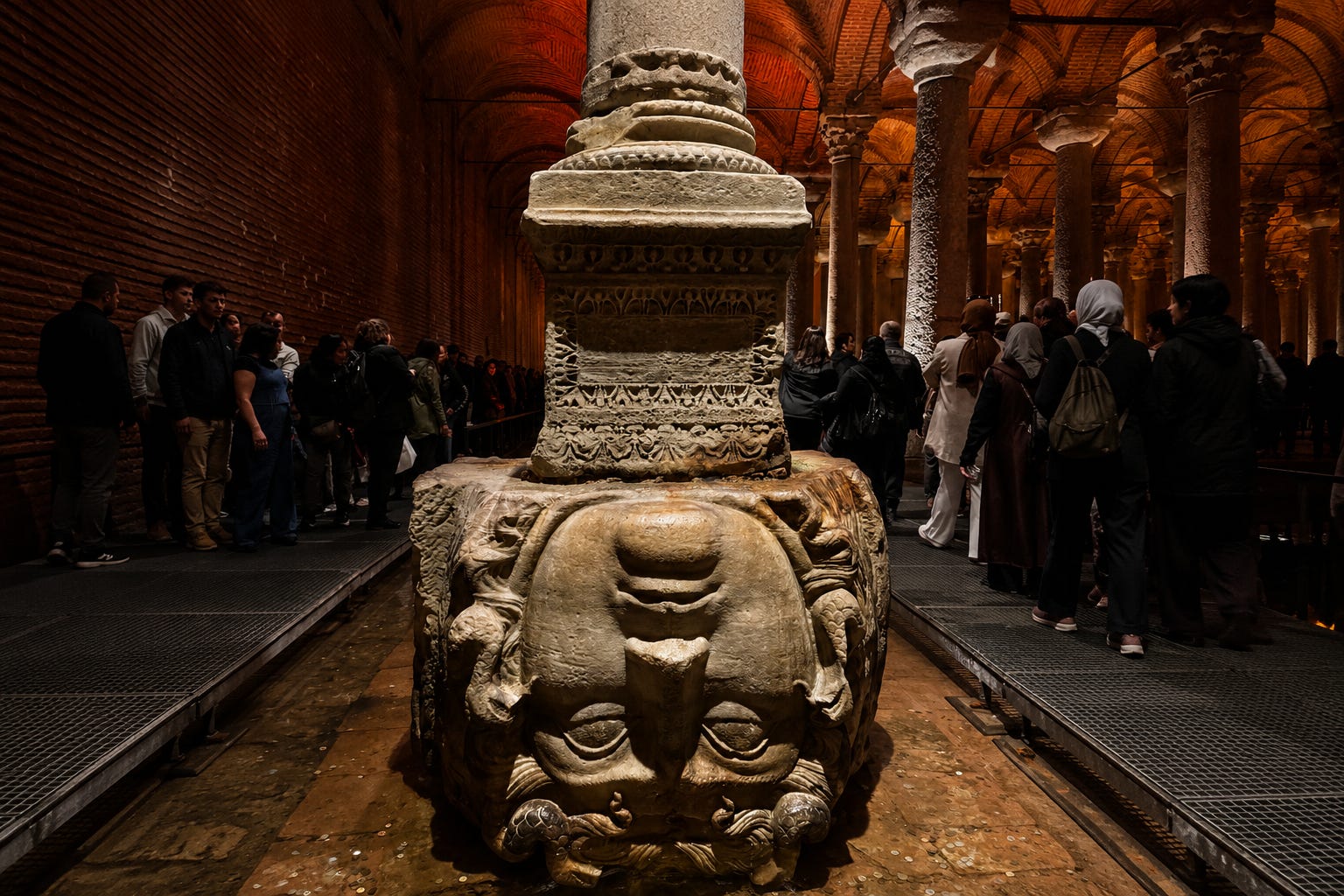
Not exactly what I expected to find in the basement of an ancient water tank.
Medusa’s face is one of the most recognizable images of the ancient world. It was found on temples, city gates, shields, ARMOR, tombs, and public buildings.
She wasn’t worshipped. She was trusted.
Her image was carved into the places people believed mattered most because they thought she could ward off evil, protect what was sacred, and stand watch over the people and places they loved.
Imagine spending months carving a single stone because you sincerely believed it would protect your daughter’s family when she moves out of your home.
THAT’S the world these heads came from.
Then, the world changed.
And about 1,500 years ago, Constantinople had a very real problem…
They needed water.
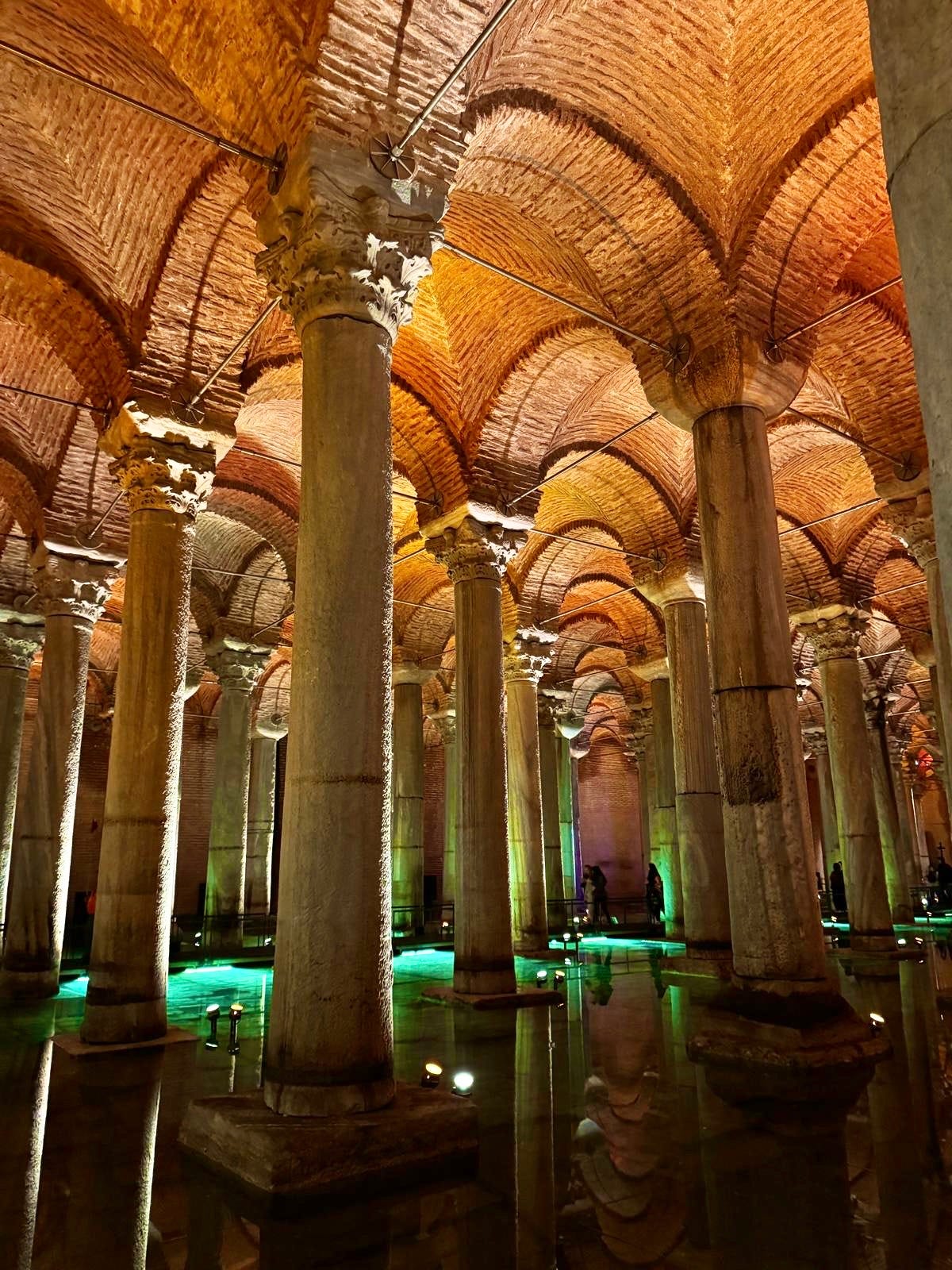
So they built more than 150 massive underground cisterns beneath the city. Essentially the ancient version of a municipal water system.
To build these spaces, workers dismantled abandoned Roman buildings and reused whatever stone they could find.
Entire temples became building supplies. Columns became “load bearing” infrastructure.
Just a few hundred years earlier, people believed her image protected the things they valued most.
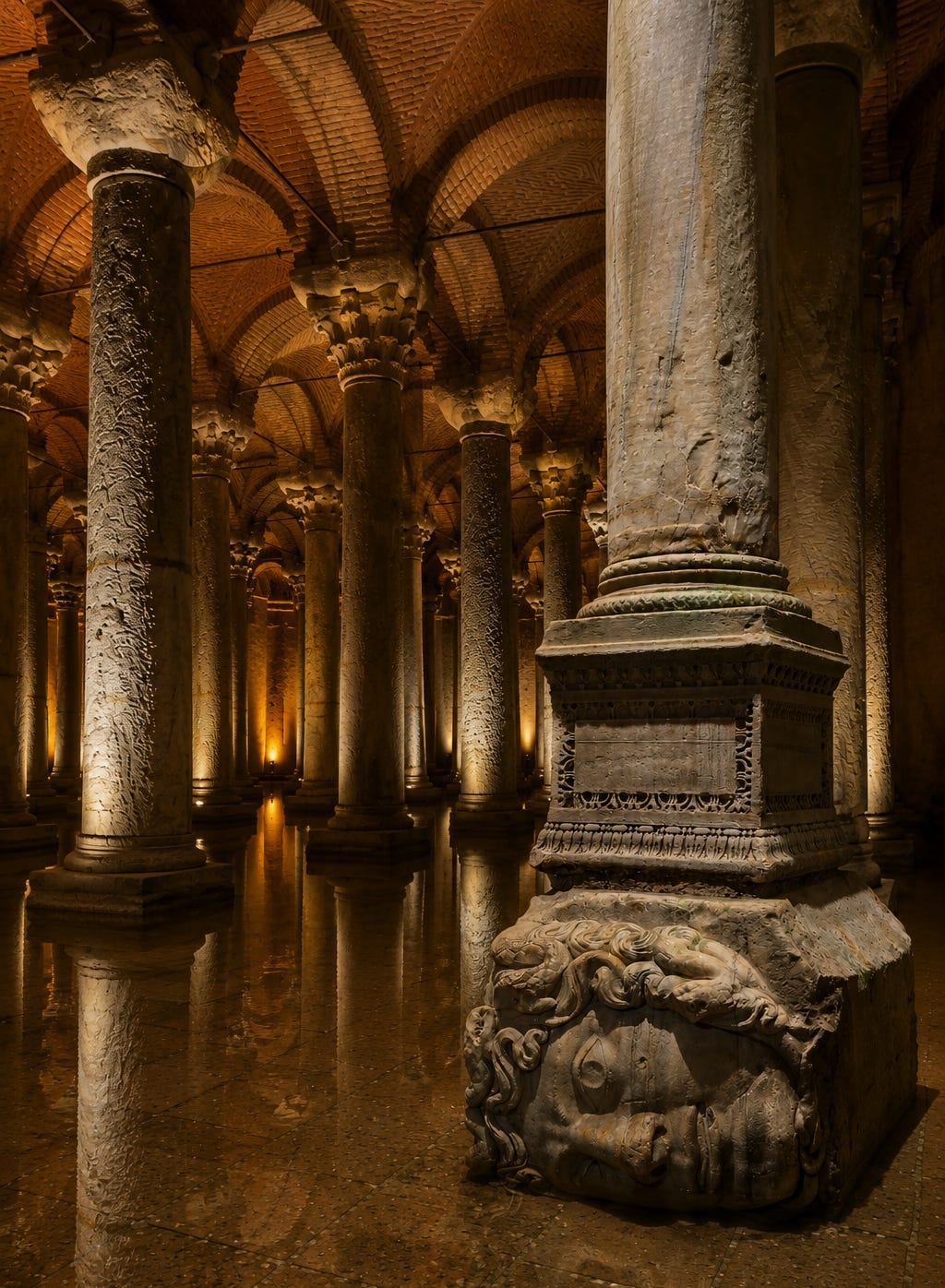
A few generations later, somebody turned her sideways, flipped her upside down, and stuck her underneath a column in the basement of a water tank. Then they turned the lights off and forgot she was there for a thousand years.
How does that even happen?
How does something an entire civilization believed was worth carving into temples become something no one thinks twice about burying underground?
How does something extraordinary become invisible?
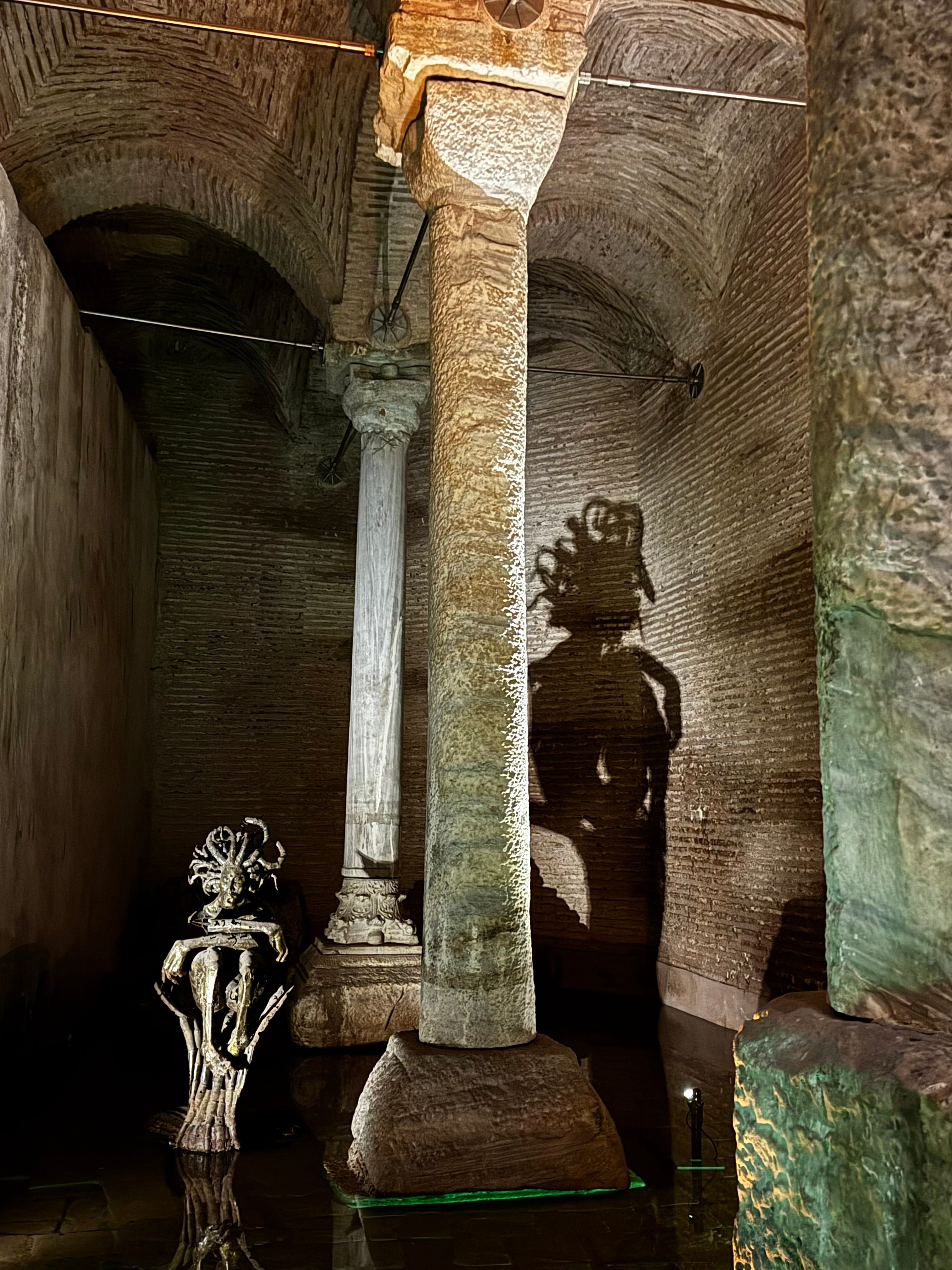
It probably didn’t happen all at once.
No one gathered in a town square and declared by ordinance that “Medusa no longer mattered”.
The world changed.
People adapted.
The sacred became familiar.
The familiar became ordinary.
And eventually, solving today’s problem mattered more than preserving yesterday’s symbols.
THAT’S how indifference enters our lives. It announces itself through competing priorities.
Nobody declares war on the things that matter most.
Life simply hands us another problem that genuinely needs solving.
And little by little, the things we once treated with absolute reverence become ordinary.
We don’t wake up one morning and decide our marriage no longer matters…we just stop noticing the person sitting across the table
We don’t stop loving our parents… we just assume there will be time for another call.
We don’t stop believing that our community is worth investing in…we just have another deadline we have to deal with.
Indifference doesn’t ask us to stop loving what matters. It just asks us to love something else a little more today.
And tomorrow.
And the day after that.
“I’ll call next weekend.”
“We’ll take a vacation after this project.”
“I’ll get back to church when work slows down.”
“I’ll volunteer again once….”
“I’ll……………..tomorrow”.
We don’t lose what matters because we stop caring about it. We lose what matters because urgency ALWAYS feels justified.
The reservoir really did need to be built.
The deadline really does matter.
The email really should be answered.
THAT’S what makes this dangerous.
None of those things are imaginary. Life doesn’t distract us with meaningless things; it distracts us with legitimate ones.
And somewhere in all that necessary, completely justified responsibility... the things that matter most quietly become the things we’ll get to tomorrow. All while we’re convinced we’re doing exactly the right thing.
NEWSFLASH: I’m not nearly as interested in what happened beneath the streets of Istanbul as I am in what might be happening beneath the surface of my own life.
Because if it happened to them...it can happen to me.
What in my life deserves a temple but is quietly becoming building material?
Nobody wakes up intending to bury what they love most.
We just keep building…
…and building.
…and building.
Until one day we realize we’ve constructed an entire life on top of the very things we once believed were sacred.
Comments
Nothing yet. Say the first thing.
Sign in to join the conversation.