
Hello again. Last time out I focused on why you should get a heat pump, and before that on the environmental benefits.
But I often hear from people who are convinced that it’s not for them. I’ve listened to the common reasons and in this post, I want to tackle them head-on. Let’s consider the reverse—the reasons why you wouldn’t get a heat pump—and see if they really hold up.
What is the return on your car? Your new kitchen? Your new coat? You don’t ask this question of other parts of your life, so why here?
OK, I accept I’m being slightly facetious but you’re making an investment in the future, for the next generations. And while the payback period on this is not a matter of months, it will payback - see Blog 8. Viewed purely financially, I accept that an 8% return on capital (assuming a 12-year payback) is not amazing but is still double the mortgage rate.
And remember, although this required a £36k capital investment for my set-up, I am now achieving cost savings of over £3000 per year.
If you’re still not convinced, you can check out this independent assessment: Are Heat Pumps Worth the Investment?
I understand that it’s a big upfront investment. But please, don’t let me find out later that you found the money for a new SUV or a kitchen extension!
If you’re serious about this, you can start saving now. You could also take out a loan, with repayments more than offset by the savings on your energy bills. Or, perhaps add the cost to your mortgage the next time you remortgage. You can also investigate green funding companies (e.g. Fornax) and other zero-capital solutions. Also, have a look at Octopus with their zero-bills initiative.
If you really can’t generate the capital, then maybe it’s not for you right now, but you will never get back the savings you’ll be making if you delay.
Don’t believe the myths! And don’t just believe me - try these: Carbon Brief, Eco Experts and Energy Saving trust.
A few years ago, I absolutely agree, this was a stronger argument. Modern R290 heat pumps will cope even on the coldest days. You just need to ensure you get a decent installer who will make sure it is set up and tested correctly. You can also get a smart controller like Homely to help you manage the technical settings - this really does make the operation and control very simple.
They are relatively quiet these days and make the most noise in the winter when you are not outside anyway. And remember the heat pump is outside - they are less noisy than your boiler which is inside!
The trick is to understand that they work differently to a gas boiler. It’s all about keeping your house at a constant temperature rather than having hot and cold periods. And for when it’s truly cold, just put a jumper on, like your grandparents used to!
In a few cases this may be true, but for most situations, it is incorrect. Don’t just assume—do the research. Remember, my own solid brick house has an EPC D rating with many walls that have no cavity insulation. A recent government energy report showed that in 2019, only 13% of UK houses had the lower “non-suitable” EPC E-G ratings. Again, it comes back to modern R290 heat pumps that really can produce hot water for radiators on chilly days.
But if you still have single-glazed windows and doors then I would agree that they should be replaced first and will dramatically reduce your gas bill.
I can’t comment on listed buildings - although Historic England have shown that this can work. We live in a Conservation Area and the heat pump was installed as a permitted development that got approved through planning very quickly.
Solutions now exist for both of these issues. You can use a SunAmp water storage solution for the water tank that can be installed where your old boiler was.
The old “1m rule” for heat pumps has also now gone, so you can place a heat pump right up against the perimeter of your property, including at the front. And, thanks to permitted development, you don’t even need planning permission. You can also mount them on a wall or a flat roof if needed - just consider maintenance access.
Please don’t give up. My first heat loss calculation was for a 25kW heat pump! You need to find out why the surveyor calculated that and challenge their assumptions. There are two big assumptions to focus on:
ACH (air changes per hour): The default assumption for the heat loss survey is often 1.5, which assumes all of your windows and external doors are open, with all the air in your house being replaced every 40 minutes. For most double-glazed houses, this is clearly rubbish. We negotiated ours down to an ACH of 0.5, which made a huge difference to the required heat pump size.
21°c Room Temperature: Again, this is the default assumption for how you heat your house. It’s a very warm temperature, just try running the house a bit cooler! We negotiated our heat loss calculation down to 19.0°c, which was still 0.3°c over what our gas thermostat was set at.
Ultimately, if your current gas boiler copes with keeping your house warm, you will get a heat pump to work. Take your annual gas consumption (around 24,000kWh in our case) and divide by 2000—this gives you an approximate heat pump size. For us, this led to a 12kW model, which was plenty. We didn’t change any radiators - with the plan to try it and then replace the ones that needed it. Our first winter showed we were fine.
It’s already here, you’ve waited long enough!
10 years ago you would be lucky to get a Coefficient of Performance of 3 (i.e. the heat produced was 3 times the electricity used). But get a modern R290 model and you should be achieving a COP of 4. Remember that your boiler will have a COP of approximately 0.85. This makes a heat pump about 4.5 times more efficient at converting power into heat than a boiler is.
R290 coolant is also not an environmental problem and can operate at a high temperature.
You can always say you are waiting, but at some point, you have to get off the fence. The longer you wait, the more gas you are burning and CO2 you are creating.
This is a real and valid issue for some people. My own mum wanted to install one in her house, but I persuaded her that at her age and stage in life, she didn’t need the disruption. If you know you will be moving house or going through a major redevelopment within the next two years, then yes, it makes sense to wait.
On the other hand, is 1-2 weeks of disruption that bad? We cooked on 2 electric rings in our small utility room for 6 months while the kitchen extension was being built!
I understand the point you are making but consider this: the Chinese have installed more green power than the rest of the world combined. And while they do burn a lot of coal, they do it to run the factories that make all the stuff we import - it’s likely our coal power stations would still be running if we had a manufacturing sector left!
Are you going to let Trump dictate your life and your decisions? Life and the world are never simple, and you can only do what you can do - take some ownership and personal responsibility!
This definitely makes it more difficult and is broadly out of your control.
UK landlords will be legally required to meet a minimum EPC-C energy efficiency standard (i.e. higher than my house!) by 2030. By 2035 the installation of new gas boilers will be banned, meaning landlords will have to consider heat pumps or other low-carbon heating solutions when their existing boilers are condemned or need replacing.
I agree this makes it more difficult. I’m not an expert, but it sounds like you and your neighbours need a shared heat pump—the technology definitely exists. District Heat Networks are also being trialled across the country.
Do you own a mirror? I’m amazed you’ve read this far!
Science and actual facts (rather than popularist rhetoric) support the move to heat pumps. Please do your own research and don’t believe everything you read.
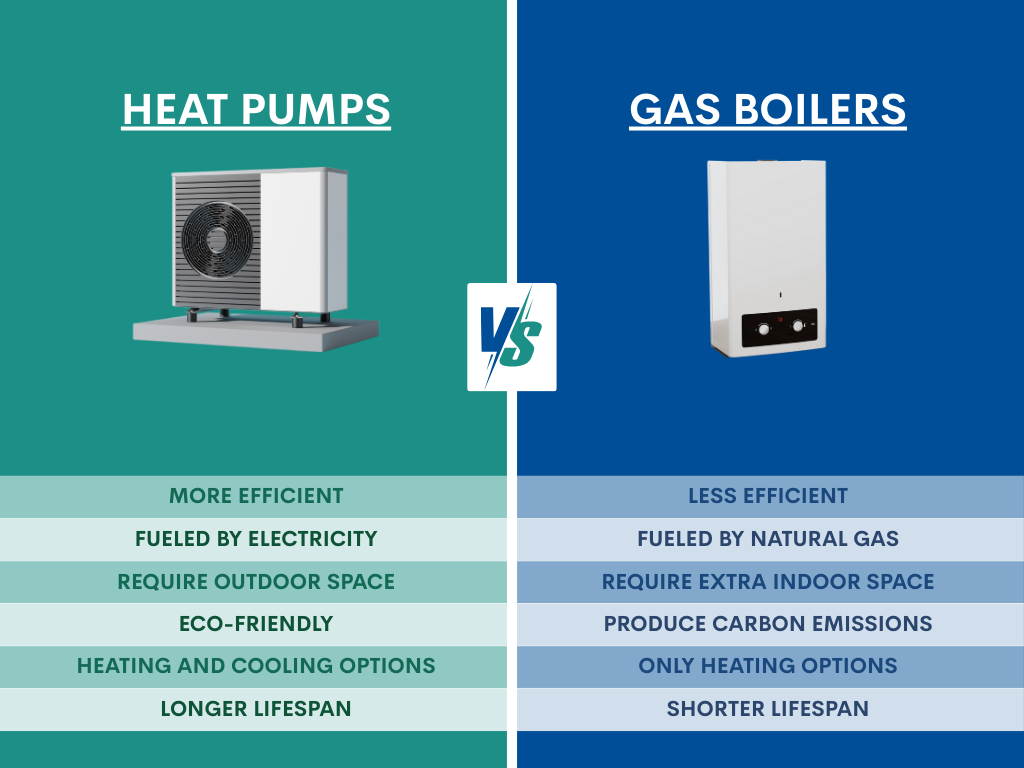
There are many reasons and elements that can put you off. If you’re not sure I would say the crucial thing is to start investigating now. You’ve almost certainly turned your boiler on for the 25/26 heating season. When the boiler breaks down and needs replacing are you ready to go with a heat pump? Don’t fall into the trap of just buying a new gas boiler because you weren’t ready.
No posts
Comments
Nothing yet. Say the first thing.
Sign in to join the conversation.