
Fair disclosure: This is a privileged viewpoint rant. I am aware. First world problem.
We recently attended a concert at the Montreux Jazz Festival, one of those events whose reputation precedes it. The setting is spectacular, the history is everywhere, and the artists were every bit as good as we had hoped. It should have been an evening remembered entirely for the music.
Instead, I will also remember the heat.
Europe was in the middle of a canicule, the French word for a heatwave. It is a wonderfully elegant word for weather that makes you feel as if someone has wrapped the continent in a wet blanket and forgotten to remove it.
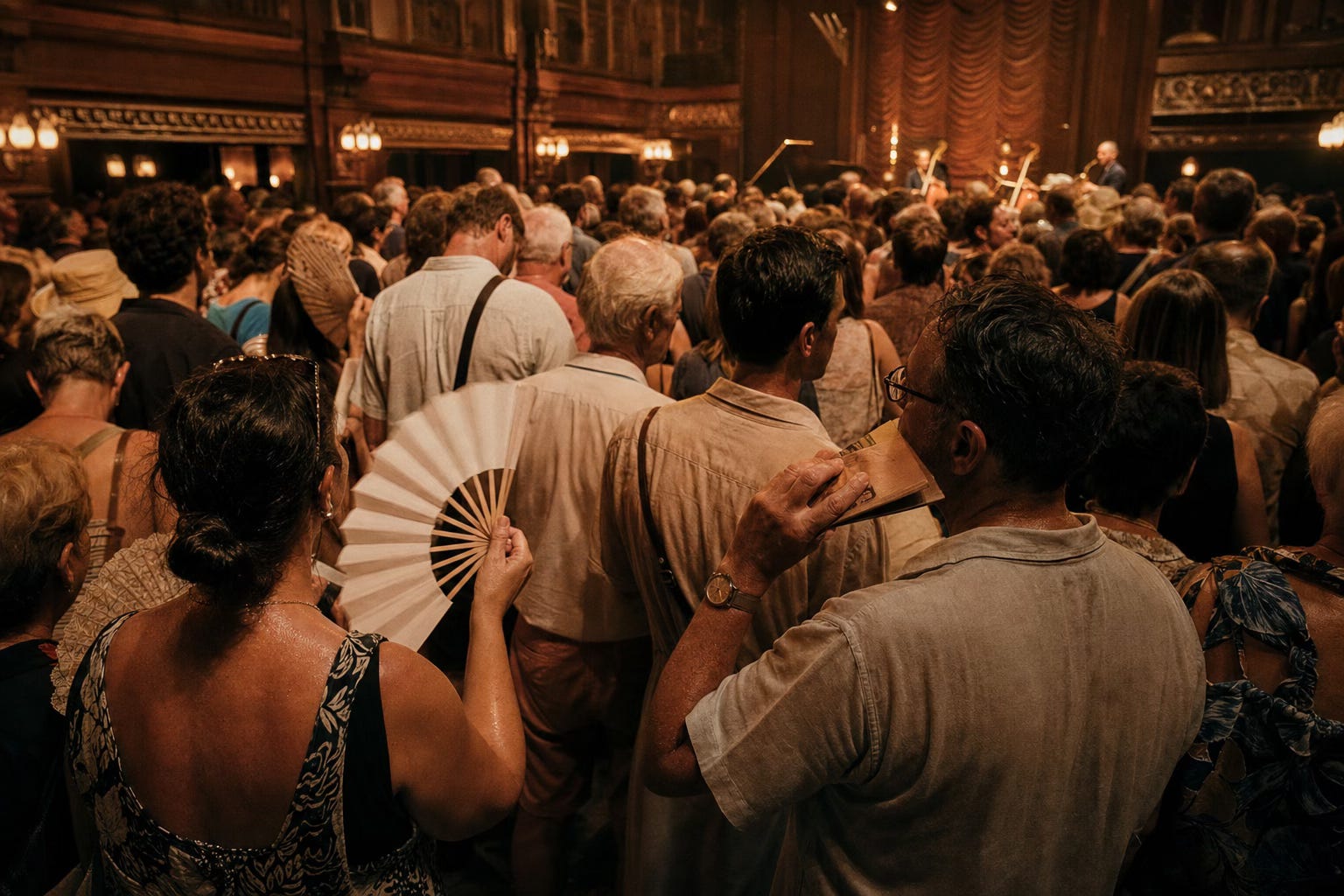
The Stravinski Auditorium was packed, especially on the standing floor where we were. People were shoulder to shoulder, with almost no room to move and seemingly no effective air conditioning to offer relief. Hundreds of bodies were producing even more heat in a room that was already struggling to breathe.
People had brought manual fans and were waving them constantly, trying to create some movement in the thick air. Occasionally, you would feel the slightest breeze from someone else’s fan and instinctively move toward it, like a plant turning toward sunlight. Unfortunately, all we were really doing was circulating hot air from one exhausted person to another.
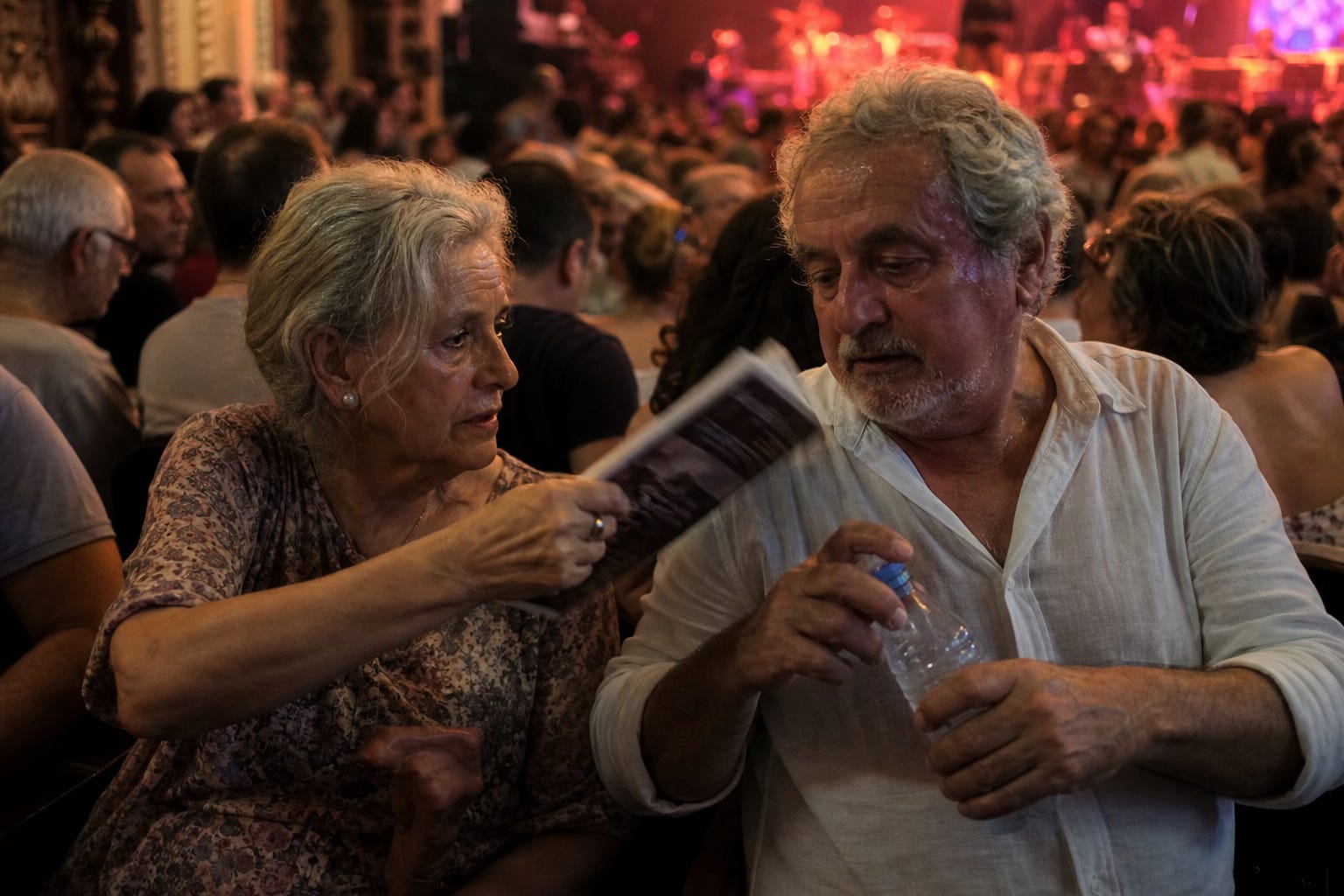
Around us, people were visibly uncomfortable. Some left only a few minutes into the concert because they were feeling unwell. Others moved toward the exits, looking for water or simply somewhere they could breathe. It was especially troubling because much of the audience was older. These were people who had probably followed the artists for decades and had come to enjoy an evening of music, not to test the limits of their cardiovascular systems.
A heatwave is, of course, a natural event. Nobody booking a festival months in advance can know exactly what the weather will be on a particular evening. But the absence of perfect foresight does not remove the need for preparation. You may not be able to predict the emergency, but you can certainly have a contingency plan for it.
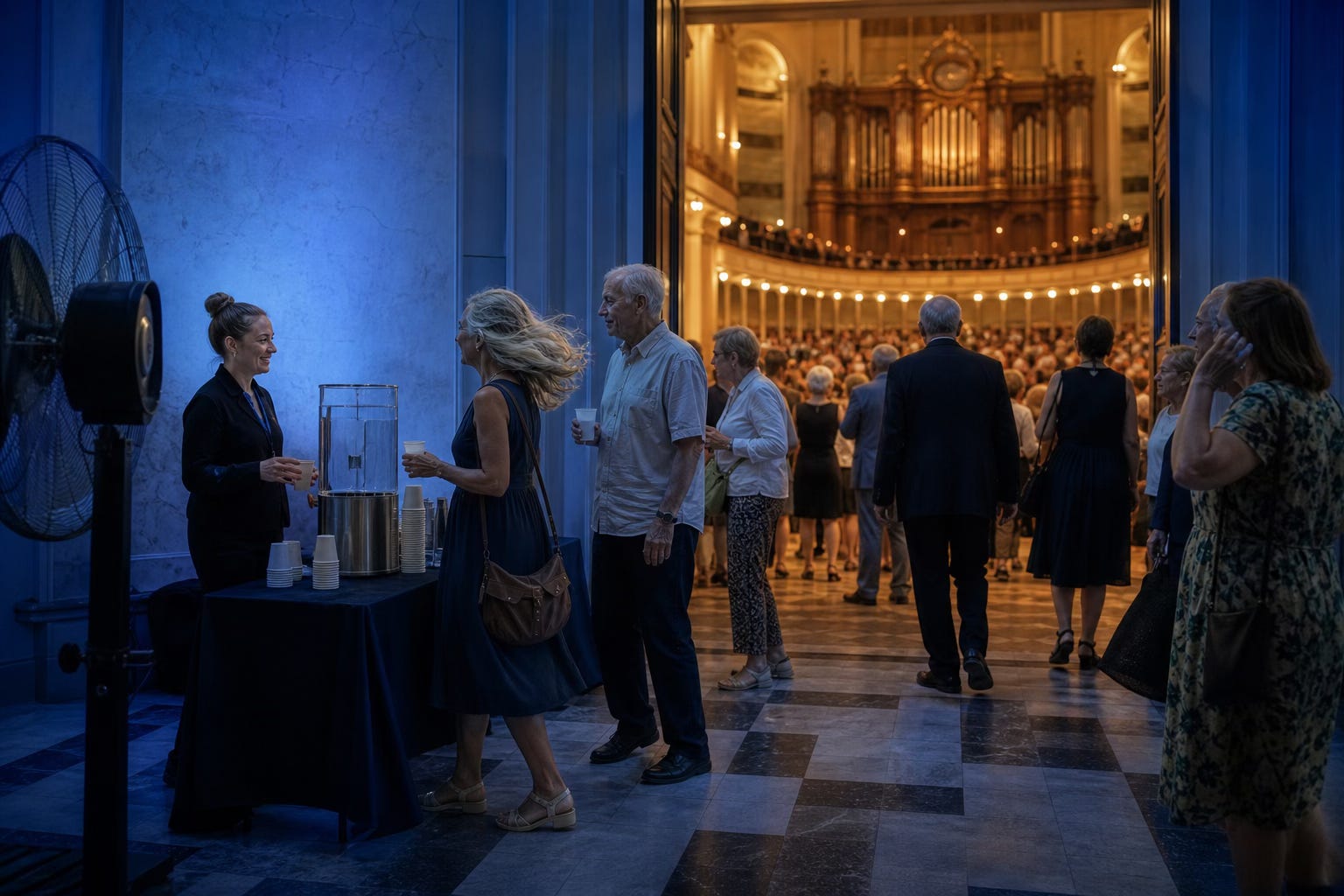
Temporary cooling systems could be brought in. Industrial fans could be installed. Water could be made free and easily accessible. Cooling areas could be created, capacity could be reduced, and the audience could be informed in advance about the conditions inside the venue. There could even be a willingness to sell fewer tickets when the combination of heat and crowd density makes the original capacity unsafe.
That last option is probably the most difficult because it requires giving up revenue. Yet it is also where the real question sits: at what point does maximizing attendance become more important than the health of the people attending? I am glad the organizers were proud of their 91% occupancy rates at the paid concerts but that night, it felt like the venue was at 150% capacity.
There were parts of the auditorium that were less crowded and appeared considerably more comfortable. Unsurprisingly, many of them came with premium pricing. I understand that better seats, private areas and special access cost more. That is how these events work. But breathable air and enough personal space to avoid fainting should not feel like luxury upgrades.
I am not naïve about the economics of live entertainment. Artists need to be paid, venues need to operate, and festivals of this scale cost enormous amounts of money to produce. Nobody expects organizers to provide perfect temperatures, unlimited space and a personal assistant carrying chilled towels.
But there is a difference between discomfort and danger.
Long lines are uncomfortable. Overpriced drinks are annoying. A tall person standing directly in front of you is an unfortunate act of geometry. Watching members of an aging audience leave because they are becoming physically unwell in an overheated, overcrowded room is something else.
This is not only a Montreux problem. We have experienced similar conditions at a couple of venues in San Francisco, although on a smaller scale. Too many people are placed in spaces with too little ventilation, and everyone quietly accepts that suffering is simply part of the authentic live-music experience. Perhaps it is because we have become accustomed to venues measuring success by the number of bodies they can fit inside rather than the quality of the experience those bodies are having.
Airports prepare for snowstorms. Hotels prepare for power failures. Outdoor festivals develop rain plans. Concert venues should be equally capable of responding when extreme heat turns a crowded auditorium into something potentially unsafe.
Nobody expects a venue to control the weather. We should expect it to respond to the weather.
That is what was so frustrating about the evening. Montreux remains extraordinary. The location is beautiful, the festival has a unique atmosphere, and the artists delivered a wonderful performance. The ingredients were all there for a memorable night. Yet part of my attention kept drifting away from the stage toward the people fanning themselves, searching for water or deciding that leaving early was safer than staying.
Live music should make you breathless because of the performance, not because the venue has run out of usable air.
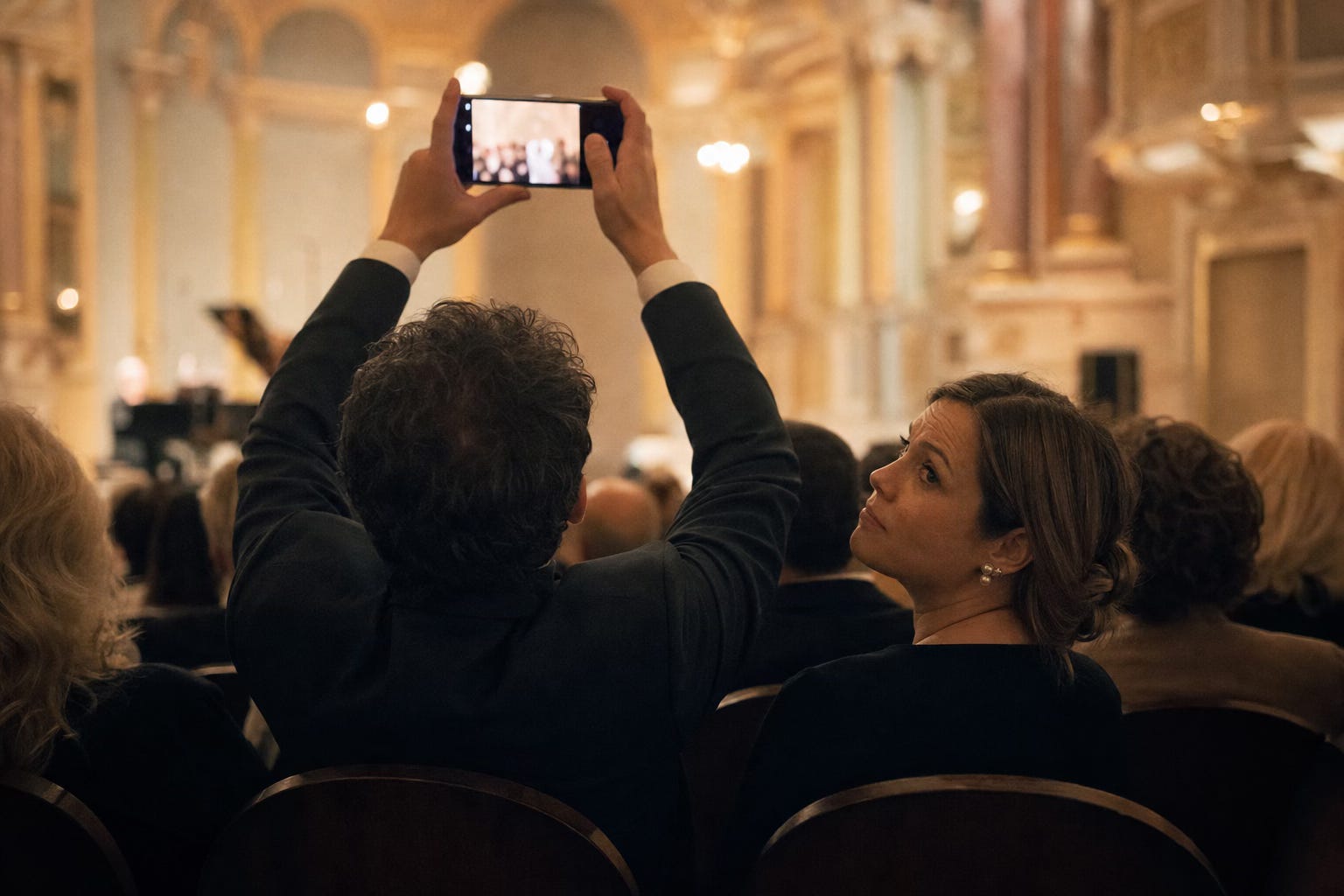
There was, however, one positive development. In my previous post, I complained about the growing wall of phones between audiences and performers. In Europe, there were definitely fewer screens in the air. This was Switzerland, after all, and the instructions not to film or take photographs were clear. Most people followed them, which made the concert feel more present and less like a gathering of several thousand amateur videographers producing footage nobody will ever watch.
Most people.
A few Russians and Brits still seemed unable to contain their filming addiction. One particularly aggressive short Englishman repeatedly stepped in front of my wife to secure a “better” view, only to raise his phone and block hers. He did this several times, apparently convinced that being closer to the stage would transform his shaky vertical video into a lost Scorsese masterpiece.
Perhaps that is progress. There were fewer screens between us and the stage.
Unfortunately, there was also less oxygen.
Comments
Nothing yet. Say the first thing.
Sign in to join the conversation.