
A few months ago, I wrote about The Sandwich Years. It was about that strange period of life where your children are becoming independent at roughly the same time your parents are becoming increasingly dependent. At the time, I thought I understood the concept. It made intellectual sense. I could describe it. I could even joke about it.
This past week, it stopped being a concept.
It became painfully real.
I’ve spent the last several days having conversations with my parents that I had hoped would stay far off in some distant future. They weren’t dramatic conversations. Nobody was in the hospital. There was no single catastrophic event that forced everyone’s hand. Instead, they were the kind of discussions that arrive quietly, disguised as practical questions.
Should you still be driving?
Wouldn’t it be easier if someone came by to help once in a while?
Have you thought about making the house a little safer?
What if…
The “what ifs” are endless.
The problem is that none of those questions are really about driving, stairs, or groceries. They’re about independence. And independence is not something you casually suggest someone should give up, especially when that person spent decades teaching you to become independent yourself.
My parents belong to a generation that survived by figuring things out on their own. They built a life through hard work, resilience, and a healthy amount of stubbornness. Asking for help wasn’t part of the plan. In many ways, their independence is woven into their identity. Taking away even a small piece of it doesn’t feel like assistance to them. It feels like losing part of themselves.
I understand that.
If someone walked into my office tomorrow and told me I was no longer allowed to make my own decisions because they were concerned about me, I would probably react the same way.
That’s what makes these conversations so emotionally exhausting. You can see both sides at the same time.
As a son, I look at them and notice things they no longer seem to notice themselves. They move a little slower. They tire more easily. Names occasionally take longer to come back. Little things that, taken individually, mean almost nothing but, together, quietly tell the story that time is doing what time has always done.
As their son, I don’t see weakness.
I see the people who raised me.
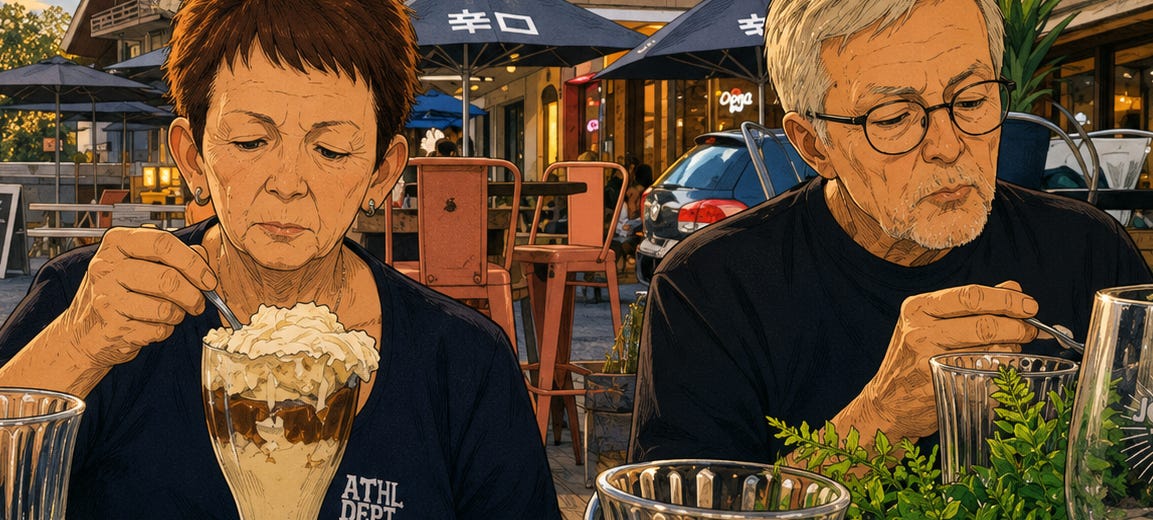
I still hear my father’s voice telling me to solve my own problems. I still remember my mother making impossible situations somehow work without ever complaining. Those memories don’t disappear simply because age has caught up with all of us.
Maybe that’s why this hurts so much.
For the first time in my life, I’m looking at the people who always had the answers and realizing that they don’t have all of them anymore.
Neither do I.
The conversations themselves aren’t particularly long. What is long is everything that happens afterward. You replay every sentence during the night. Did I push too hard? Did I not push enough? Was I trying to protect them, or was I trying to reassure myself? Could I have explained it better? Should I simply have let it go?
There are no perfect answers because there are no perfect outcomes.

Then there is another layer that many families quietly experience but rarely admit.
Siblings.
Every family seems to develop invisible roles over the years. There is the peacemaker. The optimist. The one who stays out of family politics altogether. The one who lives farther away. And then, sometimes by choice but often simply because nobody else will do it, someone becomes the person who has to say the uncomfortable things.
This time, that person happened to be me.
Being the “bad son” is an odd feeling. You know your intentions are good, yet you’re also aware that good intentions don’t necessarily make difficult conversations easier to hear. Sometimes love is interpreted as criticism. Sometimes concern sounds like judgment. Sometimes trying to help simply makes you the person everyone is frustrated with.
I wish there were a manual for this stage of life.
There isn’t.
Every family is improvising.
The irony, of course, is that none of these conversations are really about today’s problems. They’re about tomorrow. They’re about trying to preserve as much quality of life as possible for as long as possible. Every suggestion comes from the same place: I want more time with them, not less. More birthdays. More Sunday lunches. More phone calls that last longer than they need to because nobody is really in a hurry to hang up.
The goal isn’t to change who they are.
It’s to help them stay who they are for as long as possible.
That distinction is obvious to me.
It isn’t always obvious to them.
As difficult as this week has been, it has also forced me to confront an uncomfortable truth. One day, if I’m lucky enough to reach their age, my own children will probably have these same conversations with me.
I already know exactly how I’ll respond.
I’ll tell them I’m perfectly capable.
I’ll insist they’re worrying too much.
I’ll point to everything I can still do instead of acknowledging the things I can’t.
In other words, I’ll probably become my father.
And maybe that’s simply how life works.
The generation that once told us not to be afraid slowly becomes afraid of losing the independence they spent a lifetime earning. The generation that once wanted complete freedom suddenly finds itself trying to protect the people who taught them what freedom meant in the first place.
Nobody wins these conversations.
But avoiding them doesn’t stop time.
If anything, it only gives time one more victory.
So I’ll keep having them, even when they’re uncomfortable. I’ll keep trying to balance respect with responsibility, dignity with safety, and love with honesty. I’ll make mistakes. I’ll occasionally say the wrong thing. I’ll probably apologize more than once.
What I hope my parents never doubt, even on the days we disagree, is why I’m doing it.
Everything I am was built on what they gave me.
The least I can do is spend whatever time we have left trying to give a little of it back.
Comments
Nothing yet. Say the first thing.
Sign in to join the conversation.