
An article on Middle East Monitor
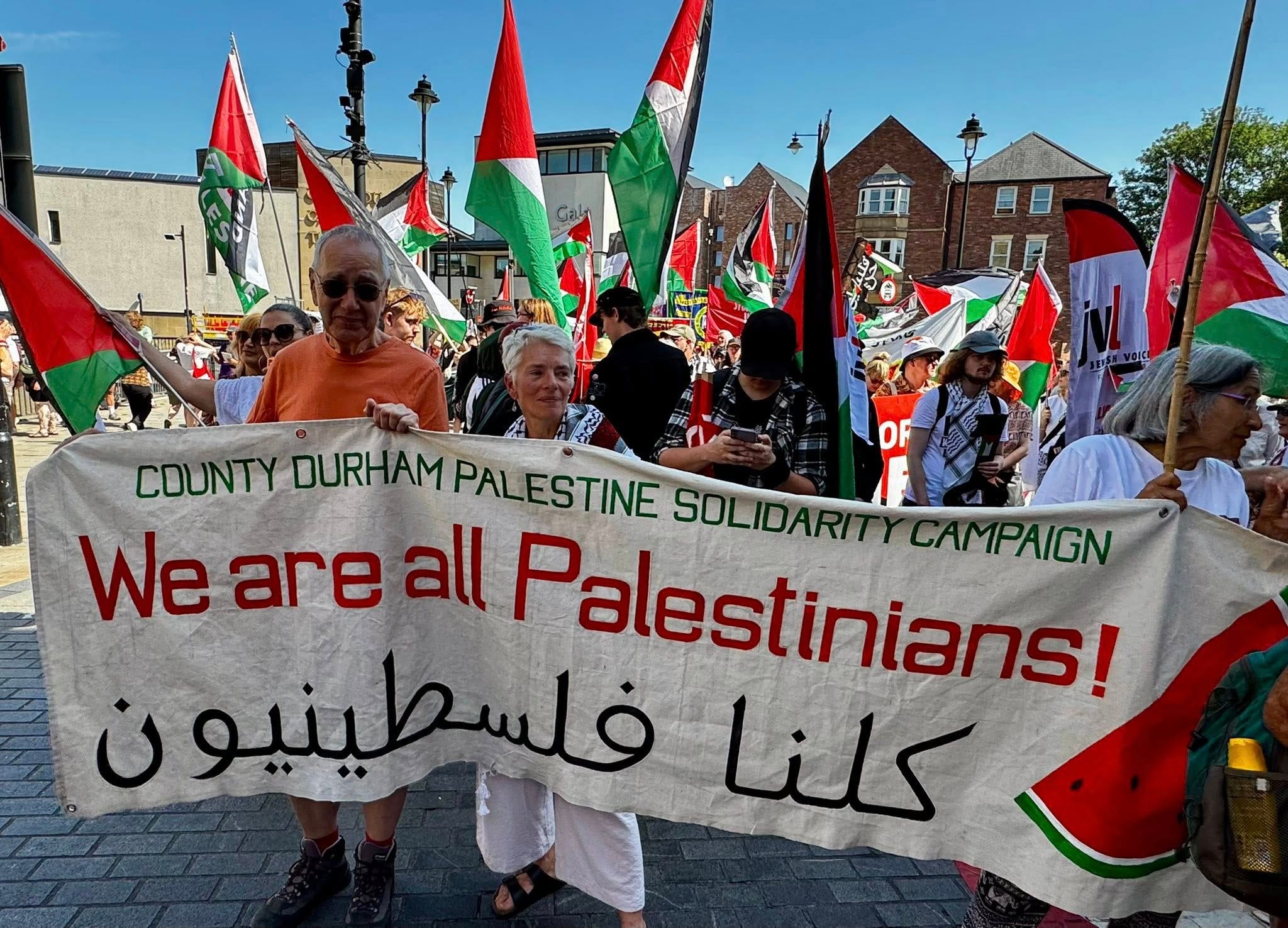
Over the past two years, millions have voiced their solidarity with Palestine, many of whom had never done so before. This support has helped Palestinians, especially those going through genocide in Gaza, feel that they are not alone. However, it has not stopped the genocide, nor does it seem capable of standing up to the U.S. administration’s so-called “peace plan.” There are a number of reasons for this, one of the key ones being the shortcomings of the concept of solidarity with Palestine itself.
Oxford Languages defines “solidarity” as “unity or agreement of feeling or action.” However, there is a fundamental difference between unity of feeling and unity of action. In most cases, solidarity seems to have been reduced to feelings of sympathy. Even when expressed through actions, such as tweets or protests, these are usually undertaken locally with little to no coordination with Palestinians in Gaza. The global solidarity scene is more accurately described as “agreement of feeling, fragmentation of action.”
Although well-intentioned, this sentimental aspect has sometimes been detrimental to the cause. It has become susceptible to social media trends determined by algorithms and media owners. This gives empire a measure of control over those in solidarity, as demonstrated by the United States’ ban on TikTok and its subsequent deal with the company. It also erodes solidarity movements because we can only feel compassion for victims of genocide for so long before we burn out. Focusing on the suffering of those we support, although well-intentioned, may shift the focus away from the political program causing that suffering. This traps us in a cycle of reacting to Zionism instead of taking the initiative to dismantle it, a problem that could be exacerbated by social media’s encouragement of performative solidarity. The “All Eyes on Rafah” campaign—which essentially calls on those in solidarity to merely observe what is happening—is an example of this.
Another downside of sympathy is that it is naturally displayed toward the less fortunate or more vulnerable. This means that solidarity is often one-sided: “We stand in solidarity with Gaza,” as opposed to “We are all in solidarity together” in favor of a certain program, as determined by political analysis. While this may seem appropriate when others are going through genocide, it is a flawed framework for at least two reasons.
First, it places an undue burden on Palestinians to prove that they are worthy of solidarity. This is precisely what the colony did when it focused on the actions of the Palestinian resistance on October 7, essentially asking: Are the people who did this worthy of your solidarity? Yet Palestine should not be colonized, regardless of what Palestinians did or do. To take this argument further, imagine that the colony’s debunked accusations of rape and child burning were true. Clearly, we would not support rapists and child murderers. Nevertheless, we would still oppose the existence of the settler state. This demonstrates that the issue is fundamentally a political stance for or against a political project rather than a stance of solidarity with people. The colony is the question mark, not the Palestinians.
Comments
Nothing yet. Say the first thing.
Sign in to join the conversation.